

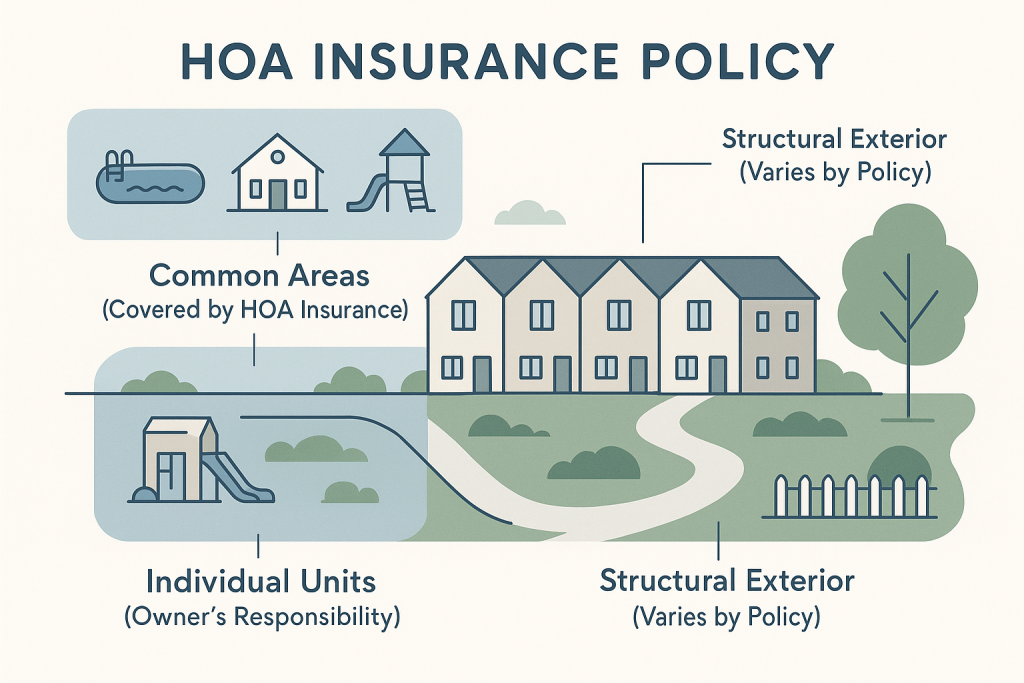
Homeowners associations manage shared spaces, community infrastructure, and financial responsibilities for entire neighborhoods. Pools, clubhouses, landscaping, walkways, and shared building systems all require protection so the community can function smoothly when unexpected events occur.
Understanding what HOA association insurance covers helps board members, property managers, and residents recognize how financial protection works within a community association. When damage occurs to shared property or someone files a liability claim related to common areas, the association’s insurance policy provides a framework for responding to those events.
Homeowners association insurance typically focuses on protecting property owned or maintained by the association and managing legal exposure connected to community spaces. These policies help cover property damage, liability incidents, and certain financial risks tied to operating a community association.
When boards understand how association insurance works, they can make better decisions about risk management, policy limits, and long-term financial stability.
Understanding Homeowners Association Insurance
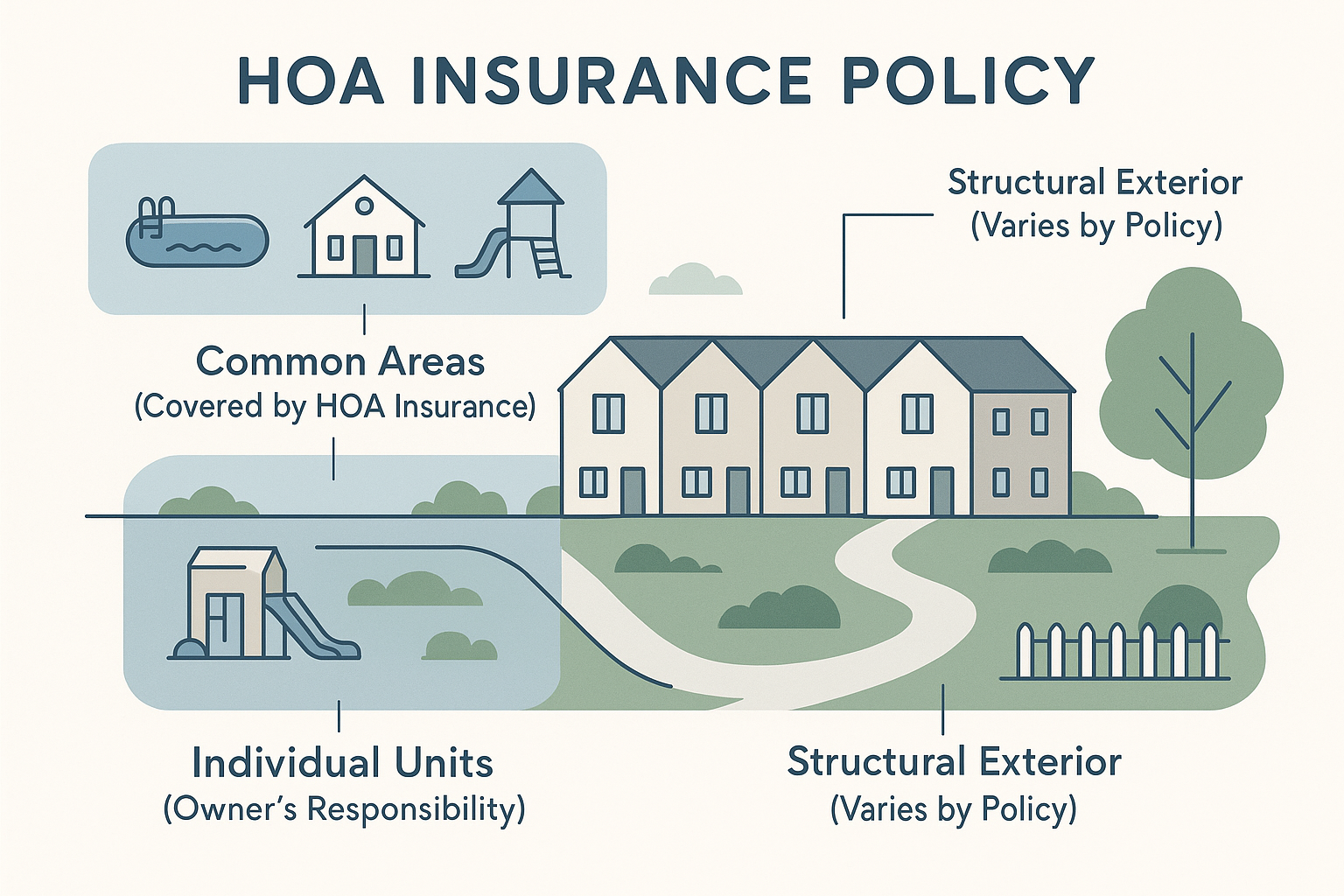
Homeowners association insurance is designed to protect the shared property and operational responsibilities of a community association. This type of coverage differs from individual homeowners' insurance because it focuses on property owned collectively by the association rather than individual residences.
Many communities rely on an HOA master policy, which serves as the central insurance policy for the association. This policy typically protects structures and assets that belong to the association itself.
Examples of property often protected by association insurance include:
-
Clubhouses and community buildings
-
Pools and recreational facilities
-
Walkways and shared parking areas
-
Landscaping features
-
Shared roofing systems or exterior structures
The goal of association insurance is to protect the financial interests of the entire community. When shared property is damaged by events such as storms, fire, or vandalism, the master policy helps cover repair costs so the association can restore those areas quickly.
This protection allows board members to manage risk responsibly while maintaining safe and functional community spaces.
How the HOA Master Policy Protects Common Areas
The master policy is a central component of HOA. It defines what property belongs to the association and what protection applies when damage occurs.
In many communities, the association’s common property includes structures and amenities used by all residents. The master policy helps protect these areas against events that cause property damage or financial loss.
For example, if a storm damages a clubhouse roof or vandalism affects a community playground, the association can file a claim under its master policy. The policy may help cover repair or reconstruction costs, depending on the type of coverage in place.
Understanding how the master policy applies is especially important for condominium communities. In a condo association, the master policy may protect the building structure while individual unit owners insure their interior spaces separately.
The exact structure of coverage depends on governing documents and the type of community involved. Boards typically review their policies regularly to confirm that the master policy reflects the value of shared property and the risks associated with maintaining those spaces.
Maintaining proper coverage for common areas helps protect the long-term value of the community.
Property Protection and Community Infrastructure
Property insurance forms a major part of HOA coverage. Shared buildings and infrastructure represent significant investments for community associations, and protecting these assets helps preserve both functionality and property value.
Property insurance typically addresses damage caused by events such as:
-
Fire incidents
-
Storm or wind damage
-
Vandalism
-
Certain types of water damage
When these events affect shared structures, the policy helps cover the cost of repairs or rebuilding.
For example, if a fire damages a community clubhouse, property insurance may help cover structural repairs and restoration costs. Similarly, storm damage affecting shared roofing systems or exterior structures may fall under the association’s property coverage.
Community infrastructure may also include operational equipment such as irrigation systems, lighting for shared spaces, and maintenance facilities. Protecting these systems helps ensure that daily community operations continue without disruption.
By maintaining adequate property coverage, associations can restore shared facilities quickly after damage occurs.
Liability Protection for Community Associations
Shared spaces increase the possibility of accidents involving residents or visitors. Liability coverage helps protect the association when injuries or property damage occur in common areas.
General liability insurance is designed to address legal claims related to accidents that occur on association property.
Examples of incidents that may trigger liability claims include:
-
Slip and fall accidents on walkways
-
Injuries near community pools or recreational facilities
-
Property damage caused by association operations
When a claim arises, liability coverage may help address medical costs, legal defense expenses, or settlement payments related to the incident.
This protection helps shield the association’s finances from significant legal expenses. Without liability coverage, the cost of resolving claims could fall directly on the association and ultimately on homeowners through increased dues or special assessments.
For this reason, many communities consider liability coverage a core component of their insurance program.
Financial Protection Through Assessment Coverage
Even with property and liability protection in place, some incidents can create expenses that exceed policy limits or involve large deductibles. In these situations, associations sometimes rely on assessment coverage.
Assessment coverage helps protect homeowners from unexpected financial contributions when the association must pay for expenses not fully covered by insurance. For example, if a major storm damages community structures and the master policy includes a significant deductible, the association may need to allocate costs among homeowners. Assessment coverage can help offset these expenses depending on the structure of the policy. This type of protection provides financial stability for both the association and individual residents. Instead of facing sudden large payments, homeowners benefit from an additional layer of protection built into the community’s insurance structure.
Boards often review assessment coverage carefully to ensure it aligns with the financial needs of the association.
Insurance Considerations for Condo Associations
Condominium communities often require special attention when structuring association insurance. Because condo owners share building structures but maintain ownership of individual units, insurance responsibilities must be clearly defined.
A condo association typically maintains a master policy that protects shared structures such as hallways, exterior walls, and common amenities. Individual owners maintain homeowners' insurance policies designed to protect interior spaces and personal property.
Different types of master policies may apply depending on the governing documents of the association. Some policies protect the building structure only, while others extend coverage to certain interior components of individual units. Understanding these distinctions helps prevent confusion when damage occurs.
Property management teams and insurance professionals often assist boards in reviewing these policies to ensure coverage aligns with the association’s needs. Clear policy structure helps avoid coverage gaps and ensures both the association and homeowners maintain appropriate protection.
Strengthening Community Protection with the Right Insurance
Insurance plays a vital role in protecting the financial health of homeowners' associations. Shared buildings, amenities, and infrastructure create valuable community assets, but they also introduce risks that require careful planning.
When boards understand how HOA works, they can make informed decisions about policy limits, liability protection, and long-term risk management. Proper coverage allows associations to repair property damage, address legal claims, and maintain safe spaces for residents.
Working with experienced insurance professionals helps communities evaluate coverage options and identify potential gaps before problems arise.
If your association wants to review its insurance coverage or explore policy options, IIS Insurance provides guidance tailored to community associations. Their team works with boards and property managers to design insurance programs that protect shared assets while supporting responsible financial management.
With the right insurance strategy in place, communities can continue providing safe and well-maintained spaces for residents while protecting the long-term stability of the association.