


Shared spaces are a defining feature of many residential communities. Pools, walkways, fitness centers, and landscaped grounds bring residents together while adding value to the neighborhood. These areas require regular maintenance and financial protection to remain safe and functional.
Understanding HOA insurance and common-area protection helps board members, property managers, and homeowners see how community assets are protected during unexpected events. Damage to shared property, liability incidents, or structural issues affecting multiple units can create financial challenges if proper coverage is not in place.
Whether in a planned neighborhood or a condo community, homeowner's associations rely on specialized insurance policies to protect common property and limit financial exposure. These policies help cover repair costs and potential legal expenses related to shared spaces.
Regular insurance review helps ensure the HOA maintains coverage that reflects current property values and community risks. When associations understand how their insurance works, they can make informed decisions that support long-term stability and protect shared areas.
Why Insurance Matters for HOA Common Areas
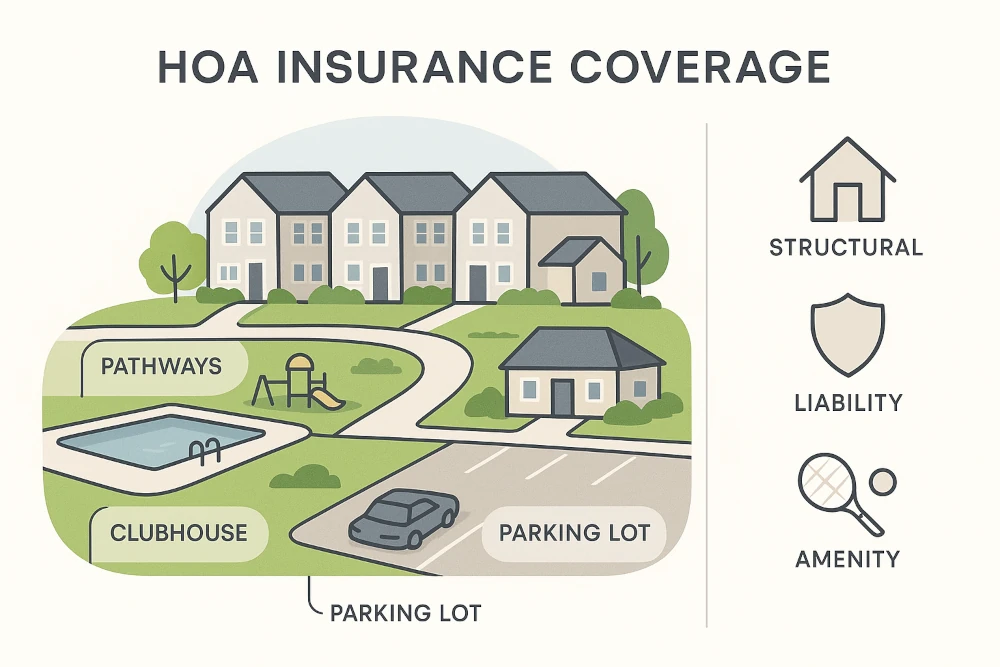
Common areas serve as gathering places where residents interact and enjoy community amenities. Because these spaces are shared by many individuals, they also introduce a range of potential risks.
Community associations often maintain facilities such as:
- Clubhouses
- Swimming pools
- Parking areas
- Landscaped parks
- Walkways and corridors
- Recreational courts or playgrounds
Each of these areas represents both an asset and a responsibility for the association. Maintaining them requires ongoing upkeep and financial planning. Insurance plays an important role in protecting these assets when unexpected damage occurs.
Storms, fire incidents, vandalism, and structural failures can all affect shared property. Without adequate coverage, the cost of repairing these areas could place a financial burden on the association and its residents.
Insurance coverage allows the community to respond quickly to damage. Instead of relying solely on association funds or special assessments, the policy helps cover repair costs and protects the financial health of the neighborhood.
Liability exposure also increases in spaces used by multiple residents and visitors. For example, if someone slips near a pool deck or trips on a walkway, the association could face legal claims. Liability protection included in association policies helps address these risks.
Strong insurance coverage ensures shared spaces remain available and safe for residents while protecting the association from unexpected financial strain.
Understanding the HOA Master Insurance Policy
At the center of most association insurance programs is the master insurance policy. This policy protects property owned or maintained by the homeowners' association and helps the organization manage financial risk tied to shared property. By defining coverage boundaries, the policy helps safeguard community assets and supports the association’s ability to operate effectively.
The master policy outlines which structures fall under the association’s responsibility. In many communities, it protects exterior building structures and shared infrastructure so the HOA can safeguard its common areas from unexpected damage.
Coverage often includes:
- Roofs and exterior walls
- Hallways and staircases
- Elevators and shared building systems
- Clubhouses and recreation facilities
- Landscaping features and outdoor structures
In condominium communities, the master policy may cover the building structure while homeowners insure their unit interiors through homeowners' insurance. In planned developments with individual homes, the association policy usually focuses on shared amenities and facilities rather than the homes themselves.
A well-structured master policy helps the association repair shared property after damage occurs and reduces financial uncertainty for the organization. Associations often review coverage limits regularly and work with insurance professionals and insurance companies to keep protection aligned with current rebuilding costs and community needs.
What HOA Insurance Typically Covers
HOA insurance policies vary depending on the structure and needs of each community, but they often include several forms of hoa coverage designed to protect shared property and infrastructure.
Property Insurance
Property insurance protects shared structures owned by the association. If a fire damages a clubhouse or a storm affects shared roofing systems, property insurance may help cover repair or reconstruction costs. Many associations structure their hoa package to protect major structures from risks such as storms, fire, or vandalism.
Liability Protection
Liability coverage protects the association when injuries occur in shared spaces. If a visitor or resident files liability claims related to an accident on association property, the policy may help cover legal defense costs and settlements. This protection helps the association manage risk without placing financial pressure on homeowners.
Directors and Officers Coverage
Board members make decisions that affect the community and the business operations of the association. Directors and officers coverage protects them from legal claims related to governance decisions, allowing volunteers to serve without personal financial risk.
Equipment and Infrastructure Coverage
Some policies also protect equipment used to maintain shared amenities. Pumps, lighting systems, irrigation equipment, and security systems may fall under the association’s insurance coverage.
Together, these protections create a structured HOA package that helps the association safeguard property, manage liability risks, and support long-term community stability.
The Role of Property Management in Insurance Planning
Property management teams play an important role in helping associations maintain appropriate insurance coverage. In many communities, management professionals coordinate maintenance, oversee vendors, and support the day-to-day business operations of the association.
Managers help identify potential risks affecting community property and provide insights that assist the board in evaluating its HOA coverage. Their experience with maintenance trends, structural issues, and operational challenges helps ensure the policy aligns with the community’s real needs.
Property managers also assist with communication between residents, contractors, and insurance professionals when claims occur. This coordination helps ensure documentation is collected properly and that liability claims or property damage reports are submitted efficiently.
Management teams often help organize periodic insurance reviews that assess changes in property value, new amenities, and evolving liability risks. Working with insurance advisors and insurance companies allows boards to adjust policies as the community grows or infrastructure changes.
Strong coordination between board members, property managers, and insurance professionals helps the association protect residents while maintaining the financial stability of the organization.
Common Risks That Affect Shared Community Property
Community spaces experience frequent use, which increases exposure to potential incidents. Because these spaces belong to the association, the board must evaluate risks carefully and ensure the community maintains proper HOA coverage.
Several types of events commonly affect shared property in association communities.
Weather-Related Damage
Severe storms, wind, and hail can damage roofs, exterior structures, and landscaping. Property insurance included in an HOA package helps address repair costs associated with these events and protects the association’s long-term financial stability.
Water Damage
Plumbing failures or drainage issues can lead to water damage affecting shared structures or mechanical systems. Quick response and proper insurance coverage help reduce long-term damage and restore community facilities.
Vandalism
Occasional vandalism may affect outdoor facilities, signage, or recreational spaces. Insurance coverage can help offset the cost of repairing damaged property so the association can continue to safeguard its common areas.
Fire Incidents
Fires in community buildings such as clubhouses or storage areas can cause significant structural damage. Property insurance plays an important role in helping associations rebuild and restore shared spaces.
Liability Incidents
Accidents involving residents or guests may occur in common spaces. When liability claims arise, insurance protection helps cover legal defense costs and settlements so the association can manage risk without placing financial strain on homeowners.
By identifying these risks in advance and working with trusted insurance companies, associations can structure policies that respond effectively when incidents occur. Proper planning ensures the community remains protected while maintaining safe and functional shared spaces for residents.
Maintaining Financial Stability Through Insurance
One of the main reasons communities rely on association insurance is to protect their financial stability.
Shared property repairs can be expensive. If an association lacks sufficient insurance coverage, it may need to rely on reserve funds or special assessments to cover repair costs.
Special assessments can place a financial strain on residents and create tension within the community. Insurance coverage helps reduce this risk by providing funds to address damage when it occurs.
Insurance also helps maintain property values. When shared amenities remain well-maintained and properly protected, potential buyers view the community as a stable and desirable place to live.
For boards, maintaining appropriate insurance coverage is part of responsible financial management. Reviewing policies regularly and adjusting coverage limits helps ensure the community remains protected against changing risks.
The Importance of Regular Insurance Reviews
Insurance needs change over time. Communities may add new amenities, expand buildings, or experience shifts in property value that affect coverage requirements.
Regular insurance reviews help associations maintain accurate protection.
During these reviews, boards often evaluate:
- The current value of shared structures
- Liability exposure related to amenities
- Changes in construction costs
- Updates to local insurance regulations
Insurance professionals can assist with these evaluations by recommending adjustments that align coverage with the community’s needs.
Associations that review policies regularly are better prepared to handle unexpected events. These reviews also help identify coverage gaps before incidents occur.
How Homeowners Benefit from Association Insurance
Although HOA insurance primarily protects shared property, homeowners benefit significantly from the protection it provides. When association insurance responds to damage affecting common areas, residents avoid large personal expenses associated with repairing community infrastructure.
Well-maintained amenities also support property values across the neighborhood. Buyers often evaluate the condition of shared spaces when considering homes in association communities. Insurance coverage contributes to long-term stability by ensuring these spaces remain functional and attractive.
Homeowners also benefit from the liability protection included in association policies. When incidents occur in common areas, the association’s coverage helps manage legal claims related to shared property.
Partnering With Experts to Protect Community Assets
Insurance planning for community associations can be complex. Policies must reflect the structure of the neighborhood, the value of shared property, and the liability risks associated with common spaces.
Working with experienced insurance professionals helps boards evaluate coverage options and identify policies suited to their community. Insurance advisors can review existing policies, recommend coverage adjustments, and help associations prepare for potential risks.
For associations seeking guidance, IIS Insurance works closely with community boards and property managers to design insurance programs that protect shared spaces and support responsible financial management.
Protecting Shared Spaces for the Future
Common areas bring residents together and create the identity of a community. Parks, walkways, recreational facilities, and gathering spaces all contribute to a neighborhood’s character.
Protecting these spaces requires thoughtful planning and the right insurance coverage. A well-structured master policy helps communities respond to unexpected damage while maintaining financial stability.
By understanding how association insurance protects common property, boards and homeowners can work together to maintain safe, attractive environments for everyone who lives in the community.
If your association would like guidance reviewing insurance coverage or strengthening protection for shared property, the team at IIS Insurance can help evaluate options and recommend solutions tailored to your community’s needs.