

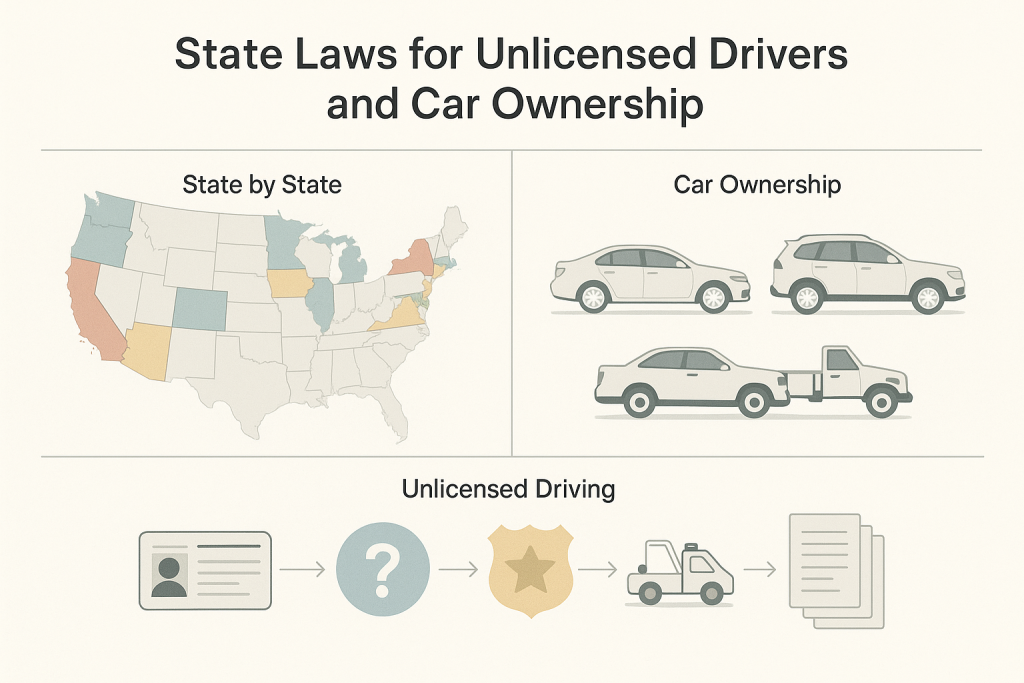
Owning a vehicle and holding a driver’s license are separate matters in California. A person may own a car without being legally permitted to drive it. The vehicle may be intended for a licensed spouse, adult child, caregiver, employee, or another approved operator.
The lack of a license doesn't remove the vehicle owner’s insurance responsibilities. California requires financial responsibility for vehicles operated or parked on public roads. An unlicensed owner may therefore need an active insurance policy even if someone else drives the car.
What are the state laws for unlicensed drivers owning insured cars? Obtaining coverage can require a different policy structure. The owner generally remains identified on the policy, while a properly licensed person is listed as the primary driver. That individual must be the person who actually operates the vehicle most often.
IIS Insurance Services helps California residents find auto insurance for nonstandard ownership and licensing situations. Its agents work with carriers that consider unlicensed owners, licensed primary drivers, suspended licenses, business vehicles, and SR-22 requirements.
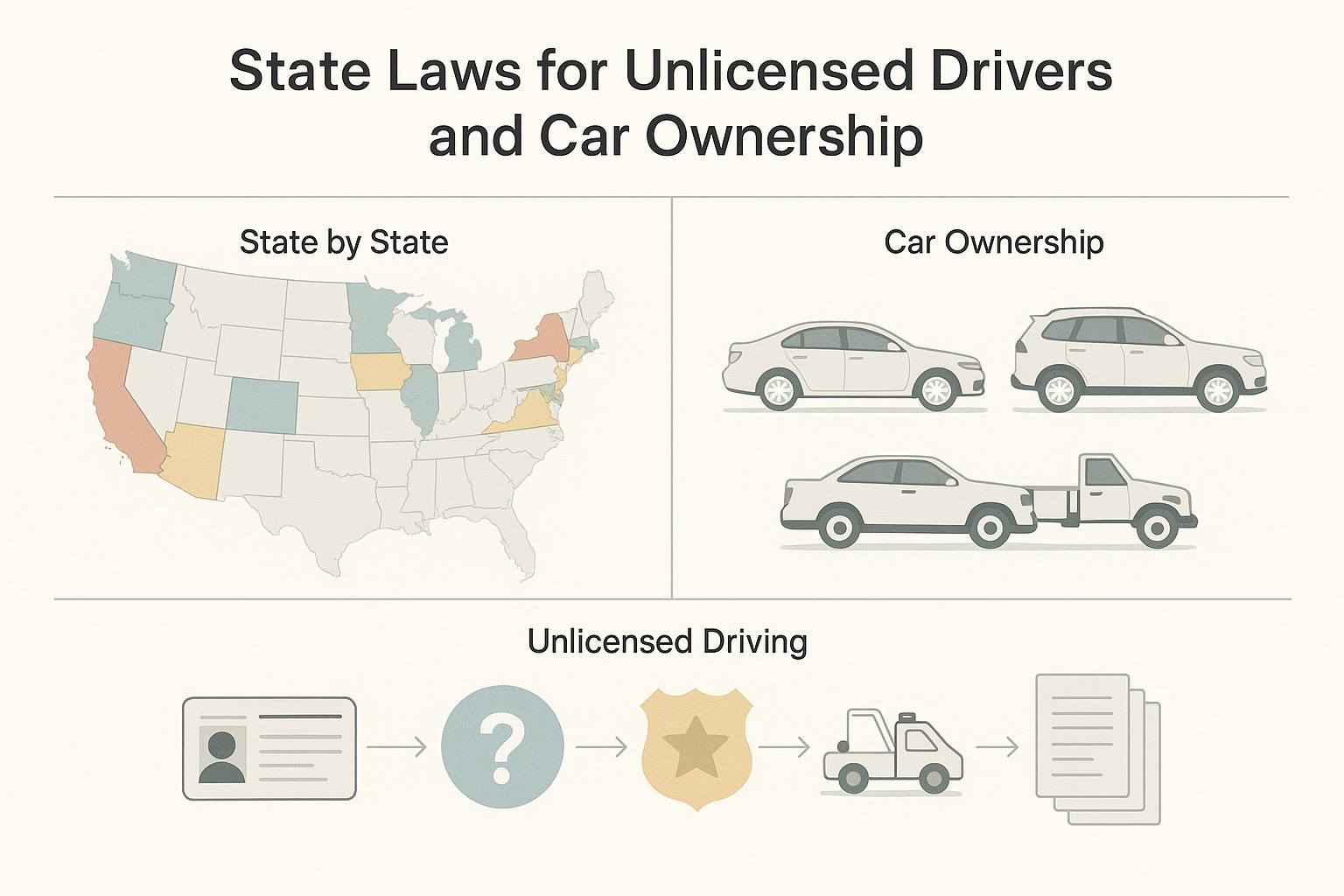
California Law on Unlicensed Drivers and Vehicle Ownership
California doesn't treat vehicle ownership as permission to drive. You may own a car without a driver’s license, but you can't legally operate it until you hold valid driving privileges.
The distinction matters because three separate issues are involved:
- Ownership identifies the person or business with a legal interest in the vehicle.
- Registration records the vehicle with the California DMV.
- Driving privileges determine who may legally operate it.
An unlicensed owner might be someone who has never applied for a license, has an expired or suspended license, no longer drives for medical reasons, or owns a vehicle used by another person. A company may also own vehicles that are driven only by licensed employees.
Even when the owner never drives, the vehicle may still create financial exposure. A licensed family member could cause a car accident, the car could damage property while being moved, or the owner could face a claim connected to its use. Insurance helps address covered liability and vehicle losses based on the policy terms.
However, purchasing insurance doesn't give an unlicensed owner permission to drive. The owner must wait until the DMV issues a valid or restricted license before operating the vehicle. Driving without legal privileges may lead to fines, impoundment, additional licensing penalties, and possible insurance disputes.
Common misconceptions include:
- Owning a car automatically allows you to drive it.
- A parked but registered vehicle never needs insurance.
- Another person can be named as the driver even if they rarely use the car.
- A non-owner policy can insure a vehicle you own.
- Insurance will always cover an unlicensed person who drives anyway.
Each statement can create trouble. The insurance arrangement must reflect the actual owner, regular driver, location, and use of the vehicle. IIS Insurance Services advises applicants to disclose their licensing status and real driving arrangements because missing or inaccurate information can result in policy cancellation or claim denial.
Vehicle Registration and Insurance Requirements
California requires financial responsibility for vehicles operated or parked on state roadways. The most common form is a motor vehicle liability insurance policy, although the DMV recognizes certain alternative methods such as an approved cash deposit, surety bond, or self-insurance certificate.
The current minimum liability limits for private passenger vehicles are:
- $30,000 for injury or death to one person
- $60,000 for injury or death to multiple people
- $15,000 for property damage
Liability insurance helps pay covered claims for injuries or property damage suffered by other people. Vehicle repair coverage by itself doesn't satisfy the state’s financial responsibility rules.
Insurance companies electronically report applicable vehicle coverage information to the DMV. If the department doesn't receive proof, it may suspend the vehicle registration. A vehicle with suspended registration can't legally be operated or parked on public roadways until acceptable proof is submitted.
| Situation | Likely insurance need | Main legal concern |
|---|---|---|
| An unlicensed owner has a licensed family member driving the car | Owner policy listing the actual licensed primary driver | Accurate driver and vehicle information |
| The owner’s license is suspended but the car remains registered | Continuous owner coverage, possibly with an SR-22 | Registration and reinstatement requirements |
| A business owns a car driven by an employee | Commercial or properly structured business-use coverage | Driver qualifications and business use |
| The car is stored on private property and not used | Storage-related coverage may be available | Registration status and DMV filing requirements |
| The owner doesn't have a car but needs proof for reinstatement | Non-Owner SR-22 coverage may apply | The person mustn't own or regularly access a vehicle |
A vehicle kept entirely off public roads may qualify for a DMV non-use procedure, but owners should confirm eligibility before canceling insurance. A parked-car or limited-use policy may protect against theft, fire, vandalism, or weather-related loss, yet it may not satisfy the requirements for active registration.
Financed and leased vehicles create another obligation. The lender or leasing company may require liability and physical damage protection even when the owner doesn't drive. Removing required coverage can violate the finance agreement.
Naming a Licensed Primary Driver on the Insurance Policy
The primary driver is the person who uses the vehicle most often. When the owner doesn't hold a valid driver’s license, many carriers require a properly licensed operator to be named on the policy.
That person might be a:
- Spouse or domestic partner
- Adult child
- Parent or other relative
- Caregiver
- Trusted household member
- Employee assigned to a business vehicle
The insurer uses the primary driver’s license status, driving record, age, mileage, and vehicle use when evaluating the application. Other licensed household members may also need to be disclosed because they may have access to the car.
Choosing a primary driver isn't simply a way to qualify for a lower price. The listed person must genuinely be the regular operator. Naming someone with a clean record who rarely touches the car can be viewed as misrepresentation.
The owner should provide accurate information about:
- Who drives the vehicle most frequently
- Where the vehicle is usually kept
- Whether it's used for commuting or business
- How many miles it is driven
- Which household members have access
- Whether the owner’s license is suspended, expired, or never issued
- Whether an SR-22 or another DMV filing is required
Some carriers may list the unlicensed owner as the policyholder while excluding that person from driving. An excluded driver has no coverage to operate the car. This restriction remains in place even if the owner uses the vehicle only once.
The policy must be updated when circumstances change. Notify the insurance agency if the primary driver moves, stops using the car, loses their license, or is replaced by someone else. The owner should also contact the carrier before driving after receiving a valid or restricted license.
Proof of Financial Responsibility and Registration Suspension
Financial responsibility means the owner or operator can pay qualifying costs arising from injuries or property damage connected to a vehicle accident. California law requires owners and drivers to be able to establish this responsibility and carry evidence when required.
For most households, an active liability insurance policy is the practical way to meet the requirement. Proof may be requested:
- By law enforcement
- During vehicle registration renewal
- After a traffic collision
- When resolving a registration suspension
- During certain license reinstatement procedures
When insurance lapses, the insurer’s electronic report may alert the DMV. The owner may then receive notice that the registration will be or has been suspended.
A registration suspension applies to the vehicle, while a driver’s license suspension applies to a person’s driving privileges. One doesn't automatically resolve the other. Restoring vehicle registration may require new proof of insurance and an applicable fee. Restoring a license may require separate steps.
An SR-22 may be necessary after a DUI, uninsured accident, license suspension, or another qualifying event. It is a certificate filed by an insurance company to confirm that an eligible liability policy is active. It's not a stand-alone form of coverage.
The correct SR-22 policy depends on vehicle ownership:
- An owner who has a car generally needs an owner policy with the filing.
- A person who doesn't own or regularly access a car may qualify for Non-Owner SR-22 insurance.
- A non-owner policy doesn't insure a vehicle titled or registered to that person.
Continuous coverage is especially important during an SR-22 period. If the policy lapses, the insurer may report the cancellation to the DMV, which can result in another suspension or delay the reinstatement process.
Choosing Insurance for an Unlicensed Vehicle Owner
Not every insurance company accepts an applicant who lacks a valid license. Some carriers decline these risks automatically, while others allow the owner to remain on the policy when a qualified primary driver is listed.
The right option depends on who owns the car, who operates it, and why the owner lacks a license. Available arrangements may include:
Owner auto insurance. This policy insures a specific vehicle and lists the licensed person who drives it most often.
Commercial auto coverage. This may apply when a business owns the vehicle and employees use it for work.
Stored-vehicle coverage. This may protect against selected non-driving losses when the car is kept off public roads, subject to registration and lender requirements.
Owner coverage with an SR-22. This may be needed when the unlicensed owner has a suspension and must prove financial responsibility before reinstatement.
Non-Owner SR-22 insurance. This applies only when the person doesn't own a vehicle and doesn't regularly use a household or employer-provided car.
Before applying, gather the vehicle identification number, title or registration, storage address, expected mileage, ownership information, and details for every regular driver. If there's a suspension or reinstatement issue, also have the DMV notice available.
Compare insurance quotes using the same liability limits, deductibles, listed drivers, and vehicle use. A cheaper policy may offer lower limits, exclude a driver, or omit protection for the vehicle.
Review the full policy price rather than focusing only on the first payment. Ask about the total term premium, installment fees, down payment, exclusions, deductibles, cancellation rules, and SR-22 filing charge.
IIS Insurance Services works with multiple carriers that handle nonstandard situations. The agency reviews ownership, driver arrangements, vehicle use, and licensing status before recommending available coverage.
Protect Your Vehicle with IIS Insurance Services
State laws for unlicensed drivers owning insured cars allow vehicle ownership, but they don't permit an unlicensed person to drive. The car must be insured and registered according to its location and use, and the policy must name the person who actually operates it.
Accurate information protects both the owner and the licensed driver. Misstating who uses the vehicle, hiding a suspension, or relying on the wrong type of policy can lead to cancellation, denied claims, registration problems, and personal financial exposure.
IIS Insurance Services helps California residents find auto insurance when the owner doesn't hold a current license. Its agents can compare participating carriers, identify the proper primary-driver structure, review SR-22 needs, and explain personal or business policy options.
Prepare your vehicle documents, identification, driver information, and any DMV notices before requesting a quote. Contact IIS Insurance Services for straightforward help finding coverage that reflects the vehicle’s real use and meets applicable California requirements.