

Living in a managed community offers many advantages. Shared amenities, maintained landscaping, and coordinated property management help neighborhoods run smoothly and protect property values. At the same time, these communities introduce an important insurance question for residents and board members: who is responsible for covering which risks?
Understanding hoa insurance vs individual homeowner coverage helps both associations and residents avoid confusion when damage or liability issues arise. Many homeowners assume the association policy protects everything connected to their home, while others believe their personal insurance covers all possible losses. In reality, both policies work together to protect different parts of the property.
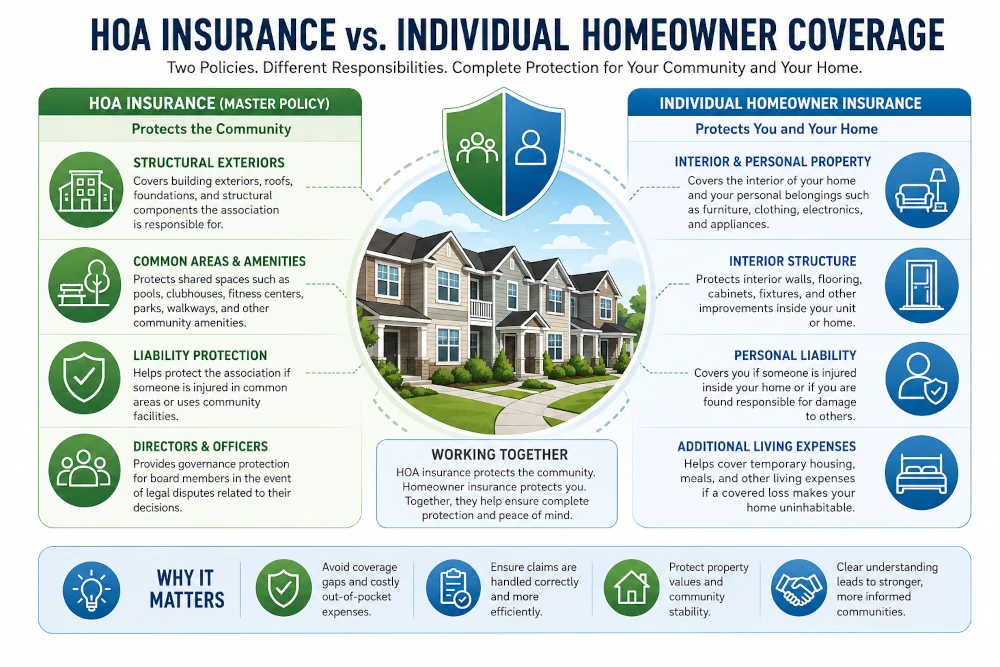
A homeowners association typically maintains insurance designed to protect common areas, shared structures, and association liability. Individual homeowners maintain their own coverage for personal belongings, interior property, and personal liability. Knowing where one policy ends and the other begins helps communities avoid costly gaps in protection.
When boards and residents understand how these policies function together, the community can respond to claims more effectively and maintain financial stability.
Understanding HOA Insurance and the Role of the Master Policy
HOA insurance focuses on protecting property and risks that belong to the community as a whole. In many managed developments, the homeowners association owns or maintains shared property. This may include exterior building structures, landscaping, recreational amenities, parking structures, and other common areas used by residents.
The central component of HOA insurance is usually the master policy. This policy defines what property the association insures and how coverage applies when damage occurs.
In many condominium communities, the master policy may protect the entire building structure. In other developments, coverage may focus primarily on shared structures such as clubhouses, walkways, and recreational facilities.
A master policy commonly addresses several types of risk.
Property protection for shared structures
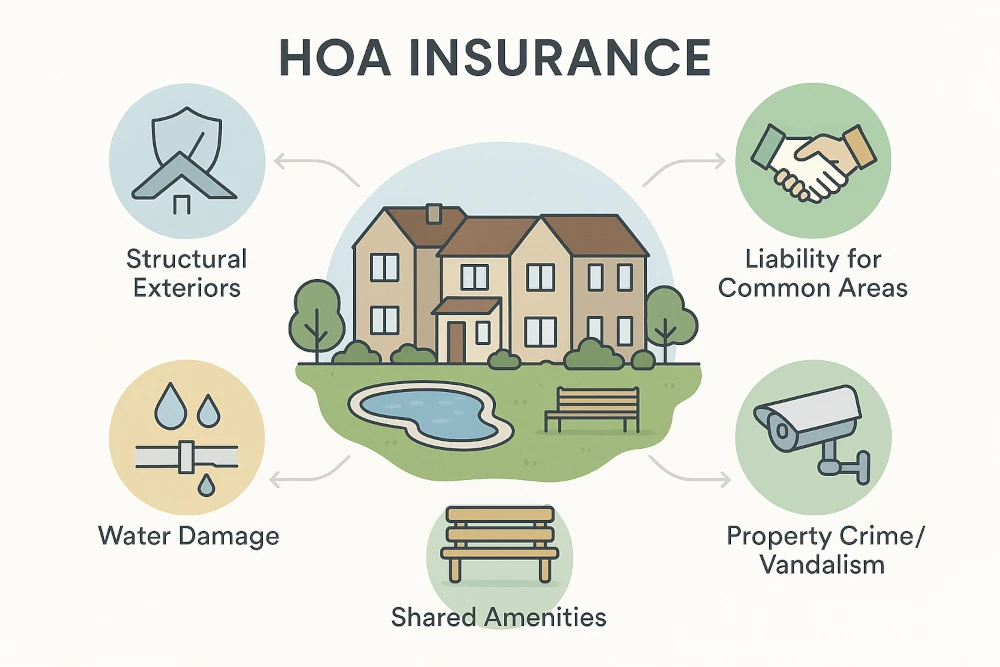
HOA insurance often covers the exterior structure of buildings, shared roofing systems, and structural components maintained by the association. If a storm damages the roof of a condominium building or a fire affects a clubhouse, the master policy may help cover repair or reconstruction costs.
Coverage for common areas
Many communities include shared spaces such as pools, fitness centers, parks, or walking paths. Because these areas belong to the association, they fall under HOA insurance coverage. Property damage affecting these areas may trigger claims under the master policy.
Liability protection for the association
Community spaces bring residents and visitors together, which can create liability risks. HOA insurance often includes liability coverage designed to protect the association if injuries occur in shared areas. For example, if someone slips on a walkway or is injured in a community facility, the association’s liability coverage may help address legal expenses or settlements.
Governance protection for board members
Some HOA policies also include directors and officers coverage. This protection helps defend board members if legal disputes arise related to decisions made while managing the association.
Because the master policy defines the limits of HOA insurance, every board member and property manager should review the policy carefully. Understanding the scope of coverage helps the association communicate responsibilities clearly to residents.
What Individual Homeowner Insurance Covers
While HOA insurance protects shared property, individual homeowner insurance focuses on personal living space and belongings. Each resident typically carries their own policy designed to protect property inside the unit or home.
Homeowner insurance serves several important functions.
Protection for personal belongings
A homeowner's policy often covers personal possessions such as furniture, clothing, electronics, and appliances. If theft, fire, or certain types of water damage occur inside the residence, the homeowner's policy may help replace these items.
Coverage for interior property
In many communities, the homeowner policy protects interior structures that the association policy does not cover. Flooring, cabinetry, lighting fixtures, and interior walls may fall under the homeowner’s responsibility depending on the master policy structure.
For condominium owners, this coverage often appears in a form sometimes called an HO-6 policy. This policy focuses on the interior of the unit and personal property within the home.
Personal liability protection
Individual policies also include liability protection for events occurring inside the home. If a guest is injured inside the residence, the homeowner’s liability coverage may help cover legal expenses or settlements.
Additional living expenses
If a covered loss makes the residence temporarily uninhabitable, homeowner insurance may help cover temporary housing or other living expenses while repairs take place.
These protections focus specifically on the homeowner rather than the association. The policy exists to protect the personal financial interests of the resident and their property inside the home.
Where HOA Insurance and Homeowner Insurance Overlap
Although HOA insurance and homeowner insurance protect different areas of risk, their coverage can sometimes overlap. Understanding these situations helps both the association and residents respond quickly when damage occurs and properly manage HOA insurance claims.
One common example involves damage that begins in a shared structure but affects individual units.
For instance, a storm may damage the roof of a condominium building. Water enters through the roof and spreads into several units below. The master policy may address repairs to the roof and building structure, while homeowner policies may cover interior damage within individual units.
Plumbing failures can create a similar situation. If a pipe connected to shared infrastructure breaks, the association may handle structural repairs, while individual homeowners' insurance policies address personal belongings damaged by the water.
Liability situations may also involve both policies. If someone is injured in a shared hallway outside a specific unit, both the association and the homeowner may become involved, depending on the circumstances surrounding the incident.
Because these scenarios can become complex, clear communication between the association, residents, and insurance professionals is important. Reviewing governing documents and policy language helps determine which coverage applies when claims arise.
Why Clear Insurance Responsibilities Matter for Communities
Insurance confusion can lead to serious financial problems in community associations. When residents misunderstand coverage responsibilities, claims may be delayed or denied.
For example, if a homeowner assumes the association policy will cover damage inside their unit, they may discover too late that their own policy should have addressed the loss. Similarly, associations that underestimate their insurance obligations may face unexpected repair costs.
Clear communication between the board and residents helps prevent these situations. Many associations provide guidance explaining what the master policy covers and what homeowners must insure themselves.
Common areas of confusion often include:
- Interior structural upgrades inside units
- Personal property belonging to residents
- Liability for accidents occurring inside a residence
- Damage caused by appliances inside the unit
- Responsibility for interior plumbing or electrical systems
Associations often review their insurance policies regularly to confirm coverage limits match the value of community property. At the same time, homeowners benefit from reviewing their own policies to ensure personal property and interior improvements remain protected.
When both policies align correctly, the community gains a strong safety net against unexpected damage and liability events.
How Boards and Homeowners Can Avoid Coverage Gaps
Preventing coverage gaps requires cooperation between the association and residents. Both parties must understand the limits of their policies and update coverage when circumstances change.
Several strategies help communities maintain proper protection.
Review governing documents regularly
Association documents often describe where the responsibility for property maintenance begins and ends. These documents can clarify whether the association covers exterior walls only or if the policy extends further into individual units.
Conduct periodic insurance reviews
Property values, construction costs, and community amenities change over time. Boards often review master policies periodically to confirm coverage limits remain appropriate.
Encourage homeowner education
Residents benefit from understanding how their personal policies complement the association’s insurance. Informational meetings or community resources can help homeowners understand what protection they should maintain.
Work with experienced insurance professionals
Insurance advisors who specialize in community associations can help evaluate coverage and identify gaps between policies. Their guidance helps both boards and homeowners choose appropriate protection.
Taking these steps helps communities manage risk more effectively while avoiding unexpected expenses.
Building Strong Protection for Communities and Homeowners
Insurance plays a vital role in maintaining the financial stability of community associations. Shared property, recreational amenities, and residential units represent significant investments for both homeowners and associations.
Understanding the relationship between association coverage and personal homeowner policies allows communities to respond effectively when incidents occur. When each policy covers the correct areas of responsibility, residents gain stronger protection, and fewer disputes arise during the claims process.
For boards managing community insurance programs, working with knowledgeable advisors helps ensure policies remain aligned with the needs of the neighborhood. Clear explanations of coverage responsibilities also help homeowners maintain the protection they need for their personal property.
If your community association or household wants guidance reviewing insurance coverage, IIS Insurance provides experienced support for both associations and residents. Their team works with communities to review master policies, evaluate homeowner coverage needs, and help ensure every layer of protection functions together effectively.
With the right guidance and well-structured policies, both associations and homeowners can move forward with confidence knowing their property, investments, and shared spaces remain protected.