

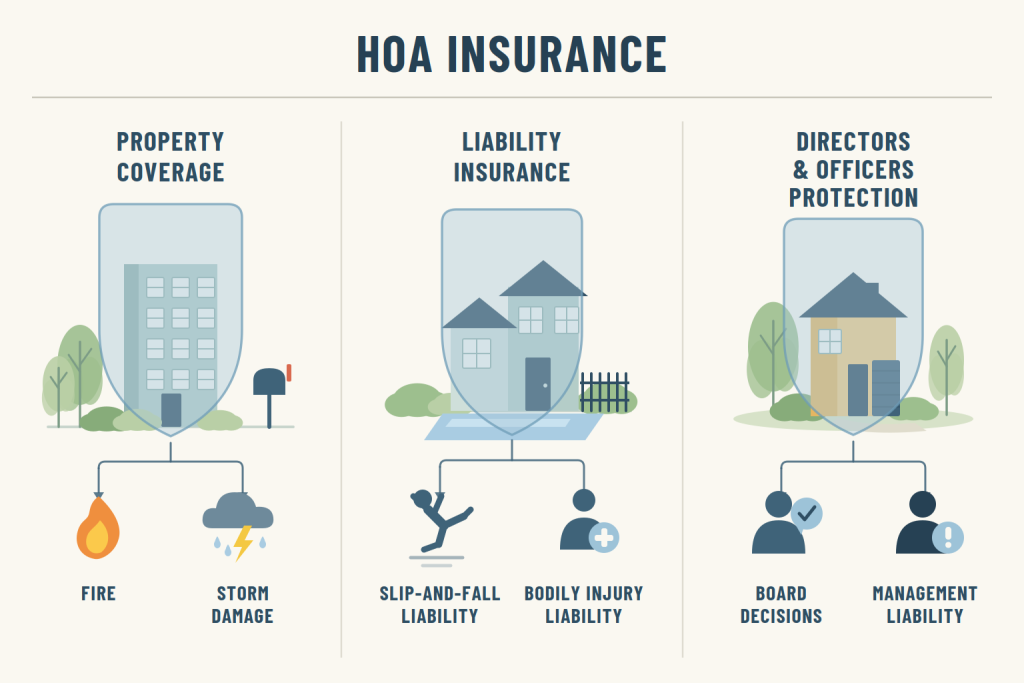
Community associations manage property, shared facilities, and the financial interests of many homeowners. When unexpected damage or accidents occur, insurance becomes a central part of protecting the association and its residents. Board members and property managers benefit from understanding types of claims HOA insurance handles, because those claims determine how the association responds to damage, injury, and legal disputes.
A homeowners association typically maintains an insurance policy designed to protect shared structures, common areas, and the association itself. When an event affects association property or creates liability for the board, the policy may help cover repair costs, legal expenses, and other financial obligations.
Knowing how these policies work helps boards make informed decisions about risk management. It also allows communities to respond quickly when incidents occur, limiting financial impact and maintaining confidence among residents.
This overview explains how HOA insurance functions, the types of claims associations often encounter, and how insurance coverage helps communities recover from unexpected events.
Understanding HOA Insurance for Community Associations
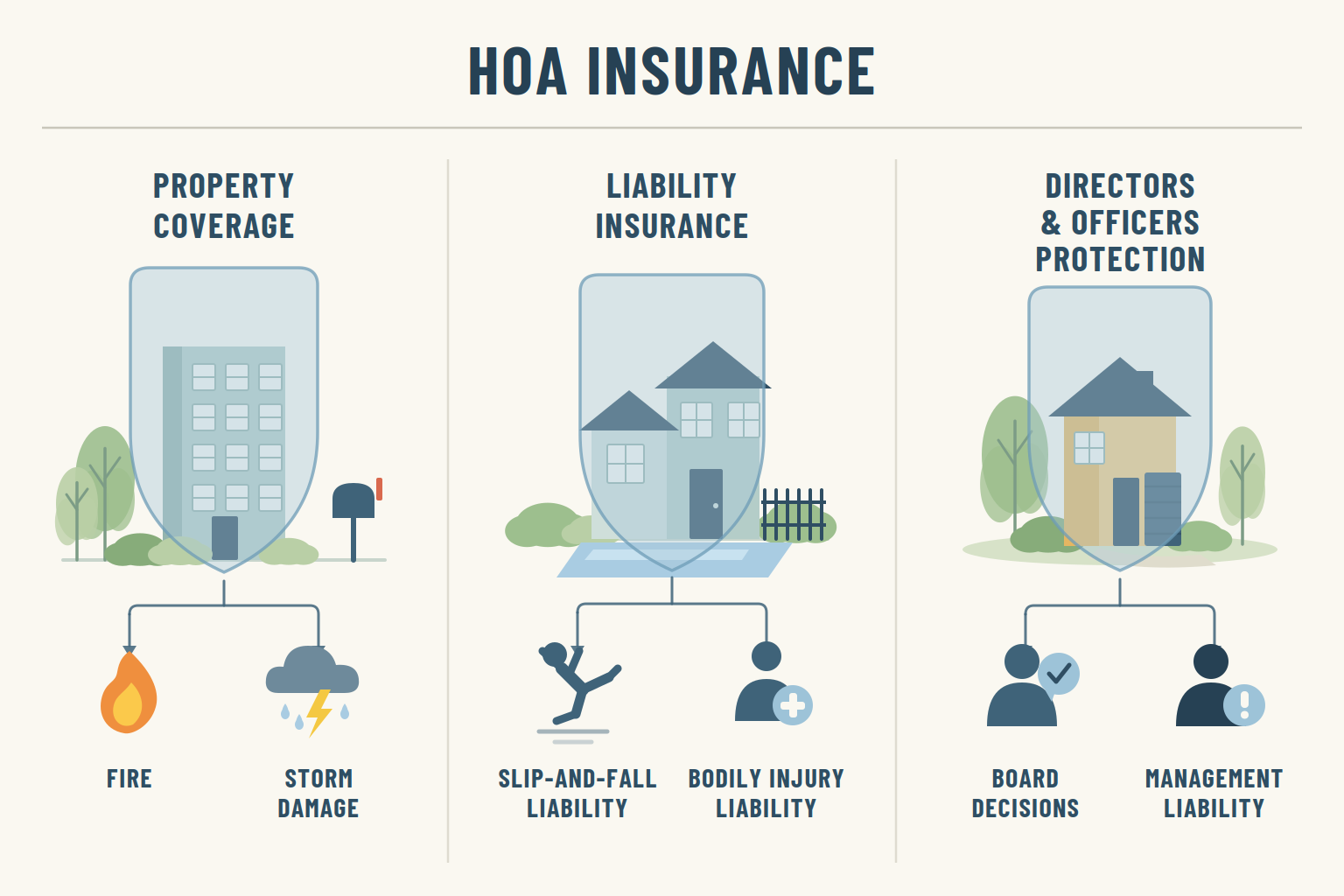
HOA insurance protects community property and helps associations respond to situations that affect shared assets. In most communities, the association owns or manages property such as clubhouses, pools, landscaping, and shared roofing systems. When damage or liability occurs in these areas, the association’s policy may provide financial protection.
Community associations rely on insurance for several reasons. Shared property represents a significant investment, and repairing damage can place pressure on association budgets. Insurance policies help offset these costs so the community can recover without imposing large special assessments on homeowners.
Policies also support legal protection. If a visitor or resident files a claim related to injury or property damage, the association may face legal action. Liability insurance within the policy can help cover legal defense costs and settlements associated with these claims.
Another important feature of association insurance involves coordination with homeowner policies. Individual homeowners typically maintain their own coverage for personal property and interior structures. The association policy focuses on common property and shared infrastructure.
Working with an experienced insurance broker helps ensure the policy reflects the real structure of the community. Coverage limits, exclusions, and risk exposure vary widely between condominium developments, townhome communities, and single-family homeowner associations.
When coverage aligns with the community’s needs, the board gains a reliable tool for protecting property and managing unexpected incidents.
Property Damage Claims in Community Associations
One of the most common situations an association encounters involves property damage to shared buildings or structures. Community property often includes clubhouses, maintenance facilities, shared roofing systems, and other structures that require protection against weather events and unexpected failures.
Property damage claims may arise from several sources. Severe storms can cause roof damage or structural damage to shared buildings. Fire incidents may affect clubhouses or storage areas used by the association. Vandalism can also create costly repairs that require prompt action.
Water damage represents another frequent cause of insurance claims in community associations. Plumbing failures or broken pipes in shared areas can damage walls, flooring, and electrical systems. If the issue spreads between multiple units or common spaces, repair costs may increase quickly.
Property insurance helps the association restore damaged areas so community facilities remain functional. Coverage may include structural repairs, cleanup costs, and restoration of damaged building components.
Associations often review property coverage limits regularly to ensure they reflect the actual cost of rebuilding shared structures. As construction costs rise, coverage amounts may need adjustment to maintain proper protection.
Having sufficient property coverage allows boards to respond to damage quickly while protecting the financial stability of the community.
Liability Claims and General Liability Insurance
Liability claims are another major concern for homeowners associations. Shared spaces receive frequent use by residents and visitors, and accidents can occur despite careful maintenance and safety practices.
General liability insurance protects the association when individuals claim injury or property damage related to association property. These claims may involve incidents such as slip and fall accidents, injuries near recreational facilities, or damage caused by association operations.
For example, a visitor might slip on a wet surface near a community pool or trip on uneven pavement along a walkway. In these situations, the injured party may seek compensation for medical expenses or damages.
Liability insurance may assist with:
-
Medical costs related to injuries
-
Legal defense expenses
-
Settlements or court judgments
-
Investigation of the incident
Without liability coverage, these expenses could fall directly on the association. In many communities, that would require higher dues or special assessments to cover the cost.
Liability protection also benefits board members. Association leaders make decisions about maintenance, safety measures, and community operations. If someone challenges those decisions after an incident, liability coverage helps address the legal implications.
Because shared amenities increase exposure to accidents, many associations review liability limits carefully. Communities with pools, fitness centers, or recreational facilities often maintain higher coverage limits to reflect the level of activity in those areas.
Claims Related to Water Damage and Plumbing Failures
Water damage is one of the most frequent causes of insurance claims in community associations. Plumbing systems that serve multiple units or shared buildings can create widespread damage if a pipe breaks or a leak develops.
Plumbing failures may occur in shared utility systems, maintenance areas, or mechanical rooms. When these failures affect multiple units or common property, the association may submit a claim under its master policy.
Water damage claims often involve:
-
Burst pipes in shared infrastructure
-
Leaks affecting walls or ceilings in common areas
-
Damage to electrical systems caused by water intrusion
-
Structural damage from prolonged moisture exposure
These incidents may require immediate mitigation to prevent further damage. Cleanup crews may remove water, dry affected materials, and begin restoration work before repairs start.
Insurance policies often address these costs when the damage occurs within covered property. The association must document the incident and submit information to its insurance carrier so adjusters can evaluate the claim.
Boards typically work closely with property managers and contractors during this process. Accurate documentation helps ensure the claim is processed efficiently and repairs begin quickly.
Maintaining plumbing systems and conducting routine inspections can reduce the likelihood of large water damage claims, but insurance remains an important safeguard for unexpected failures.
Legal and Governance-Related Claims
In addition to physical damage, community associations sometimes face legal disputes that lead to insurance claims. These disputes may involve allegations related to board decisions, governance practices, or financial management.
Claims related to governance may include allegations of breach of fiduciary duty by board members. When homeowners believe a board decision caused financial harm or violated governing documents, legal action may follow.
Insurance policies often include coverage designed to protect association leaders in these situations. Directors and officers coverage may assist with legal defense costs and settlements related to governance disputes.
These policies help ensure that volunteer board members can serve the community without personal financial risk tied to routine governance decisions.
Legal claims can also arise from disputes between homeowners and the association regarding property maintenance or policy enforcement. When conflicts escalate into lawsuits, insurance coverage may help manage legal expenses.
Clear documentation, consistent enforcement of rules, and regular policy reviews can reduce the likelihood of governance disputes. Even so, insurance protection remains an important safeguard for community associations.
The HOA Insurance Claims Process
When an incident occurs, the association typically follows a structured claims process to notify its insurance carrier and request coverage. Board members or property managers often coordinate the initial steps.
The process usually begins when the association identifies damage or a liability event. The board gathers documentation that describes the incident and supports the claim. Photos, maintenance records, and contractor estimates may all play a role in demonstrating the extent of damage.
The association then submits the claim to its insurance carrier. Adjusters review the information and determine whether the policy covers the incident. They may conduct site inspections, request additional documentation, or consult contractors to estimate repair costs.
Clear communication during this stage helps prevent delays. Associations benefit from keeping detailed records of maintenance and repairs so documentation is available if a claim arises.
Once coverage is confirmed, the insurer works with the association to finalize the claim and arrange payment for covered losses. These funds allow the community to repair property or address liability expenses.
Insurance professionals often guide boards through this process. Their experience helps ensure claims are submitted properly and that the association receives the support available under its policy.
Protecting Your Community with the Right HOA Insurance
Insurance serves as a foundation for responsible community management. Shared property, recreational amenities, and community infrastructure create valuable spaces for residents, but they also create exposure to risk.
Understanding the claims that may arise helps association leaders prepare for unexpected situations. Property damage, liability incidents, water damage, and legal disputes all represent potential challenges for homeowners associations.
With the right coverage in place, communities can address these incidents without placing unnecessary financial pressure on residents. Policies designed for community associations help protect both physical assets and the people responsible for managing them.
For boards and property managers evaluating coverage, working with an experienced insurance partner makes a significant difference. A knowledgeable advisor can review current policies, identify coverage gaps, and recommend adjustments based on the structure of the community.
If your association wants to review its insurance coverage or discuss policy options, the team at IIS Insurance can help. Their experience with community associations allows them to provide guidance tailored to HOA needs. With the right support, your board can maintain strong protection for shared property while keeping costs manageable for homeowners.