

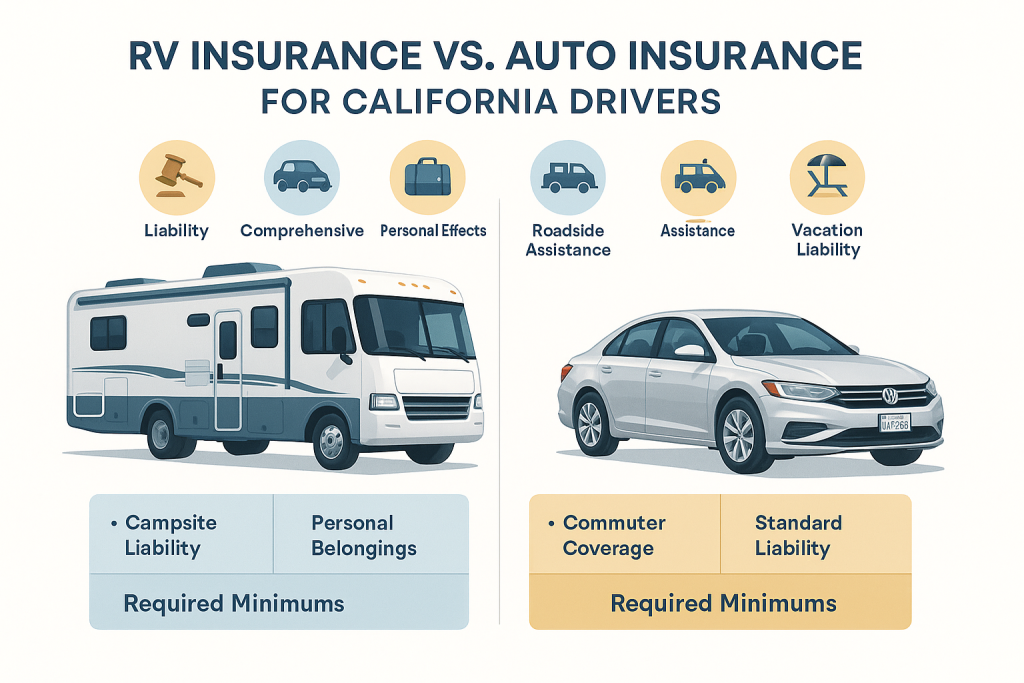
Insurance can feel confusing when different vehicles come with different risks and coverage needs. Understanding RV insurance vs auto insurance can help you choose suitable protection for everyday driving, road trips, and your vehicle investment. At IIS Insurance Services, we help California residents compare options from multiple insurers and find coverage for recreational vehicles that fits their circumstances and budget.
Understanding RV Insurance vs Auto Insurance: Differences for California Drivers
Whether you drive a family car, own a motorhome, or tow a travel trailer, the type of vehicle and how you use it affect the coverage you may need.
RV insurance policies are not identical to standard auto policies. Liability limits, physical damage coverage, personal belongings protection, roadside assistance, storage options, and residential use can all be handled differently.
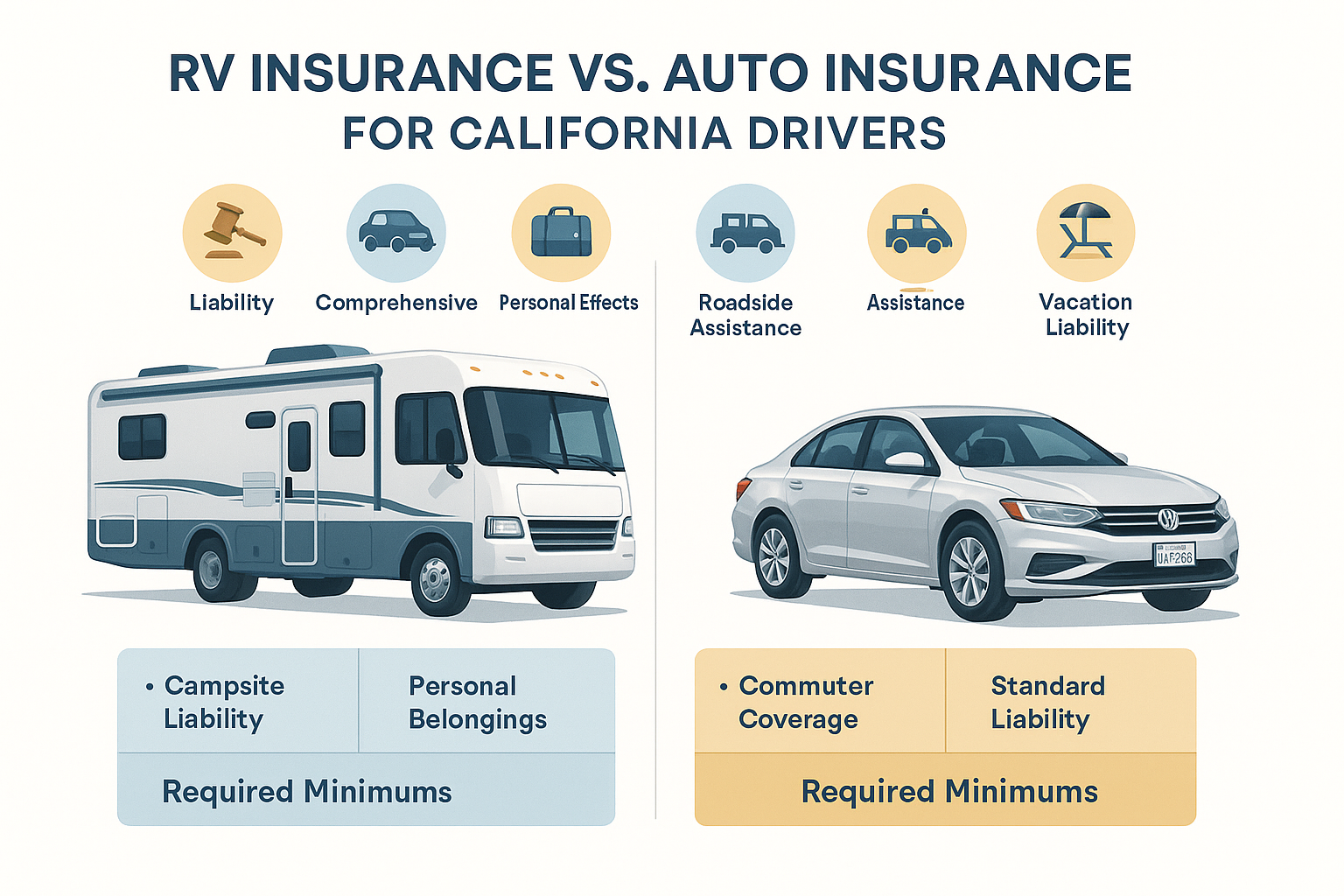
IIS Insurance Services helps California drivers and RV owners compare policies in plain language. Our agents can explain costs and limits and help you choose coverage based on your vehicle, travel habits, driving history, and budget.
The right policy helps protect you from covered losses involving your vehicle, other drivers, passengers, and property. It also helps you meet California insurance requirements when your vehicle is registered for road use.
Both auto and motorhome policies commonly include liability coverage. Bodily injury liability may help pay another person’s medical expenses when you cause a covered accident. Property damage liability may help pay for damage to another person’s vehicle or property.
RV owners may need additional options because a motorhome can serve as transportation and temporary living space. Depending on the insurer and policy, coverage may include personal belongings, roadside assistance for larger vehicles, emergency expenses, vacation liability, or full-time RV use.
Some insurers offer storage-related adjustments when a recreational vehicle will not be driven for an extended period. These options may reduce selected coverages rather than suspend the entire policy. Retained coverage, savings, registration rules, and lender requirements vary.
Auto and RV policy costs may be influenced by:
-
Vehicle type, age, value, and repair costs
-
Driving history and location
-
Annual mileage and vehicle use
-
Liability limits and deductibles
-
Optional coverages and discounts
-
Occasional, seasonal, or residential RV use
A lower premium is not always the best value if it comes with limits or exclusions that do not match your needs. IIS Insurance Services can help you compare price and coverage details without unnecessary complexity.
What Does RV Insurance Cover Beyond Standard Auto Policies?
RV insurance works similarly to auto insurance in several ways. Both may include liability, collision, comprehensive, medical payments, and uninsured or underinsured motorist coverage. The main differences come from how an RV is built, used, stored, and occupied.
Collision coverage may help pay for covered damage after an accident, subject to your deductible and policy terms. Comprehensive coverage may apply to theft, vandalism, fire, falling objects, weather, or other noncollision losses.
Standard auto insurance generally focuses on the car and driving-related liability. It usually does not provide broad protection for clothing, electronics, camping equipment, appliances, and other belongings inside a vehicle. RV policies may offer personal belongings coverage because owners often travel with more property.
Roadside assistance can also differ. A motorhome may require heavy-duty towing, specialized repair support, tire service, or transport to a qualified facility. Standard roadside plans may not provide enough towing capacity for a larger RV.
Property Protection, Liability, and Specialized Coverage for RV Owners
An RV’s size, repair costs, living features, and varied uses can create exposures a typical car policy does not address. The right options depend on whether you own a motorhome, travel trailer, fifth wheel, pop-up camper, or another recreational vehicle.
Personal property coverage may help replace belongings stolen or damaged inside the RV. Limits, deductibles, exclusions, and settlement methods vary. High-value items may need separate coverage or documentation.
Liability needs can change when an RV is parked and used as living space. Coverage for injuries or property damage around a parked RV may apply while the vehicle is used for recreational purposes. Full-time RV coverage may provide broader options for people who use an RV as a primary residence.
An RV policy may offer:
-
Total loss replacement or agreed-value coverage
-
Personal belongings coverage
-
Emergency expense coverage
-
RV roadside assistance
-
Vacation liability
-
Full-time RV coverage
-
Coverage for attached equipment
Not every insurer offers the same options, and these protections are not automatically included. An IIS Insurance Services agent can explain limits, deductibles, and exclusions based on how you use your RV.
Motorhome, Travel Trailer, and Auto Insurance Coverage
Motorhomes and towable RVs are insured differently because a motorhome has its own engine, while a travel trailer is pulled by another vehicle. A motorized RV generally needs its own liability policy when registered for road use. Liability from the towing vehicle may apply to a towable trailer while it is properly attached.
That does not mean a car policy fully protects a travel trailer. Separate trailer coverage may be needed for collision, theft, fire, weather damage, personal belongings, or certain liability exposures while parked. Owners should also check whether accessories, installed equipment, and awnings are included.
Homeowners insurance protects a permanent residence and may provide limited coverage for some belongings away from home. It should not be assumed to replace RV insurance.
| Policy Type | Primary Purpose | Coverage That May Be Available | Often Suited For |
|---|---|---|---|
| Auto Insurance | Covers a passenger vehicle and driving-related liability | Liability, collision, comprehensive, medical payments, and uninsured or underinsured motorist coverage | Daily drivers, first-time drivers, families, and commuters |
| Motorhome Insurance | Covers a motorized RV used for driving, travel, and temporary or extended living | Auto-style coverage, personal belongings, RV roadside assistance, vacation liability, and full-time RV options | Owners of Class A, Class B, or Class C motorhomes |
| Travel Trailer Insurance | Protects a towable RV against covered physical losses and selected parked-use exposures | Collision, comprehensive, personal belongings, emergency expenses, and vacation liability | Owners of travel trailers, fifth wheels, pop-up campers, and similar towable RVs |
Coverage availability depends on the insurer, policy, vehicle, use, and selected limits.
Comparing these policies can show where towing-vehicle coverage stops and where separate protection may be useful.
Personalized Insurance Solutions from IIS Insurance Services
IIS Insurance Services helps California drivers and RV owners review options based on their vehicles, driving habits, travel plans, financial priorities, and insurance history.
Our agents explain choices in straightforward terms. That support can help whether you are insuring your first vehicle, adding an RV, reviewing coverage after a lapse, or looking for a policy that better fits your budget.
We work with multiple insurers to compare rates and coverage options. You can review different limits, deductibles, optional protections, and discounts rather than accept a one-size-fits-all policy.
A transparent review should consider:
-
What each policy covers and excludes
-
What you would pay after a covered loss
-
Whether belongings and equipment are included
-
Roadside assistance towing limits
-
Seasonal storage options
-
How RV use affects coverage
-
Whether bundling offers better value
Bundling auto, RV, home, or other eligible policies may provide a discount, but it does not always produce the lowest total cost. Comparing bundled and separate options can help you decide which offers suitable value.
Full-time RV owners may also benefit from reviewing deductibles, usage classifications, available discounts, and personal property limits when looking for ways to lower the cost of full-time RV coverage. The lowest premium may not be the best fit if it leaves out protections needed for residential use.
IIS Insurance Services can also help customers locate policy information and understand who to contact when they need to report a claim. The insurance carrier handles claim decisions and payments.
Practical Tips for Comparing RV and Auto Insurance
A useful comparison starts with accurate information about your vehicle and how it will be used. Tell your agent whether the RV is driven weekly, used occasionally, stored part of the year, rented to others, or occupied for extended periods.
Review your liability limits carefully. California’s required minimums may not cover the full cost of a serious accident. Higher limits may offer broader financial protection, especially for a large or high-value vehicle.
Check your deductibles. A higher deductible may reduce the premium, but it increases the amount you pay before covered vehicle damage benefits apply.
Ask how personal belongings are valued and whether limits apply to electronics, jewelry, tools, sporting equipment, or other expensive items. Keep receipts, photographs, serial numbers, and an updated inventory when possible.
For travel trailers, confirm how the towing vehicle’s liability coverage applies while the trailer is attached. Then review separate protection for collision, theft, weather, personal belongings, and liability while parked or used at a campsite.
Auto and motorized RV owners generally need to maintain California’s required liability coverage while their vehicles are registered for road use. Before reducing coverage during storage, check registration rules, lender requirements, and what protection would remain for theft, fire, vandalism, or weather damage.
Driving history can also affect your options. A prior lapse, accident, license issue, or other challenging period does not mean you should avoid asking for help. Accurate details allow an agent to search for available policies.
When comparing quotes, review the same limits, deductibles, and optional coverages. A cheaper policy may provide less protection or omit services you expect.
Get Personal Help from IIS Insurance Services
The right policy depends on what you drive, how you use it, what you carry, and how much financial risk you are comfortable taking on.
IIS Insurance Services helps California residents compare coverage from multiple insurers with personal, budget-conscious support. Our team can explain available options and help you choose a policy suited to your circumstances.
Request a free quote or speak with an IIS Insurance Services agent to compare auto, motorhome, or travel trailer coverage. You will receive straightforward guidance from a real person focused on helping you find suitable protection without unnecessary complexity or cost.