

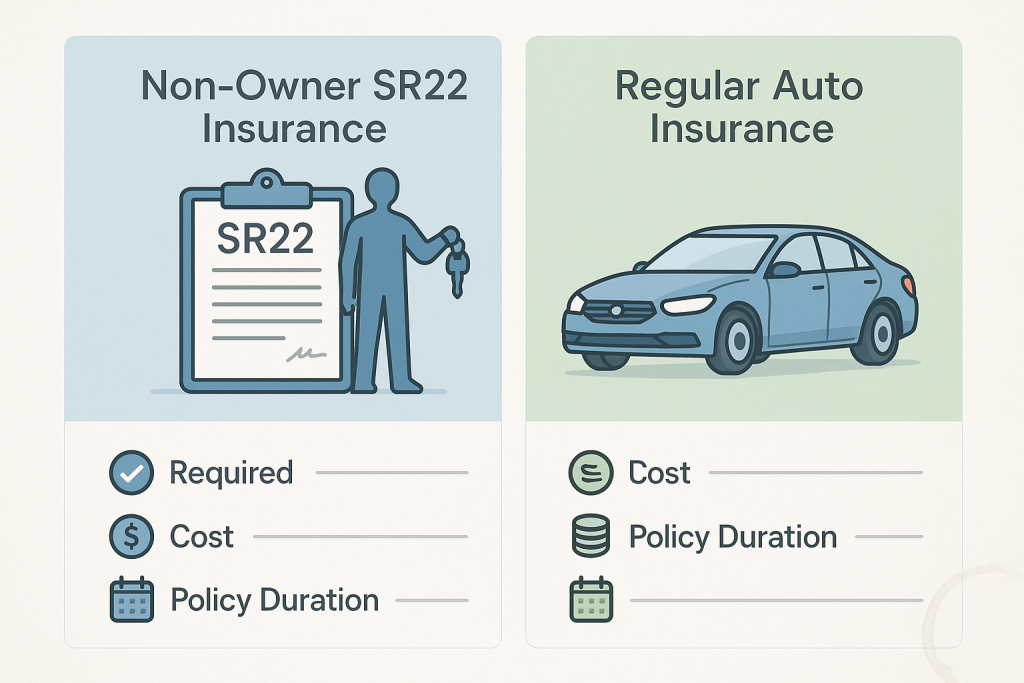
Choosing between non-owner SR22 insurance and regular auto insurance depends mainly on whether you own a vehicle, how often you drive, and whether California requires an SR22 filing to maintain or reinstate your license.
A regular auto policy is written for a driver who owns or regularly uses a specific vehicle. It can provide liability coverage as well as optional protection for damage to that vehicle. A non-owner policy is designed for someone who does not own a car and only drives eligible borrowed or rented vehicles occasionally.
The SR22 does not change the basic purpose of either policy. It is a certificate submitted by an authorized insurance company to show the California Department of Motor Vehicles that qualifying liability coverage is active. The underlying policy provides the insurance protection.
Understanding non-owner SR22 insurance vs regular auto insurance can help you avoid paying for coverage you do not need or choosing a policy that does not match your actual driving situation. The POP Content Brief emphasizes cost, coverage, filing requirements, and vehicle ownership as the main areas users need help comparing.
Who Needs Non-Owner Car Insurance?
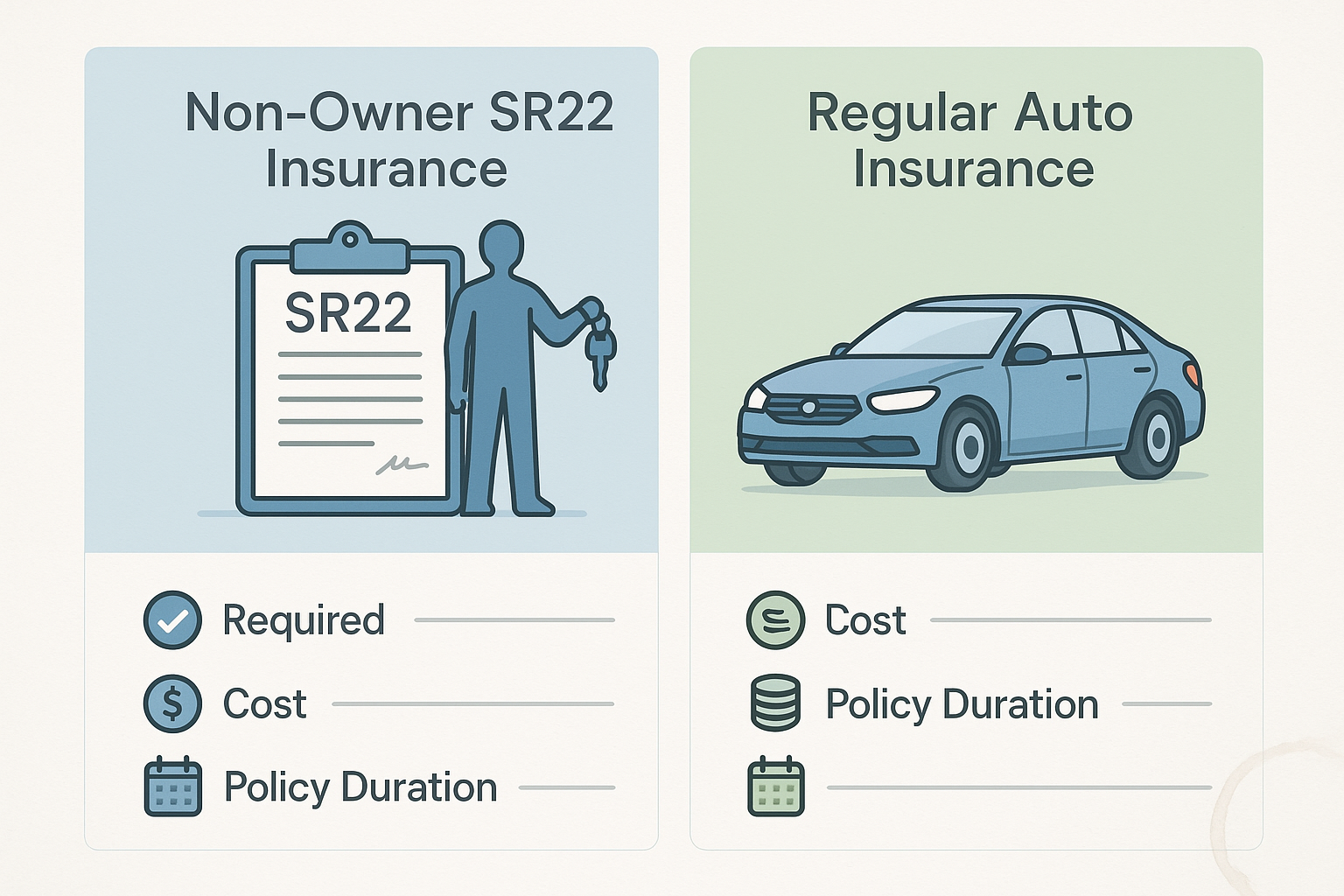
Non-owner car insurance is intended for a licensed driver who does not own a vehicle and does not have regular access to one. The policy is issued to the driver rather than attached to a particular vehicle identification number.
It may be suitable when you occasionally borrow a friend’s car, rent vehicles for personal travel, or need to maintain continuous insurance while between vehicles. It can also support an SR22 filing when you need to restore your driving privileges but do not currently have a car to insure.
Common reasons to consider a non-owner policy include:
- You sold your vehicle but must keep an SR22 filing active.
- Your license was suspended and proof of coverage is required for reinstatement.
- You use public transportation but occasionally borrow a vehicle.
- You rent cars for personal or business travel.
- You are saving for another vehicle and want to avoid an insurance lapse.
- You need a valid license for work but do not own a car.
A non-owner policy is usually not appropriate when you have regular access to the same vehicle. For example, it may not fit if you drive your spouse’s car every day, keep a relative’s vehicle at your home, or use a roommate’s car several times each week.
Vehicles owned by members of your household are commonly restricted or excluded. In that situation, you may need to be added to the owner’s car insurance policy.
The same concern applies to an employer-owned vehicle that is assigned to you for routine use. A non-owner policy is designed for occasional driving, not unrestricted access to a specific auto.
Be accurate when explaining your living arrangements and driving habits to the insurance agent. The company uses that information to determine whether you qualify and how the coverage will apply after a claim.
How a Non-Owner Policy Differs From an Owner Policy
A regular owner policy insures a specific vehicle and the drivers listed on the policy. A non-owner policy primarily follows the named driver while operating eligible vehicles that belong to other people.
The following table compares the main differences.
| Policy Feature | Non-Owner SR22 Policy | Regular Owner Auto Policy |
|---|---|---|
| Intended driver | Someone who does not own a vehicle | Someone who owns or regularly uses a vehicle |
| Vehicle listed | No personal vehicle is listed | One or more specific vehicles are listed |
| Liability coverage | Generally included | Generally included |
| Collision coverage | Usually unavailable | May be purchased |
| Comprehensive coverage | Usually unavailable | May be purchased |
| Damage to the car being driven | Usually not covered | May be covered when selected |
| Household vehicle use | Often restricted or excluded | Household drivers and vehicles can be listed |
| Typical cost | Often lower | Usually higher because a vehicle is insured |
| SR22 filing | Can be added when required | Can be added when required |
| Best use | Occasional borrowed or rental vehicles | Regular driving of an owned vehicle |
Non-owner coverage primarily addresses liability for injuries or property damage you cause to others. It generally does not pay to repair the borrowed or rented car.
A regular policy may include collision coverage, which can address covered accident damage to the insured vehicle. It may also include comprehensive coverage for theft, vandalism, fire, weather, glass damage, and other covered events.
Owner policies may offer additional options such as rental reimbursement, roadside assistance, medical payments, and protection for custom equipment. Availability and terms vary by insurance company.
The two policy types also handle vehicle access differently. An owner policy expects the insured to use the listed car regularly. A non-owner policy assumes the driver uses vehicles belonging to other people only on an occasional basis.
Purchasing non-owner insurance when you actually own or routinely use a car can create a serious mismatch. The policy may not respond as expected because the vehicle falls outside its intended use.
What Non-Owner SR22 Insurance Covers
Non-owner SR22 insurance is usually centered on liability coverage. It may help pay eligible costs when you are responsible for an accident while driving a qualifying vehicle that you do not own.
Liability protection generally includes:
- Bodily injury liability: May pay eligible medical expenses, lost income, settlements, and related damages when another person is injured.
- Property damage liability: May pay for eligible damage to another vehicle, building, fence, utility structure, or other property.
- Legal defense: May provide representation when a covered accident results in a liability claim or lawsuit.
Coverage is subject to the policy limits, exclusions, and circumstances of the accident.
When you borrow someone else’s car, the vehicle owner’s policy will often respond first. Your non-owner insurance may provide secondary liability protection if the owner’s applicable limits are exhausted. The order of coverage depends on both policies and the facts of the claim.
Non-owner insurance generally does not cover:
- Damage to the borrowed or rented vehicle
- Theft or vandalism involving that vehicle
- Your personal belongings
- Your injuries, unless optional coverage applies
- A car registered or titled in your name
- A household vehicle available for regular use
- Driving without the owner’s permission
- Delivery, courier, or rideshare work
- Other business uses excluded by the policy
Rental vehicles require added attention. A non-owner policy may provide liability coverage, but it usually does not replace the rental company’s collision damage waiver. Damage to the rental itself may remain your responsibility unless another form of protection applies.
Some insurance companies may offer uninsured motorist, underinsured motorist, or medical payments coverage with a non-owner policy. These options are not automatic. Review the declarations and endorsements to see exactly what is included.
A regular car insurance policy can provide broader protection because it insures the vehicle itself. However, those additional coverages also contribute to the difference in price.
SR22 Filing Requirements With Either Policy
An SR22 is not a stand-alone insurance product. It is a certificate filed by an insurance company to confirm that the driver carries qualifying liability insurance.
California may require an SR22 after certain driving-related events, such as a license suspension, DUI, uninsured accident, or other qualifying violation. The exact requirement depends on the driver’s record and instructions from the DMV or court.
You can use either type of policy to support the filing:
- A non-owner SR22 policy may apply when you do not own a vehicle.
- A regular owner policy with an SR22 may apply when you own or regularly drive a vehicle.
The filing process generally involves several steps:
- Confirm the SR22 requirement through your DMV notice, court paperwork, or reinstatement instructions.
- Tell the insurance agent whether you own a vehicle or regularly use someone else’s car.
- Purchase the appropriate liability policy.
- Ask the insurance company to submit the SR22 to the California DMV.
- Confirm that the policy and filing are active before driving.
- Maintain continuous coverage for the required period.
The insurer files the SR22 on your behalf. You normally cannot purchase the certificate without the qualifying policy behind it.
A lapse can create additional problems. If the policy is canceled or expires before the filing period ends, the insurer may notify the DMV. That notice could result in another license suspension or interrupt the required filing period.
Pay premiums by their due dates and keep your contact and payment information current. Automatic payments may help, but you should still monitor the account and read renewal notices.
Do not cancel an existing policy until replacement coverage and the new filing are active. Even a brief gap may affect your license status.
Tell the insurer when you purchase a vehicle. The agency may need to replace your non-owner policy with an owner policy while maintaining the SR22. Making the change before driving the new car can prevent a coverage gap.
Comparing Insurance Rates and Total Costs
Non-owner policies are usually cheaper than regular car insurance because they do not insure a specific vehicle for collision, theft, or other physical damage. The insurer is primarily covering your liability as an occasional driver.
However, non-owner insurance is not automatically inexpensive. The driving violation that caused the SR22 requirement may increase the premium. A DUI, uninsured accident, repeated traffic offense, or recent suspension can affect rates under either type of policy.
Insurance companies may consider:
- Your age and driving experience
- Your California ZIP code
- Accidents, claims, and traffic violations
- The reason for the SR22 filing
- Prior insurance history
- Coverage lapses
- Selected liability limits
- Payment method and instalment schedule
- The insurer’s underwriting rules
A standard car insurance policy also reflects the vehicle’s year, value, safety features, repair costs, annual mileage, use, and parking location. Collision and comprehensive deductibles can further affect the price.
This is why it is typically less expensive than a standard car insurance policy to purchase non-owner coverage when you genuinely do not own a vehicle. The insurer is not assuming the physical damage risk associated with a specific car.
Compare the total policy cost rather than focusing only on the advertised monthly payment. Review:
- The required down payment
- Monthly instalment amounts
- SR22 and policy fees
- Liability limits
- Optional coverage charges
- Cancellation or reinstatement fees
- The total premium for the full term
Use the same limits and accurate personal information for each quote. Comparing a minimum-limit non-owner policy with a full-coverage owner policy will not provide a useful price comparison.
The least expensive policy is not always the best value. A low rate may come with restrictions that do not match how you drive. It is better to choose suitable coverage than to save a small amount on a policy that may not apply when you need it.
Maintaining continuous insurance may also support better rates when you eventually purchase a car. A lengthy lapse can limit your options or lead to higher premiums later.
Choose the Right Insurance With IIS Insurance Services
The right choice depends on vehicle ownership and access, not simply which policy costs less.
A non-owner SR22 policy may fit when you do not own a car, do not regularly use a household vehicle, and need liability coverage for occasional driving. A regular owner policy is generally necessary when a vehicle is titled to you, kept for your use, or driven by you routinely.
Review the following before choosing:
- Whether any car is registered or titled in your name
- Whether a household vehicle is available to you
- How frequently you borrow or rent vehicles
- Whether you drive for work
- Whether you need physical damage coverage
- The limits required by California
- The period your SR22 must remain active
- Your total policy budget
IIS Insurance Services works with California drivers who need non-owner, regular auto, and SR22 insurance. Its agents can review your ownership status, driving habits, filing requirements, and available policy options. The uploaded draft positions the agency as a source of personalized help for drivers comparing these forms of coverage.
Request a quote from IIS Insurance Services to compare non-owner and owner policies, confirm which option fits your situation, and arrange the required SR22 filing without paying for coverage that does not match the way you drive.