

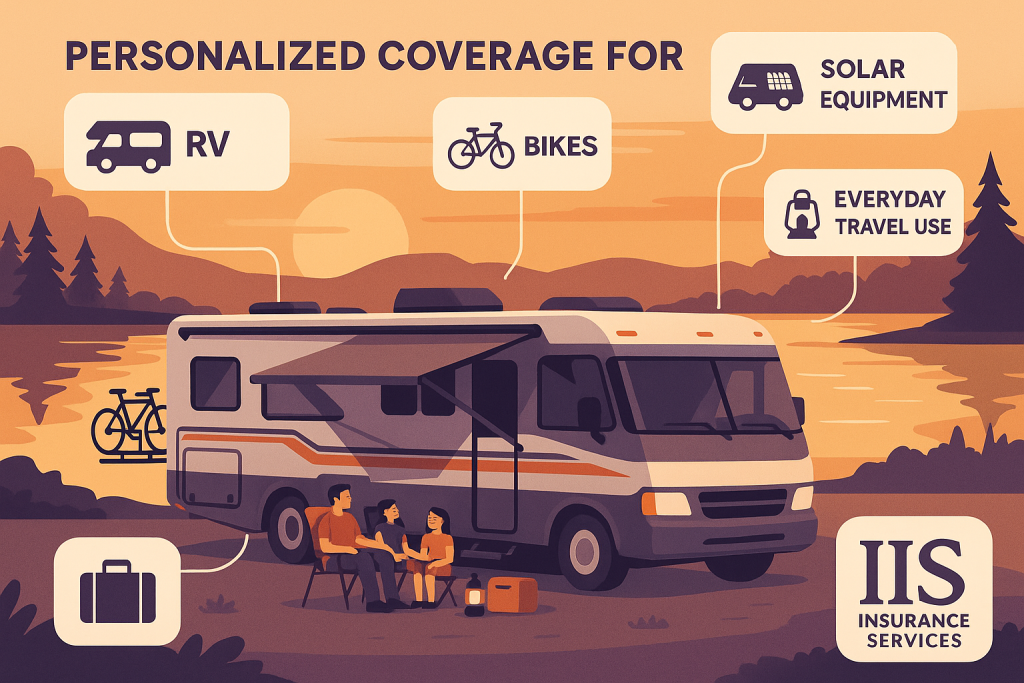
Living in an RV year-round changes what you need from an insurance policy. Your motorhome or travel trailer may serve as your vehicle, home, storage space, and base for daily life. Learning how to get cheap RV insurance for full-timers starts with identifying the protection you need, sharing accurate information, and comparing policies on equal terms.
The lowest premium may leave gaps in liability, belongings, temporary lodging, or campsite-related claims. A better goal is to remove unnecessary extras while keeping protection that fits your RV, travel habits, and finances.
IIS Insurance Services helps California RV owners review insurance options and tailored coverage suited to their use. Personalized support can make it easier to compare prices and avoid paying for features that don’t match your lifestyle.
Why Full-Time RV Insurance Costs and Coverage Limits Differ
Living in an RV full-time creates different coverage needs than using one for occasional trips. An RV used year-round spends longer on the road, carries more belongings, and may function as the owner’s primary residence.
Understanding the following factors can help you identify savings and avoid unnecessary coverage:
- RV type and value: Class A motorhomes often cost more to repair or replace than smaller camper vans or towable units.
- Annual mileage: Frequent travel can increase exposure to collisions, weather, theft, and roadside incidents.
- Primary residence use: Living in the RV may require full-timer coverage with protections similar to parts of a homeowners policy.
- Driving record: Accidents, claims, and violations can affect the insurance cost, but options may still be available.
- Storage and parking: Secured storage may present less risk than street parking or an exposed campsite.
- Coverage limits: Higher limits usually increase the premium but may provide stronger protection after a major claim.
- Deductibles: A higher deductible may reduce the premium but increases what you pay after a covered loss.
- Location: Rates can vary based on theft, weather, traffic, repair expenses, and state requirements.
- Modifications: Solar panels, electronics, custom interiors, satellite equipment, and bike racks may need to be listed separately.
- Claims history: Prior claims may affect eligibility and price.
Insurers assess these details differently. One may offer better pricing for a newer motorhome, while another may suit an older travel trailer or someone with a less straightforward driving history. IIS Insurance Services can help compare available choices.
Don’t compare price alone. Check whether each quote uses the same deductibles, liability limits, valuation method, and optional coverages. A side-by-side review can reveal whether a lower price comes with reduced protection.
Insurance Coverage Full-Time RVers May Need
An RV policy normally begins with liability and physical damage protection. Full-time living can create needs that may not exist for a recreational owner.
Liability coverage can help when you are legally responsible for bodily injury or property damage involving the RV. Terms can differ when the vehicle is parked and used as a residence, so ask how protection applies at campgrounds, long-term parking sites, and private property.
Collision coverage may help pay for damage after an impact with another vehicle or object. Learning about covered non-collision losses can help you understand how comprehensive coverage may apply to theft, fire, vandalism, falling objects, storms, or certain animal-related incidents.
Personal belongings coverage matters when the RV carries clothing, electronics, cooking equipment, and outdoor gear. Standard limits may be too low for someone living in the vehicle year-round, and high-value items may require separate documentation.
| Coverage Option | What It May Address | What to Review |
|---|---|---|
| Bodily Injury and Property Damage Liability | Injuries or property damage for which the RV owner is legally responsible | State requirements, limits, exclusions, and whether protection applies while parked |
| Collision | Damage caused by a collision with another vehicle or object | Deductible, repair provisions, and settlement method |
| Comprehensive Coverage | Theft, fire, vandalism, storms, falling objects, and other listed events | Covered causes of loss, exclusions, and limits for attached equipment |
| Personal Liability | Incidents connected to using the RV as a residence | Guest injuries, campsite incidents, legal expenses, and policy territory |
| Personal Effects | Belongings stored or carried inside the RV | Overall limit, per-item limits, replacement terms, and excluded property |
| Emergency Expense | Temporary lodging, transportation, or related costs after a covered loss | Daily limits, maximum benefit, distance requirements, and eligible expenses |
| Roadside Assistance | Towing, jump-starts, tire service, lockouts, or fuel delivery | Towing distance, service limits, vehicle size restrictions, and response areas |
| Total Loss Replacement or Agreed Value | Settlement following a covered total loss | Vehicle age limits, eligibility, depreciation rules, and documentation requirements |
A full-time RV policy may protect you in situations that a standard recreational policy does not. Insurers may use different names for similar options, so IIS Insurance Services can explain covered events, limits, deductibles, and exclusions.
Owners of towable units should also understand how RV coverage differs from a standard auto policy. The towing vehicle’s auto policy may provide liability while the trailer is attached, but damage to the trailer itself may require separate RV insurance. Personal property, roadside assistance, and campsite liability may also be handled differently.
How to Lower Your RV Insurance Cost
Reducing your premium does not always require removing useful protection. Start by requesting quotes with matching limits and deductibles, using the same RV details and usage information for each insurer.
Consider these cost-saving steps:
- Choose an affordable deductible. A higher deductible may lower the premium, but keep enough savings to pay it after a loss.
- Ask about multi-policy discounts. Combining RV insurance with another eligible policy may reduce the total price.
- Review driving-related discounts. A clean record, prior insurance, defensive driving course, or claims-free period may qualify.
- Install approved security devices. Alarms, tracking systems, and secured storage may reduce theft exposure.
- Pay in full when practical. Some carriers charge installment fees.
- Remove duplicate benefits. Roadside assistance or travel benefits may already be available elsewhere.
- Report annual mileage accurately. Full-time living does not always mean constant driving.
- Review the settlement method. Actual cash value may cost less but can result in a smaller total-loss payment.
- Recheck the policy yearly. Vehicle value, equipment, travel patterns, and storage arrangements can change.
Lowering liability limits may reduce the premium but can leave you responsible for more medical bills, repairs, or legal costs after an accident. An IIS Insurance Services agent can help compare limits that fit your budget and assets.
Share how you use your RV when requesting coverage. If it is your primary residence, that detail helps the insurer prepare the right quote and offer full-time protection.
How to Request an Accurate RV Insurance Quote
A clear RV insurance quote starts with details about how you own, use, and store the vehicle. Sharing information about modifications, full-time living, mileage, and parking helps IIS Insurance Services identify suitable coverage.
Before contacting an agency, gather:
- RV year, make, model, trim, vehicle identification number, and purchase price
- Current value and financing or lease information
- Motorhome class or travel trailer type
- Driver information and history
- Expected annual mileage
- Common travel regions
- Whether you live in the RV full-time
- Parking, campground, or storage arrangements
- Existing policies that may qualify for bundling
- Recent claims or losses
- Factory-installed and aftermarket equipment
- Estimated value of belongings
- Preferred limits and deductibles
You can still begin if you don’t have every detail. An agent can explain which information and records may be useful.
Photos, receipts, and installation records can document solar systems, awnings, generators, appliances, entertainment systems, and exterior accessories. IIS Insurance Services can help determine whether equipment is included automatically or needs added protection.
Ask how the insurer values the RV after a total loss. Options may include actual cash value, agreed value, stated value, or replacement-based settlement. Also review temporary lodging benefits, including daily caps, total limits, and distance requirements.
When comparing offers, look beyond the monthly payment. Confirm that each quote reflects the same residence status, drivers, RV value, usage, limits, deductibles, and optional protections.
Avoiding Cheap RV Insurance Policies That Leave Coverage Gaps
Online RV quotes can be a useful starting point, but a quick application may miss details of full-time living. A personalized review can identify residence-related needs, custom equipment, and belongings not addressed by a basic quote.
Personal property is a common gap. Physical damage coverage for the RV may not automatically cover loose belongings. Electronics, bicycles, tools, jewelry, business property, and collectibles may have low limits or exclusions.
Liability may also differ. Auto liability usually focuses on vehicle operation, while full-time owners may face claims involving guests, pets, or property damage at a campsite.
Emergency expense coverage may include lodging but limit the payment period or require the loss to occur a certain distance away. Roadside assistance can also have towing distance, weight, or vehicle-size restrictions, especially for larger motorhomes.
Check these details before choosing a policy:
- Whether the application asks if the RV is your primary residence
- Whether personal effects limits suit your belongings
- How custom equipment is valued
- How campsite liability is handled
- Which settlement method applies after a total loss
- Whether emergency lodging limits fit your travel pattern
- Whether common destinations and long-term parking are covered
- Whether the initial quote uses complete information
Every policy covers specific events under stated terms. Mechanical breakdowns, routine maintenance, wear, mold, pests, freezing, and some water damage may be limited or excluded. An IIS Insurance Services agent can explain unfamiliar language before you choose a policy.
Find Affordable Full-Time RV Coverage with IIS Insurance Services
Affordable coverage starts with a clear picture of how you live and travel. IIS Insurance Services provides personalized support for RV owners who want practical protection without paying for unnecessary options.
Share your vehicle details, full-time living status, travel habits, modifications, and preferred limits to receive an RV insurance quote shaped around your situation. The IIS Insurance Services team can compare available policies, identify possible discounts, and explain how each choice may affect your premium and protection.
Contact IIS Insurance Services to discuss insurance for your motorhome or travel trailer and find a policy that supports life on the road.