

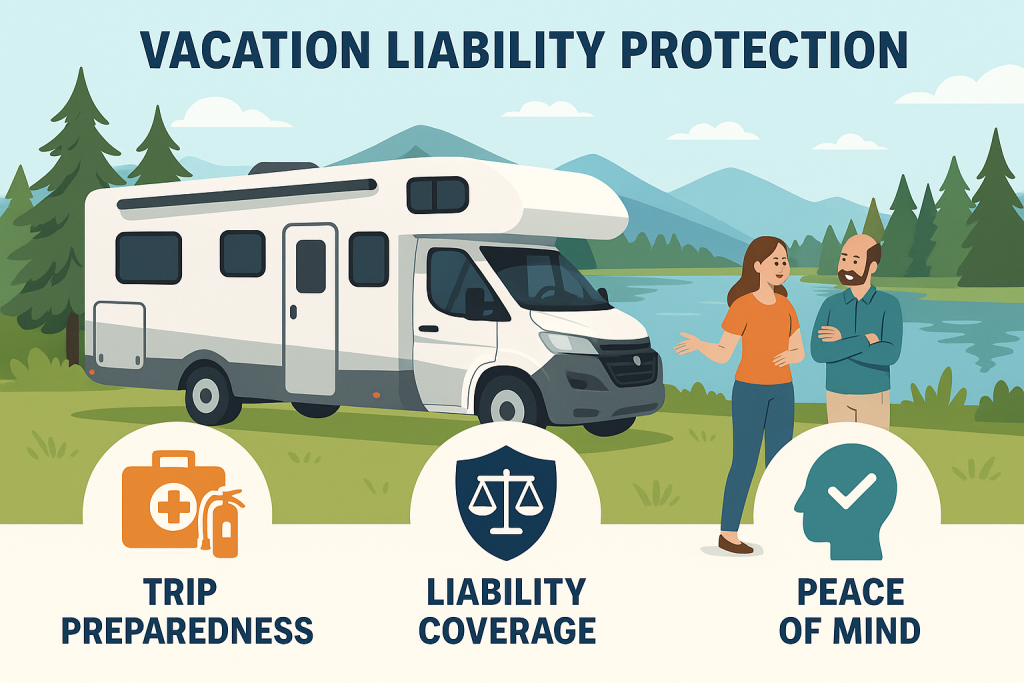
Vacation liability in RV insurance helps protect you when your recreational vehicle is parked and used as a temporary residence. For anyone researching what is vacation liability in RV insurance, it generally refers to coverage for bodily injury or property damage claims connected to a campsite, RV park space, or temporary living area.
An RV creates different risks while parked than it does while moving. A driving liability policy generally applies when you cause an accident on the road. Vacation liability coverage is designed for incidents connected to temporary residential use, such as a visitor falling on your RV steps or your equipment damaging another campsite.
Coverage terms, limits, and exclusions vary by carrier. Vacation liability is often available as part of protection for your recreational vehicle. Full-time RV owners may need a different form of personal liability protection because their vehicle serves as a primary residence rather than an occasional vacation space.
Understanding how the coverage works can help you compare policies, avoid gaps, and choose limits that fit your travel habits and budget.
How Vacation Liability RV Insurance Works
Vacation liability generally applies when an RV or travel trailer is parked and used as a temporary recreational residence, while owners who use an RV as their primary home typically need full-time RV coverage. It may help protect you if you’re legally responsible for another person’s injury or damage to someone else’s property.
For example, suppose a guest visits your campsite and trips over a loose mat outside your camper. If the person requires medical care, vacation liability insurance may help pay covered medical, legal, or settlement costs.
The same principle may apply when campsite equipment causes property damage. An unsecured awning could strike a neighboring vehicle, water from your RV connection could leak into another campsite, or cooking equipment could start a fire that damages nearby property.
Vacation liability coverage is not designed to pay for damage to your own RV, belongings, or equipment. Those losses generally fall under other parts of an insurance policy, such as collision, comprehensive, personal effects, or attached accessory coverage.
Before coverage applies, the insurance company reviews the incident and your policy terms. It may consider:
-
Where the incident occurred
-
Whether the RV was being used as a temporary residence
-
Who was injured or whose property was damaged
-
Whether you may be legally responsible
-
Whether an exclusion applies
-
The available liability limit
Some policies define vacation use by the length and purpose of the stay. A weekend at a campground may qualify, while living in the RV most of the year may require full-timers coverage. Accurate information about how you use the vehicle helps your agent recommend suitable protection.
Vacation liability also differs from emergency expense RV insurance. Emergency expense coverage may help with lodging, transportation, or meals when a covered loss makes the RV unusable. Vacation liability addresses claims made by others because of injury or property damage.
Liability Coverage on the Road and at the Campsite
RV liability changes depending on whether the vehicle is moving or parked. Understanding how RV coverage differs from a standard auto policy can help you avoid assuming that one type of coverage applies in every situation.
Motorhomes generally require bodily injury and property damage liability coverage similar to an automobile policy. This road liability may apply if the driver causes a collision that injures someone or damages another vehicle or property.
A travel trailer is towed rather than driven. Liability while it is attached to the tow vehicle may extend from the tow vehicle’s auto policy, subject to its conditions. The trailer may still need separate protection for physical damage, contents, attached equipment, and parked-use risks.
Once the RV is set up at a campsite, the exposure changes. Stairs, rugs, grills, electrical cords, water connections, and outdoor equipment can lead to injuries or damage even though the RV is not moving.
The table below shows how common RV coverages may respond in different situations.
| Coverage Type | What It Generally Addresses | Example |
|---|---|---|
| Road liability | Injury or property damage caused while driving an insured motorhome | You cause a collision that damages another vehicle |
| Vacation liability | Injury or property damage connected to temporary campsite use | A visitor falls on your RV steps |
| Collision | Damage to your insured RV from a collision or rollover | Your motorhome strikes a post |
| Comprehensive | Certain non-collision losses | Theft, vandalism, fire, or falling objects |
| Personal effects coverage | Covered belongings kept inside or used with the RV | Camping gear is stolen from the vehicle |
| Emergency expense coverage | Certain temporary costs after a covered loss | You need lodging while the RV is being repaired |
| Full-timers liability | Broader residential-style liability for qualifying full-time use | A guest is injured near the RV you use as your primary home |
These are general descriptions. Your policy language determines how a specific claim is handled.
Vacation liability may also help with legal defense costs when a covered claim leads to a lawsuit. Ask your agent whether legal expenses reduce the liability limit or are paid separately.
Medical payments coverage may apply differently. Full-time RV policies may include coverage for guests injured in or around the RV, while recreational policies may offer limited or no off-road protection. When available, it may help pay certain guest medical bills without first deciding who was at fault.
Incidents Vacation Liability May Cover
Campsites are shared spaces. RV owners often park close to other vehicles, invite visitors over, and set up equipment outside. Even careful travelers can face an unexpected liability claim.
Slips and falls are a common concern. RV steps can become wet or hard to see at night. Rugs, cords, hoses, toys, and uneven ground can create tripping hazards. If a visitor is injured and claims the campsite was unsafe, personal vacation liability insurance may apply.
Property damage can arise from outdoor equipment. Awnings, canopies, bicycles, grills, tables, and chairs may strike another RV or vehicle. Water and sewer connections can leak, and electrical equipment can damage shared hookups.
Fire is another risk. A cooking accident, portable heater, electrical problem, or unattended campfire could spread beyond your campsite and damage another person’s RV, belongings, or rented campsite property.
Depending on the policy’s terms and exclusions, possible scenarios may include:
-
A guest is injured while entering or leaving your parked RV.
-
Your dog injures another camper, if animal-related claims aren’t excluded.
-
A child visiting your campsite is hurt by equipment you set up.
-
Your portable grill damages campground property.
-
A water hose damages property at a neighboring site.
-
An object falls from your RV and strikes another vehicle.
-
Smoke or fire damages nearby belongings.
Coverage is not automatic because an incident happened near the RV. The insurer will consider responsibility, policy definitions, exclusions, and the facts of the loss.
Vacation liability commonly excludes intentional acts. It may also exclude business activities, paid rentals, certain animals, criminal conduct, or full-time residency when the policy only covers recreational use.
A campground may require liability insurance, but its minimum requirement may not provide enough protection for a serious claim. Medical treatment, legal fees, and property repairs can quickly exceed a low limit.
Review the policy’s stated coverage territory before traveling outside California or across an international border. Additional arrangements may be needed for some trips.
Choosing Limits and Avoiding Coverage Gaps
Selecting vacation liability coverage involves looking at how often you travel, where you stay, who visits your campsite, and how much financial exposure you could face.
Liability limits show the amount available for covered claims. A higher limit may provide a larger financial cushion, but it may also affect your premium. An agent can help you balance protection with a rate that fits your budget.
Start by reviewing how your RV is classified. Motorhomes, fifth wheels, travel trailers, truck campers, pop-up campers, and converted vehicles may have different coverage options and insurer requirements.
Describe your usage accurately. There is a meaningful difference between taking a few weekend trips, spending months at seasonal parks, and living in the RV full time. A recreational-use policy may not provide the residential liability protection needed for primary-home use.
You should also discuss equipment and modifications. Permanently attached awnings, solar panels, upgraded appliances, custom interiors, and towing equipment may affect the policy. Portable items may fall under personal effects coverage, while attached items may need coverage under another part of the policy.
Before selecting an RV insurance add-on, ask the agent or carrier:
-
Is vacation liability included or optional?
-
When does the coverage begin and end?
-
Does it apply at private property, campgrounds, and RV parks?
-
Are legal defense costs inside or outside the liability limit?
-
Does the policy include medical payments for guests?
-
Are pets, golf carts, rented spaces, or recreational equipment excluded?
-
What changes if I use the RV for extended stays?
-
Do I need full-timers liability if the RV is my primary residence?
-
Does the coverage apply when someone else uses the RV?
-
Is an umbrella policy available above the underlying RV liability limit?
These questions can help you choose coverage based on your actual RV use instead of paying for options that don’t fit your needs.
An umbrella policy may provide added liability protection when the RV policy and limits meet the umbrella carrier’s requirements. It does not replace the underlying RV coverage.
Avoid reducing or suspending insurance without speaking with your provider. When an RV is stored, you may be able to adjust driving-related coverage while keeping protection for theft, vandalism, fire, and weather damage. An IIS Insurance Services agent can help you manage costs without leaving the RV exposed.
A lender may require collision and comprehensive coverage until the loan is paid. State financial responsibility rules may apply to motorhomes driven on public roads. A campground, storage facility, or lease agreement may also set liability requirements.
What Vacation Liability Does Not Replace
Vacation liability should be viewed as one part of an RV insurance policy rather than a substitute for other coverage.
It does not normally repair your RV after a collision. Collision coverage is designed for damage caused by impact or rollover, subject to the deductible and policy terms.
It also does not normally pay for theft, vandalism, hail, falling objects, or other non-collision damage. Those losses may fall under comprehensive coverage.
Your belongings may require separate protection. RV policies often provide some coverage for clothing, electronics, camping gear, and other contents, but sublimits and exclusions may apply.
Roadside assistance is separate. Vacation liability won’t tow a disabled RV, deliver fuel, change a tire, or help with a mechanical breakdown unless another coverage provides those services.
Mechanical failures, wear, rust, mold, pest damage, and poor maintenance are commonly limited or excluded. Insurance generally addresses sudden covered losses rather than routine maintenance.
Business and rental use require special attention. A personal RV policy may exclude claims arising from business use or renting the RV to others. Owners who use a peer-to-peer rental platform should confirm whether their personal policy remains active during the rental.
Full-time residency is another major distinction. Standard vacation liability is intended for temporary recreational stays. Someone who lives in an RV year round may need full-timers insurance with broader personal liability features.
Your declarations, endorsements, definitions, conditions, and exclusions work together to explain your protection. An IIS Insurance Services agent can walk you through those details in plain language.
Report changes promptly. Moving the RV, adding a driver, changing to full-time use, modifying the vehicle, or renting it out can affect eligibility and claim handling.
Build Better RV Protection with IIS Insurance Services
Vacation liability can help protect your finances when an injury or property damage claim arises while your RV is parked and used as a temporary residence. The right setup depends on your vehicle, travel schedule, liability limits, budget, and whether you use the RV occasionally or as a full-time home.
IIS Insurance Services helps California RV owners compare coverage and rates from multiple carriers. The team explains how each option fits your travel plans, budget, and circumstances without unnecessary complexity. IIS offers insurance options for motorhomes, travel trailers, fifth wheels, pop-up campers, and other recreational vehicles, including part-time and full-time use.
An IIS insurance professional can review vacation liability, road liability, collision, comprehensive, personal effects, roadside assistance, and emergency expense options. The team can also discuss whether umbrella coverage may be available. You’ll receive clear explanations and recommendations based on how you use your RV.
Contact IIS Insurance Services for a California RV insurance quote and help reviewing your current policy. The team can help you find reliable protection for the road, campsite, and storage period while keeping your needs and budget in focus.