

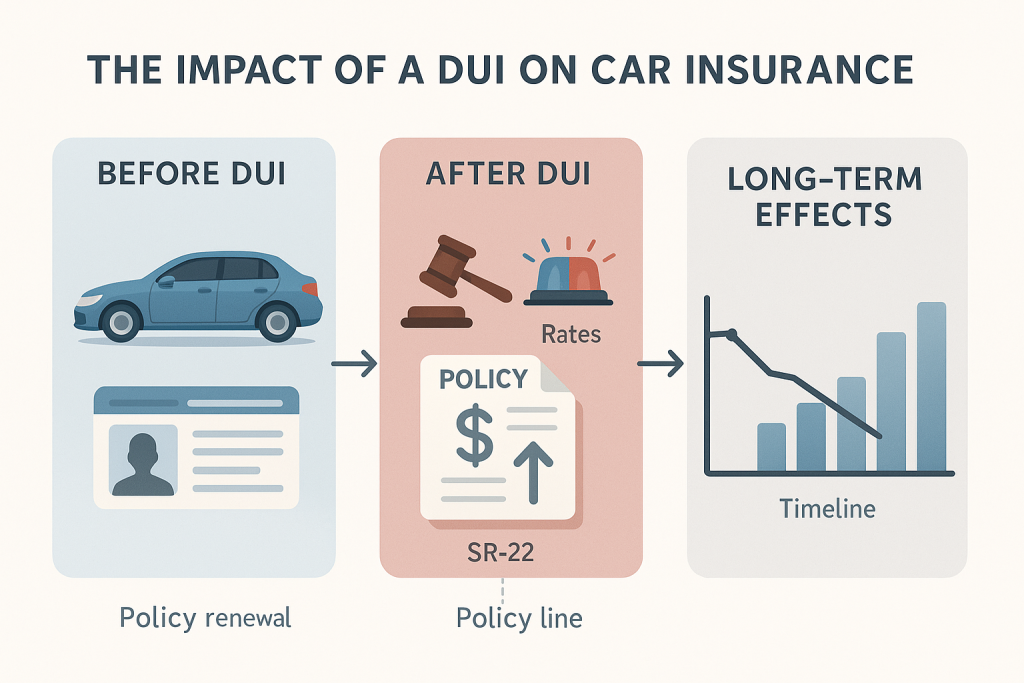
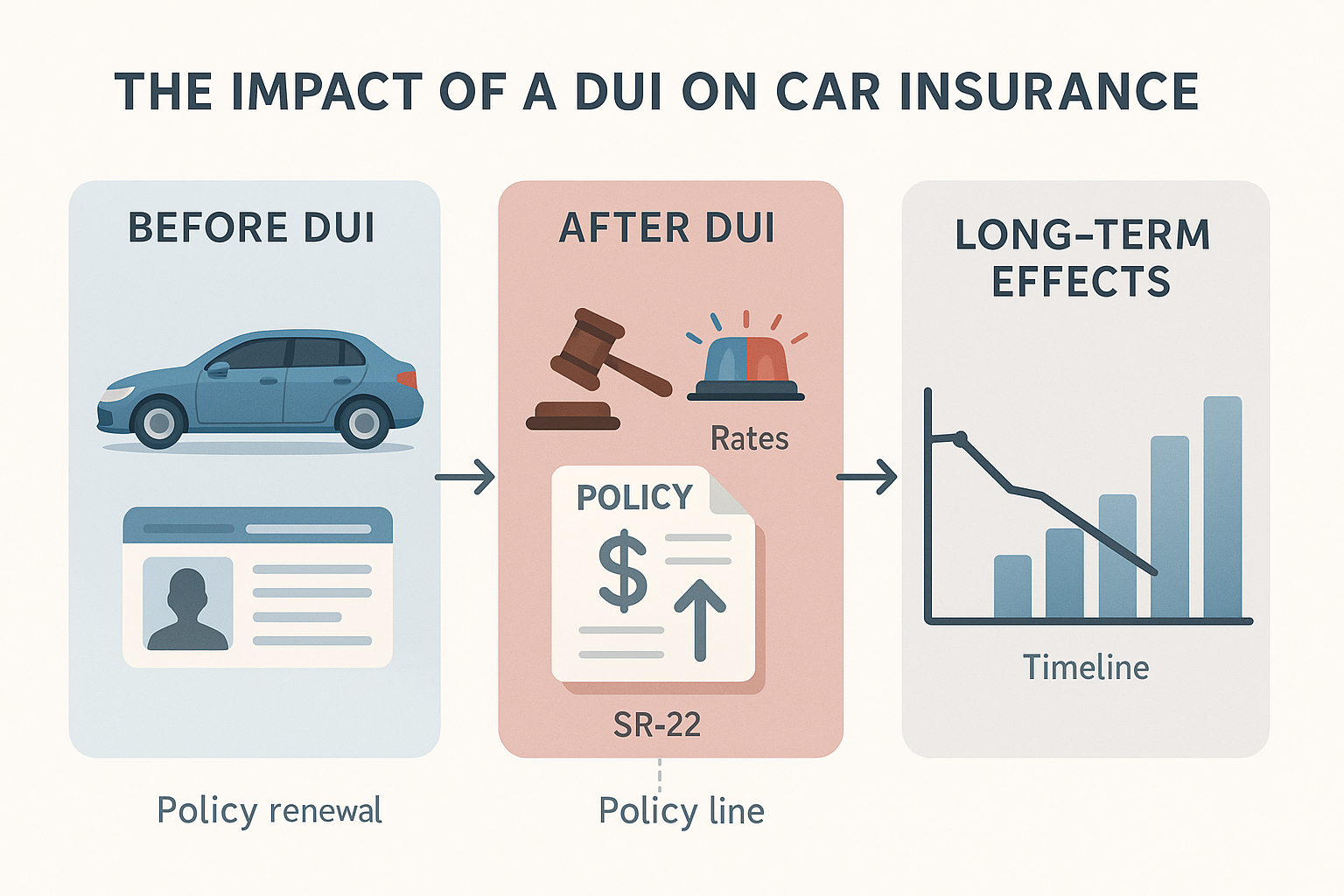
A DUI conviction can cause a sharp increase in your car insurance premium. Your insurer may remove preferred discounts, place you in a high-risk program, or decline to renew your policy. You may also need an SR-22 filing before the California Department of Motor Vehicles restores your driving privileges.
Higher rates can be frustrating, but they don't have to remain unchanged forever. Insurance companies evaluate DUI records differently, and the choices you make after the offense can affect what you pay at future renewals. Shopping across carriers, maintaining continuous coverage, adjusting your policy carefully, and avoiding additional violations may all improve your options.
Learning how to lower car insurance after a DUI begins with understanding what changed and which costs you can control. IIS Insurance Services helps California drivers compare high-risk auto insurance, SR-22 policies, and Non-Owner SR-22 coverage. Its agents focus on clear explanations, practical savings, and policies that reflect your actual driving situation.
Why Insurance Rates Increase after a DUI Conviction
Insurance companies use your driving record to estimate the chance that you will have an accident or submit a claim. A DUI signals higher risk, even when the incident didn't involve a collision. That's why the conviction can affect your premium, eligibility, payment options, and available coverage.
The DUI insurance increase may not appear immediately after an arrest. A carrier often learns about the violation when it checks your motor vehicle record at renewal, during a policy change, or when you request an SR-22. Once the conviction is reviewed, the company may move you out of its preferred program.
A DUI can affect your policy in several ways:
- Higher monthly or annual premiums
- Loss of a good-driver discount
- Larger down payment requirements
- Added policy or installment fees
- Fewer insurance companies willing to offer coverage
- Possible non-renewal by your current carrier
- An SR-22 filing requirement
- Reduced access to certain optional benefits
There's no standard increase for every California driver. Insurance companies consider the DUI alongside your age, ZIP code, vehicle, annual mileage, prior claims, other violations, coverage limits, and insurance history.
A driver who had a clean record before the DUI may receive a different quote from someone with several tickets or car accidents. Repeat convictions also create greater underwriting difficulty and can reduce the number of available companies.
The loss of preferred discounts may account for part of the higher bill. Your base rate can rise at the same time that safe-driver savings disappear, making the total change feel especially severe.
Don't assume your current carrier will remain the most affordable. A company that priced your clean record competitively may charge far more after a DUI than an insurer that regularly serves high-risk drivers.
Shop Around and Compare Matching Auto Insurance Quotes
Shopping around is often the fastest way to identify potential savings when it comes to insurance premiums. Carriers use different underwriting rules, so the price for the same driver can vary substantially from one company to another.
Request quotes from insurers that accept DUI records and can provide an SR-22 when required. An independent agency may save time by comparing several participating carriers instead of limiting you to one company.
Every quote should use the same information. Compare:
- The same drivers and household members
- The same vehicle and annual mileage
- Matching liability limits
- Identical collision and comprehensive deductibles
- The same optional coverage
- The same policy term
- The same SR-22 filing status
A low monthly payment doesn't always mean a low overall cost. One policy may require a larger down payment or include higher installment fees. Another may appear inexpensive because it provides lower limits or excludes collision coverage.
Review the total six-month or annual premium, not only the first payment. Ask whether the quote includes the SR-22 filing fee and when the certificate will be submitted to the DMV.
Be honest about your DUI, license status, vehicle use, address, and household drivers. Hiding information may lead to a corrected premium, cancellation, or problems during a claim.
Avoid choosing the cheapest policy without reviewing its protection. California minimum coverage may satisfy a legal requirement, but it may not provide enough liability protection for your finances. If damages exceed the policy limit, you may be personally responsible for the difference.
Before you purchase car insurance, ask the agent to explain what is included, what is excluded, and how each adjustment affects your price.
Adjust Coverage without Creating Expensive Gaps
Reviewing your insurance policy may reveal ways to reduce insurance costs, but changes should be made carefully. Removing protection simply to lower the monthly bill can leave you with a much larger expense after an accident.
The table below shows common adjustments and their tradeoffs.
| Policy adjustment | Possible savings | What to consider |
|---|---|---|
| Raise collision or comprehensive deductibles | May reduce the premium | You must pay a larger amount after a covered loss |
| Remove physical damage coverage from an older car | Can lower the policy price | Your insurer won't pay to repair or replace your vehicle after many losses |
| Select liability-only coverage | Often costs less than broader protection | It doesn't cover damage to your own car |
| Reduce optional benefits | May lower monthly costs | Roadside assistance, rental reimbursement, or other support may no longer apply |
| Bundle eligible policies | A multi-policy discount may apply | Compare the combined price with separate policies |
| Pay in full or use automatic payments | Some carriers offer savings | Discount availability varies by company |
Increasing your deductible can provide immediate savings, but choose an amount you could realistically pay. A $1,500 deductible may lower the premium, yet it won't help if you can't afford that expense after an accident.
Collision and comprehensive coverage may be less cost-effective on some older vehicles. Compare the car’s current value with the annual cost of the coverage and the deductible. If the vehicle is financed or leased, the lender will usually require both.
Liability-only insurance may reduce the price, but it provides no payment for damage to your own vehicle after an at-fault collision. Consider whether you could repair or replace the car without insurance assistance.
Ask about discounts that may still be available. Depending on the insurer, you might qualify for automatic payments, low mileage, vehicle safety equipment, policy bundling, or payment-in-full savings.
Keep Your SR-22 and Insurance Coverage Active
An SR-22 is a certificate of financial responsibility, not a separate insurance policy. An authorized insurer files it with the California DMV to confirm that you carry qualifying liability coverage.
If you own a vehicle, the SR-22 is generally attached to the auto policy covering that car. If you don't own a vehicle, a Non-Owner SR-22 policy may be appropriate.
Non-owner insurance generally provides liability protection when you occasionally drive certain borrowed or rented vehicles. It may not fit your situation if you regularly use a household member’s car, have daily access to the same vehicle, or should be listed on another person’s policy.
Continuous coverage matters because the insurer may notify the DMV if the policy lapses or is canceled. That notice can lead to another license suspension or interfere with your required filing period.
Use these habits to prevent a lapse:
- Set up automatic payments when practical.
- Update expired debit or credit card information promptly.
- Open every notice from the insurer and DMV.
- Contact your agency before changing vehicles or addresses.
- Activate a replacement policy before canceling the old one.
- Keep copies of your SR-22 confirmation and payment receipts.
- Confirm with the DMV before removing the filing.
Don't cancel your auto insurance simply because your license is suspended. An owned vehicle may still need coverage, and cancellation could create a lapse that raises future rates.
Speak with your insurer before making changes. A properly coordinated switch can preserve continuous insurance coverage while allowing you to move to a better-priced company.
Improve Your Driving Record and Future Insurance Rates
A DUI can't be removed from insurance rates immediately, but a cleaner record after the conviction can improve your options over time.
Insurance companies may review your driving history at each renewal. Every year without another ticket, accident, or lapse gives the carrier newer information to consider. It also helps show that the DUI wasn't part of a continuing pattern.
Focus on:
- Avoiding additional tickets and moving violations
- Never driving while impaired
- Following restricted-license conditions
- Completing required DUI education
- Keeping the SR-22 active
- Paying car insurance premiums on time
- Reviewing quotes at every renewal
- Updating the policy when your driving situation changes
A defensive driving course may help you build safer habits and may qualify for a discount with certain insurance companies. Confirm eligibility before enrolling solely to save money. The course doesn't remove the DUI or replace any court-ordered program.
Installing an ignition interlock device voluntarily shouldn't be assumed to lower your insurance premium. Ask the carrier directly before paying for a device that is not otherwise required.
Vehicle choice can also affect future premiums. Before you purchase a car, request a quote for the exact year, make, model, and trim. Expensive, high-performance, frequently stolen, or costly-to-repair vehicles often carry higher rates.
Routine maintenance can reduce the chance of preventable breakdowns, but it doesn't automatically create an auto insurance discount. Focus your premium strategy on factors insurers actually use, such as vehicle type, mileage, coverage, driving history, and continuous insurance.
Review your policy at least once per year. As the conviction becomes older, another carrier may offer a better rate. Premiums don't always decrease automatically, so a fresh comparison can uncover savings.
Get Help Lowering Car Insurance after a DUI
Lowering your rate after a DUI takes a combination of smart comparison, suitable coverage, continuous insurance, and safer driving. The best policy is one that satisfies California requirements, protects you appropriately, and remains affordable enough to keep active.
IIS Insurance Services helps California drivers compare high-risk auto insurance, standard SR-22 policies, and Non-Owner SR-22 coverage. Its agents can review your current limits, identify available discounts and rates, explain filing requirements, and compare participating carriers.
Gather your driver’s license information, DMV notice, vehicle details, and current declarations page before requesting a quote. Contact IIS Insurance Services for personalized support and practical help finding coverage that fits your record, driving needs, and budget.