

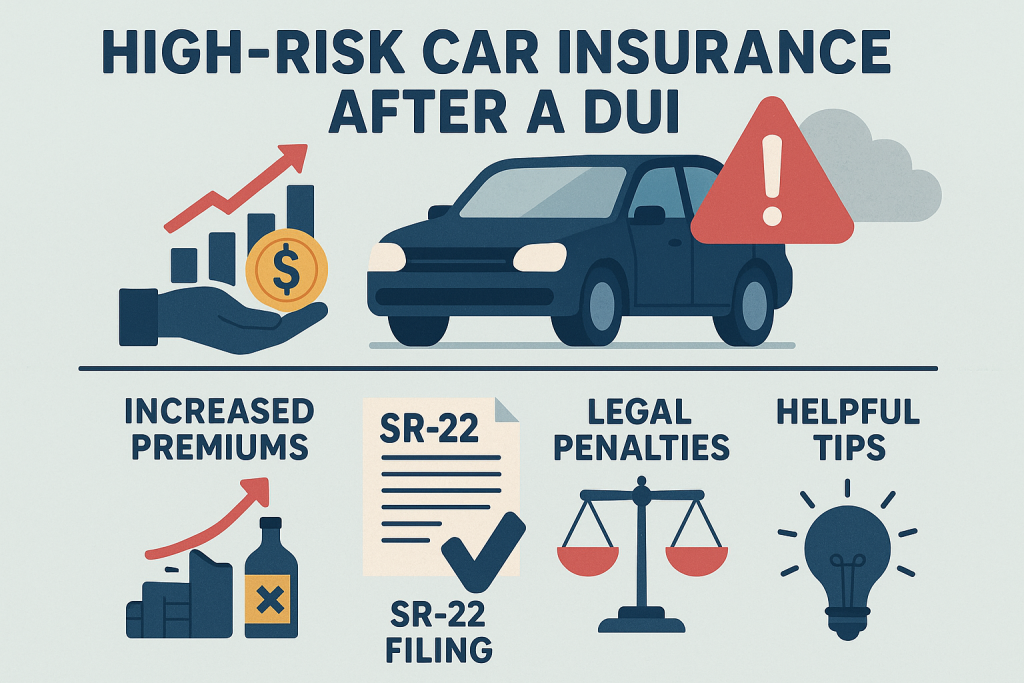
A DUI can change your car insurance options quickly. Your current insurer may raise your premium, remove preferred discounts, move you into a different rating program, or decide not to renew your policy. You may also need an SR-22 filing before the California Department of Motor Vehicles restores your driving privileges.
What is high-risk insurance after DUI? High-risk insurance after DUI is auto coverage issued to a driver whom insurers consider more likely to have an accident or file a claim. It's not a separate legal category of insurance. The phrase generally describes a standard or nonstandard policy written for someone whose driving record includes a serious violation.
Being classified as a high-risk driver doesn't mean you can't obtain coverage. It usually means fewer carriers, higher rates, and closer review of your application. Your options depend on the DUI conviction, other violations, vehicle, location, coverage history, and whether you own a car.
IIS Insurance Services helps California drivers compare high-risk auto policies, standard SR-22 coverage, and Non-Owner SR-22 insurance. Its agents focus on clear explanations, practical options, and coverage designed around your actual driving situation and budget.
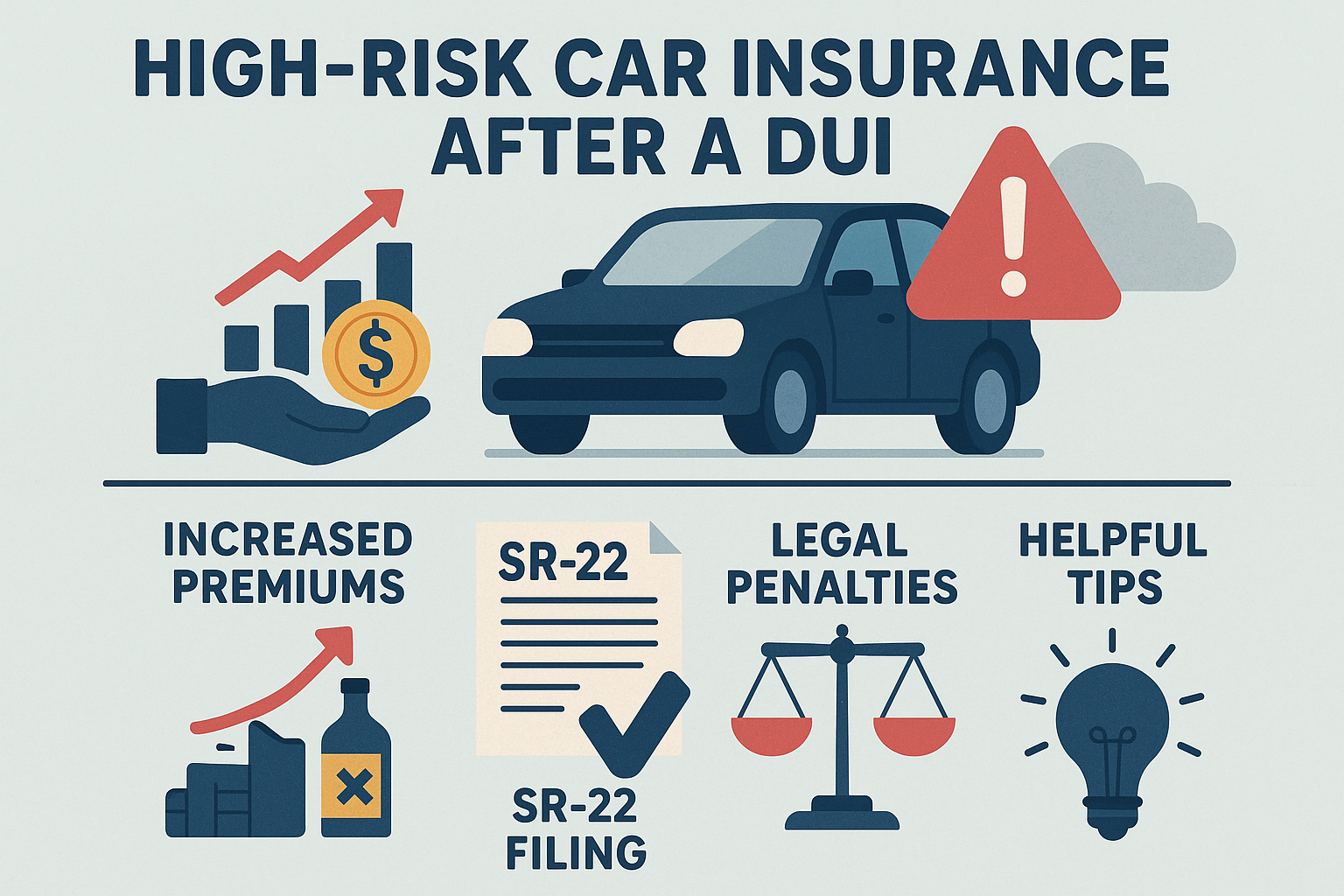
What High-Risk Insurance Means after a DUI
Insurance companies group drivers according to expected claims risk. A person with a clean record may qualify for standard or preferred rates, while a person with a recent DUI may be placed in a higher-risk rating category.
A DUI affects this classification because insurers view impaired driving as a strong indicator of future loss. Even when the incident didn't cause an accident, the violation itself can influence eligibility and pricing.
High-risk insurance is specifically designed for drivers who don't qualify for a preferred program or who have difficulty obtaining coverage from standard carriers. It can provide the same general types of protection as other car insurance, although the price, payment terms, and available options may differ.
Changes you may notice include:
- Higher insurance premiums
- Loss of a good-driver or violation-free discount
- Fewer carriers willing to issue a policy
- A larger down payment
- Added installment or filing fees
- Stricter underwriting requirements
- Possible non-renewal by your current insurer
- A requirement to carry an SR-22
- Limited access to certain optional coverage
The phrase high risk describes how the insurer evaluates the policy. It's not a personal judgment, and it doesn't mean every company will charge the same amount. One carrier may decline a driver whom another carrier accepts at a manageable price.
Insurance companies may also consider whether you have multiple DUIs, other traffic offenses, previous claims, or a lapse in coverage. A recent DUI combined with an accident or repeated violations usually creates greater underwriting difficulty than a single offense on an otherwise clean record.
California commonly uses the term DUI. Other states may use DWI, which usually means driving while intoxicated or impaired. Insurers generally treat either offense as a major driving violation.
How a DUI Conviction Affects Rates and Eligibility
A DUI conviction can raise insurance rates because the carrier expects a higher chance of future claims. There's no single percentage or monthly price that applies to every driver.
Your rate may be affected by:
- The date of the conviction
- Whether it was a first or repeat offense
- Accidents and other violations on your record
- Your age and driving experience
- The vehicle you insure
- Your ZIP code
- Annual mileage and vehicle use
- Coverage limits and deductibles
- Prior claims
- Continuous insurance history
The age of the offense matters. A recent conviction generally has a stronger effect than an older one. As time passes without another accident or violation, some carriers may offer better options.
Your current company may discover the DUI when it reviews your motor vehicle record. This often occurs when you apply for coverage, add a vehicle, change drivers, or reach a renewal date.
The insurer may respond by increasing the premium, transferring the policy to a nonstandard program, or issuing a non-renewal. It may also remove discounts that required a clean driving history.
| Area affected | Possible change after a DUI | What you can do |
|---|---|---|
| Insurance classification | Movement from preferred or standard to high risk | Compare carriers that accept DUI records |
| Premium | Higher monthly or annual cost | Request matching quotes and review deductibles |
| Discounts | Loss of good-driver savings | Ask which other discounts remain available |
| Policy eligibility | Fewer standard carriers may offer coverage | Work with an agency that accesses high-risk markets |
| SR-22 status | Filing may be required for license restoration | Choose an insurer authorized to file with the DMV |
| Renewal | Current carrier may raise rates or decline renewal | Arrange replacement coverage before the old policy ends |
A DUI may remain relevant to your driving and insurance history for years. The period during which it appears on a DMV record and the period during which a particular company uses it for pricing may not be identical.
A California DUI may remain on the driving record for up to 10 years, while an SR-22 is commonly maintained for a shorter period, depending on the driver’s circumstances and state requirements. These timelines serve different purposes and shouldn't be treated as interchangeable.
SR-22 Coverage for High-Risk Drivers
An SR-22 isn't an insurance policy. It's a certificate filed by an authorized insurer to show the California DMV that you carry qualifying liability coverage.
Drivers may need this filing after a DUI conviction, an uninsured accident, a license suspension, or another serious violation. The SR-22 remains connected to an active auto insurance policy.
If you own a vehicle, you will generally need a standard car insurance policy that includes the filing. The policy may provide liability coverage and optional protection such as collision, comprehensive, uninsured motorist, rental reimbursement, or roadside assistance.
If you don't own a vehicle, a Non-Owner SR-22 policy may be appropriate. It generally provides liability protection when you occasionally operate certain borrowed or rented cars.
Non-owner coverage may not fit your situation if you:
- Own a registered vehicle
- Regularly drive the same car
- Frequently use a household member’s vehicle
- Should be listed on another person’s policy
- Need coverage for physical damage to the vehicle you drive
Be honest about vehicle ownership and access. Incorrect information can result in a changed premium, cancellation, or a claims dispute.
Continuous coverage is especially important during an SR-22 period. If the policy lapses or is canceled, the insurer may notify the DMV. That notice could lead to another license suspension or interfere with the required filing period.
Set up automatic payments when practical and keep your contact and payment information current. Speak with your insurance agency before replacing a vehicle, moving, switching carriers, or canceling coverage.
Don't remove the SR-22 simply because your license has been restored. Confirm with the DMV that the filing requirement has ended before changing the policy.
IIS Insurance Services can help determine whether you need an owner or non-owner policy and arrange the required filing. The team can also explain when coverage becomes active and how to avoid a gap while changing companies.
Choosing Coverage and Managing High-Risk Insurance Costs
Higher rates don't mean you should accept the first policy offered. Insurance carriers evaluate DUI records differently, so comparing several quotes may reveal a substantial price difference.
Make sure every quote uses the same:
- Drivers
- Vehicles
- Liability limits
- Deductibles
- Optional coverage
- Policy length
- Payment schedule
- SR-22 filing status
Comparing only the monthly payment can be misleading. One policy may have a lower installment but a larger down payment, higher fees, reduced coverage, or stricter cancellation terms.
Liability insurance pays for covered injuries or property damage you cause to others. Choosing only minimum coverage may lower the price, but it may leave you personally responsible when damages exceed the policy limits.
Collision coverage helps pay for covered damage to your car after an accident. Comprehensive coverage applies to certain non-collision losses, such as theft, vandalism, or weather damage. Both generally include a deductible.
Raising a deductible can lower the premium, but it also increases what you pay after a covered claim. Select an amount you could realistically afford.
Removing physical damage coverage may make sense for some older vehicles. However, a lender or leasing company may require collision and comprehensive protection. Review the financing agreement before reducing coverage.
Other ways to manage insurance costs include:
- Shop across high-risk carriers. Don't assume every company will price the DUI the same way.
- Maintain continuous coverage. A lapse can create DMV problems and may make later insurance more expensive.
- Avoid new violations and accidents. A cleaner record after the offense can improve future eligibility.
- Ask about available discounts. Automatic payments, bundling, low mileage, and vehicle safety features may still produce savings.
- Review the policy at renewal. As the conviction becomes older, another insurer may offer a better rate.
- Choose the vehicle carefully. High-performance, expensive, frequently stolen, or costly-to-repair cars may increase premiums.
- Provide accurate application details. Incorrect addresses, omitted drivers, or undisclosed vehicle access can cause serious policy problems.
A defensive driving or DUI education course may demonstrate a commitment to safer behavior. Some carriers may recognize approved courses, but completing one doesn't remove the DUI or automatically reduce the rate.
California doesn't allow the use of consumer credit scores to determine private passenger auto insurance premiums.
Multiple DUIs and Rebuilding Your Insurance Record
Multiple DUIs create greater difficulty because insurers see repeated offenses as evidence of ongoing risk. Some standard carriers may decline the application, while high-risk insurers may charge substantially higher rates.
A repeat offense may also create stricter DMV and court requirements. These could include a longer license suspension, an extended DUI program, ignition interlock obligations, or a longer period before unrestricted driving privileges return.
The insurance portion still follows the same basic principles. You need an eligible policy, any required SR-22 filing, accurate application information, and continuous coverage.
Drivers with repeated offenses should focus first on securing a policy they can reliably maintain. A low initial quote doesn't help if the down payment, monthly bill, or coverage restrictions make the policy unsustainable.
Rebuilding your insurance history requires consistency:
- Pay every premium on time.
- Keep the SR-22 active for the required period.
- Follow all restricted-license conditions.
- Avoid new accidents and violations.
- Update the insurer when your vehicle use changes.
- Keep copies of DMV notices and insurance documents.
- Request new quotes as the offenses become older.
A carrier may review the entire record at each renewal. Positive driving history after the conviction gives the company newer information to consider, although it doesn't erase prior violations immediately.
Commercial auto coverage can also be affected. A business owner or employee who drives for work may face separate company rules, insurer standards, or employer restrictions. Personal high-risk coverage doesn't automatically solve a commercial driving eligibility issue.
Work with an agent who understands the difference between personal, non-owner, and commercial policies. The cheapest option may not cover the way a vehicle is actually used.
Get Help Finding High-Risk Insurance in California
A DUI can raise your rates, reduce your carrier choices, and create an SR-22 requirement. It doesn't eliminate your ability to find legal, reliable coverage.
IIS Insurance Services has helped California drivers with challenging records since 2009. Its agents can compare participating insurers, explain policy differences, and help you choose standard auto or Non-Owner SR-22 coverage based on your vehicle use and budget.
Gather your driver’s license information, DMV notice, vehicle details, and current insurance documents before requesting a quote. Contact IIS Insurance Services for friendly, practical help finding coverage you can maintain while rebuilding your driving and insurance history.