

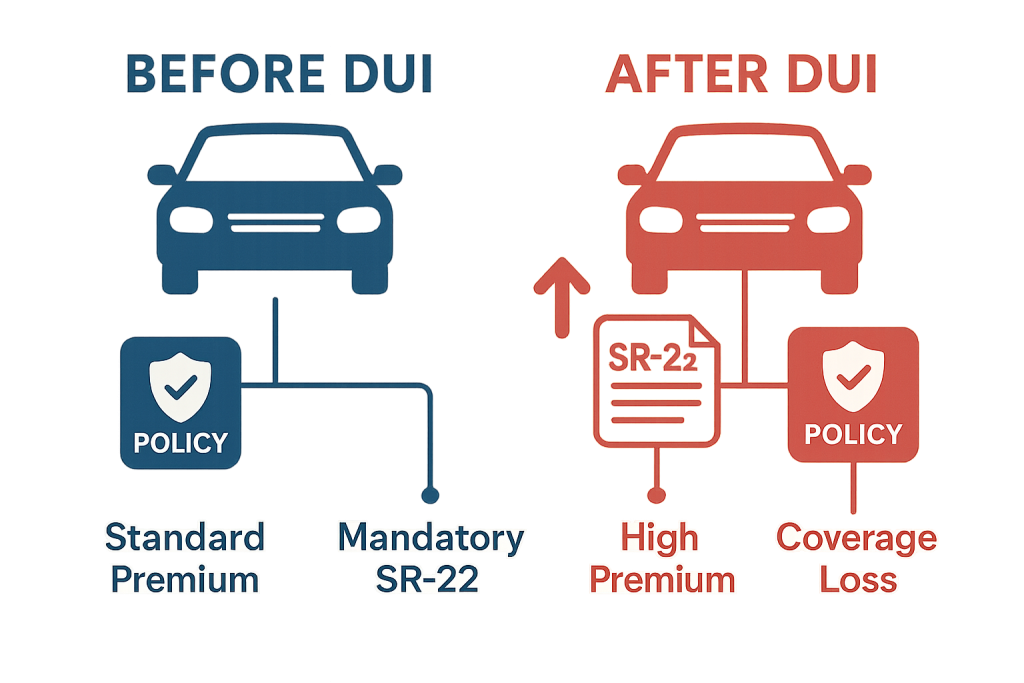
A DUI conviction can change your insurance options, driving privileges, and household budget. Your current insurer may raise your premium, move you into a high-risk program, or decide not to renew your policy. You may also need an SR-22 filing before the California Department of Motor Vehicles restores your license.
You may have trouble getting auto insurance after DUI conviction from standard carriers, but a DUI doesn't make you uninsurable. Companies evaluate driving records differently, and some specialize in helping drivers with serious violations. Comparing the right carriers can help you find coverage that meets California requirements without accepting the first expensive quote you receive.
IIS Insurance Services helps California drivers compare standard auto insurance, DUI insurance, SR-22 policies, and Non-Owner SR-22 coverage. Its team provides friendly, straightforward support for people who need to return to legal driving while keeping costs manageable.
How a DUI Conviction Changes Your Driving Record and Insurance
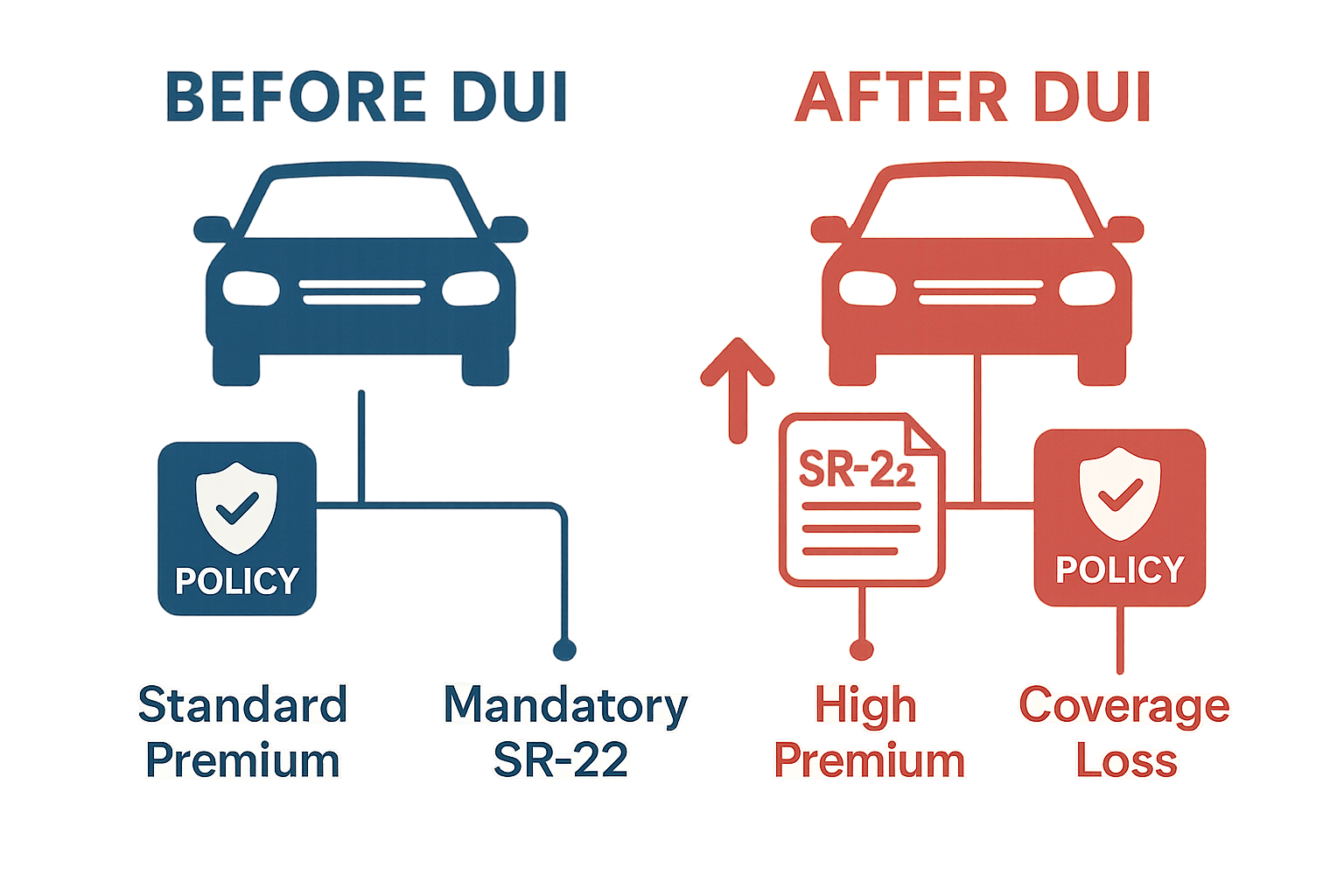
A DUI becomes part of your driving record, which insurance companies review when calculating risk. Before the conviction, you may have qualified for preferred rates or a good-driver discount. Afterward, your insurer may classify you as a high-risk driver because the violation suggests a greater likelihood of future accidents or claims.
The change may not happen immediately after an arrest. An insurer often discovers the offense when it checks your record at renewal, when you apply for another policy, or when you request an SR-22. Once the DUI appears, the company may recalculate your rate and reassess whether you remain eligible for its current program.
Common changes include:
- Higher monthly or annual premiums
- Loss of a good-driver or violation-free discount
- Fewer insurance companies willing to offer a policy
- Larger down payment requirements
- Added installment or filing fees
- Possible cancellation or non-renewal
- An SR-22 filing requirement
- Reduced access to certain optional coverage
A DUI conviction may affect insurance rates for years. A California DUI typically remains on the driving record for 10 years. During that period, carriers may consider the offense when reviewing applications and renewals.
The DUI is only one rating factor. Companies may also evaluate your age, ZIP code, vehicle, annual mileage, previous claims, other violations, and continuous insurance history. A driver with one DUI and an otherwise clean record may receive different quotes from someone with several accidents or repeat offenses.
It will be more expensive in many cases, but the amount varies widely. One carrier may impose a severe rate increase, while another may offer a less costly high-risk policy. This variation makes regular quote comparisons especially useful.
SR-22 Forms and California DUI Auto Insurance Requirements
An SR-22 is a certificate of financial responsibility. It's not an insurance policy and doesn't provide coverage by itself. An authorized insurer files the form with the California DMV to confirm that you have qualifying liability insurance.
A DUI conviction and license suspension may trigger the filing requirement. You may need an active SR-22 before applying for reinstated or restricted driving privileges. Other conditions, such as DUI program enrollment, fees, or court requirements, may also apply.
The usual process involves several steps:
- Confirm your license status and filing requirement with the DMV.
- Find an insurer that accepts your driving record.
- Purchase an eligible auto or non-owner policy.
- Ask the insurer to file the SR-22 electronically.
- Complete any remaining DMV and court obligations.
- Wait for confirmation before driving.
Purchasing coverage doesn't automatically restore your license. You must receive approval from the DMV before operating a vehicle.
The SR-22 remains connected to your active policy. If the coverage lapses or is canceled, the insurer may notify the DMV. That notice can result in another suspension or interfere with the required filing period.
Maintain continuous coverage by paying premiums on time, updating expired payment information, and opening notices from your insurer. Contact your agency before changing vehicles, moving, switching companies, or canceling the policy.
Don't remove the SR-22 simply because your license has been reinstated. The filing may need to stay active for a longer period. Confirm that the requirement has ended before making changes.
IIS Insurance Services can arrange SR-22 filings and explain how the form works with your policy. Its agents can also help coordinate a carrier change so the replacement coverage begins before the existing policy ends.
Auto Insurance Options after a DUI
Your coverage options depend partly on whether you own a vehicle. A standard auto policy with an SR-22 may fit a vehicle owner, while a Non-Owner SR-22 policy may work for someone who doesn't own a car.
| Insurance option | Who it may suit | What it generally provides | Important limitation |
|---|---|---|---|
| Standard auto policy with SR-22 | A driver who owns a vehicle | Liability coverage, an SR-22 filing, and selected optional protection | The DUI may substantially raise the premium |
| Non-Owner SR-22 policy | A driver who doesn't own a vehicle | Liability protection while occasionally driving certain borrowed or rented cars | Usually doesn't cover damage to the vehicle being driven |
| Liability-only policy | A vehicle owner seeking a lower-cost option | Coverage for qualifying injuries and property damage caused to others | Doesn't pay for damage to your own car |
| Policy with collision and comprehensive | A driver seeking broader vehicle protection | Liability plus coverage for certain collision and non-collision losses | Deductibles apply, and the premium is usually higher |
A Non-Owner SR-22 policy may be suitable when you don't own a registered vehicle but need proof of coverage for license reinstatement. It generally applies when you occasionally borrow or rent a car.
Non-owner coverage may not fit if you regularly drive the same vehicle, live with someone whose car you frequently use, or should be listed on another household policy. It also doesn't insure a vehicle you own.
Be accurate about vehicle ownership and access. Incorrect information can lead to a premium adjustment, policy cancellation, or problems during a claim.
Full coverage is an informal phrase commonly used for a policy that includes liability, collision, and comprehensive protection. It may be appropriate for a newer, financed, leased, or valuable vehicle. An older car may not need the same physical damage coverage, but the decision should reflect the vehicle’s value and your ability to pay for repairs or replacement.
A lender or leasing company will usually require collision and comprehensive coverage. Check the financing agreement before reducing protection.
Comparing DUI Insurance Rates and Policy Details
The cheapest advertised policy isn't always the best value. A quote may look inexpensive because it uses low liability limits, removes physical damage coverage, excludes a household driver, or requires a high deductible.
Compare quotes using the same information:
- Drivers and household members
- Vehicle details and annual mileage
- Liability limits
- Collision and comprehensive deductibles
- Optional coverage
- Policy term
- Payment schedule
- SR-22 filing status
Review the full six-month or annual premium rather than focusing only on the monthly payment. A low installment may come with a large down payment, higher service fees, or stricter cancellation terms.
Ask whether the SR-22 filing fee is included and when the form will reach the DMV. Delayed or inaccurate filing can slow the reinstatement process.
Coverage limits also matter. Minimum liability insurance may satisfy state requirements, but it may not protect your finances adequately after a serious accident. You could become personally responsible for damages that exceed the policy limit.
Raising the collision or comprehensive deductible may reduce the premium. However, you will have to pay that amount before the insurer contributes to a covered claim. Choose a deductible you could realistically afford.
Inform your insurer accurately when asked about your driving record, license status, address, vehicle use, and household drivers. Hiding a DUI or providing incomplete details can lead to a changed premium, cancellation, or claim dispute.
An independent agency can compare several participating companies instead of giving you only one carrier’s rate. IIS Insurance Services works with drivers who need high-risk policies and can explain the differences between available plans.
Reducing Rates and Rebuilding Your Insurance Record
A DUI can affect rates for years, but your actions after the conviction may influence future eligibility. Insurance companies may review your record at each renewal, so every clean year gives them newer information to consider.
Avoid new violations and accidents. Additional incidents can reinforce the high-risk classification and make affordable coverage harder to find.
Maintaining continuous insurance is equally important. A lapse may lead to DMV consequences and may cause future carriers to charge a higher rate. Set up automatic payments when practical and contact the agency before a missed payment results in cancellation.
A defensive driving or DUI education course may help demonstrate a commitment to safer driving. Some carriers may offer a discount for an approved course, but savings aren't automatic. Confirm eligibility before enrolling solely for insurance purposes.
Other possible cost-control strategies include:
- Comparing quotes at every renewal
- Raising deductibles carefully
- Removing unnecessary optional benefits
- Bundling eligible policies
- Using automatic payment discounts
- Selecting a vehicle that costs less to insure
- Keeping policy information current
Vehicle choice can have a noticeable effect. High-performance, expensive, frequently stolen, or costly-to-repair cars may produce higher rates. Request an insurance quote before purchasing a replacement vehicle.
Bundling auto coverage with renters, motorcycle, RV, or another eligible policy may create savings with certain companies. Compare the combined total with the cost of buying the policies separately.
Don't assume that your rate will decrease automatically as the DUI becomes older. Ask the agency to review available carriers periodically. A company that was too expensive shortly after the conviction may become competitive later.
Keep copies of your policy, SR-22 confirmation, DMV notices, and payment receipts. Organized records can help resolve a filing question or coverage issue quickly.
Get Help Finding Auto Insurance after a DUI
Getting insured after a DUI may take extra effort, but you still have options. The right policy should satisfy California requirements, match how you use a vehicle, and remain affordable enough to keep active.
IIS Insurance Services helps California drivers compare standard auto, high-risk, SR-22, and Non-Owner SR-22 policies. Its agents can explain filing requirements, review coverage choices, and search participating carriers for rates suited to your circumstances.
Gather your driver’s license information, DMV notice, vehicle details, and current insurance documents before requesting a quote. Contact IIS Insurance Services for fast, friendly support and practical help returning to legal, continuous coverage.