


Owning or managing an apartment building comes with long-term financial responsibility and daily operational risk. From weather events and accidental damage to liability claims and income disruption, the scope of exposure can be significant. Understanding what apartment building insurance typically includes helps owners, landlords, and property managers make informed decisions that protect both the structure and the business side of rental operations.
Insurance is not just a regulatory or lender requirement. It plays a direct role in keeping properties functional, tenants housed, and cash flow stable after unexpected events. Knowing how coverage is structured allows building owners to avoid gaps, manage costs, and respond quickly when losses occur.
Core Property Coverage for Apartment Building
Minimalist infographic illustrating apartment building insurance components, including property coverage, liability protection, loss of rent, and equipment breakdown. Flat vector-style icons surround a central apartment building, each labeled and linked with arrows. Soft blue, gray, ochre, and green hues enhance clarity for educational use.
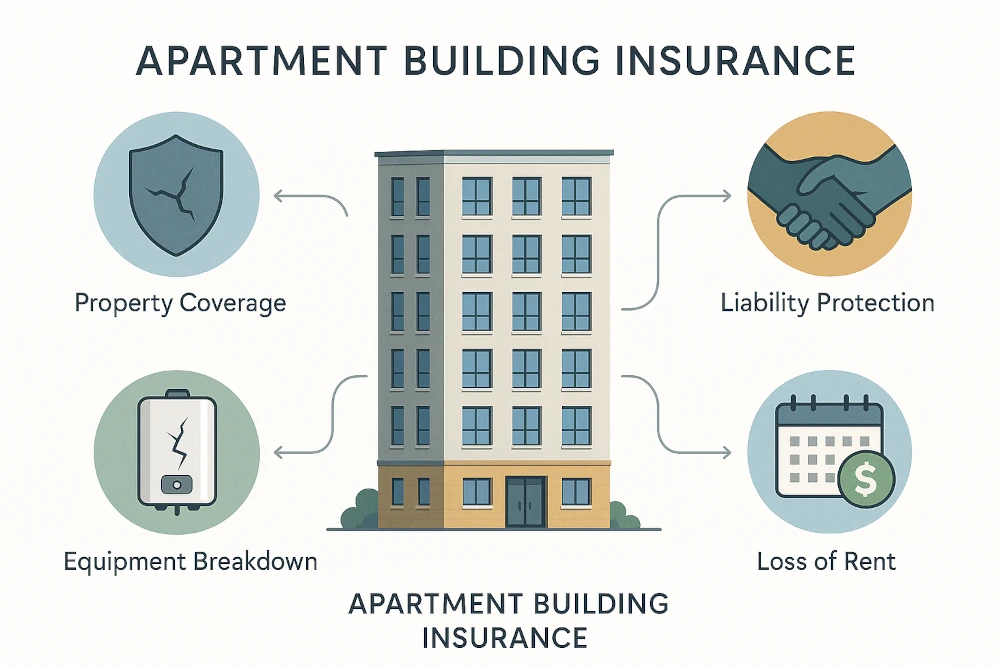
At the foundation of most apartment building insurance policies is property coverage. This portion of the policy is designed to protect the physical structure of the building and permanent fixtures attached to it.
Property coverage generally applies to the building itself rather than tenant belongings. It commonly includes walls, roofs, floors, ceilings, stairwells, hallways, and shared amenities. Mechanical systems such as electrical wiring, plumbing, and HVAC are often included as well, depending on policy terms.
Covered causes of damage usually include events such as fire, smoke, storms, vandalism, and certain types of water damage. If a covered loss occurs, property insurance helps pay for repairs or rebuilding costs, reducing the financial burden on the owner.
Accurate valuation is critical. Coverage limits should reflect current rebuilding costs rather than purchase price or market value. Underinsured buildings may leave owners paying out of pocket after a loss. Regular policy reviews help ensure coverage keeps pace with construction costs and property improvements.
Liability Coverage and Legal Protection
Liability coverage is a central component of apartment building insurance. While property coverage focuses on physical damage, liability insurance addresses legal and financial responsibility when injuries or property damage affect others.
Apartment building owners and managers can face claims from tenants, guests, vendors, or members of the public. Slip and fall accidents, injuries in common areas, or damage caused by maintenance activities are common sources of liability exposure.
Liability coverage typically helps with:
- Legal defense costs
- Medical expenses related to covered injuries
- Settlements or judgments tied to covered claims
This protection applies when an owner or operator is alleged to be responsible for unsafe conditions or negligence. Without adequate liability coverage, even a single claim can create serious financial strain.
Coverage limits should align with the size of the building, number of units, and volume of foot traffic. Higher-density properties often require higher limits due to increased exposure.
Coverage for Loss of Rental Income
Rental income is the lifeblood of an apartment building. When a covered loss makes units uninhabitable, lost rent can quickly add up. Many apartment building insurance policies include coverage for loss of rental income, sometimes referred to as business income coverage.
This coverage helps replace lost income while repairs are underway after a covered event such as a fire or storm. It allows owners to continue paying mortgages, utilities, taxes, and other ongoing expenses during the recovery period.
Loss of rental income coverage is especially important for multifamily properties, where a single incident can affect multiple units at once. Without this protection, owners may face extended financial disruption even after property repairs are complete.
Policy terms typically define how long income replacement applies and what documentation is required. Reviewing these details ahead of time helps avoid confusion during a claim.
Additional Coverage Options Owners Often Add
Beyond standard property and liability coverage, apartment building insurance can be customized with additional coverage options based on risk profile and location.
Common optional coverages include equipment breakdown insurance, which helps cover mechanical failures of systems like boilers or elevators. Ordinance or law coverage may help pay for upgrades required by updated building codes after a loss.
In certain areas, flood insurance or earthquake coverage may be necessary. These risks are often excluded from standard policies and require separate coverage. Owners should evaluate geographic exposure carefully.
Some policies also include coverage for vandalism or theft affecting building components. For properties with shared amenities or storage areas, this protection can be valuable.
Adding coverage should be based on actual exposure rather than assumptions. An experienced insurance advisor can help identify which options align with the building’s layout, age, and use.
How Insurance Supports Long-Term Risk Management
Insurance works best as part of a broader risk management approach. While coverage helps respond to losses, proactive maintenance and planning reduce the likelihood of claims in the first place.Regular inspections, timely repairs, and clear documentation support both safety and insurance outcomes. Well-maintained properties often experience fewer claims and smoother underwriting reviews.
Tenant communication also plays a role. Clear lease language, maintenance reporting procedures, and renter insurance requirements help define responsibilities and reduce disputes when issues arise.
Insurance policies should be reviewed annually or after major changes such as renovations, system upgrades, or shifts in occupancy. Coverage that fit the property years ago may no longer reflect current conditions.
Why Professional Guidance Matters for Apartment Building Insurance
Apartment building insurance is not one-size-fits-all. Policy terms, limits, and exclusions vary widely, and small differences can have major consequences during a claim.
Working with an insurance professional who understands apartment buildings helps ensure coverage aligns with real-world risks. This guidance can identify gaps, eliminate unnecessary coverage, and support cost control without sacrificing protection.
IIS Insurance Services works with apartment building owners, landlords, and property managers to evaluate insurance needs and structure policies that fit the realities of multifamily ownership. The goal is not just coverage, but confidence in how that coverage works when it matters most.
Understanding policy details before a loss occurs puts owners in a stronger position. Clear coverage supports faster recovery, fewer disputes, and better long-term outcomes.
Building Confidence Through Informed Coverage
Knowing what apartment building insurance includes allows owners to manage risk with clarity rather than guesswork. From protecting the structure and addressing general liability claims to maintaining rental income after disruptions, the right insurance coverage supports steady operations and long-term growth.
Apartment building ownership involves many moving parts, but insurance should not be one of the uncertainties. With informed planning and a well-designed insurance policy, coverage becomes a practical tool that supports decision-making rather than a reactive expense after a loss.
IIS Insurance Services is available to help review existing policies, explain coverage options, and tailor insurance solutions to specific property needs. A properly structured insurance policy helps protect investments, support tenants, and keep daily operations running smoothly.
If you are reviewing your current insurance coverage or planning for future growth, speaking with an experienced insurance advisor can help ensure your apartment building is protected from the risks that matter most.