


High-risk auto insurance often carries a stigma that leaves California drivers feeling boxed into limited options and inflated costs. Many of those assumptions stem from high-risk auto insurance misconceptions that do not reflect how today’s policies, pricing models, or state rules actually work. For drivers dealing with tickets, accidents, or license issues, misinformation can quickly lead to overpaying or choosing coverage that does not align with legal or financial needs.
Online forums, word-of-mouth advice, and even well-meaning friends often repeat half-truths about car insurance. These ideas spread quickly, especially among drivers already under pressure from court requirements or rising premiums. Without accurate guidance, drivers may delay coverage, accept policies that do not fit their situation, or carry limits that expose them to unnecessary liability.
IIS Insurance Services works with California drivers who need clear answers, not sales pressure. By addressing common high-risk auto insurance misconceptions and explaining how insurers actually evaluate risk, drivers can make informed decisions, remain compliant, and regain control over their insurance costs.
Understanding High-Risk Auto Insurance and Why Myths Persist
High-risk auto insurance is not a punishment or a permanent label. It is a classification used by insurance companies to assess the likelihood of future claims based on specific factors. Misunderstandings develop because many drivers hear secondhand advice or assume that one violation automatically removes all affordable options.
A common insurance myth is that high-risk coverage is a special policy with fixed pricing. In reality, high-risk auto insurance uses many of the same policy structures as standard auto insurance, with pricing adjusted for risk signals such as violations, claims, or coverage gaps. These signals change as a driver’s history changes.
Another reason myths persist is the lack of transparency around underwriting. Insurance companies do not always explain why a rate increased or coverage changed, which leads drivers to fill in the gaps with assumptions. Over time, these assumptions harden into beliefs that discourage drivers from comparing quotes or reviewing policy details.
Understanding how high-risk auto insurance actually works helps drivers move past fear-based decisions and focus on coverage that fits both legal requirements and personal budgets.
What Insurance Companies Consider High Risk
Driving Record and Claims History
A driving record plays a central role in risk evaluation. Multiple speeding tickets, at-fault accidents, reckless driving citations, or DUI convictions signal a higher likelihood of future claims. Insurers consider how recent these events are, how often they occur, and whether they show an ongoing trend.
Claims history matters just as much as violations. Several claims filed within a short time frame can increase premiums even when fault is unclear. Insurance companies focus on frequency because repeated claims suggest continued exposure.
Legal and Licensing Issues
License suspensions, lapses in coverage, or court-ordered filings such as SR-22 requirements raise concern for insurers. These issues indicate compliance risk and often result in higher premiums or reduced carrier availability until resolved.
Insurance Score and Risk Indicators
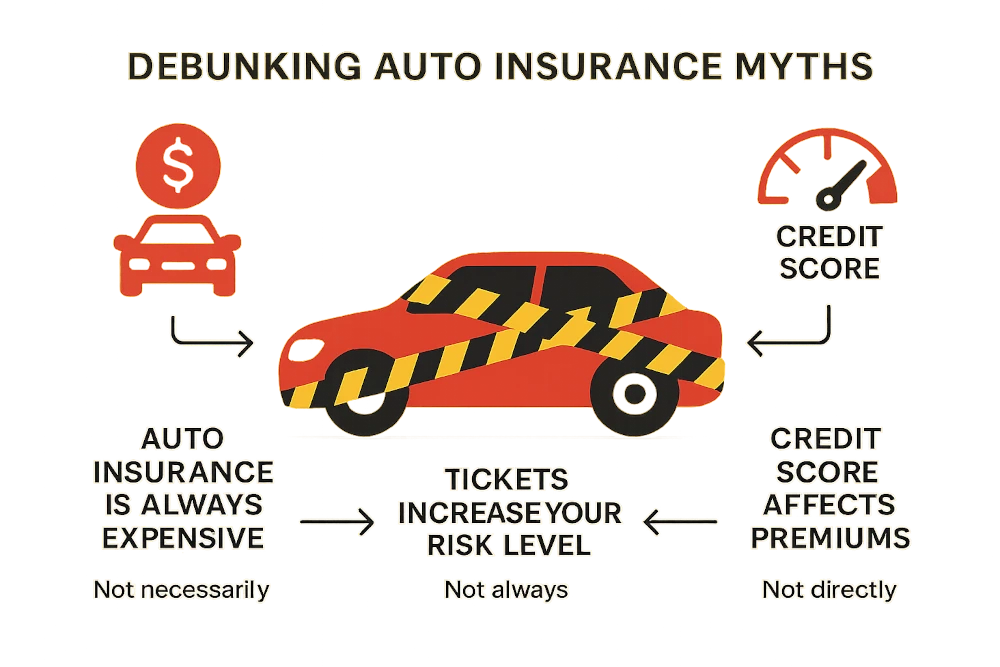
Some insurers use an internal insurance score based on factors such as your driving record, prior claims, and how consistently you have maintained coverage. In California, auto insurance pricing is largely driven by driving-related behavior rather than financial data. This type of risk indicator helps insurers assess patterns tied to future claims, not personal credit information. As violations age off your record and you maintain continuous insurance without lapses or new incidents, these indicators can improve over time. That improvement may lead to broader carrier options or more favorable pricing when you review your policy.
Common High-Risk Auto Insurance Misconceptions That Cost Drivers Money
Myth: High-Risk Drivers Have No Choice of Insurance Companies
Drivers often believe that once they are labeled high risk, they must accept the first quote they receive. In reality, different insurers weigh risk factors differently. Some carriers specialize in non-standard auto insurance and offer pricing models designed for drivers rebuilding their records.
Myth: Minimum Coverage Is Always Enough
California law sets minimum liability limits, but those limits may not cover the full cost of injuries or property damage after an accident. This liability myth often leaves drivers facing lawsuits or financial loss despite having active insurance.
Myth: High-Risk Insurance Always Means Extreme Premiums
Premiums depend on more than risk status. Vehicle type, mileage, garaging location, and policy structure all influence cost. Adjustments in these areas can reduce premiums even for risk drivers.
Myth: One Violation Defines Your Insurance Future
Insurance companies reassess risk over time. Drivers who maintain coverage and avoid new violations often qualify for better pricing sooner than expected.
Affordable Coverage Options for High-Risk Drivers in California
SR-22 Insurance Filings
SR-22 insurance is not a separate policy. It is a filing that proves required liability coverage after certain violations. Drivers often assume SR-22 automatically results in high premiums, but pricing depends on the policy and carrier, not the filing itself.
Non-Owner Auto Insurance
Non-owner auto insurance helps drivers who do not own a vehicle but still need coverage to meet legal obligations. This option provides liability protection while driving borrowed or rented vehicles and often costs less than standard policies.
Adjusting Coverage and Policy Limits
Drivers can manage premiums by reviewing deductibles, limits, and optional coverages. Paying only for necessary protection prevents wasted expense while maintaining compliance.
Commercial and Business Use Coverage
Drivers using vehicles for work purposes need proper classification. Accurate commercial coverage prevents claim issues and regulatory problems without unnecessary overlap that increases cost.
Meeting California Insurance Requirements Without Delays
California requires active liability coverage for registered vehicles and frequent drivers. Failure to maintain coverage can result in fines, registration suspension, or license issues, especially for drivers already considered high risk.
Deadlines matter for drivers with court or DMV requirements. Missed filings or incorrect paperwork can extend suspensions or trigger additional penalties. Fast, accurate processing reduces that risk.
IIS Insurance Services helps drivers meet insurance required by California law without confusion. From issuing proof of insurance to filing SR-22 forms, accuracy and speed protect drivers from further setbacks.
For drivers navigating high-risk auto insurance misconceptions, reliable guidance replaces uncertainty with confidence. Requesting a quote allows drivers to compare real options based on facts, not assumptions. With the right policy in place, drivers can stay compliant, control costs, and move forward with stability.
Get Help From IIS Insurance Services Today
If tickets, accidents, or license issues have affected your coverage options, IIS Insurance Services is ready to help. Our licensed agents work with California drivers every day to explain insurance requirements, review available options, and secure coverage that fits both legal obligations and budget concerns.
Whether you need an SR-22 filing, non-owner auto insurance, or a standard auto policy adjusted for your driving record, IIS Insurance Services provides fast quotes and clear guidance without confusion. We focus on accuracy, speed, and coverage that works for your situation.
Contact IIS Insurance Services today to request a quote, review your options, and move forward with confidence. One conversation can help replace uncertainty with clarity and get you back on the road fully insured.