

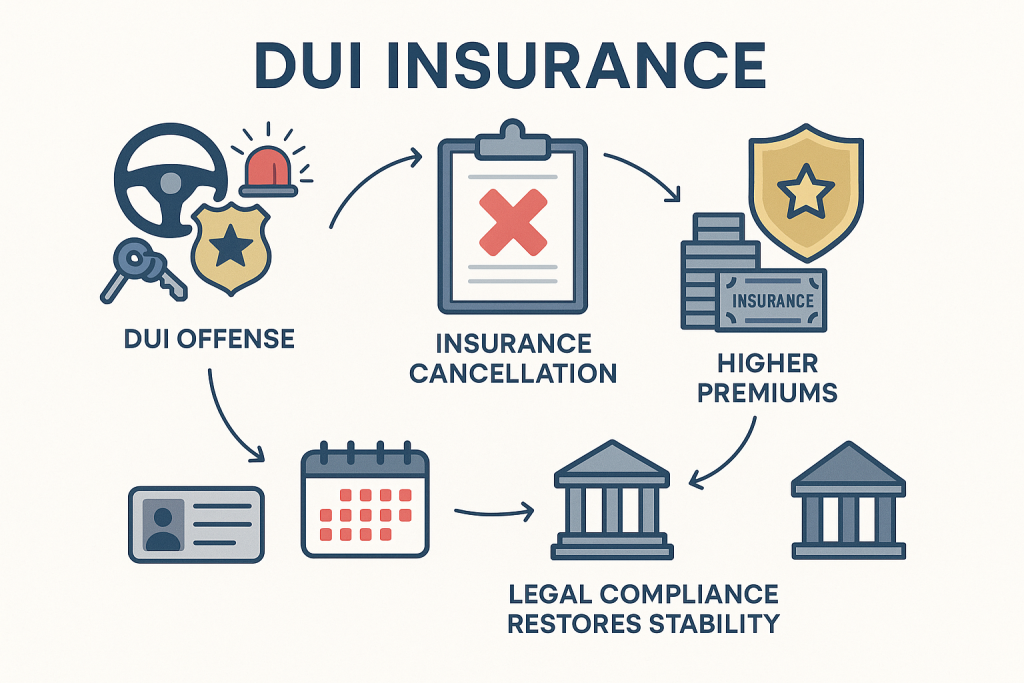
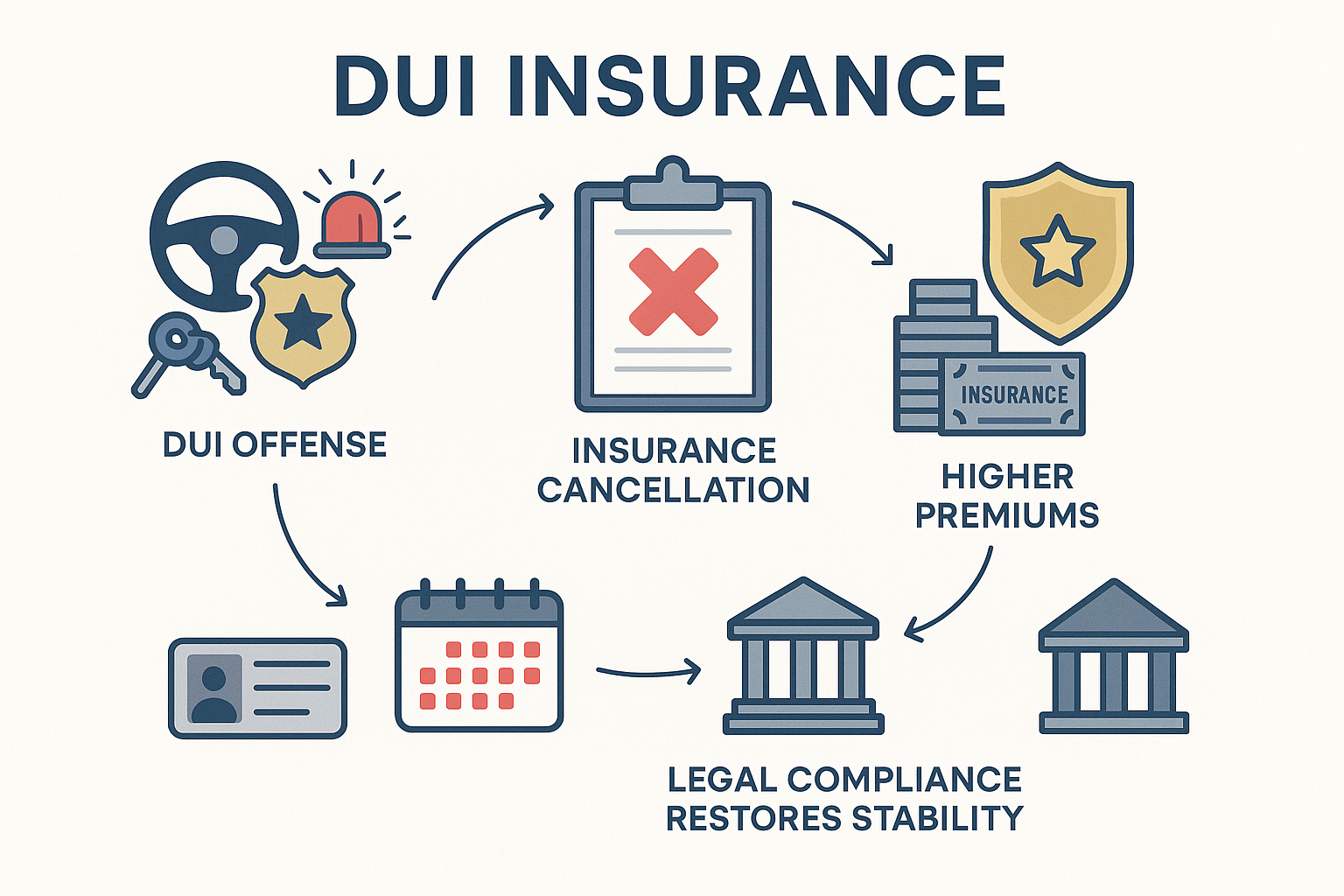
A DUI can change your driving privileges, insurance options, and monthly expenses with little warning. You may need to address a license suspension, complete a court-ordered program, file an SR-22, and maintain uninterrupted coverage before you can legally return to the road.
These obligations may come from both the California Department of Motor Vehicles and the criminal court. Because the two processes are separate, completing a court requirement doesn't automatically restore your license. Likewise, meeting a DMV requirement doesn't resolve your criminal case.
Knowing how the DUI insurance and legal compliance process works can help you avoid missed deadlines, added penalties, and insurance lapses. IIS Insurance Services helps California drivers compare DUI insurance, SR-22 coverage, and Non-Owner SR-22 policies. Its team provides straightforward support designed to keep the insurance portion of the process clear, affordable, and manageable.
How a DUI Conviction Changes Your Insurance Options
Insurance companies use your driving record to estimate the likelihood of future accidents and claims. A DUI conviction signals increased risk, so your insurer may move you from a preferred program into a high-risk insurance category.
This change can affect your premium, available discounts, payment options, and eligibility with certain carriers. Your current company may continue the policy at a higher price, move you into a different rating program, or decide not to renew your coverage.
Common insurance consequences include:
- Higher car insurance premiums
- Loss of a good-driver discount
- Fewer companies willing to offer coverage
- A possible policy non-renewal
- An SR-22 filing requirement
- Higher down payments or installment charges
- Greater scrutiny when the policy renews
Insurance rates will likely go up after a recent DUI, but the amount varies by carrier and driver. Companies may also consider your age, vehicle, location, annual mileage, prior claims, other violations, and coverage history.
A driver with one DUI and an otherwise clean record may receive different quotes than someone with multiple DUI convictions, recent accidents, or a previous lapse. Each carrier applies its own underwriting rules, which is why the first quote you receive may not be the most affordable option.
A DUI may also affect optional protection. Some insurers continue to offer collision, comprehensive, uninsured motorist, roadside assistance, and rental reimbursement. Others may restrict certain choices or offer only a basic liability policy.
Compare policies using the same drivers, vehicles, liability limits, deductibles, and optional coverage. A cheaper quote may provide less protection or exclude something you expected to have.
IIS Insurance Services works with participating insurers that serve California drivers with difficult records. Instead of treating the DUI as an automatic dead end, its agents can review available programs and explain how each policy handles your record, vehicle, and filing needs.
State Requirements and the SR-22 Filing Process
Many drivers first hear about an SR-22 after a DUI arrest or conviction. Despite the common phrase “SR-22 insurance,” the SR-22 isn't a separate type of coverage.
It's a document that proves you carry qualifying liability insurance. An authorized insurance company files it with the California DMV on your behalf.
The SR-22 connects your active policy to the state’s financial responsibility requirement. If the policy is canceled or lapses, the insurer may notify the DMV. That notice can lead to another suspension or interrupt the required filing period.
A typical process may include:
- Confirm your DMV status. Review the suspension notice and determine whether you're eligible for reinstatement or restricted driving privileges.
- Purchase qualifying auto insurance. Choose a policy that reflects whether you own a vehicle and how you use it.
- Request the SR-22 filing. The insurer submits the certificate to the DMV, usually electronically.
- Complete other obligations. You may need to enroll in a DUI program, install an ignition interlock device, or pay court and DMV charges.
- Wait for official approval. Don't drive until the DMV confirms that your license is active or restricted.
The filing itself doesn't provide liability protection. Your underlying insurance policy provides that coverage. It's important to review the policy limits, exclusions, deductibles, and covered drivers rather than focusing only on the SR-22.
California DUI cases may involve an ignition interlock device. This device connects to the vehicle’s ignition and requires a breath sample before the car will start. Installation doesn't automatically restore your license. You must still satisfy the remaining state requirements and receive authorization from the DMV.
Navigating legal issues related to a DUI often requires support from different professionals. An insurance agent can handle coverage and the SR-22 filing. A qualified attorney can advise you about criminal defense, court orders, and legal rights. DUI program providers and approved interlock installers handle their respective requirements.
Standard and Non-Owner DUI Insurance Policies
The right insurance arrangement depends largely on whether you own a vehicle.
A standard auto policy with an SR-22 may be appropriate if you own a car. The policy can provide liability insurance and any optional physical damage protection you select and qualify for.
A Non-Owner SR-22 policy may be appropriate if you don't own a car but need proof of financial responsibility to restore your driving privileges. It generally provides liability protection when you occasionally drive certain borrowed or rented vehicles.
| Insurance option | Best suited for | What it generally provides | Important limitation |
|---|---|---|---|
| Standard auto policy with SR-22 | A driver who owns a vehicle | Liability coverage for the listed car and an SR-22 filing | The DUI may result in higher premiums |
| Non-Owner SR-22 policy | A driver who doesn't own a vehicle | Liability coverage while occasionally operating certain vehicles | Usually doesn't cover damage to the vehicle being driven |
| Liability-only auto policy | A vehicle owner seeking necessary car insurance coverage at a lower price | Bodily injury and property damage liability | Doesn't cover damage to your own vehicle |
| Policy with collision and comprehensive | A vehicle owner seeking broader protection | Liability plus coverage for certain vehicle losses | Deductibles apply, and the price is usually higher |
Non-owner insurance isn't appropriate for every driver without a car. It may not fit your situation if you regularly operate a household vehicle, have consistent access to one car, or should be listed as a driver on another person’s policy.
Be accurate about ownership and vehicle access. Hiding regular use, listing the wrong address, or leaving out a household driver may cause a premium adjustment, cancellation, or claims dispute.
A driver who owns a car generally can't use a non-owner policy as a substitute for insuring that vehicle. Likewise, a person who borrows the same car every day may need to be added to the owner’s insurance rather than relying on non-owner protection.
IIS Insurance Services can help determine which option reflects your actual driving situation. Its agents can compare standard and non-owner programs and arrange the required filing once an eligible policy is issued.
Legal Compliance and Continuous Coverage
Legal compliance doesn't stop once the SR-22 reaches the DMV. You must keep the qualifying insurance active for the full period required by the state.
A missed payment can create a lapse. If the insurer reports that lapse, the DMV may suspend your license again. You may then need to purchase another policy, submit a new filing, and pay additional charges before driving legally.
Use these habits to protect your coverage:
- Set up automatic payments when practical.
- Keep your mailing address, email, and phone number current.
- Update expired debit or credit card information promptly.
- Open notices from your insurer and the DMV.
- Contact the agency before changing vehicles or carriers.
- Confirm that a replacement policy is active before canceling the old one.
- Keep copies of your policy, SR-22 confirmation, receipts, and DMV letters.
Don't remove the SR-22 simply because your license has been reinstated. The DMV may require you to maintain proof for a longer period. Confirm that the obligation has ended before canceling the filing or changing to a policy that doesn't include it.
You should also follow every restriction placed on your license. A restricted license may allow driving only for work, school, a DUI program, medical care, or other approved purposes. An interlock-restricted license may allow broader vehicle use, but only when the required device is installed.
Driving outside the permitted conditions can lead to new legal problems and further insurance issues. It may also affect how insurers evaluate your record when the policy renews.
An SR-22 doesn't replace other court or DMV obligations. The driver may still need to complete alcohol education, attend treatment, pay fines, satisfy probation conditions, or resolve other holds.
The safest approach is to track each requirement separately. Keep a written record of what has been completed, what remains outstanding, and which agency must approve each item.
How to Manage Car Insurance Costs after a DUI
A DUI usually raises insurance costs, but carriers don't all charge the same amount. Comparing multiple companies can uncover meaningful differences in premium, down payment, fees, and available protection.
Begin with accurate information. Gather your driver’s license details, vehicle identification number, current declarations page, mileage estimate, household driver information, and any DMV notice related to the SR-22.
When reviewing quotes, compare:
- Total six-month or annual cost
- Initial down payment
- Monthly installment amount
- SR-22 and policy fees
- Liability limits
- Collision and comprehensive deductibles
- Exclusions and driver restrictions
- Cancellation and renewal terms
A higher deductible may lower the insurance premium for collision or comprehensive coverage. However, you will pay a larger amount after a covered loss. Choose a deductible you could realistically afford if your vehicle were damaged.
You may also consider removing optional coverage from an older car, but check whether the vehicle is financed or leased. Lenders commonly require collision and comprehensive protection.
Ask about discounts that may still be available. Depending on the insurer, potential savings may include automatic payments, policy bundling, low mileage, vehicle safety equipment, or other approved factors. A defensive driving course may help with certain companies, although it doesn't erase the DUI or replace court-ordered education.
Continuous coverage can also influence future options. A lapse may lead to higher pricing in addition to DMV consequences. Keeping the policy active shows stability and helps prevent another obstacle when you shop at renewal.
Time matters as well. A recent offense generally has a stronger effect than an older one. Maintaining a cleaner record after the incident may gradually open access to additional carriers and better rates.
Be cautious of offers that promise unusually cheap coverage without reviewing your record or vehicle use. The lowest price may come with inadequate liability limits, missing physical damage coverage, or inaccurate information on the application.
IIS Insurance Services has helped California drivers with DUI-related coverage since 2009. Its independent approach allows agents to compare participating insurers, explain cost differences, and help you choose coverage based on your legal obligations and budget.
Insurance Issues: Get Help Staying Insured and Compliant
A DUI can create new paperwork, higher rates, and stricter obligations. Staying organized and maintaining the correct policy can help prevent another suspension or unnecessary delay.
IIS Insurance Services helps California drivers compare standard auto, high-risk, SR-22, and Non-Owner SR-22 options. Its agents can explain the insurance requirements, arrange the filing, and search participating carriers for coverage suited to your driving situation and budget.
Have your DMV notice, driver information, vehicle details, and current policy ready when requesting a quote. Contact IIS Insurance Services for friendly support and practical help staying insured while you work through your DUI obligations.