

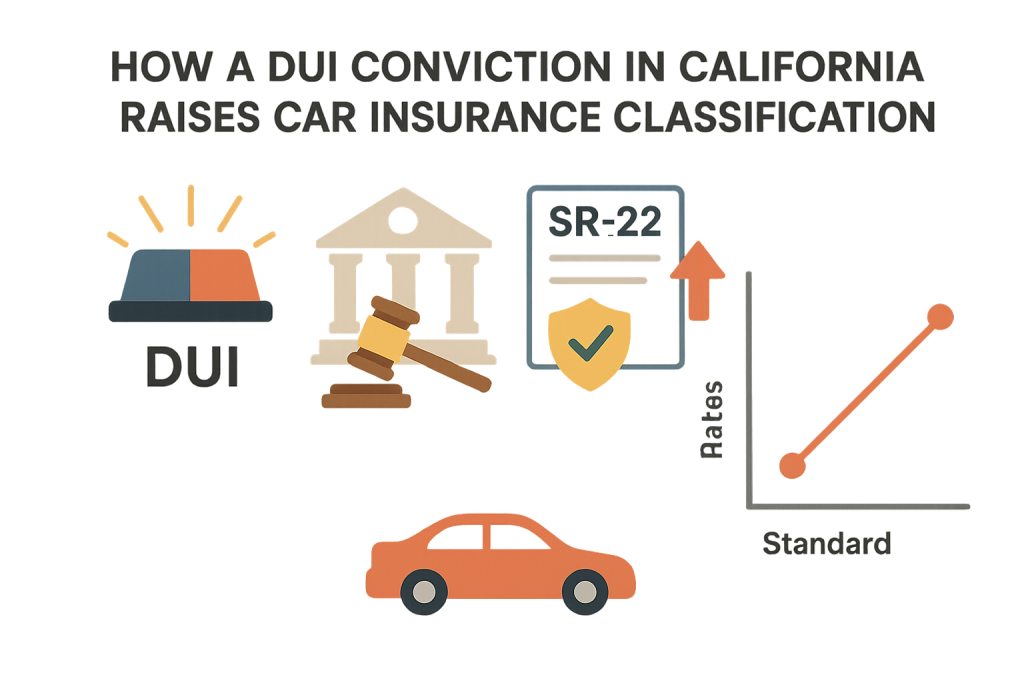
A DUI can change how an insurance company evaluates your driving risk. You may lose access to preferred programs, face higher premiums, or need an SR-22 filing before the California Department of Motor Vehicles restores your driving privileges.
The change can feel abrupt, especially when you're also handling court dates, DMV notices, fines, and transportation problems. Still, a DUI conviction doesn't make you uninsurable. It usually means you need to compare a different group of carriers and pay closer attention to policy requirements.
Understanding how a DUI affects insurance classification can help you avoid rushed decisions, coverage gaps, and policies that don't meet your needs. IIS Insurance Services helps California drivers compare standard auto insurance, high-risk coverage, SR-22 policies, and Non-Owner SR-22 options. Its team focuses on clear answers, affordable choices, and support without judgment.
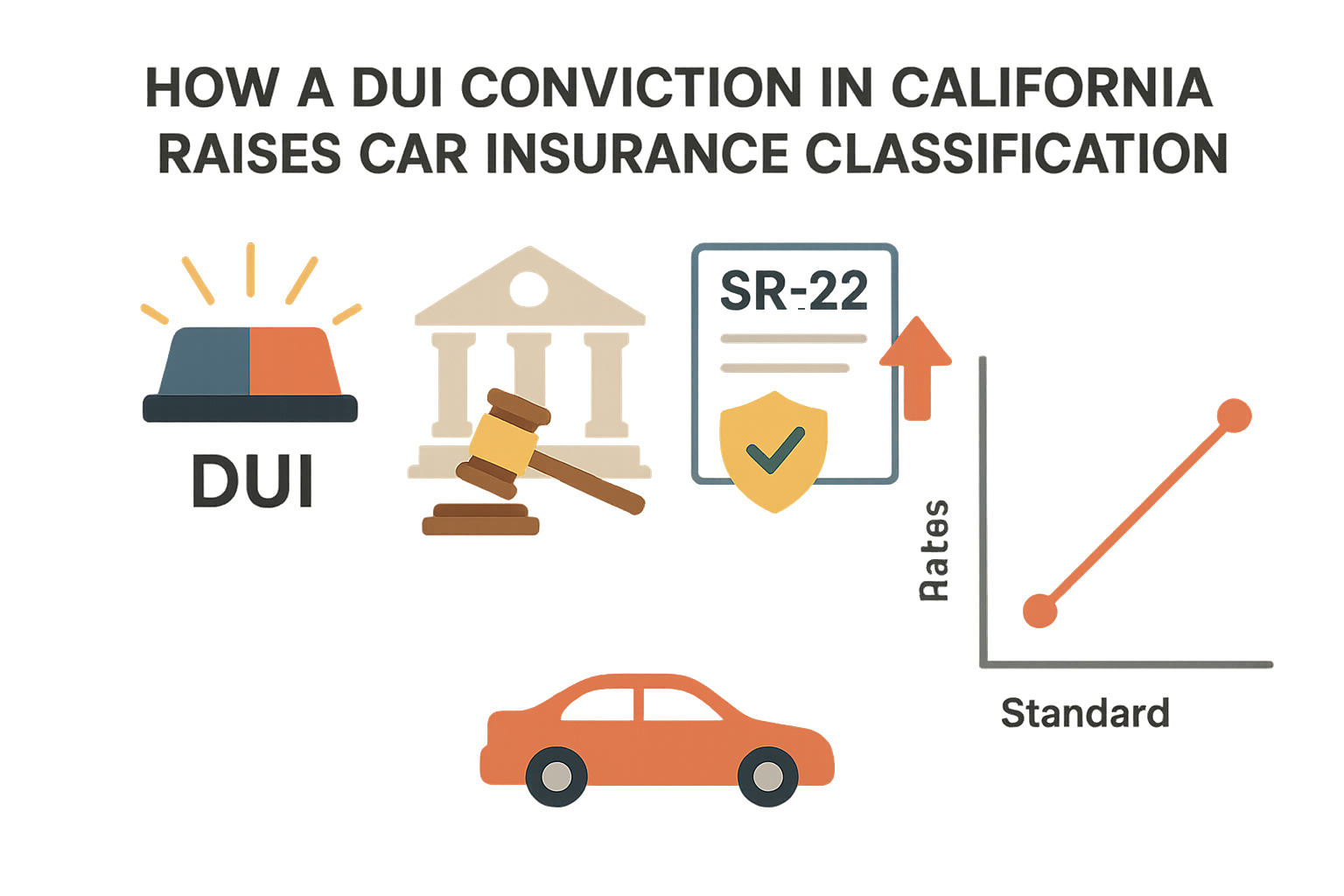
Why a DUI Changes Your Insurance Classification
Insurance companies place drivers into rating groups based on the likelihood of future claims. Your driving record, age, location, vehicle, previous accidents, coverage history, and other approved factors can all influence where you fall.
A recent DUI conviction usually moves a driver out of a preferred or standard rating group and into a high-risk driver category. Insurers view an alcohol-related offense as evidence that the chance of another serious violation or accident may be higher.
This classification can affect several parts of your policy:
- The premium charged for coverage
- Eligibility for preferred insurance programs
- Access to safe-driver discounts
- Available payment plans
- Whether the current insurer renews the policy
- Whether an SR-22 filing is required
- The number of carriers willing to offer coverage
Your insurance company may classify you differently when it reviews your motor vehicle record. That review commonly occurs when you apply for a policy, add a vehicle, change drivers, or reach a renewal period.
A DUI doesn't affect every carrier in the same way. One insurer may decline the application, while another may offer coverage through a nonstandard program. A third may continue the policy but apply a substantial rate increase.
That variation makes comparison shopping especially useful. Staying with the same insurer may feel easier, but the company that offered a competitive rate before the DUI may no longer be the best fit afterward.
High Risk Doesn't Mean Uninsurable
The term high risk describes an insurance rating category. It's not a judgment about your character, and it doesn't mean every company will refuse to insure you.
Some carriers specialize in drivers with DUI convictions, suspensions, previous lapses, or multiple traffic violations. These companies may offer the policy and filing support needed to help you return to legal driving.
IIS Insurance Services works with California drivers whose records no longer qualify for standard coverage. Instead of limiting you to one insurer, its agents can compare participating carriers and explain how each option handles the DUI, vehicle, coverage limits, and SR-22 requirement.
How a DUI Affects Car Insurance Rates and Coverage
A DUI can raise your auto insurance rate because the carrier expects greater claims risk. The amount of the increase varies widely, so there's no reliable statewide monthly price that applies to every driver.
Your new insurance premiums may depend on:
- How recently the DUI occurred
- Whether it was a first or repeat offense
- Other accidents or traffic violations
- Your age and driving experience
- The vehicle you insure
- Your California ZIP code
- Annual mileage and vehicle use
- Liability limits and deductibles
- Whether you maintained continuous coverage
- The insurer’s underwriting rules
A DUI may also cause a loss of preferred rates or discounts. Even when the base premium doesn't change dramatically, losing a safe-driver discount can make the total policy cost noticeably higher.
Coverage availability may change as well. Some insurers offer only liability coverage to certain high-risk drivers, while others continue to offer collision, comprehensive, uninsured motorist, and roadside assistance. Vehicle age, value, financing, and carrier rules all influence what's available.
| Insurance change | Why it may happen | What it can mean for you |
|---|---|---|
| High-risk classification | The DUI signals greater expected claims risk | Higher premiums and fewer carrier choices |
| Loss of preferred discounts | A clean-record requirement is no longer met | The policy price may increase at renewal |
| Non-renewal | The current carrier may not accept recent DUI convictions | You must arrange replacement coverage before the policy ends |
| SR-22 requirement | The DMV requires proof of financial responsibility | An insurer must file the certificate with the state |
| Stricter underwriting | The carrier reviews the DUI, accidents, and prior violations | More documentation or limited policy options may apply |
| Higher deductibles or reduced optional coverage | The driver adjusts coverage to manage cost | Lower premiums may come with greater out-of-pocket exposure |
Don't compare policies by price alone. A cheaper quote may use lower liability limits, exclude a household driver, remove physical damage coverage, or require a larger deductible.
Ask the agent to quote the same drivers, vehicles, limits, deductibles, and optional coverage across each carrier. That creates a fair comparison and reduces the risk of discovering an important difference after the policy starts.
SR-22 Insurance and Your High-Risk Status
An SR-22 is a certificate of financial responsibility, not a separate insurance product. An authorized insurer files it with the California DMV to confirm that you carry qualifying liability coverage.
Drivers may need an SR-22 after a DUI, an uninsured accident, a license suspension, or another serious violation. The requirement is connected to the driver’s DMV record, while the actual protection comes from the underlying insurance policy.
A standard auto policy with an SR-22 may be appropriate when you own a vehicle. The policy can include liability coverage and, when selected and available, protection such as collision and comprehensive coverage.
A Non-Owner SR-22 policy may be suitable when you don't own a car but need the filing to restore or maintain driving privileges. It generally provides liability protection while you occasionally operate certain borrowed or rented vehicles.
Non-owner coverage may not be appropriate when you:
- Own a registered vehicle
- Regularly drive a household member’s car
- Have regular access to one specific vehicle
- Should be listed on another person’s policy
- Need physical damage coverage for the vehicle you drive
Tell the agent exactly what vehicles you own, borrow, or use. Incomplete information can result in a policy that doesn't match your exposure or provide the coverage you expected after a claim.
Why Continuous SR-22 Coverage Matters
The insurer may notify the DMV if an SR-22 policy is canceled or lapses. That report can lead to another suspension or interrupt the required filing period.
Protect your coverage by making payments on time, updating expired debit or credit card information, and opening all notices from the insurer. Contact the agency before you change carriers, replace a vehicle, move, or cancel the policy.
Don't remove the filing simply because your license has been reinstated. The SR-22 may need to remain active for a set period. Confirm that the requirement has ended before changing the policy.
IIS Insurance Services can help arrange standard or Non-Owner SR-22 insurance and submit the required filing. Its agents can also explain when the policy becomes active and what steps may help prevent a lapse.
How Long a DUI Can Affect Insurance Eligibility
The period during which a DUI appears on a driving record and the period during which it affects insurance pricing are related, but they're not always identical.
Insurers consider the age of the offense, their underwriting guidelines, and the rest of the driver’s record. A recent conviction usually has a stronger effect than an older one. Repeat DUI convictions or additional violations may extend the period of restricted eligibility and higher rates.
Expungement of a criminal case may help with some non-insurance matters, but it doesn't necessarily remove the DUI from the DMV record or immediately change how an insurer evaluates the risk. Drivers considering expungement should seek legal advice about its effect on their specific case.
Insurance eligibility can improve over time when you:
- Maintain continuous coverage without cancellations.
- Avoid new accidents and traffic violations.
- Complete all court and DMV requirements.
- Follow any restricted-license or ignition interlock rules.
- Compare rates at each renewal rather than assuming the current price is still competitive.
A clean record following the offense gives insurers new information to evaluate. It doesn't erase the DUI immediately, but it can help show that the incident isn't part of an ongoing pattern.
Review your policy before each renewal. Confirm that the vehicle, mileage, household drivers, address, and coverage selections are accurate. Updated information may reveal a better carrier or policy structure.
Finding Affordable DUI Insurance in California
Insurance after a DUI usually costs more, but the first quote you receive isn't necessarily the best available price. Carriers use different rating methods, and some have programs designed for drivers with serious violations.
Begin by gathering your driver’s license information, vehicle details, current declarations page, and any DMV notice showing an SR-22 requirement. Accurate information helps the agent obtain realistic quotes and prevents changes after the policy is issued.
Use these strategies when comparing coverage:
- Request quotes from several high-risk insurance carriers.
- Keep the coverage limits and deductibles consistent.
- Ask whether SR-22 filing fees are included.
- Compare the full policy cost, not only the monthly payment.
- Review down payments and installment charges.
- Check whether collision and comprehensive coverage are included.
- Ask about exclusions, driver restrictions, and cancellation terms.
- Confirm when the policy and SR-22 will become effective.
Raising a collision or comprehensive deductible may reduce the premium, but it also increases the amount you pay after a covered claim. Choose a deductible you could manage without creating another financial problem.
Dropping optional physical damage coverage may lower the price on an older car. However, a lender or leasing company may require it. Review the financing agreement before removing coverage.
You may still qualify for certain discounts. Availability varies by insurer, but possible savings can include automatic payments, bundling, vehicle safety equipment, or other carrier-approved factors. A defensive driving course may also help in some situations, although it doesn't remove the DUI or replace court-ordered education.
Be cautious of any so-called “DUI insurance tricks” that involve hiding drivers, using an inaccurate address, or failing to disclose regular vehicle use. Incorrect information can lead to a changed premium, policy cancellation, or claim dispute.
IIS Insurance Services has helped California drivers find coverage for difficult records since 2009. Its independent agency model allows the team to compare participating insurers, explain policy differences, and help drivers meet SR-22 requirements without treating them like a case number.
Get Help Finding Insurance after a DUI
A DUI can change your insurance classification, increase your premium, and create new filing requirements. It doesn't remove every path to affordable, legal coverage.
IIS Insurance Services helps California drivers compare high-risk auto insurance, SR-22 policies, and Non-Owner SR-22 coverage. You receive help from a live agent who can explain your options, handle the filing, and search participating carriers for a policy suited to your vehicle use and budget.
Have your driver information, vehicle details, DMV notice, and current insurance documents ready. Contact IIS Insurance Services for a personalized quote and practical support as you work toward stable coverage and a cleaner driving record.