

Court-Mandated SR22 Without a Car Explained
Drivers who face a court order for an SR-22 often assume the requirement only applies if they own a vehicle. In reality, courts and state departments frequently mandate SR-22 filings even when a driver does not own a car. Understanding how courts mandate non-owner sr22 helps drivers meet legal obligations, reinstate driving privileges, and avoid further penalties.
IIS Insurance Services works with drivers across the country who are navigating court-ordered insurance requirements after license suspensions, DUIs, or other serious violations. This article explains why courts require non-owner SR-22 filings, how the process works, what drivers must do to stay compliant, and how to complete the requirement without unnecessary delays or costs.
What a Court-Mandated Non-Owner SR-22 Means
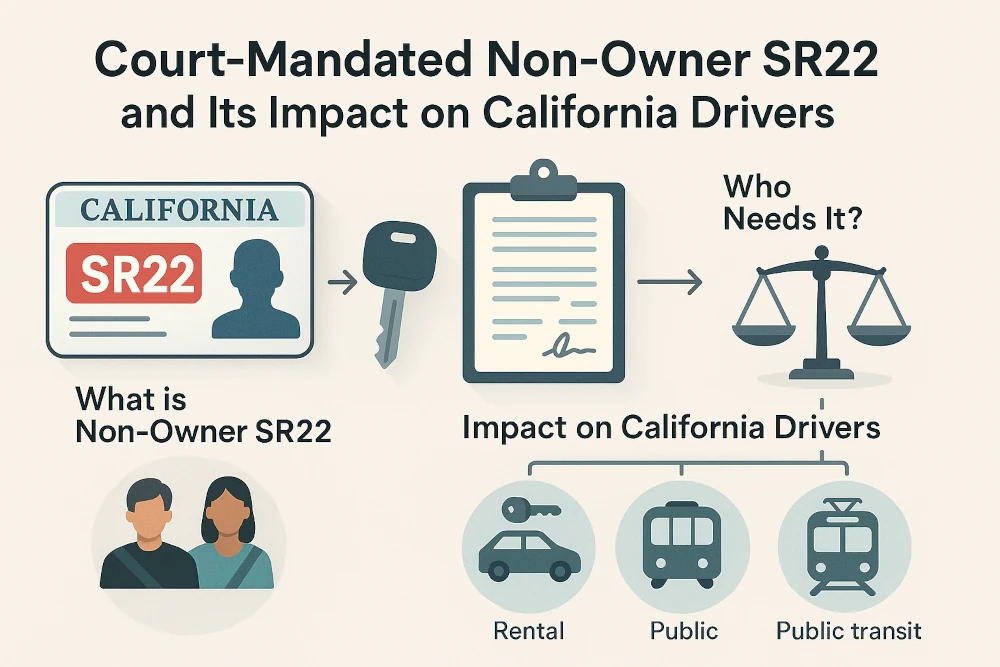
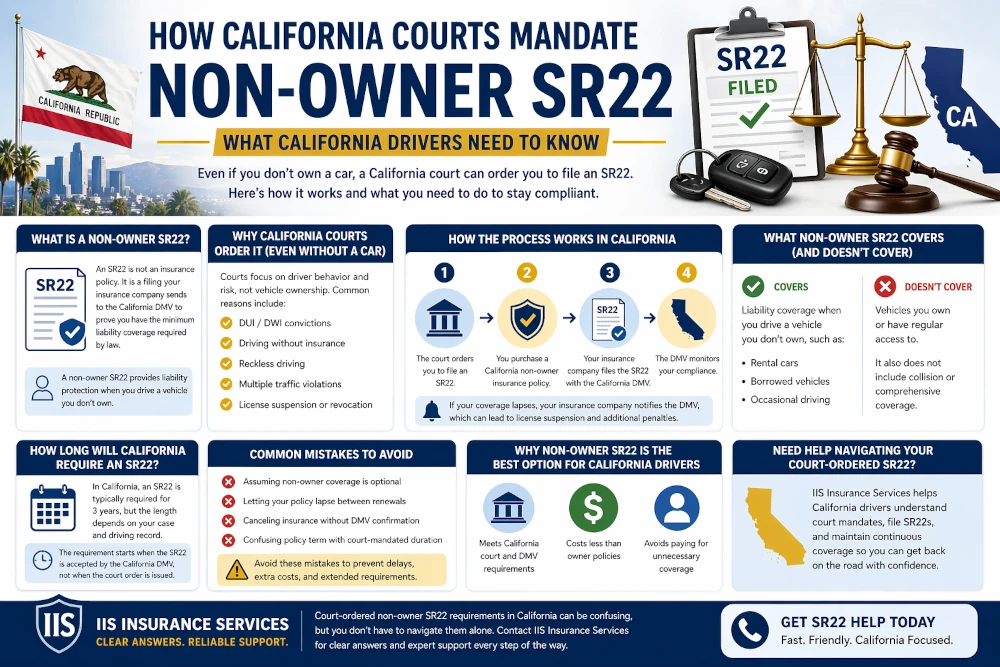
An SR-22 is not an insurance policy. It is an insurance filing submitted by an insurance company to the state, confirming that a driver meets minimum financial responsibility requirements. Courts often order this filing after violations that indicate a higher risk, even when the driver does not own a vehicle.
A non-owner SR-22 applies to drivers who:
- Do not own a vehicle
- Borrow or rent cars occasionally
- Need to reinstate or maintain a valid license
The policy attached to the filing provides liability insurance when the driver operates a vehicle that they do not own. It does not cover damage to the vehicle itself.
Courts mandate this filing to ensure that any driver allowed back on the road carries required insurance protection at all times.
Why Courts Order SR-22 Filings for Drivers Without Cars
Courts focus on driver behavior rather than vehicle ownership. If a judge determines that a driver poses a higher risk based on their driving record, an SR-22 may be ordered regardless of whether the driver owns a car.
Common reasons courts require non-owner SR-22 insurance include:
- DUI or DWI convictions
- Driving without insurance
- Reckless driving
- Multiple traffic violations
- License suspension or revocation
The court’s goal is financial responsibility. Even if a driver plans to use public transportation or only drive occasionally, the court wants proof that insurance is in place before driving privileges are restored.
How the Court and State Work Together on SR-22 Requirements
Courts issue the order, but the state department of motor vehicles enforces compliance. Once the court mandates an SR-22, the driver must secure an insurance policy that meets state requirements and includes the SR-22 filing.
The process typically works as follows:
- The court orders an SR-22 filing
- The driver purchases a qualifying insurance policy
- The insurance company files the SR-22 with the state
- The state monitors compliance
If coverage lapses, the insurance company notifies the state. This often triggers immediate penalties, including license suspension.
IIS Insurance Services helps drivers understand the roles of both the court and the state, so nothing is missed.
How Non-Owner SR-22 Insurance Works in Practice
Non-owner SR-22 insurance follows the driver, not a specific vehicle. It provides liability coverage when driving a vehicle that is not owned by the policyholder.
This coverage generally applies when:
- Driving a rental car
- Borrowing a friend’s or family member’s car
- Driving occasionally, not regularly
It does not apply to vehicles owned by the driver or vehicles that are regularly available to them. It also does not include collision or comprehensive coverage.
Courts accept non-owner policies because they satisfy financial responsibility laws while matching the driver’s situation.
State Differences in Court-Mandated Non-Owner SR-22 Rules
Each state sets its own rules regarding SR-22 filings. Courts follow these state guidelines when issuing orders.
Differences may include:
- Length of time the SR-22 duration of non-owner sr22 requirements is required
- Minimum liability limits
- When the requirement officially begins
- Penalties for noncompliance
Some states require SR-22 filings for one year, while others require three years or longer. The requirement usually starts when the filing is accepted by the state, not when the court order is issued.
Drivers who move to another state must still satisfy the original state’s SR-22 requirement.
How Long Courts Typically Require Non-Owner SR-22 Coverage
The length of a court-mandated SR-22 requirement depends on state law and the underlying violation. Many states require continuous coverage for three years, but this varies.
Important points to understand:
- The policy term and SR-22 requirement are separate
- Renewals are required to maintain compliance
- Any lapse can reset the timeline
Courts expect uninterrupted coverage for the entire required period. Even a short lapse can result in additional penalties.
IIS Insurance Services helps drivers track timelines and avoid accidental resets.
What Happens If Coverage Lapses During a Court Order
Coverage lapses are one of the most common reasons drivers face extended SR-22 requirements. When a non-owner SR-22 policy lapses:
- The insurance company notifies the state
- The state may suspend the driver’s license
- Courts may impose additional penalties
Missed payments, policy cancellations, or switching insurers incorrectly can all cause lapses. Planning and maintaining consistent payments is critical.
How Driving Records Affect Court-Mandated SR-22 Insurance
Drivers required to file SR-22 insurance are often considered high-risk. Courts use driving records to determine whether the requirement is necessary and how long it should last.
Factors that influence court decisions include:
- Severity of violations
- Number of prior offenses
- Time between incidents
Maintaining a clean record during the SR-22 period helps avoid further court involvement and may reduce long-term insurance costs.
Ending a Court-Mandated Non-Owner SR-22 Requirement
Court-mandated SR-22 requirements do not end automatically. Drivers must confirm that the requirement has been fully satisfied before canceling coverage.
Steps to take include:
- Verifying the required period has passed
- Confirming the state has cleared the filing
- Waiting for official confirmation when possible
Canceling early can restart the entire requirement and lead to new penalties.
IIS Insurance Services assists drivers with confirming clearance before making changes.
Common Mistakes Drivers Make With Court-Ordered SR-22 Filings
Drivers often face delays due to misunderstandings rather than intentional mistakes. Common issues include:
- Assuming non-owner coverage is optional
- Letting policies lapse between renewals
- Canceling insurance without state confirmation
- Confusing policy term with court-mandated duration
Avoiding these mistakes helps drivers complete requirements on time.
Why Non-Owner SR-22 Is Often the Best Court-Approved Option
For drivers without vehicles, non-owner SR-22 insurance is usually the most practical solution. It:
- Meets court and state requirements
- Costs less than owner policies
- Avoids paying for unnecessary coverage
Courts accept this option because it maintains financial responsibility without forcing vehicle ownership.
IIS Insurance Services helps drivers determine whether non-owner coverage fits their situation.
Getting Help Navigating Court-Mandated SR-22 Requirements
Court-ordered insurance requirements can feel overwhelming, especially when deadlines and penalties are involved. Clear guidance helps drivers avoid setbacks and complete the process successfully.
IIS Insurance Services supports drivers by explaining court mandates, handling SR-22 filings, and helping maintain continuous coverage. Whether you are just starting the process or nearing completion, having the right support helps you move forward with confidence.
Drivers who need help understanding court-mandated non-owner SR-22 requirements can contact IIS Insurance Services for clear answers and reliable support.