

RV Insurance by Size and Class
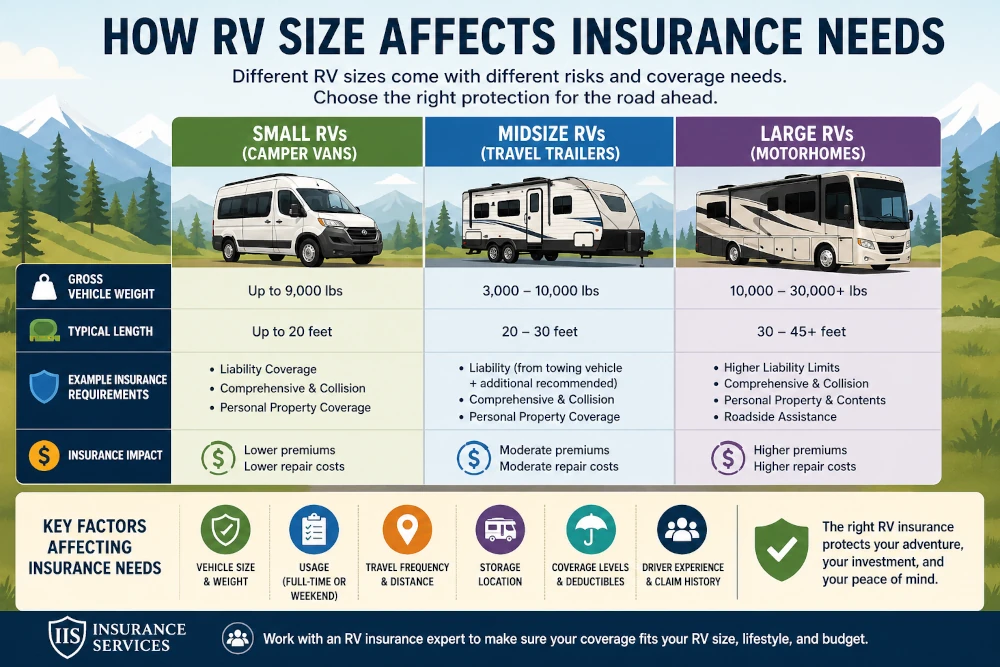
RV insurance is not one size fits all. The size of your recreational vehicle plays a direct role in how coverage is structured, how much protection is required, and how insurance costs are calculated. From compact camper vans to large motorhomes, vehicle size influences liability exposure, repair costs, and policy limits.
Understanding how RV size affects insurance needs helps owners choose coverage that matches how their vehicle is used. A policy that fits a smaller RV may leave gaps for a larger one. Likewise, ensuring a compact unit like a full-size motorhome can lead to unnecessary costs.
IIS Insurance Services helps RV owners understand how size, class, and usage affect insurance requirements so coverage stays aligned with real-world risk.
Choose the Right Coverage for Your RV
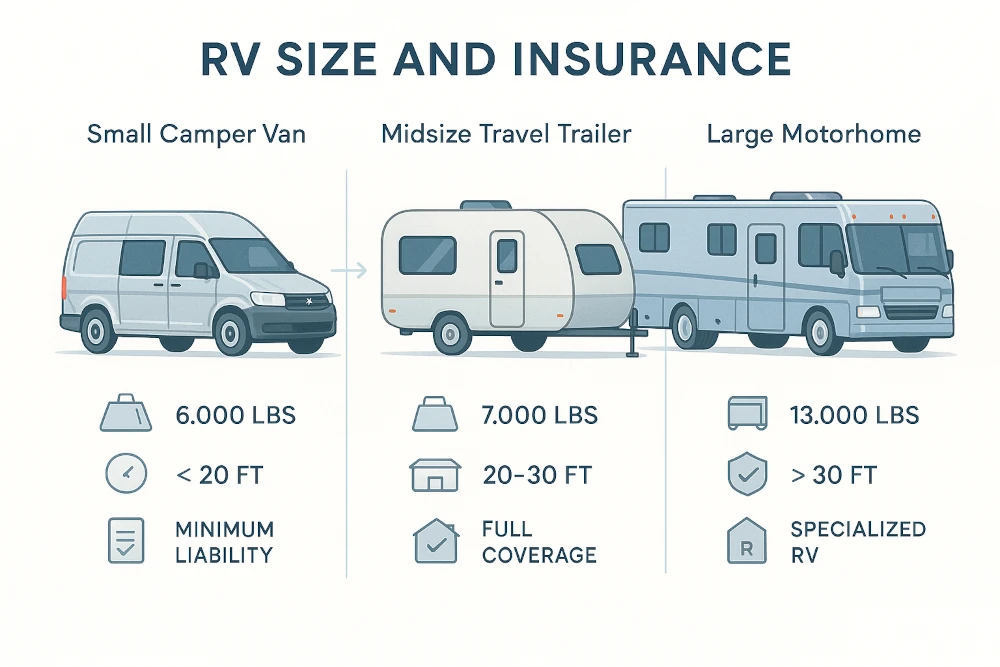
RV insurance requirements change as vehicle size increases. Larger RVs typically carry higher replacement values, require more coverage, and present greater liability exposure. Smaller RVs usually involve lower insurance costs and simpler policies.
Most states require liability insurance for motorhomes because they are self-propelled vehicles. Towable RVs may rely partly on the towing vehicle for liability, but still need insurance coverage for physical damage and personal property.
Insurance requirements also depend on how the RV is classified. Motorhomes are often insured like a combination of an auto policy and a homeowners-style policy, while trailers focus more on property coverage.
RV size affects these requirements because larger vehicles increase both risk and repair expense. IIS Insurance Services helps owners confirm what is required and what additional protection makes sense based on size and use.
How RV Class and Size Influence Insurance Coverage
RV class is closely tied to vehicle size. Class A, Class B, and Class C RVs each present different insurance considerations due to their dimensions, weight, and construction.
Class B RVs are the smallest motorized option. These camper vans typically have lower insurance premiums than Class A or Class C motorhomes. Their smaller size makes them easier to maneuver and less costly to repair, which reduces insurance risk.
Class C RVs are midsize motorhomes built on a truck or van chassis. Class C RVs typically have lower premiums than Class A motorhomes but higher premiums than Class B vehicles. Their size increases both repair costs and liability exposure, which affects insurance coverage needs.
Class A motorhomes are the largest and most expensive RVs. These vehicles often require higher liability limits and more comprehensive coverage due to their value and potential accident severity. Insurance coverage for Class A RVs is usually the most robust.
RV size directly affects insurance coverage because larger vehicles require more protection for both physical damage and liability risk.
How RV Size Impacts Insurance Rates and Premiums
Insurance rates for RVs vary significantly based on size. Larger RVs generally cost more to insure due to higher replacement costs, increased repair expenses, and greater liability exposure.
Insurance premiums depend on several factors tied to RV size. These include vehicle value, length, weight, and engine size. Larger RVs often require higher liability coverage, which increases insurance costs.
Smaller RVs and camper vans typically carry lower premiums because they are less expensive to repair and pose lower risk in accidents. Class C RVs fall in the middle, offering moderate insurance rates compared to the largest motorhomes.
RV insurance premiums depend on how the vehicle is used as well. Full-time RV living often requires expanded coverage regardless of size, while weekend use may keep premiums lower.
IIS Insurance Services reviews these factors to help RV owners understand how size affects insurance rates and where savings may exist.
Liability Coverage and RV Size Considerations
Liability coverage is one of the most affected areas when RV size increases. Larger RVs typically require higher liability limits because accidents involving heavier vehicles can result in more severe damage and injury.
RV size affects stopping distance, visibility, and maneuverability. These factors influence liability risk and insurance requirements. Larger motorhomes often require higher liability limits than smaller RVs or trailers.
Smaller RVs still require liability protection, but coverage limits may be lower depending on state requirements and usage patterns. Towable RVs may rely on the towing vehicle’s liability insurance, though additional coverage is often recommended.
Selecting appropriate liability coverage helps protect assets and income after an accident. IIS Insurance Services helps RV owners choose liability limits that reflect vehicle size and exposure rather than relying only on minimum requirements.
Choosing Insurance Based on RV Size and Usage
Choosing RV insurance requires matching coverage to both size and lifestyle. Size determines baseline risk, while usage shapes how that risk is applied day to day.
Full-time RV living often requires broader insurance coverage regardless of size. Larger RVs used as primary residences may need coverage similar to homeowners insurance, including personal liability and belongings protection.
Weekend travelers with smaller RVs may prefer simpler policies with lower insurance costs. Storage location, travel frequency, and travel distance all influence coverage decisions.
RV owners should review policies regularly as size, usage, or travel habits change. A policy that worked for a smaller RV may not provide enough coverage after upgrading to a larger model.
IIS Insurance Services helps RV owners compare insurance options, adjust coverage as needs change, rv insurance and weather-related risks, and select policies that support both safety and budget.
Get Help Understanding How RV Size Affects Insurance Needs
RV size plays a major role in shaping insurance requirements, coverage options, and costs. From compact camper vans to large motorhomes, choosing the right insurance depends on understanding how size affects risk.
IIS Insurance Services helps RV owners evaluate insurance coverage based on RV size, class, and usage. Whether you are purchasing your first RV or upgrading to a larger model, professional guidance helps prevent coverage gaps and unnecessary expense.
If you want to understand how your RV’s size affects insurance needs or review your current policy, contact IIS Insurance Services for clear answers and personalized support.