

How Liability Is Determined in Apartment Complexes
Understanding how liability works in apartment complexes is essential for property owners, landlords, management teams, and tenants alike. With multiple residents, shared spaces, and ongoing maintenance needs, responsibility is rarely limited to a single party. A minor oversight in one area can quickly affect many people, leading to injuries, disputes, and unexpected legal or insurance claims.
Liability questions often arise after accidents, property damage, or unsafe conditions. Knowing who is responsible, when insurance applies, and how risk is managed helps protect financial interests and supports safer living environments. This exhibits how liability typically functions in apartment settings and why proper insurance planning apartment complex matters for everyone involved.
Understanding Liability in Apartment Complexes
Liability in apartment complexes is largely shaped by premises liability law. This area of law focuses on the duty of care owed by property owners and operators to people who live in or visit the property. When someone is injured due to unsafe conditions, liability often depends on who controlled the area where the incident occurred and whether reasonable steps were taken to prevent harm.
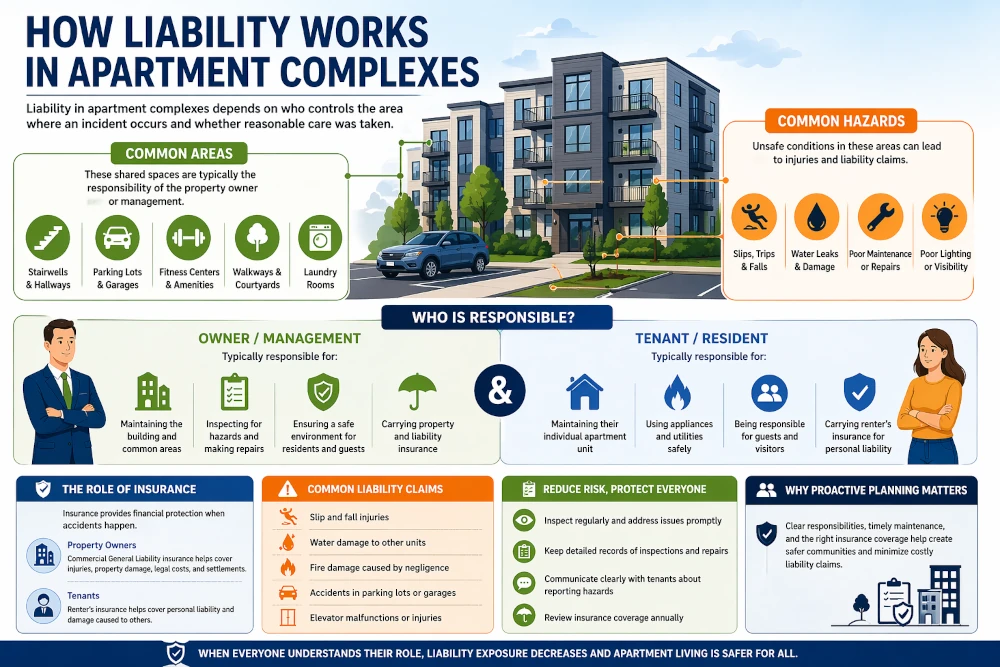
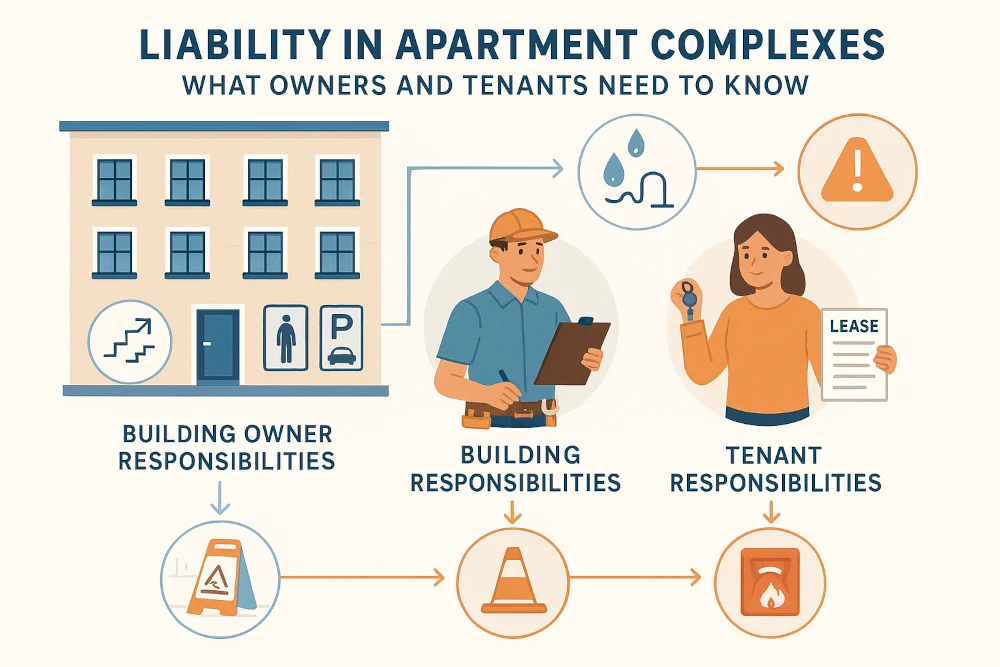
Apartment complexes involve layered responsibility. Property owners usually hold primary responsibility for maintaining the structure and shared areas. Management companies may also carry responsibility if they oversee daily operations or maintenance. Tenants, meanwhile, are responsible for conditions within their individual apartment units and for avoiding actions that create hazards for others.
Premises liability applies when injuries result from conditions such as uneven walkways, poor lighting, water leaks, broken handrails, or delayed repairs. In these cases, property owners can be held responsible if they knew or should have known about the hazard and failed to address it. Liability is not automatic, but it is closely tied to maintenance practices and response times.
Understanding these boundaries helps clarify why insurance coverage plays such a central role. Liability insurance exists to respond when claims arise, but coverage is effective only when responsibility is clearly defined, and risks are managed proactively.
Common Areas and Shared Spaces Where Liability Arises
Common areas are one of the most frequent sources of liability claims in apartment complexes. These spaces are used daily by tenants, guests, and service providers, and they fall under the control of the property owner or management team.
- Hallways and stairwells
- Parking lots and garages
- Laundry rooms and fitness areas
- Elevators and entryways
- Outdoor walkways and courtyards
Because tenants do not control these areas, liability usually rests with the property owner or operator. If an accident occurs due to unsafe conditions, such as a slip caused by water accumulation or a fall resulting from broken steps, the owner may be held responsible.
Liability exposure increases when hazards are not addressed on time. Delayed repairs, lack of inspections, or poor documentation can weaken a defense if a claim is filed. Even temporary issues, such as wet floors or debris, can lead to injury if warning signs or corrective action are missing.
Property owners can reduce liability risk by maintaining consistent inspection schedules, responding promptly to maintenance requests, and keeping records of repairs. Clear communication with tenants about reporting hazards also helps identify issues early before they lead to injuries.
Insurance coverage tied to common areas typically includes general liability protection. This coverage helps respond to claims involving bodily injury or property damage, including legal costs and settlements when applicable.
Tenant Responsibility and Individual Apartment Liability
While property owners manage shared spaces, tenants carry responsibility for conditions inside their own apartments. Liability may arise when a tenant’s actions or neglect cause injury or damage to others.
- Water damage is spreading from a tenant’s unit
- Fires caused by unsafe appliance use
- Injuries to guests inside the apartment
- Blocked exits or unsafe storage practices
If a tenant creates a hazardous condition that leads to injury, they may be held liable under personal liability principles. This is why renter’s insurance is strongly recommended in apartment complexes. Renter’s insurance can help cover personal liability claims and damage caused to other units or shared areas.
Tenants also play a role in minimizing risk by reporting maintenance issues promptly. When problems such as leaks, faulty wiring, or structural concerns are reported early, property owners can address them before they escalate. Failure to report issues may complicate liability questions if damage or injury occurs later.
Clear lease agreements often outline tenant responsibilities and insurance expectations. These agreements help set boundaries and reduce confusion when claims arise. From a risk management perspective, encouraging renter’s insurance protects both tenants and property owners by reducing disputes and coverage gaps.
The Role of Insurance in Managing Apartment Liability
Insurance serves as the financial backbone for managing liability in apartment complexes. Without appropriate coverage, even a single claim can place significant strain on a property’s finances.
For property owners and landlords, liability insurance helps cover claims related to injuries or property damage that occur in areas under their control. This may include legal defense costs, settlements, or judgments, depending on policy terms. Coverage limits should reflect the size of the property, the number of units, and the level of foot traffic.
Apartment complexes often carry commercial general liability insurance as part of a broader insurance program. This coverage is designed to respond to incidents involving tenants, guests, and third parties. It works alongside property insurance, which addresses physical damage to the building itself.
Tenants benefit from renter’s insurance, which covers personal liability within their apartment. If a guest is injured or damage spreads to neighboring units, renter’s insurance can help handle costs that would otherwise fall directly on the tenant.
Insurance does not replace safe management practices, but it provides protection when incidents occur despite reasonable care. Regular policy reviews are important, especially when properties undergo renovations, expand amenities, or experience changes in occupancy.
Working with an insurance provider that understands apartment complex operations helps ensure coverage aligns with actual risks. Policies should be tailored to the property’s structure, location, and management model rather than relying on generic coverage assumptions.
Why Proactive Liability Planning Matters
Liability issues rarely arise in isolation. They are often the result of overlooked maintenance, unclear responsibilities, or gaps in insurance coverage. Proactive planning reduces uncertainty and helps protect everyone involved in apartment living.
For property owners, this means maintaining the property, documenting repairs, and reviewing insurance regularly. For tenants, it means following lease guidelines, reporting issues, and carrying renter’s insurance. When each party understands their role, liability exposure decreases, and claims are easier to manage when they occur.
IIS Insurance Services works with apartment owners, landlords, and management teams to assess liability risks and recommend insurance solutions that fit real-world conditions. From evaluating coverage limits to identifying overlooked exposures, expert guidance supports better decision-making and long-term stability.
If you manage or own an apartment complex, reviewing how liability applies to your property can prevent costly surprises. Speaking with an experienced insurance professional helps clarify responsibilities, strengthen coverage, and support safer living environments for everyone involved.