

Why Drivers Need Non-Owner SR22 Insurance Without a Car
Drivers are often surprised to learn that they may be required to carry SR-22 insurance even when they do not own a vehicle. Courts and state motor vehicle departments focus on driver risk and financial responsibility rather than car ownership. Understanding situations requiring non-owner sr22 filings helps drivers meet legal obligations, avoid license delays, and stay compliant while moving forward.
IIS Insurance Services works with drivers who need clear, practical guidance after license suspensions, serious traffic violations, or court orders.
What a Non-Owner SR-22 Filing Means
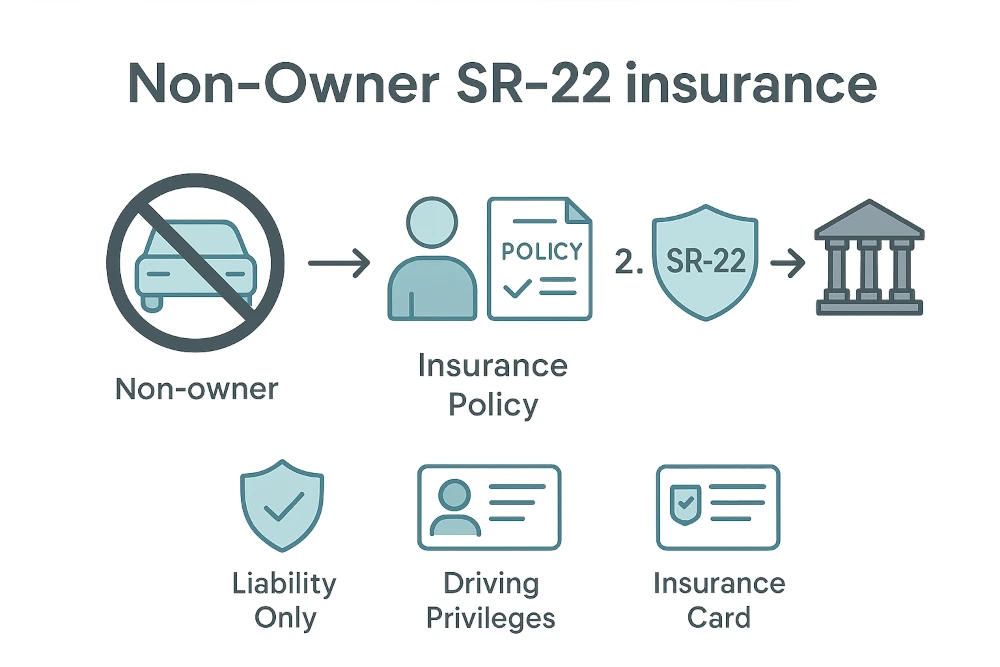
Minimalist infographic detailing non-owner SR-22 insurance requirements. Shows a prohibited car icon, step-by-step flowchart linking policyholder, SR-22 document, and courthouse icons. Supplementary symbols for liability coverage, driving privileges, and insurance card. Designed with soft blues and clear, accessible layout on white background.
An SR-22 is not an insurance policy. It is an insurance filing submitted to the state by an insurance company. The filing confirms that a driver carries the minimum liability coverage required by law.
A non-owner SR-22 applies when the driver:
- Does not own a vehicle
- Needs proof of financial responsibility
- Plans to drive only borrowed or rented vehicles
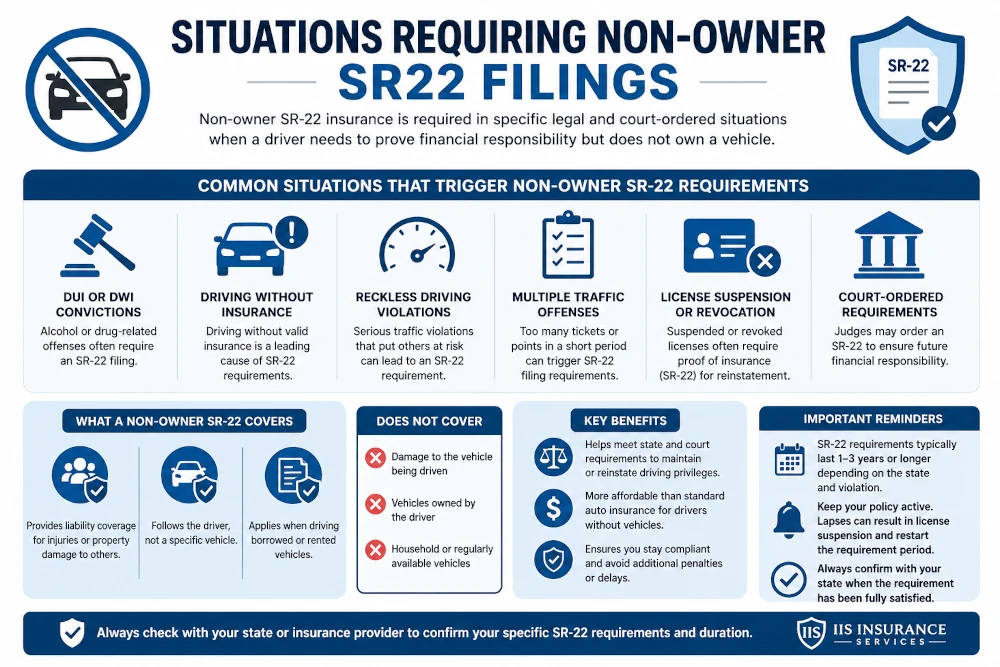
The insurance policy attached to the filing provides liability coverage for injuries or property damage caused to others. It does not cover damage to the vehicle being driven.
States require this filing to ensure that high-risk drivers maintain continuous insurance coverage before driving privileges are restored or maintained.
Common Legal and Court-Ordered Situations That Trigger Non-Owner SR-22 Filings
Non-owner SR-22 requirements usually stem from legal or administrative actions tied to a driver’s record. Courts and state agencies impose the filing when a driver’s history shows an increased risk.
Common situations include:
- DUI or DWI convictions
- Driving without insurance
- Reckless driving violations
- Multiple traffic offenses in a short period
- License suspension or revocation
In many cases, courts require proof of insurance before reinstating a driver's license. Even if the driver no longer owns a car, the requirement still applies.
IIS Insurance Services helps drivers understand whether their situation qualifies and what steps are needed to comply.
Why Vehicle Ownership Does Not Remove the Requirement
A common misconception is that selling a car or choosing not to drive eliminates the need for an SR-22. States base the requirement on driving behavior, not vehicle ownership.
If a driver wants to keep or reinstate a valid license, proof of insurance is still required. The non-owner SR-22 allows drivers to meet that obligation without insuring a vehicle they do not own.
Courts and state agencies view this filing as protection for the public. It ensures that any driver who gets behind the wheel carries financial responsibility.
How Non-Owner SR-22 Insurance Works in Real-World Use
Non-owner SR-22 insurance follows the driver, not a specific vehicle. Coverage applies when the insured driver operates a vehicle that they do not own.
This typically includes:
- Rental cars
- Borrowed vehicles from friends or family
- Occasional driving situations
It does not apply to:
- Vehicles owned by the driver
- Vehicles regularly available to the driver
- Household vehicles
Because coverage is limited to liability, non-owner policies are often more affordable than standard owner insurance.
State-Specific Rules That Affect SR-22 Filing Requirements
Each state sets its own SR-22 rules. These rules determine how long the filing is required, when it begins, and what happens if coverage lapses.
State differences may include:
- Length of required filing period
- Minimum liability limits
- Penalties for missed payments
- Reinstatement procedures
Some states require one year of continuous coverage, while others require three years or longer. The requirement often starts when the SR-22 is filed, not when the violation occurred.
Drivers who relocate must still satisfy the original state’s requirement.
IIS Insurance Services helps drivers navigate these state-specific differences.
Situations Involving License Suspension or Revocation
License suspension is one of the most common reasons for non-owner SR-22 filings. Suspensions may occur after serious violations or repeated offenses.
In these cases, the state often requires:
- Proof of insurance
- Payment of reinstatement fees
- Completion of any court-ordered programs
The non-owner SR-22 allows drivers to meet insurance requirements while working toward full reinstatement.
Failing to file or maintain coverage can delay reinstatement and lead to additional penalties.
High-Risk Driver Classification and Its Role
Drivers required to carry an SR-22 are usually classified as high-risk. This classification affects insurance availability and pricing.
Factors that contribute to high-risk status include:
- DUI convictions
- Multiple moving violations
- Driving without insurance
- Accidents tied to negligence
Non-owner SR-22 insurance offers a practical option for high-risk drivers who do not own vehicles but need to meet legal requirements.
IIS Insurance Services works with insurers experienced in high-risk filings to help drivers secure coverage.
What Happens If Coverage Lapses During the Requirement
Coverage lapses are one of the most costly mistakes drivers make. Insurance companies are required to notify the state when a policy cancels or lapses.
A lapse may result in:
- Immediate license suspension
- Reset of the SR-22 requirement period
- Additional fines or fees
Even a short lapse can restart the entire filing period. This often increases long-term costs and delays completion.
Drivers should plan renewals carefully and keep payment information current.
How Long Non-Owner SR-22 Filings Are Typically Required
The duration of a non-owner SR-22 requirement depends on state law and the underlying violation. Three years is common, but not universal.
Important points to remember:
- The insurance policy term and filing duration are different
- Policies may renew multiple times during the requirement
- Continuous coverage is mandatory
Drivers should confirm their specific timeline with the state or their insurance provider before making any changes.
Ending a Non-Owner SR-22 Requirement Correctly
SR-22 requirements do not end automatically. Drivers must verify that the obligation has been fully satisfied.
Steps include:
- Confirming the required time period has passed
- Verifying clearance with the state
- Waiting for confirmation before canceling coverage
Canceling too early can trigger new penalties and restart the requirement.
IIS Insurance Services helps drivers track timelines and confirm when it is safe to remove the filing.
Common Misunderstandings About Non-Owner SR-22 Filings
Many delays stem from misunderstandings rather than intent. Common issues include:
- Assuming non-owner coverage is optional
- Confusing policy expiration with filing completion
- Letting coverage lapse between renewals
- Believing the requirement ends when driving stops
Clear guidance helps drivers avoid these setbacks.
Why Non-Owner SR-22 Insurance Is Often the Best Solution
For drivers without vehicles, non-owner SR-22 insurance offers a practical balance between compliance and cost. It allows drivers to:
- Meet legal insurance requirements
- Avoid insuring a vehicle they do not own
- Maintain or reinstate driving privileges
This option is widely accepted by courts and state agencies when properly maintained.
Getting Help With Non-Owner SR-22 Requirements
Navigating SR-22 requirements can be stressful, especially when legal deadlines are involved. Clear guidance helps drivers avoid mistakes that extend the process.
IIS Insurance Services supports drivers by explaining filing requirements, securing appropriate non-owner coverage, and helping maintain continuous compliance. Whether you are just starting the process or nearing completion, having knowledgeable support makes the path forward clearer.
Drivers who need help understanding non-owner SR-22 filing requirements or determining whether their situation qualifies can contact IIS Insurance Services for clear answers and practical support.