

Dealing with an SR-22 filing can feel confusing, especially if you do not own a vehicle and are trying to restore or protect your driving privileges. Many drivers are unsure how long they must carry coverage, what actions can extend the requirement, and how state rules affect timelines. Understanding the duration of non-owner sr22 requirements helps drivers plan, avoid setbacks, and move through the process with fewer surprises.
IIS Insurance non owners sr22 insurance works with drivers who need clear, practical guidance on non-owner SR-22 insurance. This article explains how long non-owner SR-22 coverage usually lasts, what factors affect the timeline, how policy terms differ from filing requirements, and how to stay compliant until the requirement officially ends.
What a Non-Owner SR-22 Means for Drivers Without a Vehicle
A non-owner SR-22 is a form filed by an insurance company with the state to prove that a driver meets financial responsibility requirements. It is typically required after certain violations, such as license suspension, revocation, or serious driving offenses.
Non-owner policies are designed for drivers who:
- Do not own a vehicle
- Borrow cars occasionally
- Need to reinstate or maintain a valid driver's license
This type of policy provides liability insurance coverage when driving vehicles not owned by the policyholder. It does not cover damage to the vehicle being driven.
The SR-22 itself is not insurance. It is a filing attached to an insurance policy that confirms coverage meets state minimum requirements.
How Long Non-Owner SR-22 Coverage Typically Lasts
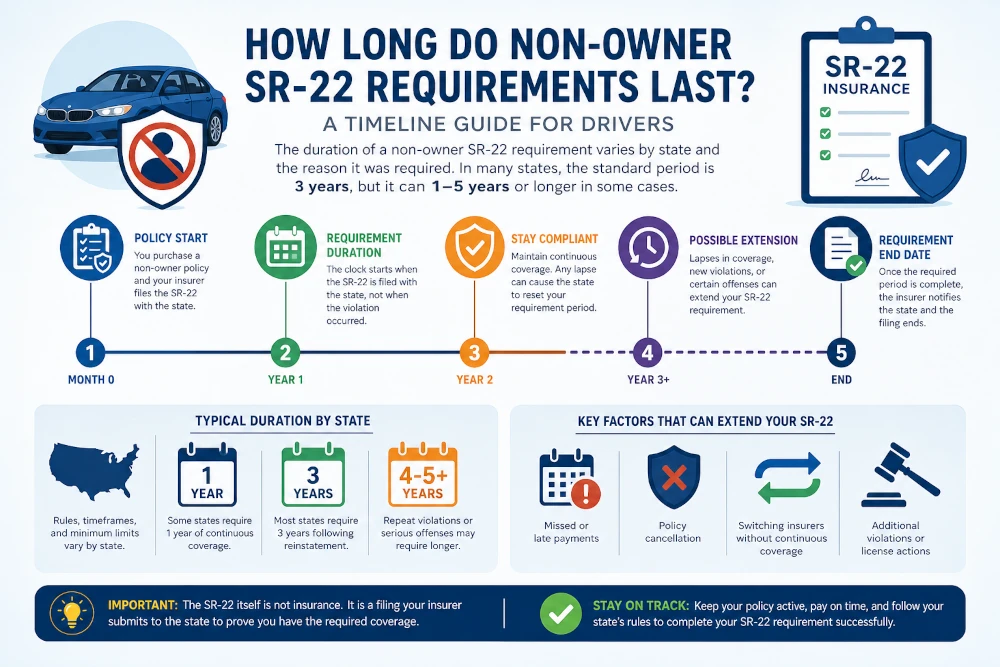
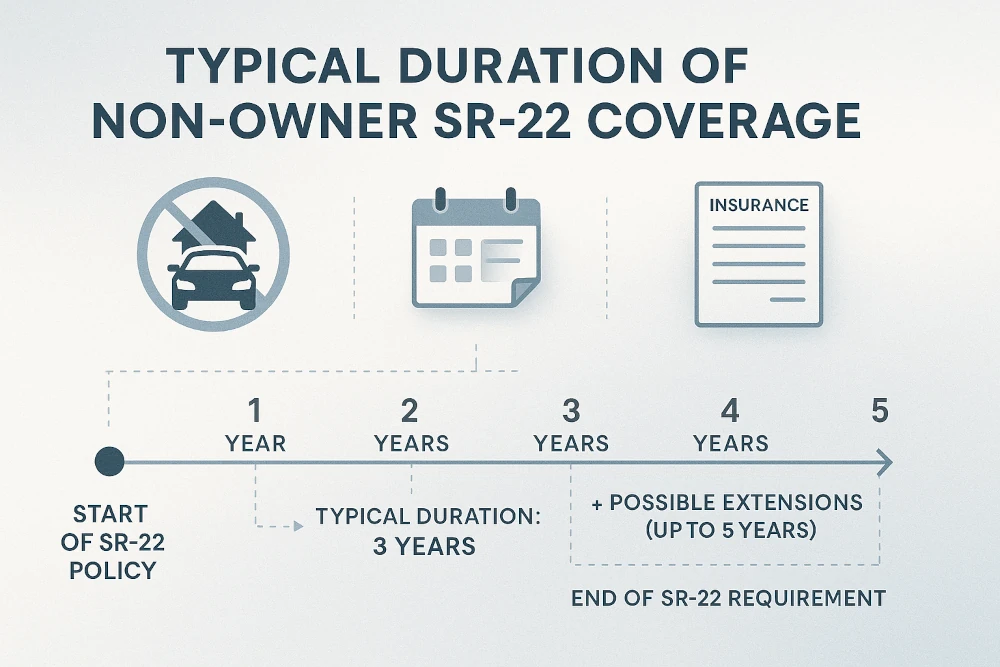
The length of time a driver must carry a non-owner SR-22 varies by state and by the reason the filing was required. In many states, the standard requirement is three years, but this is not universal.
Some states require:
- One year of continuous coverage
- Three years following reinstatement
- Longer periods for repeat violations or serious offenses
The clock typically starts when the SR-22 is first filed with the state, not when the violation occurred. If the policy lapses at any point, the state may reset the requirement period.
IIS Insurance Services helps drivers confirm their specific state timeline and understand how the requirement is calculated.
Policy Term vs SR-22 Filing Period
One common source of confusion is the difference between an insurance policy term and the SR-22 filing duration.
The policy term refers to how long the insurance contract lasts, often six or twelve months. The SR-22 filing duration refers to how long the state requires proof of financial responsibility.
These timelines rarely match. A driver may renew the insurance policy several times before the SR-22 obligation ends. Each renewal must maintain continuous coverage without gaps.
If a policy ends early or is canceled, the insurance company is required to notify the state. This notification can result in license suspension and a reset of the SR-22 timeline.
State-By-State Differences in SR-22 Duration
Each state sets its own SR-22 rules. Some states start the requirement period on the reinstatement date, while others begin counting from the filing date.
Differences may include:
- Length of required coverage
- Minimum liability limits
- Penalties for late or missed payments
- Reporting rules for insurance companies
Drivers who move between states must still satisfy the original state’s SR-22 requirement. Changing locations does not remove the obligation.
IIS Insurance Services assists drivers in navigating state-specific rules and maintaining compliance even if circumstances change.
What Can Extend the Length of a Non-Owner SR-22 Requirement
Several actions can cause the SR-22 requirement to last longer than expected. The most common issue is a lapse in coverage.
Situations that may extend the requirement include:
- Missed or late payments
- Policy cancellation
- Switching insurers without continuous coverage
- Additional violations or license actions
Even a short coverage gap can trigger a reset of the filing period. This often leads to higher costs and longer compliance timelines.
Planning payments and monitoring policy status closely helps avoid these setbacks.
How Non-Owner SR-22 Insurance Affects High-Risk Drivers
Drivers required to file an SR-22 are often classified as high-risk. This classification can influence pricing and availability of coverage.
Factors insurers may consider include:
- Driving record
- Type of violation
- Length of time since the offense
- State requirements
Non-owner policies are often more affordable than owner policies, but they still require careful management. Maintaining a clean record during the SR-22 period helps reduce long-term insurance costs.
IIS Insurance Services works with high-risk drivers to find practical coverage options and avoid unnecessary expenses.
Ending the SR-22 Requirement the Right Way
The SR-22 requirement does not end automatically. Drivers must confirm the official ending date with the state or their insurance provider before making changes.
Steps to take include:
- Confirm the required duration has been fully met
- Verify the state has cleared the SR-22 obligation
- Wait for written confirmation when possible
Canceling coverage too early can trigger penalties and restart the requirement. It is important to confirm clearance before removing the filing.
IIS Insurance Services helps drivers track their SR-22 timeline and confirm when it is safe to make changes.
Common Mistakes Drivers Make With Non-Owner SR-22 Policies
Many delays occur due to simple misunderstandings. Common mistakes include:
- Assuming the policy term equals the SR-22 duration
- Letting coverage lapse between renewals
- Canceling insurance without state confirmation
- Failing to update contact or payment information
Avoiding these issues helps drivers complete the requirement on time and with fewer complications.
Our post on non-owner SR-22 insurance quotes walks through the order of the DMV steps after the filing, including the reissue fee.
Reinstating Driving Privileges With a Non-Owner SR-22
For many drivers, the SR-22 is required to reinstate a suspended or revoked license. This process often includes:
- Filing the SR-22 with the state
- Paying reinstatement fees
- Meeting minimum insurance limits
Once reinstated, maintaining continuous coverage is essential. Any lapse can result in another suspension.
IIS Insurance Services supports drivers through the reinstatement process and helps ensure filings are handled correctly.
Why Non-Owner SR-22 Coverage Is Often the Best Option
Drivers without vehicles often benefit from non-owner SR-22 insurance because it:
- Meets legal requirements
- Costs less than owner policies
- Avoids paying for unnecessary coverage
This option allows drivers to stay compliant while maintaining flexibility.
IIS Insurance Services helps determine whether non-owner coverage is appropriate based on driving needs and state rules.
Getting Help Managing Your SR-22 Timeline
Managing an SR-22 requirement requires attention to detail and consistency. Understanding timelines, renewal cycles, and state rules helps drivers avoid costly mistakes.
IIS Insurance Services supports drivers by explaining requirements clearly, tracking filing timelines, and helping maintain continuous coverage. Whether you are just starting the SR-22 process or nearing the end, having reliable guidance helps you move forward with confidence.
Drivers who need help understanding non-owner SR-22 timelines or maintaining compliance can contact IIS Insurance Services for clear answers and practical support.