

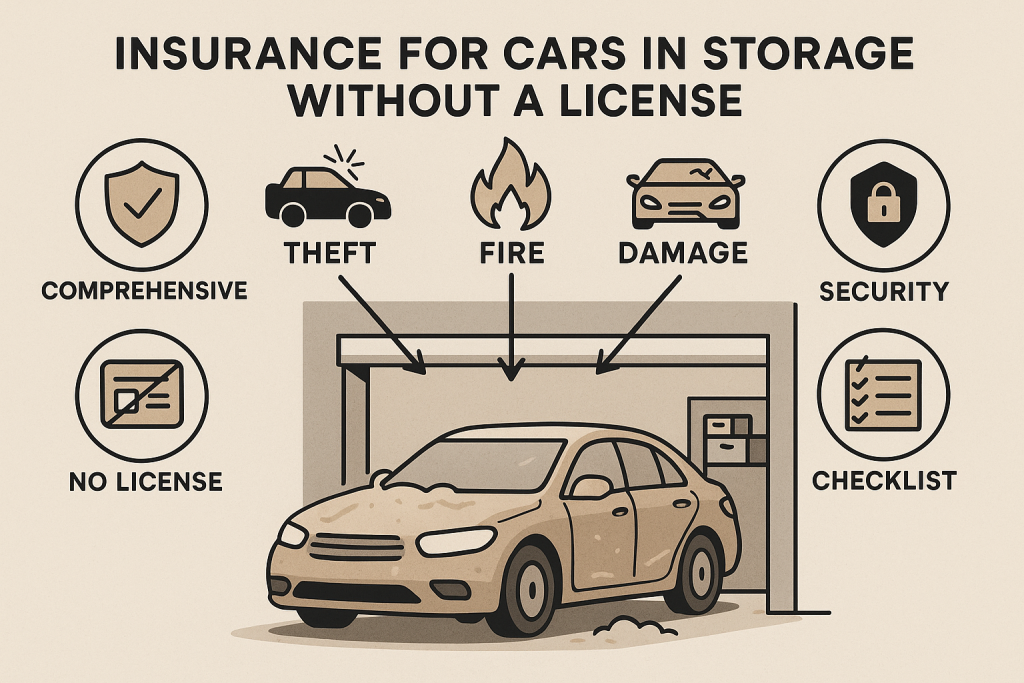
A car can still face expensive damage while sitting in a garage, driveway, or storage facility. Theft, fire, vandalism, falling objects, flooding, and severe weather don't require the vehicle to be moving. That's why canceling every form of car insurance may leave you exposed, even when you don't have a valid license or plan to drive soon.
Comprehensive insurance for stored cars without a license may help protect a parked vehicle against qualifying non-collision losses. Insurers may also call this parked-car insurance, storage insurance, or comprehensive-only coverage. The name and availability vary by company.
Your registration status, loan or lease agreement, storage location, license situation, and future plans all influence which policy arrangement makes sense. California also distinguishes between a registered vehicle and one placed on Planned Non-operation status. A car with active registration that is operated or parked on a public road must meet the state's financial responsibility rules.
IIS Insurance Services helps California vehicle owners compare policies for stored, limited-use, and non-operational cars, including situations where the owner doesn't hold a current driver's license. Its agents work with carriers that consider no-license applications and can help structure coverage around the vehicle's real use and storage conditions.
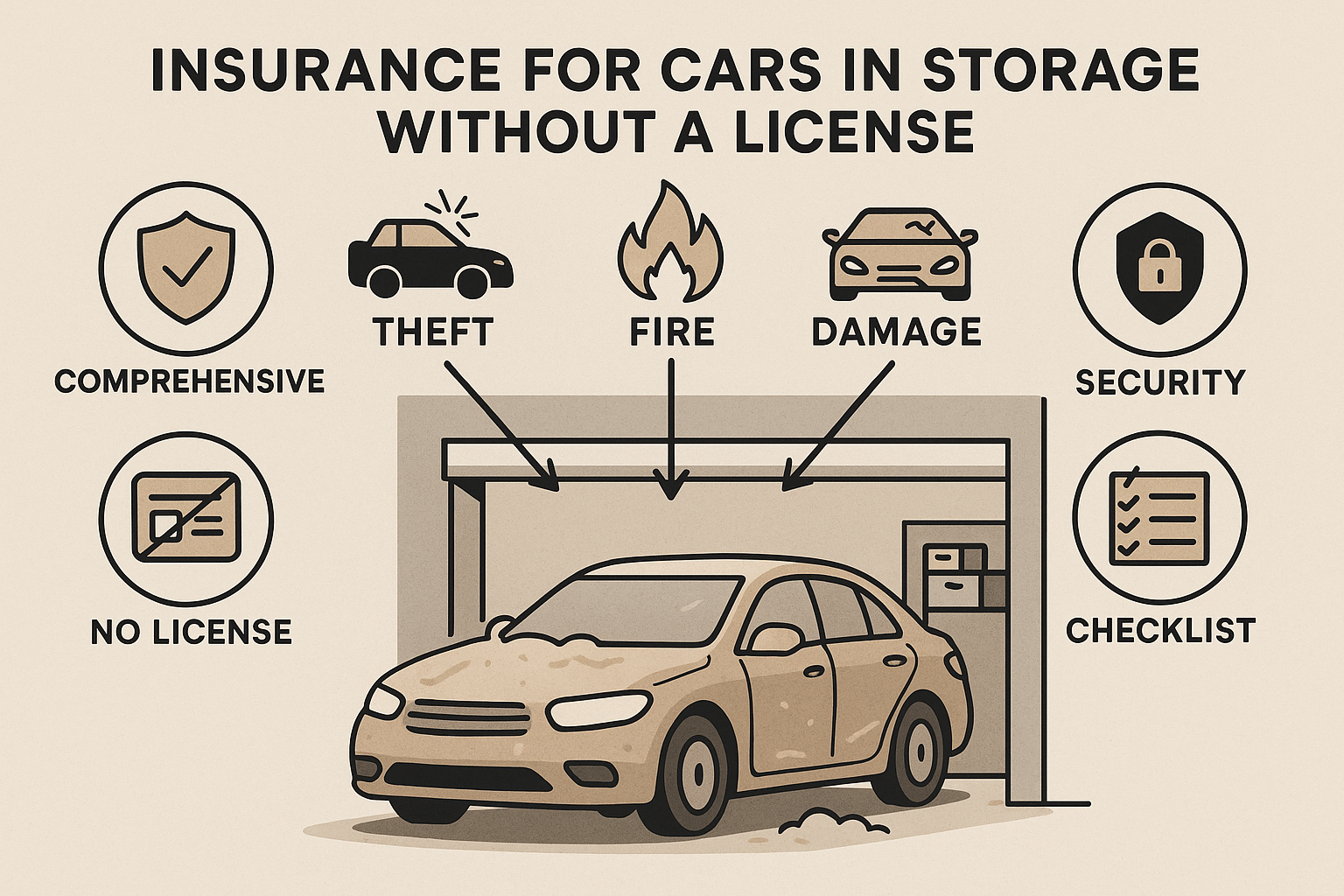
What Storage Insurance Can Protect
"Storage insurance" is an informal term rather than one standard policy sold by every carrier. It usually refers to an auto insurance arrangement that keeps comprehensive coverage active while removing or reducing protections associated with road use.
Comprehensive coverage generally addresses qualifying losses that aren't caused by a collision. Depending on the policy, covered events may include:
- Theft or attempted theft
- Vandalism
- Fire and smoke damage
- Hail, wind, flooding, or other weather events
- Falling trees, branches, or objects
- Broken glass
- Damage caused by certain animals
The deductible still applies. If a policy has a $500 deductible and a covered loss causes $3,000 in damage, the insurer may pay up to $2,500, subject to the vehicle's value, policy limits, exclusions, and claim review.
This coverage generally doesn't pay for deterioration caused by age, neglect, corrosion, mold, rodents, mechanical failure, or improper maintenance. It also doesn't cover damage caused while the car is being driven if road-use coverage has been suspended or removed.
A storage arrangement may therefore help protect your car from a sudden covered event, but it's not a substitute for routine care. Tires can develop flat spots, batteries can lose power, fuel can degrade, and moisture can damage interiors or electrical systems.
The term "comprehensive-only" can also be misleading in relation to California registration. Comprehensive or collision insurance doesn't satisfy the state's financial responsibility requirement for a car operated or parked on California roads. Active liability coverage or another DMV-approved form of financial responsibility is required in those situations.
| Storage situation | Possible insurance arrangement | Main issue to confirm |
|---|---|---|
| Car stored on private property with PNO status | Comprehensive-only or stored-car coverage, when available | Carrier eligibility and storage location |
| Registered car parked on a public roadway | Liability coverage plus any desired vehicle protection | California financial responsibility rules |
| Financed or leased car in storage | Coverage required by the lender or leasing company | Loan or lease contract |
| Unlicensed owner with a licensed person using the car | Owner policy naming the actual licensed primary driver | Accurate driver and vehicle use |
| Car that may occasionally be driven | Regular auto policy or limited-use arrangement | Coverage must be active before any road use |
| Collector or seasonal car | Specialty or limited-mileage policy | Mileage, storage, and use restrictions |
IIS Insurance Services notes that drivers without a license may still have access to liability, collision, comprehensive, uninsured motorist, and medical payments coverage, depending on the carrier, listed drivers, and vehicle use.
California Registration Rules for a Stored Car
Whether you can reduce or cancel liability coverage depends partly on the vehicle's registration status and location.
California requires insurance or another acceptable form of financial responsibility for vehicles operated or parked on public roads. If the DMV doesn't receive proof for a vehicle that requires it, the registration may be suspended. The car can't then be driven or parked on public roadways until acceptable proof is submitted.
A vehicle that will remain completely off public roads may qualify for Planned Non-operation, commonly called PNO. California defines PNO as a status for a vehicle that will not be driven, towed, stored, or parked on public roads or highways for the entire registration year.
The DMV generally accepts a PNO filing up to 60 days before registration expires or up to 90 days afterward. Filing after expiration can result in penalties, and California doesn't provide a general grace period for registration renewal or PNO filing.
Before changing insurance, consider these steps:
- Confirm whether the vehicle will be stored entirely on private property.
- Review the registration expiration date.
- Determine whether PNO is appropriate.
- File the required DMV form and pay the applicable fee on time.
- Confirm that the PNO status has been processed.
- Ask the insurer which coverage can remain active after the registration change.
- Keep the vehicle off public roads until it is properly registered and insured again.
An Affidavit of Non-Use and a PNO filing serve different administrative purposes. The DMV states that an owner who files an Affidavit of Non-Use for a currently registered car must still file for PNO when registration renewal becomes due if the vehicle will continue to remain unused.
A PNO vehicle can't simply be driven for a quick errand, maintenance trip, or test run. A vehicle moving permit may be available for certain limited purposes, but the owner should confirm the correct DMV authorization before moving the car.
How a Missing or Suspended License Affects the Policy
You may be able to insure a stored car without holding a valid license. Insurance companies focus on ownership, storage conditions, vehicle value, and who will operate the car. A missing license can narrow your carrier options, but it doesn't automatically make coverage unavailable.
Common situations include:
- A license suspended after a violation
- A license that expired and hasn't yet been renewed
- A medical condition that prevents driving
- A senior owner who no longer operates the car
- A collector who owns vehicles but doesn't drive them
- A business owner whose employees operate company cars
- A person waiting for a California license
- An owner keeping a vehicle for a licensed family member
If the car is truly stored and no one will drive it, the insurer may consider a storage-focused arrangement. If a licensed person will use it, that driver must usually be disclosed and may need to be listed as the primary operator.
An unlicensed owner shouldn't name a licensed person merely to secure a lower rate. The listed driver must reflect how the vehicle is actually used.
A suspended license creates another distinction. Keeping a car insured doesn't restore driving privileges. Even if the policy is active, the owner can't operate the vehicle until the DMV confirms that the license is valid or an eligible restricted privilege has been issued.
If an SR-22 is required for license reinstatement, comprehensive-only coverage won't satisfy that obligation. An SR-22 must be attached to qualifying liability insurance. The correct arrangement depends on whether the person owns a vehicle and how it will be used.
A vehicle owner will generally need an owner policy if the car remains registered or will be operated by another listed driver. A person who doesn't own a car may qualify for a Non-Owner SR-22 policy, but that policy can't be used to insure a car they own.
Risks of Keeping a Car in Storage without Insurance
Storage without insurance may save a premium in the short term, but it transfers the full financial risk to the owner. A single fire, theft, flood, or vandalism claim can cost far more than months of storage coverage.
The physical location matters. A locked private garage may present a different risk from an outdoor driveway, apartment parking lot, public street, or shared storage building. The insurer may ask about security systems, access controls, fire protection, flooding exposure, and how often the vehicle is checked.
Canceling a policy can also create issues beyond physical damage.
If the car remains registered, the insurance company's cancellation notice may cause the DMV to suspend the registration. If it's financed or leased, the lender may purchase force-placed coverage and add the cost to the account. Force-placed insurance is often expensive and primarily protects the lender's interest rather than providing the owner with a well-matched policy.
A gap in insurance history can also affect future shopping. Some insurers consider prior coverage when determining eligibility or price. Keeping an appropriate storage policy may preserve continuity, although the effect varies by carrier.
Reducing coverage without approval can produce several problems:
- No payment if the vehicle is stolen
- No protection after fire or vandalism
- Registration suspension when liability is still required
- Violation of a loan or lease agreement
- Higher future insurance costs
- Delays when returning the vehicle to road use
- A denied claim if the car is driven under a storage-only policy
A storage policy should never be treated as permission to drive. If road-use coverage has been removed, contact the insurer before starting, moving, test-driving, selling, or lending the car. Ask when regular coverage becomes effective and obtain confirmation before the vehicle leaves storage.
Adjusting Auto Insurance for Long-Term Storage
Start by contacting the insurance company or agency before the car goes into storage. Explain why it won't be driven, where it will be kept, how long storage may last, whether the registration will stay active, and whether anyone else has access to it.
The insurer can then identify which options are available. Some carriers permit a temporary suspension of selected coverage. Others require a policy endorsement, a specific storage arrangement, or proof that the vehicle is on private property.
If the car is financed or leased, review the contract before reducing coverage. Lenders commonly require collision and comprehensive protection throughout the loan or lease term, even when the car isn't driven. Obtain written approval for any change that affects required protection.
You should also prepare the vehicle physically:
- Store it in a secure, dry location.
- Remove valuables and personal documents.
- Use a fitted cover that allows proper ventilation.
- Disconnect or maintain the battery safely.
- Check fluids, tire pressure, and pest prevention.
- Keep registration and insurance documents organized.
- Photograph the car and storage area before leaving it.
- Inspect the vehicle periodically.
Tell the insurer immediately if the storage arrangement changes. Moving the car from a locked garage to an outdoor lot, allowing a family member to drive it, changing ownership, or taking it off PNO status can affect the policy.
Before returning the vehicle to regular use, contact the insurer and restore all required road coverage. Then complete the DMV registration process, pay applicable fees, and confirm that the car can legally be operated. A policy change alone doesn't reactivate PNO registration.
Protect Your Stored Car with IIS Insurance Services
A car that is not being driven may still need protection. Theft, fire, vandalism, weather damage, lender requirements, registration rules, and future insurance history should all be considered before reducing or canceling coverage.
IIS Insurance Services helps California owners compare auto insurance for stored and limited-use vehicles, including policies for people without a current license. Its agents can review the storage location, registration status, listed drivers, lender requirements, and available carrier options.
Gather the vehicle identification number, registration documents, storage address, lender information, license details, and current declarations page before requesting a quote. Contact IIS Insurance Services for clear guidance and a policy structured around how your vehicle will actually be stored and used.