

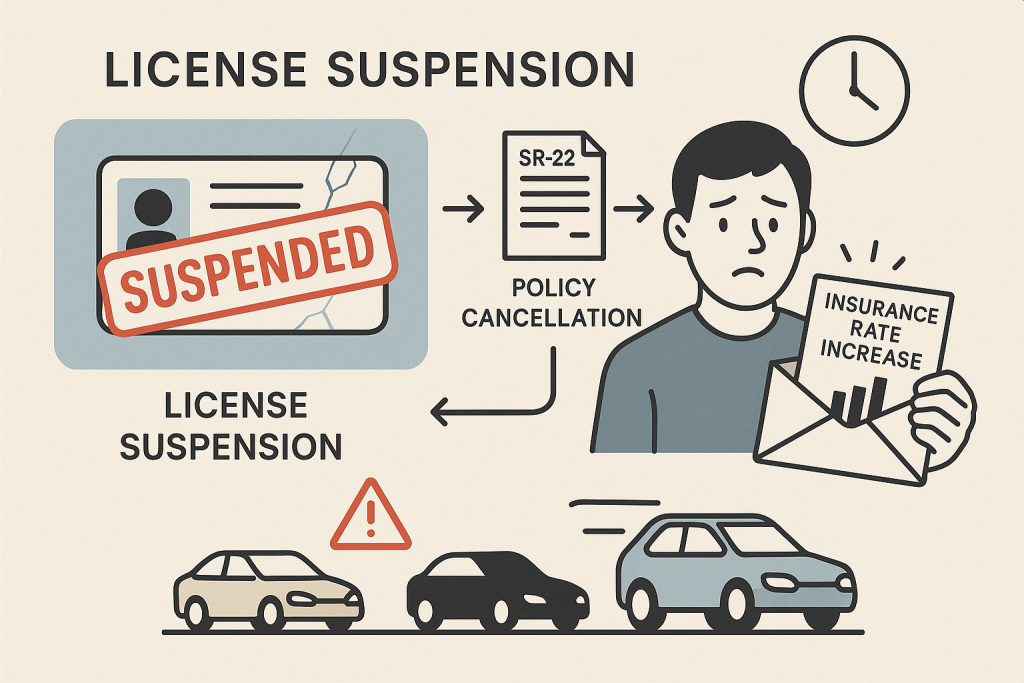
A driver's license suspension can create several insurance questions. You may need to keep a registered vehicle insured, obtain an SR-22 for reinstatement, protect a car that another household member drives, or maintain coverage even though you don't currently own a vehicle.
Getting auto insurance for a suspended license is possible in California, although not every insurance company accepts the same situations. Your options depend on why the license was suspended, whether you own a car, who will operate it, and what the California DMV requires before restoring your driving privileges.
An active policy doesn't give you permission to drive while your license remains suspended. Insurance handles the financial responsibility requirement, while the DMV controls your license status. You must receive confirmation that your license is valid or that you have been issued a restricted license before driving.
IIS Insurance Services helps California drivers compare high-risk auto coverage, owner policies, Non-Owner SR-22 insurance, and other options related to a license suspension. Its team works with multiple carriers and can file an eligible SR-22 electronically, helping customers complete the insurance portion of the reinstatement process without unnecessary delays.
How a License Suspension Affects Auto Insurance
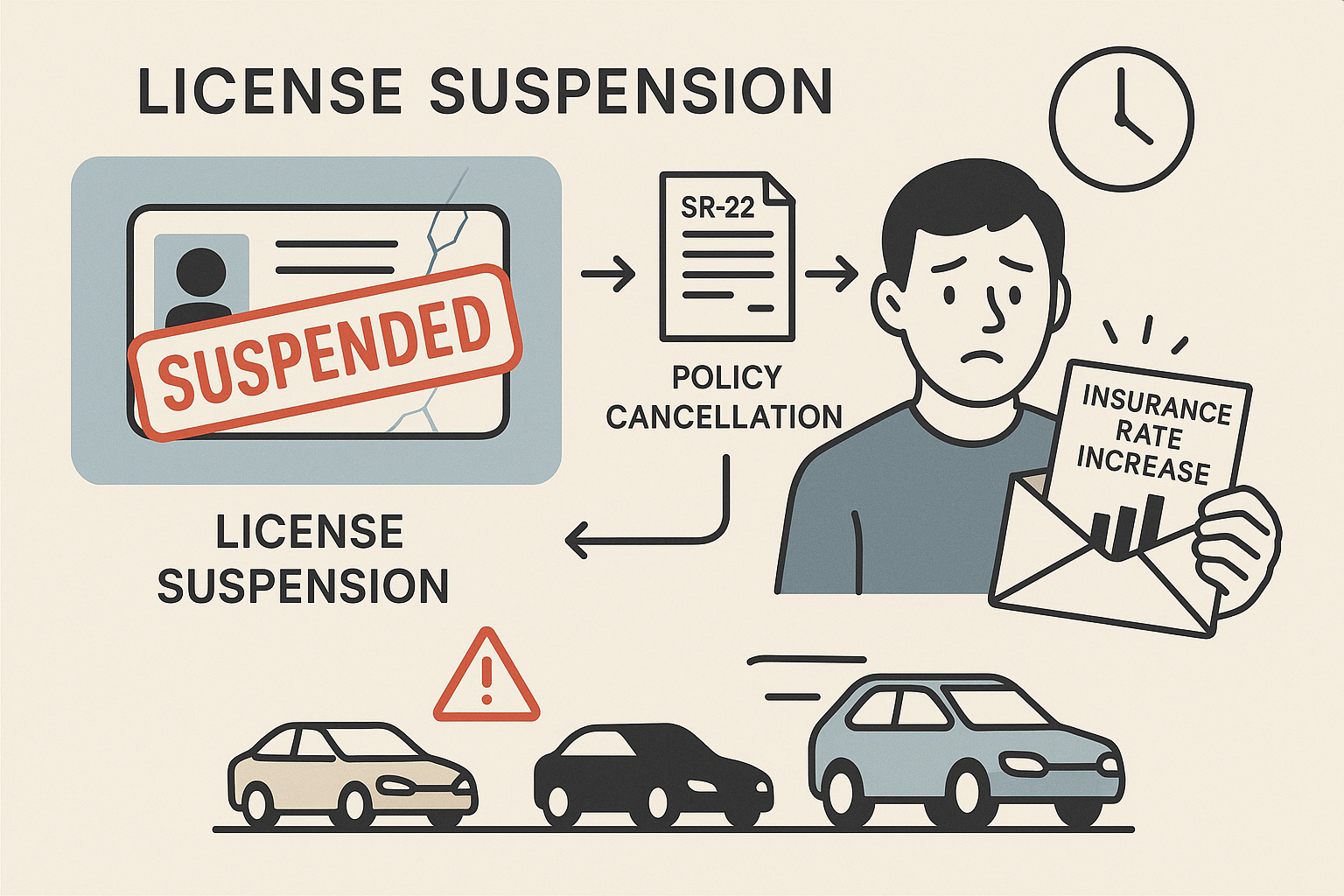
A suspended license doesn't automatically cancel your existing auto insurance. However, the suspension can affect your eligibility, premium, available coverage, and renewal options.
Insurance companies review driving records when evaluating applications and renewals. A suspension connected to a DUI, reckless driving, repeated violations, or an uninsured accident may cause the carrier to classify you as a higher-risk driver. That classification can lead to higher insurance rates or fewer companies willing to issue a policy.
Administrative suspensions may also affect coverage. For example, a license can be suspended because of unresolved DMV requirements, failure to appear, failure to maintain insurance, or another legal matter. The impact on the insurance rate depends on what appears on the driving record and how each company evaluates it.
Common results of a suspension include:
- A higher monthly or annual premium
- Loss of a good-driver or violation-free discount
- A requirement to file an SR-22
- A larger policy down payment
- Fewer standard carrier options
- Transfer to a high-risk insurance program
- Non-renewal by the current insurer
- Restrictions on who may operate the insured vehicle
Your insurance needs don't necessarily disappear because you can't drive. If you own a registered vehicle that another licensed person uses, the car may still need liability insurance. If the vehicle is financed or leased, the lender may also require collision and comprehensive coverage.
A vehicle that remains registered in California generally needs evidence of financial responsibility when it is operated or parked on public roads. California may suspend the vehicle registration if required insurance information isn't submitted. Drivers who won't use or park a vehicle on a California roadway may have other DMV options, such as an Affidavit of Non-Use, but they should confirm the correct procedure before canceling a policy.
Don't assume canceling coverage is the cheapest solution. A lapse can create problems with vehicle registration, an SR-22 requirement, or future insurance rates. Speak with an agent before changing the policy so that the coverage reflects the car's actual use during the suspension.
Insurance Rates for a Suspended Driver's License
The right insurance arrangement depends mainly on whether you own a vehicle.
If you own a car, an owner policy may remain appropriate even while your license is suspended. A licensed household member or other qualified person may be listed as the primary driver when that person genuinely operates the vehicle most often. The insurer must be told that the owner's license is suspended.
Some carriers may list the unlicensed owner as an excluded driver. An excluded person has no coverage to operate the vehicle. This arrangement doesn't allow the suspended owner to drive, even for a short trip or emergency.
If you don't own a vehicle but need an SR-22, a non-owner car insurance policy may be a better fit. This policy provides liability protection when you occasionally drive certain borrowed or rented vehicles after your driving privileges have been restored.
| Driver situation | Possible insurance option | What it may provide | Main limitation |
|---|---|---|---|
| You own a vehicle that another licensed person drives | Owner auto policy with a licensed primary driver | Liability and selected vehicle protection | The suspended owner can't drive unless legally reinstated and covered |
| You own a financed or leased vehicle | Owner policy with required physical damage coverage | Liability, collision, and comprehensive coverage | Lender requirements still apply |
| You don't own a vehicle but need an SR-22 | Non-Owner SR-22 policy | Liability coverage and the required DMV filing | It doesn't insure a vehicle you own |
| Your car is stored and not driven | Storage-related or limited coverage, when available | May protect against theft, fire, or other selected losses | It may not satisfy active-registration requirements |
| You use a vehicle for business | Commercial auto or another business-use policy | Coverage structured around business driving | A personal policy may exclude the activity |
Non-owner insurance isn't appropriate when you own a vehicle or regularly use the same household car. It also generally doesn't pay for damage to a borrowed or rented vehicle. The policy primarily provides liability coverage for injuries or property damage the insured person causes to others.
Drivers using a car for deliveries, rideshare work, service calls, or other commercial activity should disclose that use. A personal policy may not cover business driving, even if the vehicle is borrowed.
SR-22 Requirements and License Reinstatement
An SR-22 is a certificate of financial responsibility, not a separate type of insurance. The insurance company files it with the California DMV to confirm that an eligible liability policy is active.
The DMV or a court may require an SR-22 after:
- A DUI or DWI
- Driving without insurance
- An uninsured accident
- Reckless driving
- Multiple serious violations
- A license suspension or revocation
- A court-ordered financial responsibility requirement
The SR-22 must be attached to an active insurance policy. If you own a car, the filing may be connected to your owner policy. If you don't own a vehicle, the filing may be connected to a qualifying non-owner policy.
California's current minimum liability limits are $30,000 for injury or death to one person, $60,000 for injury or death to multiple people, and $15,000 for property damage. These amounts are commonly written as 30/60/15. Drivers may select higher limits for added financial protection.
Purchasing insurance and filing the SR-22 are only parts of the reinstatement process. Depending on the reason for the suspension, the DMV or court may also require fees, program enrollment or completion, ignition interlock documentation, or clearance of other holds.
A typical insurance-related process may include:
- Review the DMV notice and confirm the reason for suspension.
- Determine whether an owner or non-owner policy is appropriate.
- Purchase qualifying liability coverage.
- Ask the insurer to submit the SR-22 electronically.
- Pay applicable DMV reissue or reinstatement fees.
- Complete any additional court or DMV requirements.
- Confirm your license or restricted privilege is active before driving.
IIS Insurance Services states that many eligible SR-22 filings can be submitted electronically on the same day the qualifying policy is purchased. Same-day submission can reduce processing delays, but it doesn't promise immediate license reinstatement. The DMV must still receive and process all required items.
Continuous coverage matters throughout the required filing period. If the policy is canceled or lapses, the insurer may notify the DMV. That notice can cause another suspension or interrupt the period during which the SR-22 must remain active.
How to Apply and Avoid Coverage Problems
Applying for insurance with a suspended license starts with accurate information. The agent needs to understand why the suspension occurred, whether you own a vehicle, who will drive it, and whether the DMV requires an SR-22.
Gather the following before requesting insurance quotes:
- Your driver's license or identification information
- The DMV suspension or reinstatement notice
- Vehicle year, make, model, and identification number
- Registration and ownership details
- Information for every household driver
- The licensed primary driver's record, when applicable
- Current or prior policy documents
- Details about personal, commuting, or business use
When comparing policies, use the same liability limits, deductibles, drivers, vehicles, and optional coverage. A lower quote may simply provide less protection or require a much larger down payment.
Ask the insurance agent to explain the full price, including the initial payment, monthly installment fees, SR-22 filing charge, and total policy premium. You should also confirm when the policy becomes active and when the filing will be sent to the DMV.
Accuracy is especially important when the vehicle owner can't legally drive. Don't list someone as the primary driver merely because that person has a better record. The primary driver must be the individual who genuinely operates the car most often.
Misrepresenting the driver, address, vehicle use, or ownership can lead to a corrected premium, cancellation, or claim dispute. Notify the insurer if the primary driver moves, loses a valid license, stops using the car, or is replaced by another driver.
Keep copies of your declarations page, insurance card, SR-22 confirmation, payment receipts, and DMV correspondence. These records can help resolve questions about filing dates or policy status.
Never drive simply because the policy is active. A person with a suspended license must wait until the DMV has restored full privileges or issued an eligible restricted license.
Managing Your Insurance Rate during a Suspension
A suspension can increase insurance rates, but the exact change depends on the reason for the suspension and the rest of your record. A DUI or repeated serious violations will generally have a greater pricing impact than some administrative issues.
Insurance companies also consider factors such as your vehicle, location, prior claims, annual mileage, coverage limits, and insurance history. Each carrier weighs these factors differently, which is why comparing quotes can produce meaningful savings.
You may be able to control costs by adjusting the policy carefully. Increasing a collision or comprehensive deductible can reduce the premium, although you will pay a larger amount after a covered loss. Removing physical damage coverage from an older vehicle may also reduce the price, but it's not suitable when a lender or lease requires that protection.
Maintaining continuous insurance may help prevent additional problems. To reduce the chance of a lapse:
- Use automatic payments when practical.
- Update expired payment information quickly.
- Open insurer and DMV notices promptly.
- Contact your agent before switching carriers.
- Make sure replacement coverage is active before canceling the old policy.
- Review the policy when your license status changes.
- Confirm that the SR-22 period has officially ended before removing the filing.
Avoid assuming that completing a general defensive driving course will automatically lower the premium. A discount depends on the insurer, the type of course, and the reason for suspension. Court-ordered DUI education and ordinary defensive driving courses aren't interchangeable.
As the violation becomes older and you avoid new incidents, additional companies may become available. Request new insurance quotes at renewal rather than assuming your rate will decrease automatically.
Get Suspended-License Insurance Help from IIS Insurance Services
A suspended license can complicate your insurance, but coverage may still be available. The appropriate solution may be an owner policy with a licensed primary driver, high-risk auto insurance, or a Non-Owner SR-22 policy.
IIS Insurance Services has helped California drivers with difficult records and unusual licensing situations since 2009. Its agents can compare participating carriers, explain owner and non-owner options, file an eligible SR-22 electronically, and help you avoid gaps that could delay reinstatement.
Have your DMV notice, identification, vehicle information, and current insurance documents ready when requesting a quote. Contact IIS Insurance Services for clear, practical support finding coverage that matches your license status, vehicle ownership, and budget.