

Yes, you may be able to insure a car you own without holding a valid driver’s license. Some insurance companies will accept an unlicensed vehicle owner when a properly licensed person is listed as the primary driver. The policy must accurately show who owns the vehicle, who regularly operates it, how it’s used, and where it’s kept.
Can I insure a car I own without a license? This situation is fairly common in California. A person may own a car for a spouse, adult child, caregiver, employee, or other licensed driver. The owner may also have an expired, suspended, or revoked license, be unable to drive for medical reasons, or be working toward a first California license.
Not every insurance company accepts applications from unlicensed owners. Coverage options, documentation, and policy structure vary by carrier. IIS Insurance Services works with providers that consider these situations and can help applicants identify an arrangement that reflects the actual owner and driver.
Owning insurance doesn’t give an unlicensed person permission to drive. The named licensed driver must be the person who genuinely operates the vehicle most often. Accurate information protects the policy from cancellation, pricing corrections, or claim disputes.
Car Insurance Options for Unlicensed Vehicle Owners
You can buy car insurance without personally being licensed, but the available solution depends on why you don’t have a license and how the vehicle is used.
An insurance company may consider applications from:
- Vehicle owners who no longer drive because of age or health
- People whose licenses are temporarily suspended or revoked
- Parents who own cars driven by licensed family members
- Business owners who provide vehicles to licensed employees
- New California residents using an accepted foreign license
- People awaiting a first or renewed driver license
- Owners of stored, collector, or rarely driven vehicles
The owner may remain the named insured, policyholder, or additional interest, depending on the carrier’s underwriting rules. A licensed driver is then listed as the primary operator. IIS Insurance Services works with carriers willing to insure unlicensed owners when the policy meets their conditions and accurately identifies the person driving the car.
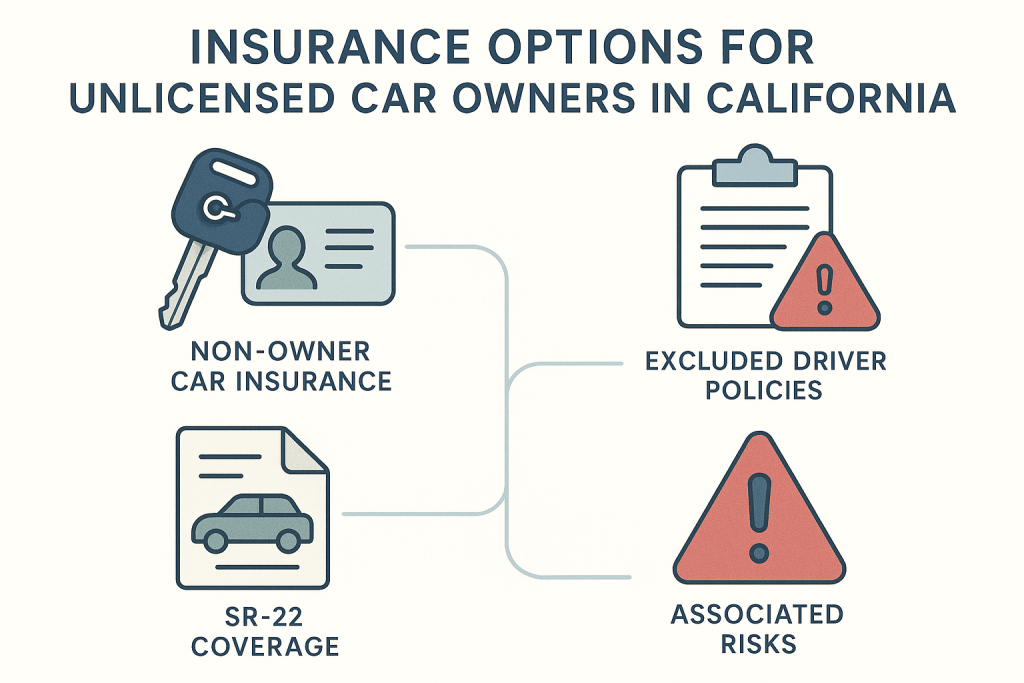
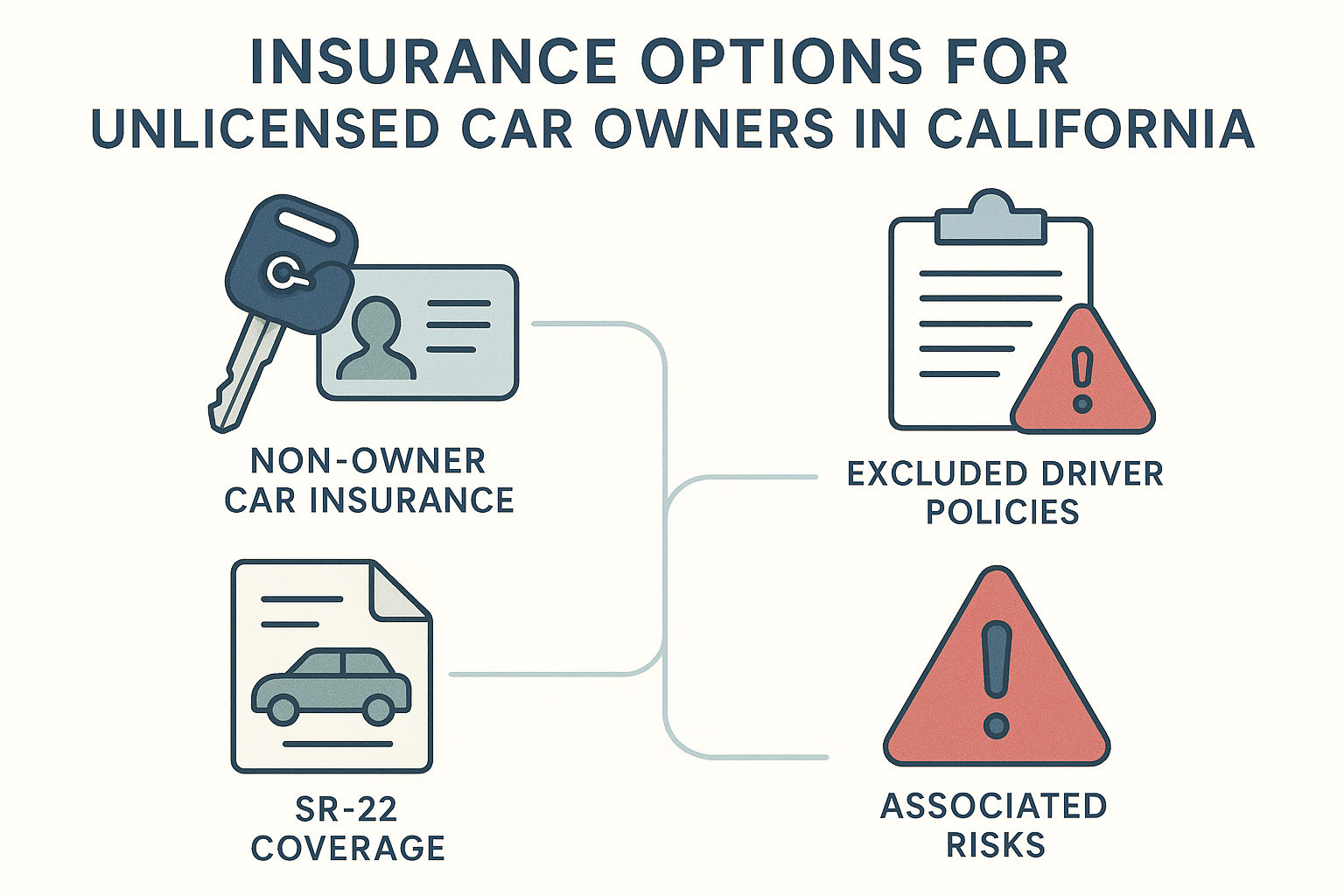
Insurance non-owners coverage is generally not the proper solution when you own the vehicle. A non-owner policy follows a driver who doesn’t own a car and occasionally operates borrowed or rented vehicles. If the car is titled or registered to you, the usual approach is an owner policy structured around the vehicle and its licensed primary driver.
A suspended license may create additional considerations. You might need to keep the vehicle insured because it remains registered or because another licensed person uses it. You may also need an SR-22 before the California DMV restores your driving privileges.
An SR-22 is proof that qualifying liability insurance is active. It doesn’t reinstate a license on its own, and purchasing coverage doesn’t permit you to drive during a suspension. Follow the instructions in your DMV notice and wait for confirmation that your privilege is valid or restricted before driving.
Some carriers accept alternative identification during the application process. Depending on the insurer, this may include a foreign driver’s license, foreign passport, California identification card, consular identification, or Individual Taxpayer Identification Number. The documents accepted vary, so ask the agency what the chosen carrier requires.
Choosing a Licensed Primary Driver
The primary driver is the person who operates the vehicle most often. When the owner doesn’t have a valid license, naming the correct licensed driver is one of the most important parts of the insurance application.
The primary driver might be a:
- Spouse or domestic partner
- Adult child
- Parent or other relative
- Caregiver
- Trusted household member
- Employee who regularly operates a company-owned vehicle
The insurer uses that person’s driving record, age, license status, mileage, and vehicle use to evaluate risk and calculate the rate. The company may also review other licensed household members who could have access to the car.
The primary driver can’t simply be the person with the cleanest record if someone else actually uses the car most often. Listing one person while allowing an unlicensed owner or undisclosed driver to operate the vehicle regularly may be treated as inaccurate application information.
| Primary-driver consideration | Why it matters | Owner’s responsibility |
|---|---|---|
| Valid driver’s license | Confirms that the person may legally operate the car | Verify that the license is active |
| Actual vehicle use | Helps the insurer rate the correct exposure | Name the person who drives most often |
| Driving history | Influences eligibility and premium | Provide complete and accurate details |
| Household access | Identifies other people who may operate the car | Disclose household drivers when requested |
| Personal or business use | Determines which policy form may apply | Explain commuting, delivery, or work-related use |
| Changes during the policy | May affect coverage and pricing | Report a new driver, move, or licensing change promptly |
IIS Insurance Services advises applicants to disclose ownership, licensing status, and all drivers accurately. Incomplete information may lead to a claim denial or policy cancellation, particularly when an accident reveals that the real driving arrangement differed from the application.
The primary driver should also maintain a valid license throughout the policy term. If that person moves out, stops using the vehicle, or loses driving privileges, notify the insurance agency. The policy may need to be updated with another qualified driver or placed into a different coverage arrangement.
If you later regain your own license and begin driving the car, tell the insurer before doing so. Your status as a driver changes the risk being insured and may affect the policy rate, driver listing, or carrier eligibility.
California Insurance Requirements and Available Coverage
California requires financial responsibility for vehicles operated or parked on public roads. If the DMV doesn’t receive required proof of insurance, it may suspend the vehicle registration. The vehicle may not be driven or parked on public roadways until acceptable proof is submitted.
Current California minimum liability limits for private passenger vehicles are:
- $30,000 for injury or death to one person
- $60,000 for injury or death to multiple people
- $15,000 for property damage
These limits became the applicable state minimums in 2025. Liability insurance pays qualifying claims involving injury or property damage to other people. Collision or comprehensive coverage alone doesn’t satisfy California’s financial responsibility requirement.
Minimum limits may not be enough for every household. A serious collision can create costs above those amounts, leaving the owner or driver exposed to additional financial responsibility. An agent can help you compare higher liability limits based on your assets, vehicle use, regular passengers, and budget.
Depending on the insurer and vehicle, an unlicensed owner may be able to purchase:
Liability coverage. This helps pay qualifying bodily injury and property damage claims when the listed driver causes an accident.
Collision coverage. This can help repair the insured car after a covered collision, subject to the deductible and policy terms.
Comprehensive coverage. This may cover certain non-collision losses, such as theft, vandalism, fire, or weather damage.
Uninsured or underinsured motorist coverage. This may provide protection when another driver causes a covered loss but has little or no insurance.
Medical payments coverage. This may help with qualifying medical expenses for covered occupants, regardless of fault.
Financed and leased cars may require collision and comprehensive coverage under the loan or lease agreement. Even when those coverages are optional under state law, removing them could violate the financing contract.
Stored vehicles need careful handling as well. Comprehensive coverage may protect a parked car against theft, fire, vandalism, or weather damage, but a comprehensive-only arrangement may not meet registration requirements for a vehicle kept on a California roadway. Explain where the vehicle is stored and whether its registration will remain active.
Business vehicles also require a different review. If employees operate the car for deliveries, service calls, transporting equipment, or other work, a personal policy may not fit. IIS Insurance Services offers assistance with personal and commercial arrangements for unlicensed owners, depending on the vehicle and its use.
How to Apply for Auto Insurance without a License
Getting coverage begins with a clear explanation of your circumstances. Tell the agent why you don’t currently have a license, who will drive the car, and whether you need insurance for registration, family use, business use, storage, or license reinstatement.
Prepare the following information before requesting a quote:
- Vehicle year, make, model, identification number, and estimated mileage
- Registration or title showing ownership
- Your identification and current address
- The licensed primary driver’s information
- Driving records for people who will operate the vehicle
- A description of personal, commuting, or business use
- Prior insurance details, if available
- Any DMV notice or SR-22 requirement
The agent can then approach companies that accept unlicensed owners. Not every carrier will, so a rejection from one insurer doesn’t mean coverage is unavailable everywhere.
When comparing quotes, keep the liability limits, deductibles, drivers, vehicle use, and optional coverage consistent. Otherwise, a lower price may simply reflect reduced protection.
Review the policy before purchasing it. Confirm who’s named as the owner, policyholder, primary driver, and additional driver. Ask whether the unlicensed owner is excluded from driving and what happens if that person regains a license.
You should also check:
- The full six-month or annual premium
- The required down payment
- Monthly installment fees
- Liability limits
- Collision and comprehensive deductibles
- Driver exclusions
- Personal or business-use restrictions
- SR-22 charges and filing timing
- Cancellation and renewal terms
Once the policy is active, keep proof of insurance available in the car. California requires evidence of financial responsibility when requested by law enforcement, during registration renewal, and following a collision. Insurers electronically report applicable vehicle coverage information to the DMV.
Don’t drive the car until you hold a valid license or the DMV has issued the appropriate restricted privilege. Even a correctly insured vehicle doesn’t make unlicensed driving legal. Drivers with suspended licenses may also be able to obtain coverage, though an active policy doesn’t permit the owner to drive while the license is suspended.
Get Car Insurance Help from IIS Insurance Services
Owning a car without a valid license doesn’t automatically prevent you from finding insurance. The policy must be structured truthfully around the vehicle’s licensed primary driver, actual use, registration status, and coverage needs.
IIS Insurance Services works with California carriers that consider applications from unlicensed vehicle owners. Its agents can help list the correct primary driver, compare liability and vehicle protection options, address SR-22 requirements, and review personal or business use.
Gather your identification, vehicle documents, DMV notices, and primary driver information before requesting a quote. Contact IIS Insurance Services for practical help finding a policy that protects the car, satisfies applicable California requirements, and reflects who will actually be behind the wheel.