

Running a small business that relies on box trucks means managing daily deliveries, tight schedules, and customer expectations while also protecting vehicles, drivers, and cargo. Accidents, theft, and property damage can disrupt operations quickly and lead to expensive setbacks. Insurance plays a central role in managing those risks, but coverage must be structured around how box trucks are actually used.
For many owners, understanding box truck insurance for small businesses starts with knowing what coverage is required, what is optional, and how policies apply to real-world scenarios. Choosing the right insurance supports compliance, reduces financial exposure, and helps keep operations moving.
IIS Insurance box truck insurance works with small business owners, independent operators, and growing fleets to explain coverage options clearly and help secure policies that fit practical needs rather than generic assumptions.
Why Box Trucks Require Specialized Insurance
Box trucks differ from passenger vehicles and other commercial trucks in several important ways. Their enclosed cargo areas, higher center of gravity, and frequent stop-and-go routes create unique exposure. Many box trucks operate in urban environments where tight streets, loading docks, and customer locations increase the chance of accidents or property damage.
These vehicles are also frequently loaded and unloaded throughout the day. Each stop introduces additional risk, including cargo damage, workplace injuries, and third-party liability. Standard personal auto insurance does not address these exposures.
Specialized box truck insurance is designed to reflect how these vehicles are used and the types of losses small businesses actually face.
Common Risks Faced by Small Box Truck Businesses
Small businesses that operate box trucks encounter a range of risks beyond basic traffic accidents. Understanding these risks helps owners choose coverage that addresses real exposure.
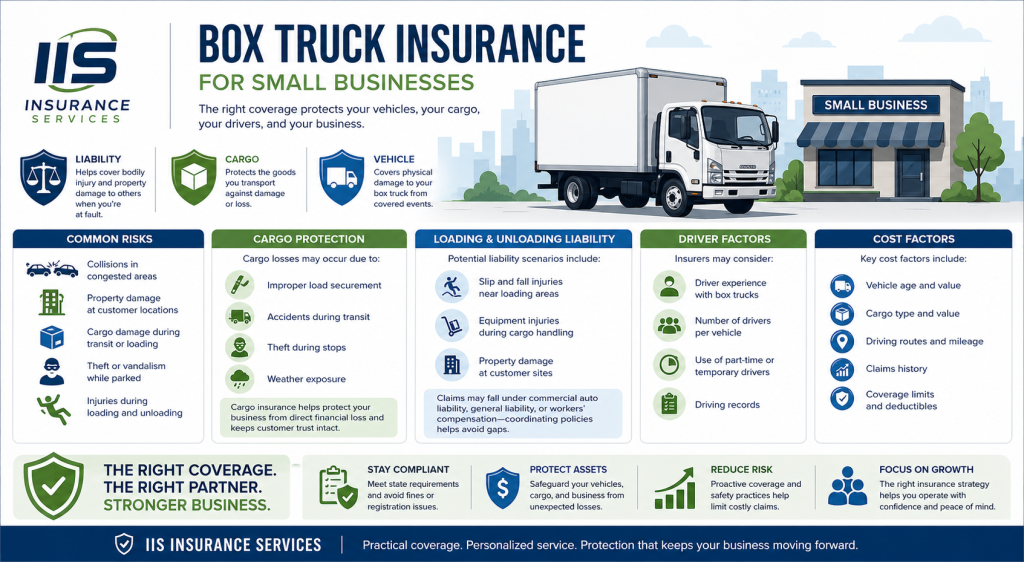
Common risks include:
- Collisions in congested areas
- Property damage at customer locations
- Cargo damage during transit or loading
- Theft or vandalism while parked
- Injuries during loading and unloading
Even minor incidents can lead to repair costs, missed deliveries, and liability claims. Insurance helps absorb these costs when coverage is properly structured.
IIS Insurance Services helps business owners evaluate risk patterns based on routes, cargo, and operating environments.
Core Coverage Types for Box Truck Insurance
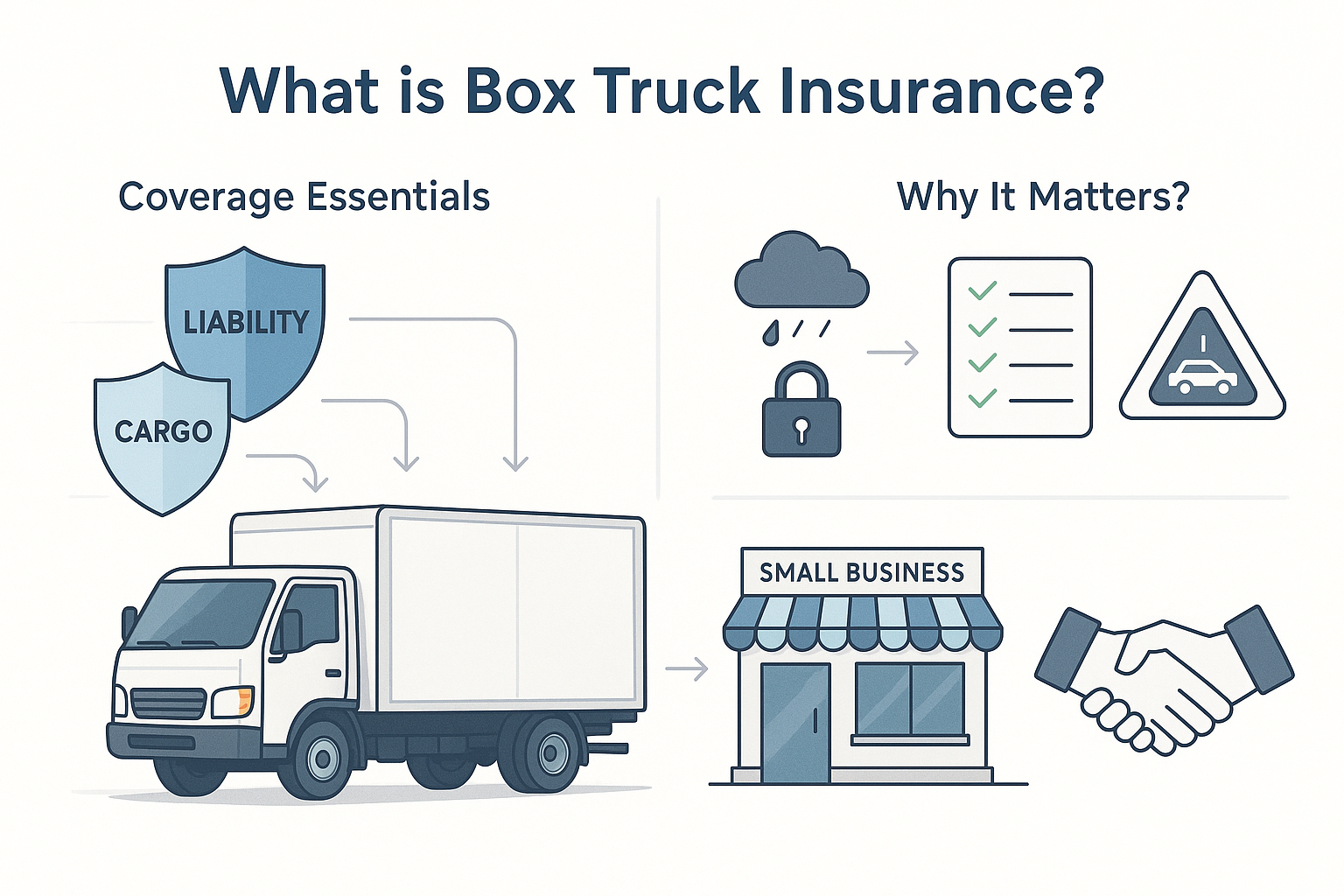
Box truck insurance typically combines several types of coverage into a commercial auto policy. Each coverage serves a specific purpose and works together to protect the business.
Common coverage types include:
- Liability coverage for bodily injury and property damage
- Physical damage coverage for the truck itself
- Cargo insurance for goods being transported
Liability coverage is usually required by law. It applies when the business is responsible for injury or damage to others. Physical damage coverage helps pay for repairs or replacement after covered events such as collisions, theft, or weather damage.
Cargo insurance protects the value of goods being hauled. Without it, businesses may be responsible for replacing damaged or stolen cargo out of pocket.
IIS Insurance Services helps owners understand how these coverages interact and where limits should be set.
Cargo Protection and Business Exposure
For many small businesses, cargo is one of the most valuable assets on the truck. Damage or loss can result in direct financial loss and strained customer relationships.
Cargo losses may occur due to:
- Improper load securement
- Accidents during transit
- Theft during stops
- Weather exposure
Cargo insurance policies vary widely. Some apply only to specific goods or limit coverage during certain stages of transport. Owners should confirm whether loading and unloading incidents are included.
IIS Insurance Services works with businesses to tailor cargo coverage based on what is hauled and how frequently.
Loading and Unloading Liability Considerations
Loading and unloading activities introduce liability exposure that is often overlooked. Injuries can occur even when the truck is not moving.
Potential liability scenarios include:
- Slip and fall injuries near loading areas
- Equipment injuries during cargo handling
- Property damage at customer sites
Depending on the circumstances, claims may fall under commercial auto liability, general liability, or workers’ compensation. Coordinating these policies helps avoid gaps.
IIS Insurance Services helps small businesses understand where responsibility begins and ends across different policies.
How Driver Factors Affect Insurance Coverage
Drivers play a major role in insurance risk assessment. Experience, driving history, and route familiarity all influence coverage terms and pricing.
Insurers may consider:
- Driver experience with box trucks
- Number of drivers per vehicle
- Use of part-time or temporary drivers
- Driving records
Clear driver policies and training programs can help reduce claims and stabilize insurance costs over time.
IIS Insurance Services works with owners to review driver factors and adjust coverage accordingly.
State and Regulatory Insurance Requirements
Insurance requirements for box trucks vary by state and may depend on vehicle weight, cargo type, and business structure. Minimum liability limits are set to protect the public, but additional coverage may be necessary based on operations.
Compliance considerations include:
- State minimum liability limits
- Proof of insurance rules
- Commercial vehicle registration requirements
Failure to meet requirements can result in fines, suspended registrations, or claim complications.
IIS Insurance Services helps businesses stay compliant as regulations change or operations expand.
Factors That Influence Box Truck Insurance Costs
Insurance costs for small businesses are influenced by several factors. Understanding these helps owners plan budgets and manage expenses.
Key cost factors include:
- Vehicle age and value
- Cargo type and value
- Driving routes and mileage
- Claims history
- Coverage limits and deductibles
Businesses that maintain good safety records and review coverage regularly may see more stable pricing.
IIS Insurance Services helps owners balance coverage needs with cost considerations.
When to Review or Update Your Policy
Insurance needs change as businesses grow or shift focus. Adding vehicles, changing routes, or hauling different cargo can affect coverage requirements.
Policy reviews are recommended when:
- Purchasing additional trucks
- Expanding service areas
- Increasing cargo value
- Adding new drivers
Regular reviews help prevent coverage gaps and ensure policies still match operations.
IIS Insurance Services offers policy reviews to help businesses stay protected as they evolve.
Choosing the Right Insurance Partner
Selecting the right insurance partner matters as much as choosing coverage. Box truck operations involve specific risks that benefit from experienced guidance and a clear understanding of commercial truck insurance coverage.
A knowledgeable insurance provider can:
- Explain coverage options clearly using straightforward information
- Identify gaps before claims occur and affect your business
- Help adjust business insurance as operations grow or change
IIS Insurance Services focuses on practical support, reliable resources, and tailored solutions designed around the real needs of small business owners.
Get Support for Your Box Truck Insurance Needs
Box trucks are essential tools for many small businesses, but they come with risks that standard policies may not fully address. The right business insurance supports compliance, protects assets, and helps your business recover from unexpected events.
IIS Insurance Services supports small business owners by providing clear information on box truck insurance options, identifying risk exposure, and helping secure coverage that fits real-world operations. Whether you operate one truck or manage a small fleet, having the right insurance strategy helps protect your business and support long-term success.
Business owners looking for guidance on commercial truck insurance coverage can contact IIS Insurance Services to access helpful resources and review coverage options tailored to their business.