

Box Truck Insurance and Loading Risks Explained
Operating a box truck business involves more than completing deliveries on time. Loading and unloading activities create unique risks that can lead to accidents, cargo damage, and costly insurance claims. Improper weight distribution, unsecured freight, or rushed loading practices increase the chance of vehicle instability, workplace injuries, and third-party liability. Understanding box truck insurance and loading risks helps business owners reduce losses and protect their operations.
Many trucking companies also rely on a diverse workforce that may include drivers who are new to the United States. Staying compliant with broader regulations, including insurance requirements for foreign drivers, supports uninterrupted operations and helps ensure that every driver and vehicle is properly insured.
IIS Insurance Services works with box truck owners, independent operators, and small fleets to explain how insurance coverage addresses loading risks, outline common exclusions, and show how safer loading practices can help control long-term insurance costs.
Understanding Box Truck Insurance and Why Loading Risks Matter
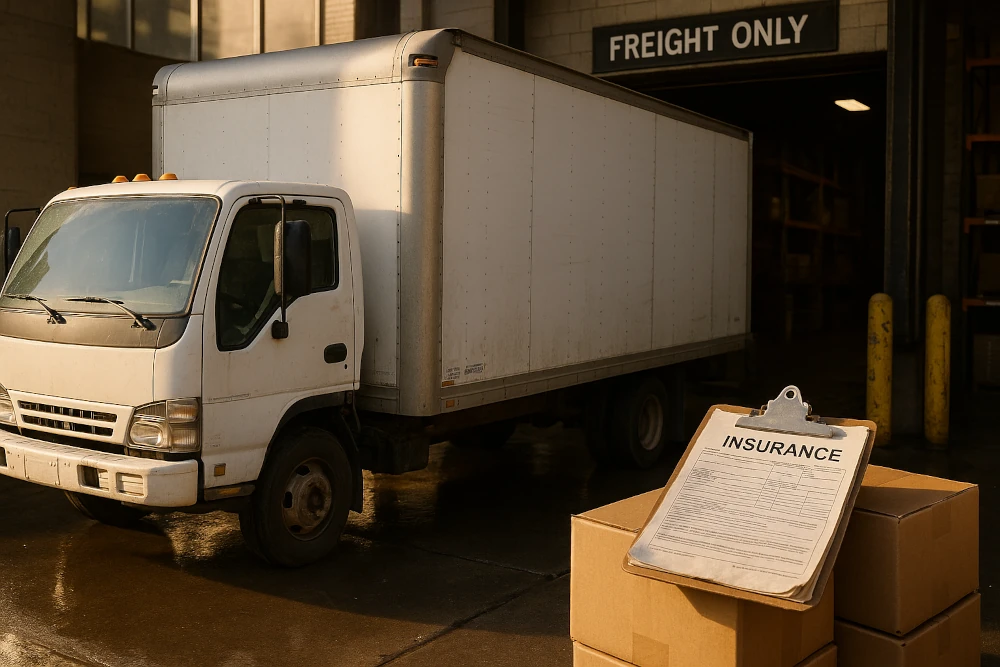
Box truck insurance is designed to protect commercial vehicles used to transport goods, equipment, or freight as part of daily operations. For many owners of box trucks, the focus is often on roadway accidents, yet a significant number of losses occur before a commercial truck ever leaves the loading area.
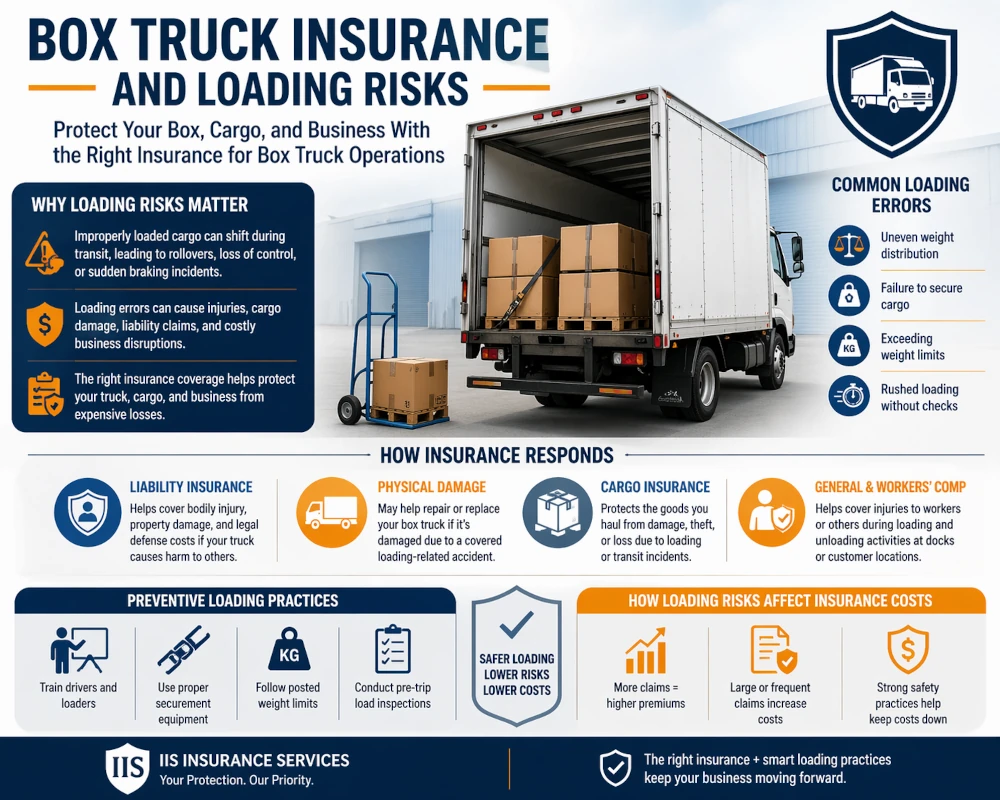
Loading risks matter because cargo that is unevenly distributed or improperly secured can shift during transit, increasing accident risks such as rollovers, loss of vehicle control, or sudden braking incidents. Even low-speed events caused by shifting loads can lead to serious damage, liability exposure, and costly disruptions.
Standard commercial truck insurance policies may include liability coverage, physical damage coverage, and optional cargo insurance. Each plays a different role when loading-related incidents occur. Understanding how these coverages work together helps protect businesses from coverage gaps that can leave losses uninsured.
IIS Insurance Services helps business owners review policy details, assess loading exposure, and understand how trucking insurance responds to real-world risks. Operators can also request a customized quote to see how coverage can be aligned with their specific operations.
Common Loading Errors That Increase Accident Risk
Loading errors are one of the most frequent causes of preventable incidents involving box trucks. These mistakes often occur during tight schedules, high-volume routes, or when established loading procedures are skipped.
Common loading errors include:
- Uneven weight distribution inside the cargo box
- Failure to secure cargo with straps, load bars, or restraints
- Exceeding allowable vehicle weight limits
- Rushed loading without proper safety checks
These issues increase stopping distance, reduce vehicle stability, and place additional strain on braking systems. In severe cases, they can result in rollovers, cargo spills, or collisions that damage property or injure others.
Even when no collision occurs, improperly loaded cargo can shift and sustain damage during transit. Without appropriate cargo protection included in trucking insurance, those losses may not be covered.
IIS Insurance Services encourages operators to treat loading procedures as a core risk-management practice that supports safer operations and helps protect businesses over the long term.
How Box Truck Insurance Responds to Loading-Related Accidents
When a loading error contributes to an accident, insurance coverage depends on the circumstances and the type of commercial truck insurance policy in place. Liability coverage typically applies when injuries or property damage affect third parties.
Liability insurance may help cover:
- Bodily injury to third parties
- Property damage caused by the commercial truck
- Legal defense costs tied to covered claims
Physical damage coverage may apply if the box truck itself is damaged during an accident caused by shifting cargo. Routine loading mistakes that do not result in a covered event may not qualify for reimbursement.
Cargo insurance becomes especially important when loading errors damage freight. Without this coverage, businesses may be responsible for replacing goods out of pocket, even when the truck is insured.
IIS Insurance Services helps owners understand how trucking insurance applies across different scenarios and whether current limits are sufficient to manage loading-related accident risks.
The Role of Cargo Insurance in Managing Loading Risks
Cargo insurance protects the goods being transported, not the vehicle itself. For box trucks that frequently load and unload freight, this coverage plays a key role in reducing financial exposure.
Cargo losses can occur due to:
- Improperly secured or unbalanced loads
- Accidents caused by shifting cargo during transit
- Theft during loading or unloading stops
Cargo insurance policies vary in scope. Some apply only to specific types of freight or limit coverage during certain stages of transport. Owners should confirm whether loading and unloading incidents are included under their trucking insurance policy.
Without cargo insurance, even a minor loading error can result in significant financial loss, client disputes, and operational delays.
IIS Insurance Services works with box truck operators to tailor cargo coverage based on the type of freight hauled, loading frequency, and overall business needs. Operators can request a detailed quote to review options that support safer, more reliable operations.
Loading and Unloading Liability Exposure
Loading and unloading activities create liability exposure beyond vehicle accidents. Injuries to workers, clients, or bystanders can result in claims even when the truck is stationary.
Common liability risks include:
- Slip and fall injuries near loading docks
- Equipment injuries during cargo handling
- Property damage at customer locations
Depending on the situation, liability may fall under commercial auto insurance, general liability insurance, or workers’ compensation coverage. Understanding where one policy ends and another begins is essential.
IIS Insurance Services helps businesses coordinate coverage to avoid gaps between auto and general liability protection.
Preventive Loading Practices That Reduce Insurance Claims
Insurance is only part of the solution. Preventive loading practices help reduce the frequency and severity of claims.
Effective risk-reduction strategies include:
- Training drivers and loaders on weight distribution
- Using proper securement equipment
- Following the posted weight limits
- Conducting pre-trip load inspections
Consistent procedures reduce accident risk and demonstrate responsible operation. Insurers often view businesses with strong safety practices as lower risk, which can help stabilize premiums.
IIS Insurance Services encourages owners to combine strong loading procedures with appropriate insurance coverage.
How Loading Risks Affect Insurance Costs
Loading-related claims influence insurance pricing over time. Insurers consider claim frequency, severity, and loss history when setting premiums.
Factors that may increase insurance costs include:
- Repeated cargo damage claims
- Liability claims tied to loading injuries
- Accidents caused by unsecured loads
Businesses that demonstrate consistent safety practices and lower claim activity may experience more stable insurance costs. Preventing loading errors protects both operations and long-term budgets.
IIS Insurance Services helps owners review claim history and identify ways to reduce risk-related cost increases.
State Regulations and Loading Compliance
Loading regulations vary by state and may include requirements related to weight limits, securement standards, and commercial vehicle inspections. Failure to comply can result in fines or out-of-service orders.
Compliance considerations include:
- Weight distribution regulations
- Securement requirements
- Commercial vehicle safety inspections
Noncompliance can complicate insurance claims and lead to additional penalties.
IIS Insurance Services helps operators understand regulatory expectations and maintain compliance across operating areas.
When to Review Your Box Truck Insurance Policy
As operations grow or change, insurance needs evolve. Adding new routes, hauling different cargo, or expanding a fleet can increase loading exposure.
Policy reviews are recommended when:
- Cargo types or values change
- New trucks are added
- Routes or delivery frequency increase
Regular reviews help ensure coverage still aligns with loading risks and business operations.
IIS Insurance Services offers policy reviews to help box truck owners stay protected as their needs change.
Get Help Managing Box Truck Insurance and Loading Risks
Loading risks are a daily reality for box truck operations, but they do not have to derail your business. Understanding how insurance applies to loading-related losses helps owners plan and avoid costly gaps.
IIS Insurance Services supports box truck owners by explaining coverage options, identifying loading risk exposure, and securing policies that fit real operational needs. Whether you operate a single truck or manage a small fleet, the right insurance strategy supports safer operations and long-term stability.
Business owners looking for guidance on box truck insurance and loading risks can contact IIS Insurance Services to review coverage options and protect their operations.