

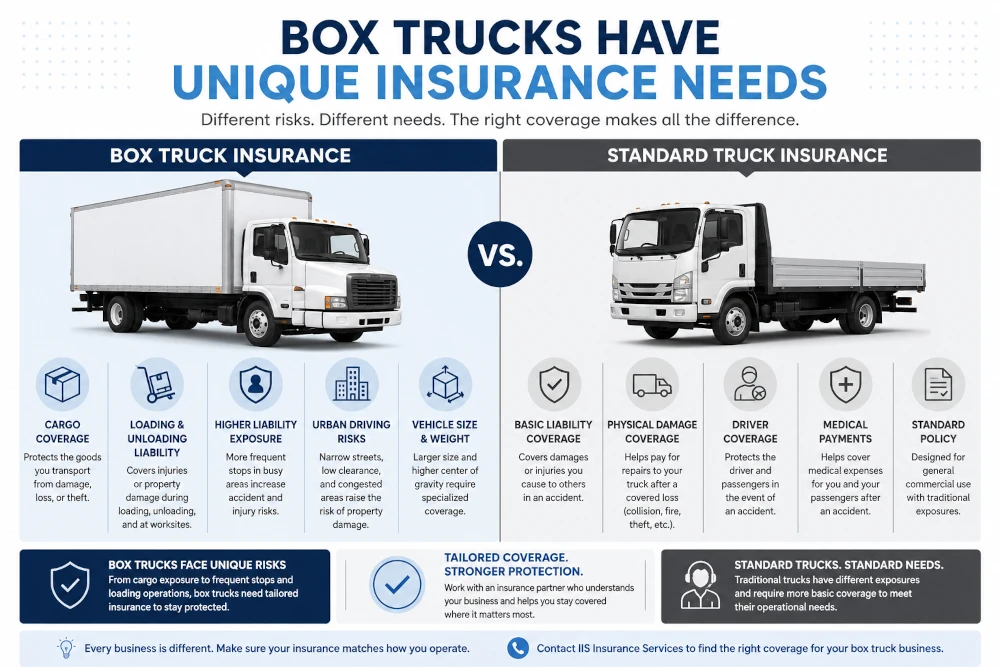
Box trucks play a central role in local and regional commerce. From deliveries and moving services to trades and logistics support, these vehicles are constantly on the road and frequently loading and unloading cargo. Their size, design, and daily use expose them to risks that standard vehicles rarely face. Understanding why box trucks have unique insurance needs helps owners avoid coverage gaps and protect their business operations.
Many box truck businesses also employ drivers with varied backgrounds, including individuals who may be new to driving in the United States. Staying compliant with broader regulations, including insurance requirements for foreign drivers, supports uninterrupted operations and helps ensure that every driver and vehicle is properly insured.
IIS Insurance Services works with box truck owners, independent operators, and fleet managers to explain coverage needs, identify common risk areas, and help secure insurance solutions that match how these vehicles are actually used.
How Box Trucks Differ From Other Commercial Vehicles
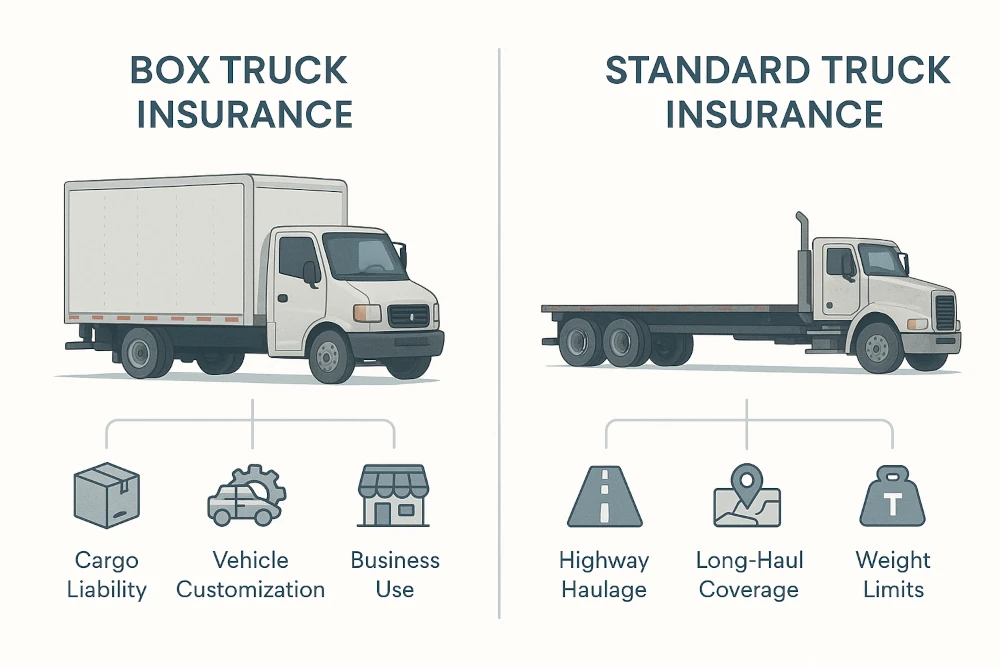
Box trucks differ from passenger vehicles and other commercial trucks in several important ways. Their enclosed cargo area, higher center of gravity, and frequent stop-and-go routes create a distinct risk profile. These vehicles are often driven in urban environments, tight delivery zones, and loading docks where accidents are more likely.
Unlike long-haul trucks, box trucks frequently operate on short routes with multiple daily stops. Each stop introduces exposure to collisions, property damage, and injuries. Loading and unloading activities further increase risk, especially when cargo is heavy, oversized, or unevenly distributed.
Because of these differences, standard auto insurance is often not enough. Box trucks need coverage that reflects how they operate, what they carry, and where they drive.
Why Box Truck Insurance Is Not One Size Fits All
Box truck insurance must account for a wide range of variables. Two trucks of the same size may have very different insurance needs depending on how they are used. A moving truck hauling household goods faces different exposure than a delivery truck carrying electronics or tools.
Key factors that affect coverage needs include:
- Cargo type and value
- Driving routes and delivery environments
- Frequency of loading and unloading
- Number of drivers
- Vehicle size and weight
A generic policy may leave gaps in protection. Tailored coverage helps ensure that liability, physical damage, and cargo risks are properly addressed.
IIS Insurance Services works with business owners to evaluate these factors and match coverage to real-world operations.
Cargo Risks and the Need for Specialized Coverage
Cargo is often the most valuable part of a box truck operation. Damage, loss, or theft of goods can create financial strain and harm client relationships. Cargo risks are especially high during loading and unloading, when items may be dropped, crushed, or improperly secured.
Cargo insurance is designed to protect the goods being transported. Without it, businesses may be responsible for replacing damaged or stolen items out of pocket. Coverage limits and exclusions vary, making it important to confirm what is and is not included.
Businesses that regularly transport high-value or fragile goods should pay close attention to cargo coverage details. IIS Insurance Services helps operators tailor cargo insurance based on what they haul and how often they load and unload.
Loading and Unloading Create Additional Liability Exposure
Many box truck claims occur when the vehicle is stationary. Loading docks, customer locations, and warehouses introduce risks that go beyond driving accidents. Slip and fall injuries, equipment mishaps, and property damage can all result in liability claims.
Liability exposure may involve:
- Injuries to workers or third parties
- Damage to customer property
- Accidents caused by shifting loads
Depending on the situation, claims may fall under commercial auto liability, general liability, or workers’ compensation. Coordinating coverage across these policies is critical to avoid gaps.
IIS Insurance Services helps businesses understand how different policies work together to manage loading and unloading risks.
Urban Driving and Property Damage Risks
Box trucks often operate in congested areas where space is limited. Narrow streets, low clearance zones, and busy loading areas increase the likelihood of property damage. Mirrors, bumpers, and roofs are common points of contact during tight maneuvers.
Urban driving also increases the risk of theft and vandalism, especially when trucks are parked overnight or during deliveries. Comprehensive coverage may help address these losses, but limits and exclusions vary.
Understanding how location and route selection affect risk helps owners choose appropriate coverage and reduce claim frequency.
Regulatory and Compliance Considerations
Box truck insurance requirements vary by state and may change based on vehicle weight, cargo type, and business structure. Minimum liability limits, proof of insurance rules, and commercial vehicle regulations all play a role.
Compliance issues may arise when:
- Vehicles cross state lines
- Drivers change or are added
- Cargo types or routes shift
Failing to meet regulatory requirements can lead to fines, out-of-service orders, or claim complications. Regular policy reviews help ensure ongoing compliance.
IIS Insurance Services assists businesses in staying aligned with state and local requirements as operations evolve.
Driver Factors That Influence Insurance Needs
Drivers are a major part of any insurance assessment. Experience level, driving history, and route familiarity all affect risk. Box truck drivers often operate in challenging conditions, including tight delivery schedules and unfamiliar locations.
Insurance considerations may include:
- Driver experience and training
- Number of drivers per vehicle
- Use of part-time or temporary drivers
Businesses with clear driver policies and training procedures may experience fewer claims and more stable insurance costs.
IIS Insurance Services works with owners to review driver factors and adjust coverage accordingly.
How Claims History Affects Box Truck Insurance Costs
Claims history plays a significant role in determining insurance costs. Frequent or severe claims related to cargo damage, collisions, or liability can increase premiums over time.
Common claim drivers include:
- Loading errors
- Urban property damage
- Theft or vandalism
- Repeated minor accidents
Reducing preventable claims through training and safety practices helps control long-term costs. Insurance should be viewed as part of a broader risk management strategy.
IIS Insurance Services helps businesses review claim history and identify opportunities to reduce exposure.
When to Review or Update a Box Truck Insurance Policy
Insurance needs change as businesses grow or shift focus. Adding vehicles, expanding routes, or taking on new types of cargo may require policy updates.
Policy reviews are recommended when:
- New trucks are purchased
- Cargo value changes
- Routes expand or shift
- Additional drivers are added
Regular reviews help ensure coverage stays aligned with operations and avoids unexpected gaps.
IIS Insurance Services offers policy reviews to help box truck owners stay protected as their business evolves.
Choosing the Right Insurance Partner
Selecting the right insurance provider is as important as choosing the right coverage. Box truck operations involve specific risks that require industry knowledge and attention to detail.
An experienced insurance partner can:
- Explain coverage options clearly
- Identify gaps before claims occur
- Help balance protection and cost
IIS Insurance Services focuses on practical guidance and tailored solutions that reflect how box truck businesses actually operate.
Get Support for Your Box Truck Insurance Needs
Box trucks face risks that standard vehicles do not. From cargo exposure and loading activities to urban driving and regulatory requirements, these factors make specialized insurance essential.
IIS Insurance Services supports box truck owners and fleet operators by explaining coverage options, reviewing risk exposure, and helping secure insurance that fits real-world needs. Whether you operate a single vehicle or manage a growing fleet, the right insurance strategy supports stability and long-term success.
Business owners looking to better understand box truck insurance and protect their operations can contact IIS Insurance Services to review coverage options and get guidance tailored to their business.