


RV ownership often includes long stretches when the vehicle is not on the road. Seasonal travel, limited vacation time, or weather conditions can all lead to extended storage periods. During these times, insurance needs change, but coverage should never be an afterthought.
Understanding how insurance handles RV storage periods helps owners protect their vehicle, avoid coverage gaps, and manage costs when the RV is parked. Insurance during storage works differently from insurance during active use, and knowing those differences makes it easier to choose the right policy setup.
IIS Insurance helps RV owners adjust coverage during storage periods while keeping protection in place for theft, damage, and unexpected loss.
What Changes When an RV Goes Into Storage
Minimalist infographic illustrating RV insurance choices during storage: comprehensive coverage, storage-only, and suspended collision/liability. Features flat vector icons—a shield, padlock, and idle RV—connected to a central sheltered RV image. Soft blue, green, and gray tones create a clean, educational layout for easy understanding.
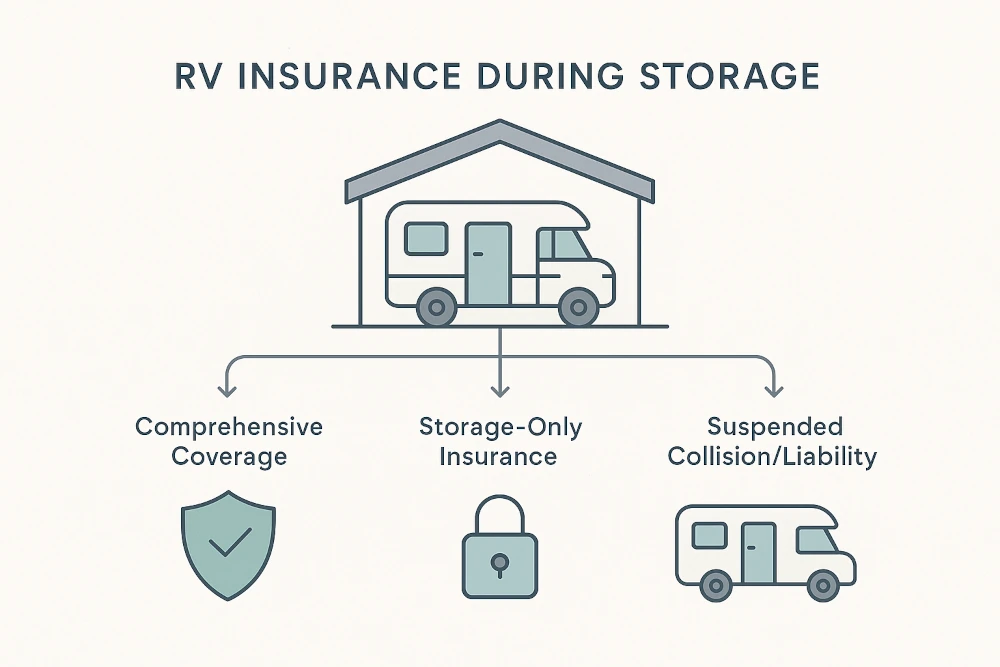
When an RV is placed into storage, its risk profile shifts. Driving-related risks decrease, but other risks remain. Theft, fire, weather damage, and vandalism can still occur, even when the RV is not moving. Because of this shift, insurance companies often allow changes to coverage while the RV is stored. Liability coverage related to driving may be reduced or removed, while physical damage protection stays active.
RV storage does not eliminate the need for insurance. Instead, it changes which parts of the policy matter most. Owners who cancel coverage entirely may face serious financial exposure if damage occurs during storage.
Understanding these changes helps RV owners avoid unnecessary costs without sacrificing protection.
How Insurance Companies Handle RV Storage Periods
Insurance companies recognize that RV owners do not drive year-round. Many offer storage-specific coverage options designed for periods when the vehicle is parked. During storage, insurance companies may allow policy adjustments that focus on comprehensive coverage rather than liability. Comprehensive coverage protects against risks such as theft, fire, falling objects, and certain weather events. Some insurers refer to this as storage-only insurance. This type of coverage keeps the RV protected while removing driving-related coverage that is not needed when the vehicle is not in use.
IIS Insurance Services helps RV owners understand how insurance companies structure these options and how to switch coverage safely before storage begins.
RV Storage Insurance and Coverage Options
RV storage insurance is designed to protect a stored vehicle without paying for coverage tied to road use. It typically includes comprehensive coverage and may exclude liability and collision. This option is useful for owners who store their RV for several months at a time. It allows continued protection against common storage risks while lowering insurance costs. Storage insurance is different from temporarily suspending all insurance. Suspending coverage completely can leave the RV unprotected and may cause issues when coverage is restarted.
RV insurance coverage during storage should always include protection against non-driving risks. IIS Insurance Services helps owners compare storage insurance options and choose coverage that fits the length and location of storage.
Proper Storage and Its Impact on Insurance Coverage
Proper storage plays a major role in how insurance coverage applies. Where and how an RV is stored can affect claims and policy terms. Insurance companies often consider whether the RV is stored at home, in a secure storage facility, or in an open lot. Facilities with security features such as fencing, cameras, or controlled access may reduce risk. Proper storage also includes maintenance steps taken before storage begins. Draining tanks, securing doors, covering the RV, and disconnecting power sources help prevent damage that may not be covered if neglect is involved.
Documenting storage preparation and maintenance can support claims if damage occurs. IIS Insurance Services encourages owners to review storage plans before adjusting insurance coverage.
Storage Facilities and Insurance Considerations
Not all storage facilities are viewed the same by insurance companies. Storage location affects risk assessment and may influence coverage terms or premiums. Facilities designed specifically for RV storage often provide better protection than general parking areas. Covered storage, climate considerations, and on-site security can reduce exposure to damage.
Insurance companies may ask where the RV is stored and how long it will remain there. This information helps determine whether storage-only insurance is appropriate. Choosing the right storage facility supports insurance protection and may help manage costs. IIS Insurance Services reviews storage details with RV owners to ensure policies reflect actual conditions.
Continuous Coverage During RV Storage
Maintaining continuous insurance coverage during storage is important. Canceling a policy entirely can lead to coverage gaps that create problems later. Coverage gaps may result in denied claims if damage occurs during storage. They can also affect future insurance pricing when coverage is reinstated. Many lenders require insurance to remain active even when the RV is not in use. Dropping coverage may violate loan terms or create financial risk.
Continuous coverage ensures protection remains in place and allows smoother transitions back to active use. IIS Insurance Services helps owners maintain coverage while adjusting policy details to fit storage periods.
Claims Involving Stored RVs
Claims for stored RVs usually involve comprehensive coverage. These claims may include damage from storms, theft, fire, or falling objects. When damage occurs, prompt documentation helps support the claim. Photos, storage facility records, and maintenance documentation can be important. Insurance companies may investigate whether proper storage and maintenance were in place. Clear records help demonstrate that reasonable care was taken.
IIS Insurance Services assists RV owners through the claims process, helping explain coverage and next steps after a storage-related loss.
Common Mistakes RV Owners Make During Storage
One common mistake is assuming no insurance is needed when the RV is not being driven. Storage risks remain even when the RV is parked. Another mistake is temporarily suspending all insurance without understanding the consequences. This can leave the RV unprotected and create issues later. Failing to notify the insurance provider about storage changes can also cause problems. Coverage terms may depend on how the RV is being used or stored.
Reviewing coverage before storage helps avoid these issues. IIS Insurance Services works with RV owners to prevent gaps and misunderstandings.
Seasonal Storage and Policy Reviews
Seasonal storage often happens at the same time each year. Reviewing insurance coverage before each storage period helps ensure policies still match current needs. Changes in storage location, RV value, or usage patterns may require policy updates. Weather risks and storage conditions can also change over time.
Annual policy reviews help keep coverage aligned with reality. IIS Insurance Services offers policy reviews to help RV owners adjust coverage before storage begins.
Choosing the Right Insurance Approach for RV Storage
The right insurance approach depends on how long the RV will be stored, where it will be kept, and whether it will be driven occasionally during the storage period. Some owners benefit from storage-only insurance. Others may need limited coverage if the RV will be moved occasionally.
There is no single solution that fits every RV owner. IIS Insurance Services helps tailor coverage based on storage duration, location, and individual risk.
Get Help Understanding How Insurance Handles RV Storage Periods
RV storage periods are a normal part of ownership, but insurance decisions during these times matter. The right coverage protects against theft, weather damage, and unexpected loss while helping manage insurance costs.
IIS Insurance Services helps RV owners understand how insurance handles RV storage periods, review coverage options, and make informed adjustments before storage begins.
If you are preparing to store your RV or want to review your current policy, contact IIS Insurance Services for clear guidance and personalized support.