

Shared amenities play an important role in many residential communities. Pools, clubhouses, fitness centers, walking paths, and parks bring residents together and increase property value. These spaces also introduce risk. Injuries, property damage, and liability claims can occur when many people use the same facilities.
A homeowners' association must protect these areas while keeping operating costs manageable. HOA insurance for shared amenities helps reduce financial exposure when incidents occur in community spaces used by residents and guests. Proper policies also help board members manage risk responsibly and maintain residents' confidence.
Understanding how association insurance works is an important step for any HOA board or property management team. Policies often include liability protection, property coverage, and protection for community-owned structures. Knowing how these elements work together helps a community remain protected while keeping amenities open and safe.
This overview explains how insurance protects shared amenities, how a master policy functions, and how boards can evaluate the coverage needed for their community.
Why Shared Amenities Create Unique Insurance Risks
Community amenities encourage social interaction and improve quality of life. Swimming pools, playgrounds, sports courts, and clubhouses allow residents to gather and enjoy shared experiences. At the same time, these facilities introduce potential liability.
Shared areas often see constant activity. Children run near pools, residents use exercise equipment, and guests attend events in community spaces. With this level of activity, accidents can occur even when maintenance and safety practices are followed.
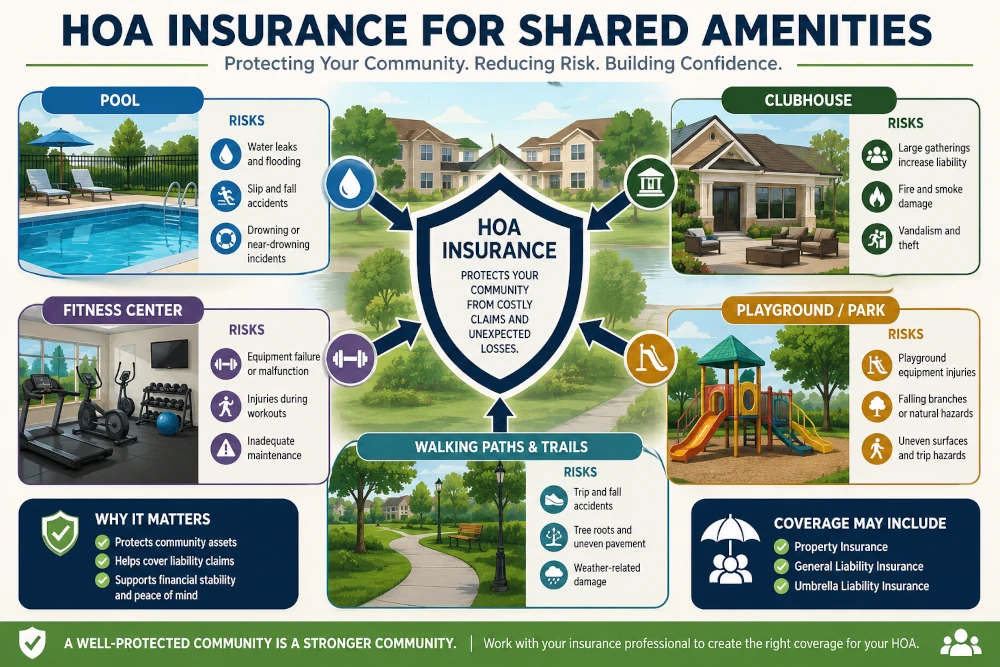
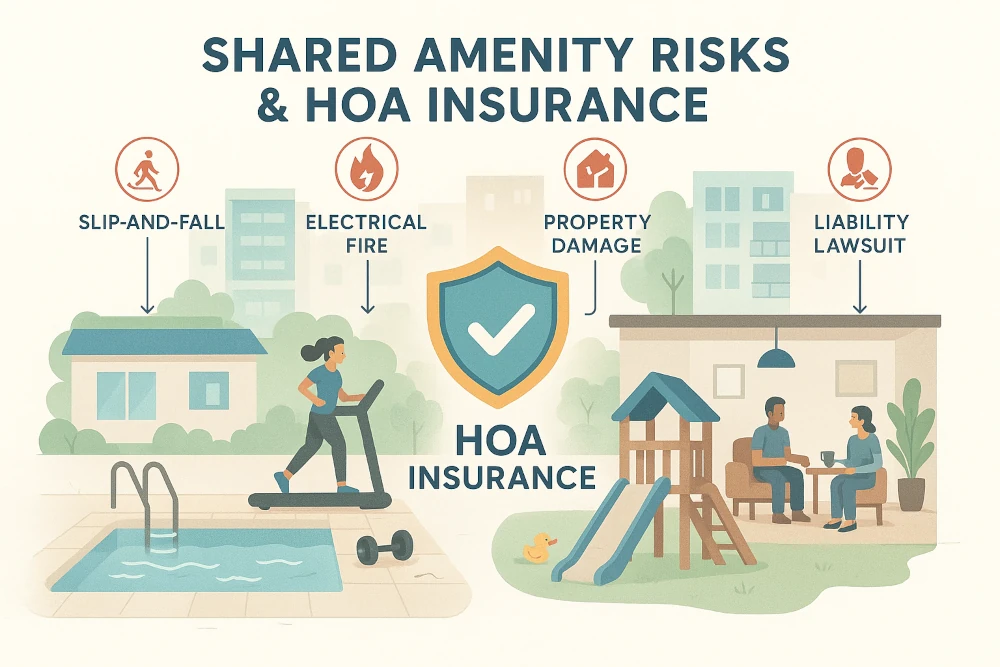
Common risks include:
- Slip and fall incidents near pools or walkways
- Injuries during recreational activities
- Property damage caused by storms or equipment failure
- Damage to shared structures such as clubhouses or fitness rooms
- Liability claims from visitors or residents
When these incidents happen on association property, the homeowners' association may be responsible for responding to claims. Repair costs, legal expenses, and settlements can place a significant financial strain on a community if the proper coverage is not in place.
Insurance helps protect the association from these unexpected costs. Property coverage can assist with repairing or rebuilding shared facilities. Liability protection may help cover medical costs, legal defense, and settlements if injury occurs on association property.
Without appropriate coverage, the association might need to raise dues or issue special assessments to handle expenses related to damages or claims. For many communities, insurance serves as a financial safety net that keeps the association stable while addressing incidents responsibly.
Understanding the HOA Master Insurance Policy
One of the most important protections for community associations is the HOA master insurance policy. This policy typically covers property owned by the association and helps protect the community from liability connected to shared areas.
A master policy is usually purchased by the homeowners' association and paid for through HOA dues. It provides coverage for property that belongs to the association rather than individual homeowners.
Examples of property often covered by a master policy include:
- Clubhouses and recreation centers
- Swimming pools and pool structures
- Shared hallways or entry areas in condominium buildings
- Landscaping features such as parks or green spaces
- Exterior building components maintained by the association
Master policies can vary depending on the structure of the community and the governing documents of the association. Some policies cover only shared structures and common property. Others provide broader coverage that may extend to portions of residential buildings.
In many communities, lenders require associations to maintain this type of insurance. It provides reassurance that the property supporting the neighborhood is protected against damage or liability events.
The master policy does not replace individual homeowner insurance. Residents typically maintain their own policies for personal property, interior finishes, and liability inside their homes. The association policy and homeowner policies work together to provide layered protection for the entire community.
Common Amenity Scenarios That Lead to Claims
Understanding how claims occur can help HOA boards evaluate the type and amount of insurance coverage needed. Shared amenities often present situations where accidents may happen despite safety measures.
Consider a typical weekend at a community pool. Residents and guests gather for recreation, and water on the surrounding deck creates slippery surfaces. If someone slips and suffers an injury, the association could face a liability claim related to maintenance or safety conditions.
Fitness centers present another risk area. Equipment failure or improper use may result in injuries. Even when the association maintains equipment properly, claims may arise when someone is hurt while using shared facilities.
Community clubhouses also host events that bring many visitors onto theassociation property. Social gatherings, celebrations, and meetings increase foot traffic. When large groups use the space, the chance of accidents or property damage can rise.
Other examples include:
- Playground equipment is causing injuries to children
- Damage to shared landscaping or outdoor features
- Fires or water damage inside community buildings
- Storm damage to community structures
Insurance helps protect the association when these situations occur. Liability coverage addresses injury claims. Property insurance assists with repairing or rebuilding damaged structures. Claims handling also helps ensure that incidents are addressed through proper legal and financial processes.
For HOA boards, recognizing these everyday scenarios makes it easier to evaluate risk and confirm that coverage levels match the needs of the community.
Liability Insurance for Homeowners Associations
Liability insurance is one of the most important protections for a homeowners' association. This coverage addresses claims involving injury or property damage that occur on association property.
If a resident or visitor is injured in a shared area, the association could face legal action. Liability coverage helps cover legal defense costs, settlements, or judgments related to these claims.
Typical liability coverage may help with:
- Medical expenses related to injuries on shared property
- Legal defense costs if the association is sued
- Settlements resulting from injury claims
- Property damage caused by association negligence
For example, if a resident trips on uneven pavement in a community walkway and files a claim, liability coverage may assist with medical costs and legal expenses. Without this protection, the association might have to pay those costs directly from operating funds.
Communities sometimes increase liability limits to reflect the scale of their amenities. Larger communities with pools, sports courts, or recreational facilities may face higher exposure. Higher coverage limits can help reduce financial risk.
Some associations also consider umbrella policies. These provide additional liability protection beyond the limits of the primary policy. Umbrella coverage can help if a claim exceeds standard policy limits.
Reviewing liability coverage regularly allows the board to adjust protection as the community grows or adds amenities.
Property Coverage for Shared Facilities with HOA
While liability coverage addresses injuries and legal claims, property insurance focuses on physical structures owned by the association. Community facilities can represent a significant financial investment, and repairing damage may require substantial funds.
Property coverage often protects:
- Clubhouses
- Fitness centers
- Maintenance buildings
- Pools and surrounding structures
- Shared roofs or exterior building elements in condominium communities
Damage to these facilities can occur due to fire, storms, vandalism, or other unexpected events. Property insurance helps the association repair or rebuild these structures so residents can continue using community amenities.
In addition to buildings, policies may include coverage for equipment or furnishings located in shared facilities. Items such as exercise machines, kitchen appliances in clubhouses, or maintenance tools may also be protected.
When evaluating property coverage, associations often consider the replacement value of structures. Coverage limits should reflect the cost required to rebuild or repair facilities if a major event occurs.
Accurate valuations help ensure the community does not face financial gaps when filing a claim.
Working with insurance brokers experienced in community associations can help boards evaluate property risks and confirm that policy limits match the value of shared assets.
Choosing the Right Insurance Strategy for Your Community
Selecting appropriate insurance coverage requires careful evaluation of the community’s layout, amenities, and risk exposure. Each homeowners' association operates differently, and insurance strategies should reflect those differences.
Several factors influence the coverage needed:
- Number and type of shared amenities
- Size of the community and number of residents
- Age and condition of buildings
- Local climate and natural disaster exposure
- Event activity within shared facilities
Communities with extensive amenities such as multiple pools, large recreation centers, or sports facilities may require broader coverage. Smaller associations may focus on protecting basic shared spaces and maintaining liability protection.
Regular policy reviews help ensure coverage keeps pace with community changes. New amenities, building renovations, or increased property values may require updated policy limits.
Board members often work with insurance brokers who specialize in association coverage. These professionals help evaluate risk, compare policies, and identify gaps that may exist between different types of coverage.
The goal is to build an insurance structure that protects the association without placing unnecessary financial strain on residents. A well-structured policy allows board members to focus on community management rather than unexpected financial liabilities.
Protecting Your Community’s Shared Amenities
Shared amenities strengthen community life and provide spaces where residents can connect and relax. Pools, parks, and clubhouses contribute to the identity of a neighborhood and often influence property values.
Maintaining these spaces responsibly includes protecting them with the right insurance coverage. Liability protection, property insurance, and a well-structured master policy help guard the association against unexpected incidents.
With proper planning, homeowners' associations can protect their shared property while keeping operating costs predictable for residents.
If your HOA board or property management team needs guidance reviewing coverage, IIS Insurance can help evaluate your community’s risk profile and identify policy options that match your needs.
Working with experienced insurance professionals allows your association to protect its amenities, residents, and financial stability with confidence.