

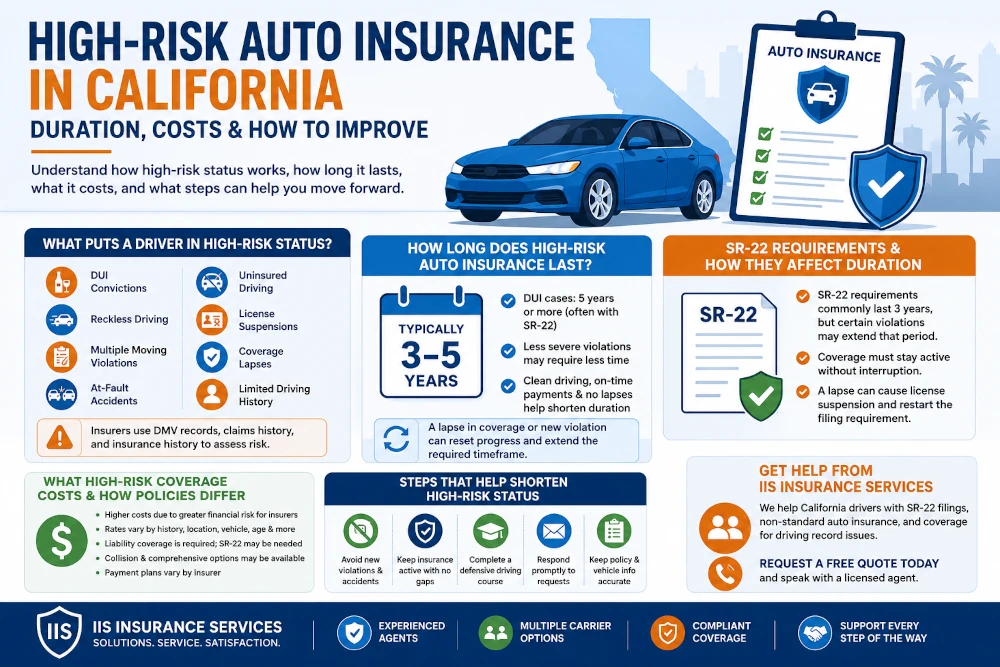
High-risk auto insurance in California often brings higher costs and stricter rules, which can create uncertainty for drivers trying to regain stable coverage. Many people want clear expectations around timelines, pricing, and compliance before committing to a policy that may last several years. Understanding how insurers evaluate risk helps drivers avoid mistakes that can extend required coverage.
One of the most common concerns centers on high-risk auto insurance duration, especially for drivers dealing with SR-22 filings, license suspensions, or serious violations. The length of time a driver remains classified as high risk depends on the reason for the designation, the severity of past offenses, and how consistently insurance coverage is maintained afterward.
High-risk status does not automatically mean permanent higher rates. Insurance carriers regularly review driving history, policy behavior, and compliance with state requirements. Drivers who understand how duration works are better positioned to plan financially and move back toward standard auto insurance when eligibility improves.
IIS Insurance Services works with California drivers facing SR-22 requirements, prior violations, or complex insurance situations. By setting expectations early and maintaining the right policy structure, many drivers shorten the time spent in high-risk status and avoid unnecessary setbacks.
What Puts a Driver in High-Risk Status in California
Insurance companies assign high-risk status when past driving behavior suggests a higher likelihood of future claims. This classification affects eligibility, insurance premiums, and available coverage options. Carriers rely on DMV records, claims data, and insurance history to assess overall risk.
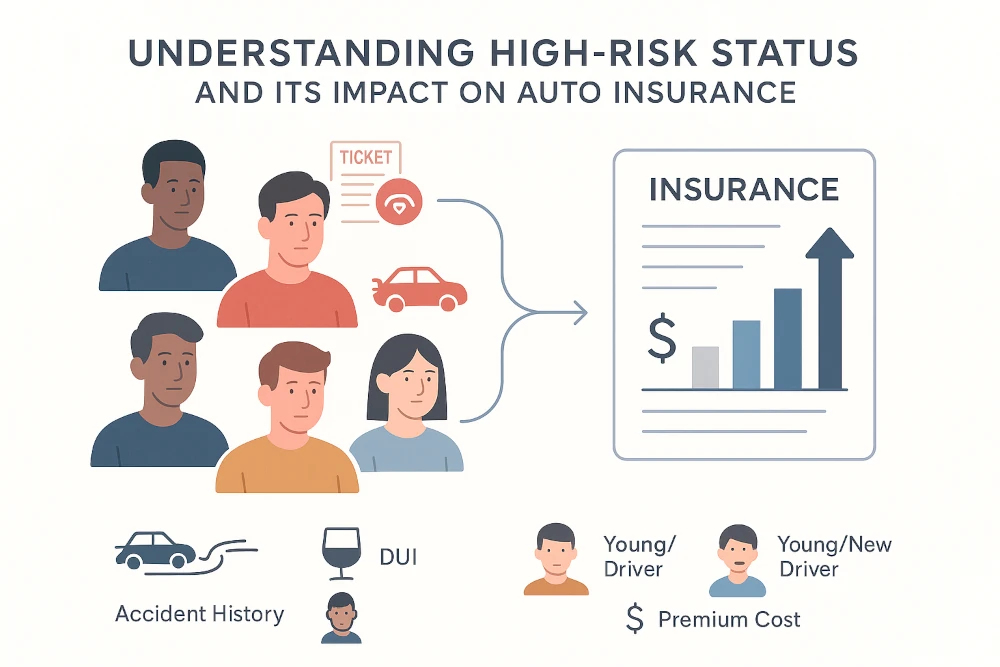
Common reasons California drivers are considered high-risk include DUI convictions, reckless driving, multiple moving violations, at-fault accidents, uninsured driving, license suspensions, and coverage lapses. Drivers with limited driving history, such as newly licensed individuals, may also fall into this category due to insufficient data for long-term risk assessment.
Points added to a driving record play a significant role in how insurers evaluate risk. Accumulating too many points within a short period often results in higher rates and fewer policy choices. Many insurers focus heavily on violations from the last five years, particularly when serious offenses are involved.
IIS Insurance Services helps drivers understand how insurers interpret these records and works to secure compliant auto insurance coverage even when traditional carriers decline applications.
How Long High-Risk Auto Insurance Usually Lasts
High-risk auto insurance duration varies depending on the reason for the classification and whether state-mandated filings are required. California does not apply a single timeline to every driver. Instead, insurers and the DMV review each case individually.
For many drivers, high-risk coverage lasts between three and five years. DUI-related cases often require coverage for five years or more, particularly when an SR-22 filing is involved. Less severe violations, such as isolated traffic offenses, may result in a shorter required period if no additional incidents occur.
Insurance companies reassess driving behavior during renewal periods. Clean driving, on-time payments, and uninterrupted coverage can positively influence future evaluations. A single lapse in coverage or new violation can reset progress and extend the required timeframe.
IIS Insurance Services reviews each driver’s driving history and insurance policy to explain expected timelines clearly and ensure coverage remains compliant throughout the required period.
How SR-22 Requirements Affect High-Risk Auto Insurance Duration
Many California drivers classified as high risk are required to file an SR-22, which directly affects how long high-risk coverage must stay active. An SR-22 is not an insurance policy itself but a form filed by the insurance company with the state to confirm active liability coverage.
SR-22 requirements commonly last three years, though certain violations may extend that period. During this time, coverage must remain active without interruption. Even a short lapse can result in license suspension and restart the filing requirement from the beginning.
Drivers with SR-22 filings often face fewer carrier options, which can impact insurance rates and payment flexibility. Working with an agency experienced in high-risk filings helps prevent compliance errors and unnecessary delays.
IIS Insurance Services can file your SR-22 electronically with the California DMV and help you keep your policy active so your filing stays in good standing.
What High-Risk Coverage Costs and How Policies Differ
High-risk auto insurance generally costs more than standard coverage because insurers assume greater financial exposure. Monthly rates vary based on driving history, location, vehicle type, age, and previous insurance behavior. Drivers with multiple violations or serious offenses typically see higher insurance premiums.
High-risk policies usually include liability coverage that meets California minimum requirements, along with SR-22 filings when required. Optional collision and comprehensive coverage may be available depending on the vehicle and carrier guidelines. Payment structures also vary, with some insurers offering monthly billing while others require larger upfront payments.
Not all high-risk policies are priced the same. Some carriers specialize in non-standard auto insurance and offer competitive coverage options designed for drivers with complex records.
IIS Insurance Services compares multiple insurance carriers to locate coverage that balances affordability with legal protection, helping drivers manage costs while maintaining compliance.
Steps That Help Shorten How Long High-Risk Status Lasts
Although high-risk status cannot be removed immediately, drivers can take practical steps that support improvement over time. Insurance companies reward consistency, responsibility, and stable insurance behavior.
Drivers who want to improve their insurance profile should focus on actions that demonstrate reliability, including:
- Avoiding new traffic violations and at-fault accidents
- Keeping auto insurance active without payment gaps or cancellations
- Completing an approved defensive driving course when available
- Responding promptly to insurer and DMV requests
- Maintaining accurate policy and vehicle information
Avoiding new traffic violations remains one of the most effective ways to improve future insurance rates. Continuous coverage also plays a major role, since lapses often signal instability to insurers. Defensive driving courses can support safer habits and may qualify drivers for insurance discounts.
Regular policy reviews allow drivers to adjust coverage as circumstances change. Selecting lower-risk vehicles, reducing annual mileage, and keeping policy details current can also influence premiums.
IIS Insurance Services works closely with drivers throughout the coverage period, offering guidance on policy reviews, rate changes, and steps that support eligibility for standard auto insurance.
Get Help With High-Risk Auto Insurance From IIS Insurance Services
If you need high-risk auto insurance in California, working with the right agency can make the process clearer and less stressful. IIS Insurance Services helps drivers with SR-22 filings, non-standard auto insurance, and coverage questions tied to driving record issues.
Their licensed agents take time to explain coverage options, review your situation, and help you secure an auto insurance policy that meets California requirements. Whether you are starting a new policy or reviewing an existing one, IIS Insurance Services focuses on clear guidance and responsive support.
Reach out to IIS Insurance Services today to request a free quote or speak with a licensed agent about your coverage options.