

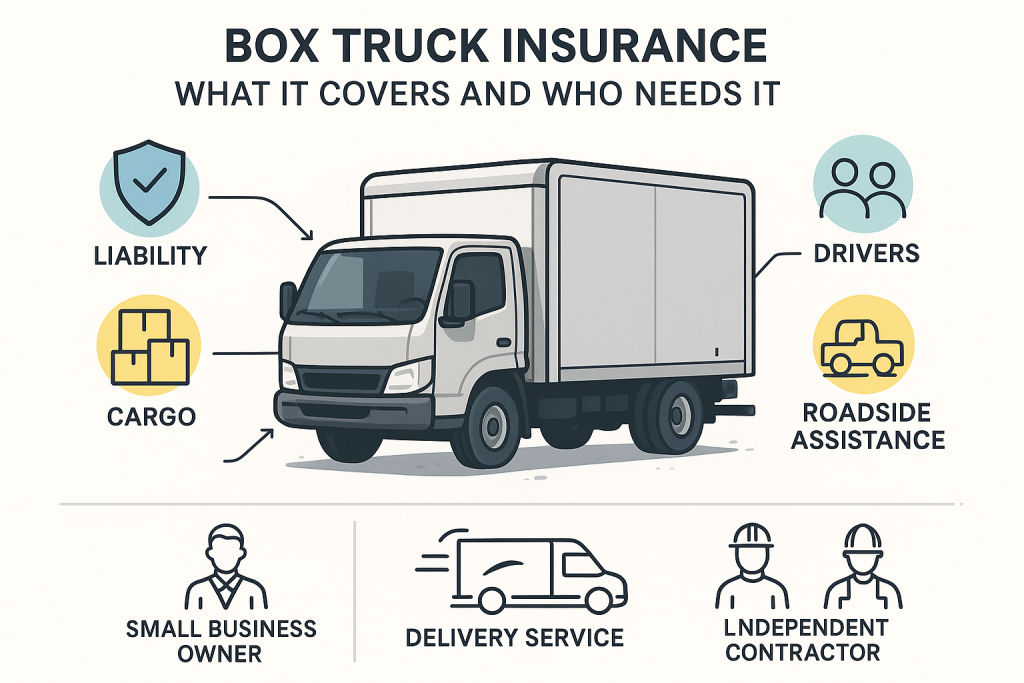
Running a business that depends on a commercial box truck means managing operating expenses without sacrificing protection. Insurance is one of those expenses that can vary widely from one business to another. A local contractor with one truck may pay a very different premium than a delivery company operating multiple vehicles across California. Understanding what influences your commercial box truck insurance cost helps you make informed decisions, compare policies confidently, and avoid paying for coverage you do not need.
At IIS Insurance Services, we work with contractors, movers, retailers, delivery businesses, fleet operators, and independent business owners to build policies that fit their operations. Instead of offering one-size-fits-all coverage, we take time to understand your business, the vehicles you operate, the cargo you transport, and the risks you face each day.
Whether you operate a single commercial box truck or manage an expanding fleet, the right insurance policy protects your vehicles, drivers, business assets, and financial future while helping you stay compliant with commercial insurance requirements.
What Affects Commercial Box Truck Insurance Cost?
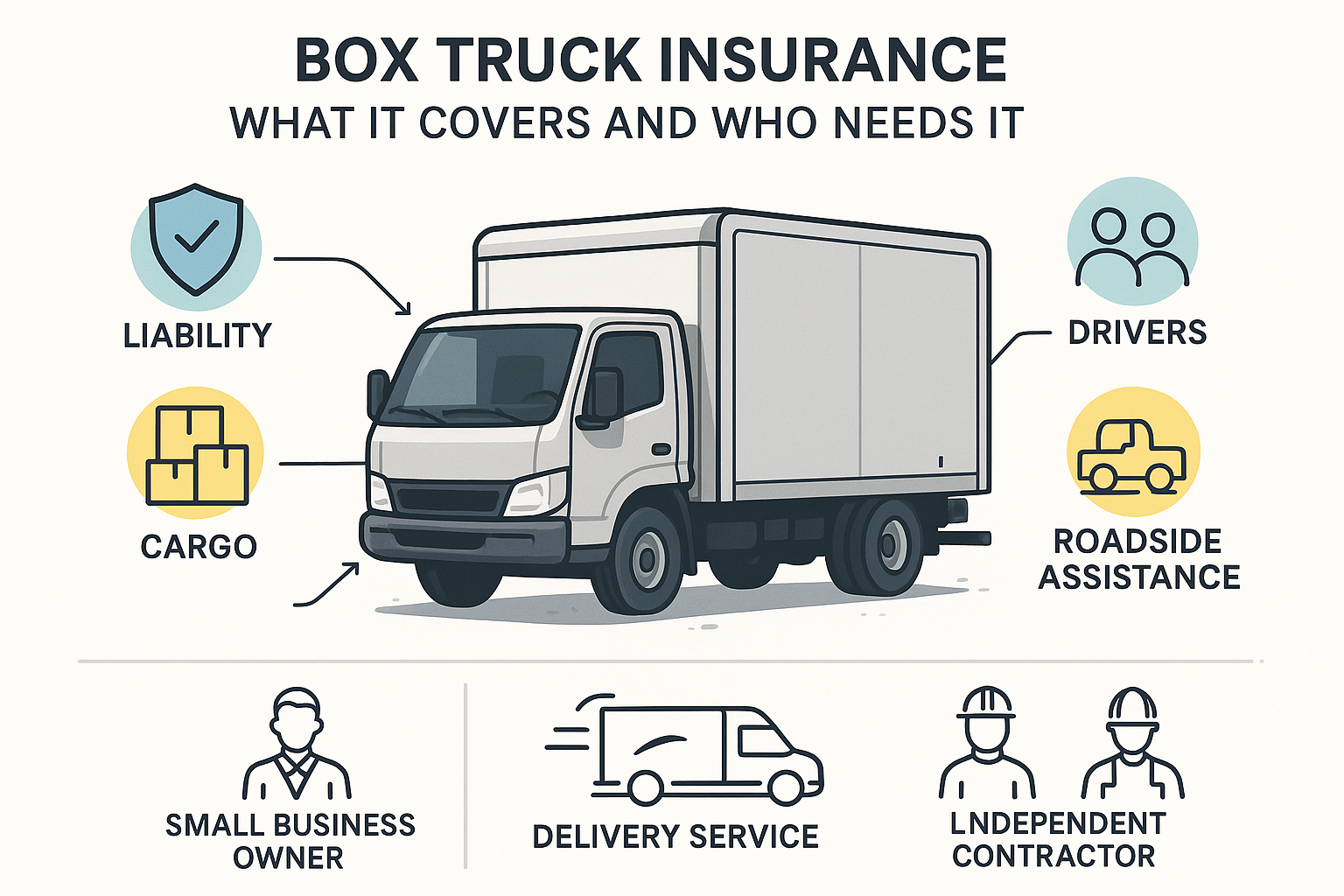
No insurance company calculates premiums the same way, but most carriers evaluate many of the same risk factors. Understanding these variables gives business owners a clearer picture of why quotes differ and where savings may be available.
Vehicle Details
The truck itself has a direct impact on your insurance premium. Carriers review information such as:
- Vehicle age
- Purchase value
- Replacement cost
- Safety equipment
- Vehicle size
- Custom modifications
A newer commercial box truck may cost more to insure because it has a higher replacement value. However, trucks equipped with advanced safety technology may also qualify for discounts that help offset higher coverage costs.
The truck's size also matters. A 26-foot box truck generally costs more to insure than a smaller delivery vehicle because repair costs, liability exposure, and cargo values are often higher.
Business Operations
Insurance providers also look closely at how your truck is used.
Businesses that make deliveries in crowded cities often face greater accident exposure than companies operating primarily in rural areas. Likewise, trucks traveling long interstate routes usually present different risks than those serving local customers.
Your daily operations may include:
- Local deliveries
- Moving services
- Contractor equipment transport
- Retail distribution
- Wholesale deliveries
- Interstate freight
Each operation creates a different level of risk, which directly affects your commercial truck insurance costs.
Driver Experience
Drivers often influence premiums just as much as the vehicle itself.
Insurance companies review:
- Years of commercial driving experience
- Accident history
- Traffic violations
- CDL status when applicable
- Previous insurance claims
Experienced drivers with clean driving records usually qualify for lower insurance premiums because they present a lower level of risk.
Businesses that invest in driver training and safe driving programs may also qualify for additional savings over time.
Cargo and Liability Exposure
The products transported inside your truck also affect pricing.
For example, hauling furniture generally creates different insurance risks than transporting electronics, medical equipment, or expensive commercial inventory.
Businesses carrying higher-value cargo often need increased cargo insurance limits to protect customer property during transportation.
Likewise, many commercial clients require higher liability insurance limits before awarding contracts. While increased liability limits raise premiums, they also provide stronger financial protection if a serious accident occurs.
Understanding the Coverage Included in a Box Truck Insurance Policy
Choosing insurance based only on price can leave your business exposed to expensive losses. A well-designed commercial policy combines several coverages that work to protect your business.
The exact combination depends on your operations, contracts, vehicle value, and cargo.
Liability Insurance
Liability insurance serves as the foundation of every commercial auto policy.
If your driver causes an accident, liability coverage can help pay for:
- Property damage
- Medical expenses
- Legal defense costs
- Bodily injury claims
- Court settlements within policy limits
Many businesses choose liability limits that exceed state minimum requirements because customers, brokers, and contracts often require higher coverage amounts.
Physical Damage Coverage
Physical damage coverage protects your own commercial box truck rather than damage caused to others.
This coverage typically includes protection for:
- Collision damage
- Fire
- Theft
- Vandalism
- Falling objects
- Severe weather events
Since a commercial truck represents a significant investment, physical damage coverage helps businesses recover faster after unexpected losses.
Cargo Insurance
Your customers trust you to transport valuable goods safely.
Cargo insurance helps protect those goods if they are damaged, stolen, or destroyed during transit.
Depending on your business, cargo insurance may protect:
- Furniture
- Appliances
- Electronics
- Building materials
- Business inventory
- Commercial equipment
Businesses transporting higher-value goods generally require higher cargo coverage limits than companies hauling standard household items.
Additional Commercial Coverage Options
Many businesses also choose optional protections that strengthen their policy.
These may include:
- Rental reimbursement
- Roadside assistance
- Uninsured and underinsured motorist coverage
- General business insurance
- Trailer coverage
- Hired and non-owned vehicle coverage
An experienced insurance agency can help determine which coverages match your business without paying for unnecessary protection.
Typical Commercial Box Truck Insurance Costs
Although every quote is different, understanding the major pricing factors helps business owners set realistic expectations.
For many California businesses, commercial box truck insurance commonly falls between $250 and $600 per month per truck, depending on vehicle type, coverage selections, driver history, operating radius, cargo, and claims experience. Actual premiums may be lower or higher depending on individual circumstances.
| Factor | How It Affects Cost | Example |
|---|---|---|
| Liability limits | Higher limits usually increase premiums | $1 million liability generally costs more than state minimum coverage |
| Truck value | Newer, higher-value trucks cost more to insure | A new commercial box truck typically costs more than an older model |
| Driver history | Safe drivers often receive better rates | Clean driving records can reduce premiums |
| Cargo type | High-value cargo increases risk | Electronics usually cost more to insure than furniture |
| Business history | Established businesses with fewer claims may pay less | A company with several claim-free years may qualify for better pricing |
| Operating area | Dense urban routes often increase premiums | Local rural routes generally present lower risk |
Price should never be the only factor when comparing policies. A lower premium may also mean lower coverage limits, higher deductibles, or exclusions that leave your business responsible for significant expenses after a claim.
At IIS Insurance Services, our team reviews multiple insurance carriers to help businesses compare coverage, deductibles, and premiums so they receive protection that fits both their operations and budget.
Continue with Part 2, where we'll cover:
- Practical ways to lower your box truck insurance costs
- Common mistakes that increase premiums
- A strong conversion-focused closing section with CTA to IIS Insurance Services.
How to Lower Your Commercial Box Truck Insurance Costs
Every business wants reliable coverage at a competitive price. While some factors, such as your location or the value of your truck, cannot be changed, many others are within your control. Taking a proactive approach can help reduce insurance premiums while maintaining the protection your business depends on.
Consider these practical strategies:
- Compare quotes regularly. Insurance rates change over time, so reviewing multiple carriers during each renewal can uncover better pricing or improved coverage.
- Hire experienced drivers. Drivers with clean motor vehicle records typically qualify for lower premiums than those with accidents or repeated traffic violations.
- Increase deductibles if appropriate. Choosing a higher deductible may lower your monthly premium, provided your business can comfortably cover the deductible after a claim.
- Invest in safety programs. Ongoing driver training, documented safety policies, and regular vehicle inspections demonstrate responsible risk management.
- Install GPS and anti-theft technology. Tracking systems help reduce theft risk and may qualify for carrier discounts.
- Bundle business insurance policies. Combining commercial auto coverage with other business insurance policies can often result in lower overall costs.
- Review your policy each year. As your business grows, your insurance needs may change. Updating your policy helps eliminate unnecessary coverage while ensuring you remain properly protected.
Working with an independent insurance agency such as IIS Insurance Services also gives you access to multiple insurance carriers rather than limiting you to one company's products. That flexibility allows you to compare coverage options and premiums that fit your business goals.
Common Mistakes That Can Increase Insurance Premiums
Many businesses unintentionally pay higher insurance costs because of avoidable mistakes. Some errors increase premiums immediately, while others become expensive only after a claim occurs.
One of the most common issues is providing incomplete or inaccurate information when applying for coverage. Failing to report vehicle modifications, underestimating annual mileage, or not listing every regular driver can create underwriting problems and may even affect claim payments.
Another mistake is purchasing coverage based solely on the lowest premium. While saving money is important, policies with limited protection may leave your business responsible for repair costs, cargo losses, or legal expenses that exceed your coverage limits.
Business owners should also avoid postponing annual policy reviews. As your company grows, your operations may change significantly. You may add trucks, hire new drivers, expand delivery routes, or begin transporting higher-value cargo. If your policy does not reflect those changes, you could be underinsured when you need coverage most.
Other common mistakes include:
- Allowing drivers with poor driving records to operate company vehicles.
- Ignoring recommended driver safety training.
- Failing to maintain accurate business records.
- Overlooking required state or federal filings.
- Choosing liability limits that do not satisfy customer contracts.
- Waiting until renewal time to discuss changes with your insurance agent.
Avoiding these issues helps protect your business while keeping insurance costs as manageable as possible.
Partner With IIS Insurance Services for a Personalized Quote
Every commercial trucking business operates differently, which is why there is no universal insurance price. The cost of your policy depends on your vehicles, drivers, cargo, operating radius, coverage selections, claims history, and business goals.
At IIS Insurance Services, we simplify the process by helping you compare policies from trusted insurance carriers and explaining how each coverage option affects your premium. Our experienced team works with independent contractors, moving companies, delivery services, retailers, construction businesses, and fleet operators throughout California to build insurance solutions that match their operations and budget.
When you request a personalized quote, we'll help you:
- Evaluate the right liability limits for your business.
- Compare physical damage and cargo coverage options.
- Identify discounts that may reduce your premium.
- Review deductible choices.
- Ensure your policy meets contractual and regulatory requirements.
- Build coverage that can grow alongside your business.
Since 2009, IIS Insurance Services has helped California businesses secure dependable commercial truck insurance with responsive service and competitive pricing. Whether you insure one commercial box truck or an entire fleet, our team is committed to helping you make informed decisions with confidence.
Request your personalized commercial box truck insurance quote today. We'll help you compare coverage options, explain your choices clearly, and build a policy that protects your drivers, vehicles, cargo, and business without paying for coverage you do not need.