

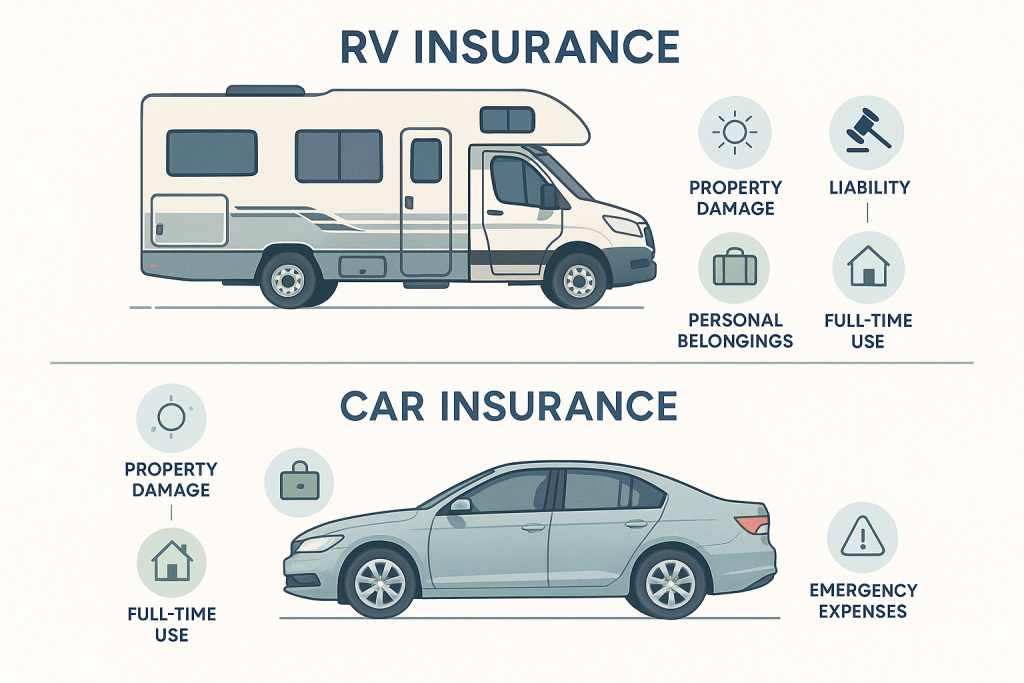
RV insurance costs depend on the type of recreational vehicle you own, how often you use it, its value, and the coverage you select. For California drivers searching for is rv insurance more expensive than car insurance, the answer depends on those details rather than a single statewide average. A large Class A motorhome used as a full-time residence will usually cost more to insure than a standard passenger car, while a small travel trailer used occasionally may cost less.
RV insurance works similarly to auto insurance because both can include liability, collision, comprehensive, and uninsured motorist protection. An RV may also serve as temporary housing, carry personal belongings, include specialized equipment, and remain parked at campsites for extended periods. These added risks can affect coverage and price.
IIS Insurance Services compares coverage options for recreational vehicles from multiple carriers and explains the differences in plain language, helping California RV owners find coverage that fits their vehicle, travel habits, storage plans, and budget.
Why RV Insurance Cost Can Be Higher than Car Insurance
RV insurance pricing often reflects what it may cost to repair or replace the vehicle after a covered loss. Many motorhomes cost more than passenger cars, and repairs may involve automotive parts, appliances, plumbing, electrical systems, and built-in furnishings.
Repair options may also be limited. A car can often be taken to a local body shop, while an RV may need a facility familiar with its chassis, roof, slide-outs, interior construction, and onboard systems. Specialized parts and longer repair times can affect premiums.
A larger RV can also cause greater bodily injury or property damage in an accident than a compact passenger vehicle. Some owners choose higher liability limits to better protect their finances.
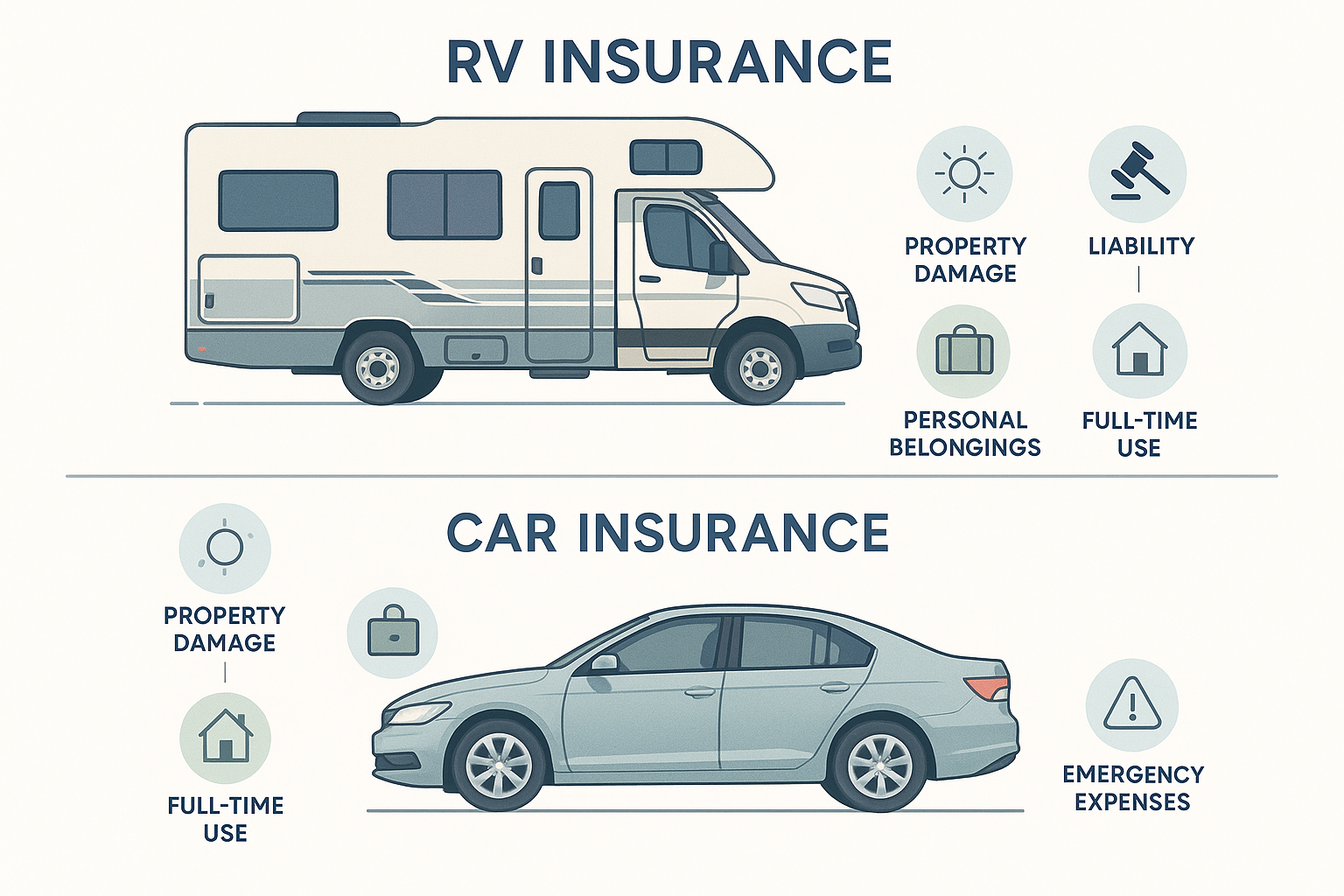
RVs often carry belongings that a standard car policy may not fully cover. Clothing, electronics, camping equipment, tools, and outdoor gear may stay inside for long periods. An RV policy can offer personal property coverage for these items.
Some policies also include emergency expense coverage when a covered loss makes the RV unusable during a trip. This may help with lodging or transportation while repairs are arranged.
A motorhome can cost more to insure than a car when it has a high value, serves as a residence, or includes physical damage protection, personal belongings coverage, vacation liability, or full-timer coverage.
A higher premium does not mean you have to overpay. Coverage can be adjusted around how often you travel, where the RV is stored, its value, and the risks that matter most. Smaller towable units may cost less when used occasionally and stored securely.
How RV Class, Value, and Use Affect Insurance Rates
Your RV’s class helps determine its repair cost, value, size, and coverage needs. Two owners with similar driving records may receive different quotes because one owns a camper van and the other owns a luxury diesel motorhome.
Class A motorhomes are typically the largest self-propelled RVs. They may include kitchens, bathrooms, sleeping areas, generators, entertainment systems, and slide-outs. Their size and market value can lead to higher physical damage and liability costs.
Class B motorhomes, often called camper vans, are smaller and easier to maneuver. Their insurance cost may be lower than for a Class A model, although luxury conversions can still carry a high value.
Class C motorhomes are commonly built on a truck or van chassis and have a sleeping area above the cab. Pricing often falls between Class A and Class B coverage, but the model, age, condition, and equipment still matter.
Travel trailers and fifth wheels are towed rather than driven. The tow vehicle’s liability coverage may apply while the trailer is attached, but it may not pay for damage to the trailer itself. Owners may need separate protection for theft, weather damage, collisions, and personal belongings.
Motorized RVs must carry liability insurance, while a tow vehicle’s liability policy may apply to a trailer while it is being towed. An IIS Insurance Services agent can help you review both policies.
A few details help an agent find suitable options:
Whether you use the RV for vacations, seasonal travel, or full-time living
How many miles you expect to travel and where the RV is stored
Whether it has solar panels, awnings, custom equipment, or upgraded electronics
Whether it is financed, rented to others, or used for business
Who drives it and what their driving records look like
Accurate information can help you avoid unsuitable coverage or leave important risks unprotected. An RV used a few weekends each year has different needs from one that serves as a primary residence.
Full-time use may require liability and property protection similar to parts of home insurance. A basic recreational policy may not cover long-term occupancy, campsite incidents, or the property carried by a full-time traveler. IIS Insurance Services can help identify gaps and compare full-timer options.
RV Insurance and Car Insurance Coverage Compared
Car and RV policies share several coverage types, but they are built for different uses. Terms, limits, exclusions, and availability vary by insurer.
| Coverage Area | Car Insurance | RV Insurance |
|---|---|---|
| Liability | Can pay for covered bodily injury and property damage caused to others | Can cover road accidents and may offer added liability for incidents involving a parked RV |
| Collision Coverage | Can pay for damage caused by a collision with another vehicle or object | Can cover collision damage to the motorhome or insured towable RV |
| Comprehensive Coverage | Can cover theft, vandalism, fire, weather, and other non-collision losses | Can cover similar losses involving the RV, its body, and permanently installed equipment |
| Uninsured Motorist | May apply when an uninsured or underinsured driver causes a covered loss | May be available for motorized RVs, subject to state rules and policy terms |
| Personal Belongings | Usually limited because auto policies are not designed for household property | May provide higher or specialized limits for items carried inside the RV |
| Vacation Liability | Generally not included | May cover certain injuries or property damage while the RV is parked and used as temporary lodging |
| Emergency Expenses | Rental reimbursement or roadside options may be available | May include lodging or transportation after a covered loss interrupts a trip |
| Full-Time Use | Not designed to cover a residence | Full-timer coverage may address added personal liability and property exposure |
| Storage Options | Continuous road coverage is commonly maintained | Some policies may allow reduced road coverage while keeping protection for theft, fire, or weather |
California motorized RV owners must carry at least the state-required liability limits, but liability coverage does not pay to repair or replace the insured RV after theft, weather damage, or an at-fault collision. A lender may also require collision and comprehensive coverage.
The right additional coverage depends on the RV’s value and your budget. An older motorhome used occasionally may not need the same protection as a financed luxury model. IIS Insurance Services can help compare limits, deductibles, and physical damage options.
Before selecting a deductible, review how coverage for theft, fire, vandalism, and weather damage may apply to your RV and permanently installed equipment.
Vacation liability may matter when your RV is parked and used as temporary living space. For example, a guest could be injured around the RV at a campsite. A standard auto policy may not be designed for that situation.
Full-time RV owners may have broader needs, especially without a separate homeowners or renters policy. Full-timer coverage can help address the driving, living, and property risks of using an RV as a primary residence.
What Determines an RV Insurance Premium?
Insurance companies use information about your RV, driving history, location, and coverage selections to calculate a premium.
The RV’s value is one of the largest influences. A newer motorhome with a high replacement cost will usually cost more to insure than an older travel trailer.
The way a policy values the RV also matters. Actual cash value coverage accounts for depreciation, while other options may use an agreed amount or replacement-cost terms. Each can affect the premium and claim payment.
Your driving record can influence rates for a motorized RV. Accidents, traffic violations, license suspensions, prior claims, and other listed drivers may affect the price.
Insurers may also consider where the RV is registered, stored, and driven. Secure storage may reduce some risks.
Usage and annual mileage affect road exposure. A motorhome driven thousands of miles each year may cost more to insure than a trailer kept at one seasonal campsite.
Coverage selections also shape the price. Higher liability limits, lower deductibles, broader personal property limits, roadside assistance, emergency expense protection, and full-time use endorsements can raise the premium. Removing useful protection to lower the quote may leave costly gaps.
An agent can help balance affordability and protection by adjusting a deductible, comparing valuation options, reviewing personal property limits, or checking available discounts.
A $200,000 RV does not have one standard insurance price. Its class, age, condition, storage arrangement, location, annual mileage, deductible, and selected coverages can each affect the quote.
IIS Insurance Services compares rates from multiple carriers and explains why one option costs more or less than another, helping you choose based on price and protection.
How to Lower RV Insurance Rates Without Creating Gaps
The lowest quote is not always the best value. A low-cost policy may have low liability limits, a large deductible, narrow personal property protection, or exclusions that do not fit your travel habits.
Several practical steps may help lower your RV insurance rates:
Compare several carriers. Insurance companies may price the same RV differently, and IIS Insurance Services can shop available options on your behalf.
Bundle eligible policies. Combining RV, car, motorcycle, or home insurance with one carrier may produce a multipolicy discount.
Choose deductibles carefully. A higher deductible may lower the premium, but the amount should remain manageable.
Ask about storage adjustments. If you store your RV for part of the year, you may be able to reduce certain road coverages while maintaining protection against theft, fire, vandalism, and weather.
Maintain a clean driving record. Safe driving can help control car insurance and motorhome rates.
Review optional equipment. Make sure expensive modifications and permanently attached accessories are listed correctly.
Estimate annual mileage accurately. An honest estimate helps the carrier price the policy around your actual use.
Review the policy each year. Changes in value, travel frequency, storage, drivers, or full-time use may affect suitable coverage and price.
Bundling can simplify billing, but a discount does not automatically make a bundled policy the least expensive option. IIS Insurance Services can compare bundled and separate quotes, including costs, limits, deductibles, and exclusions.
Tell your agent when your RV use changes. Moving from occasional travel to full-time living can create a gap if the policy still treats the vehicle as recreational. Renting the RV, using it for business, or making major modifications may also require an update.
Get an RV and Car Insurance Comparison from IIS Insurance Services
The cost difference between RV and car insurance depends on what you own and how you use it. Large motorhomes and full-time RVs often require broader coverage and may carry higher premiums. Camper vans and towable trailers may cost less when used occasionally and stored securely.
IIS Insurance Services helps California RV owners compare policies from multiple carriers. An agent will learn about your vehicle, travel plans, storage arrangements, and budget, then help you review available protection for recreational or full-time use, physical damage, personal belongings, roadside emergencies, and other needs.
IIS Insurance Services explains what drives each quote, where discounts may apply, and how changing a deductible or coverage limit may affect your cost.
Request a free, personalized quote to compare your RV and car insurance side by side. You will receive responsive support from an agent who can simplify the process and find coverage tailored to the risks you face.