

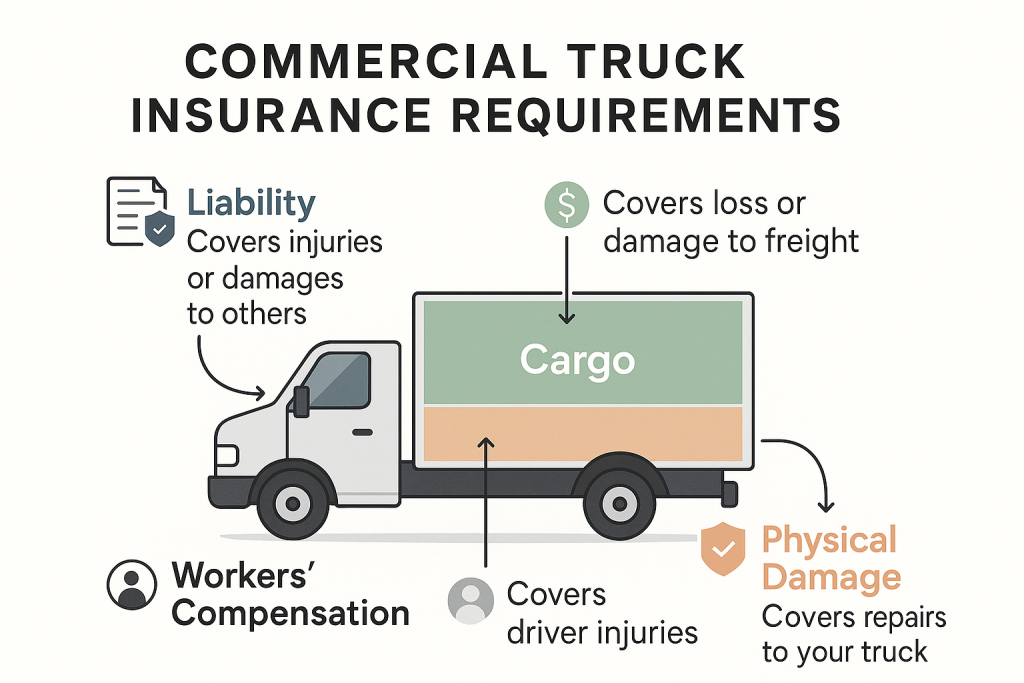
Operating a box truck for commercial purposes involves more than keeping your vehicle maintained and your deliveries on schedule. Every business must also meet insurance requirements that protect drivers, customers, and the public. While all states require commercial vehicles to carry some level of insurance, the exact rules vary depending on where your business operates, whether you cross state lines, the type of cargo you transport, and the size of your operation.
Understanding box truck insurance requirements by state helps business owners stay compliant, avoid unnecessary penalties, and select coverage that supports long-term growth. Whether you own a single delivery truck, operate a moving company, or manage a growing fleet, having the right policy in place protects your business from financial losses while helping you meet state and federal regulations.
At IIS Insurance Services, we work with contractors, delivery companies, retailers, fleet managers, and independent operators to simplify commercial insurance. Our experienced team helps businesses compare coverage options, understand legal requirements, and build policies that provide dependable protection without paying for unnecessary coverage.
Understanding Commercial Truck Insurance Requirements
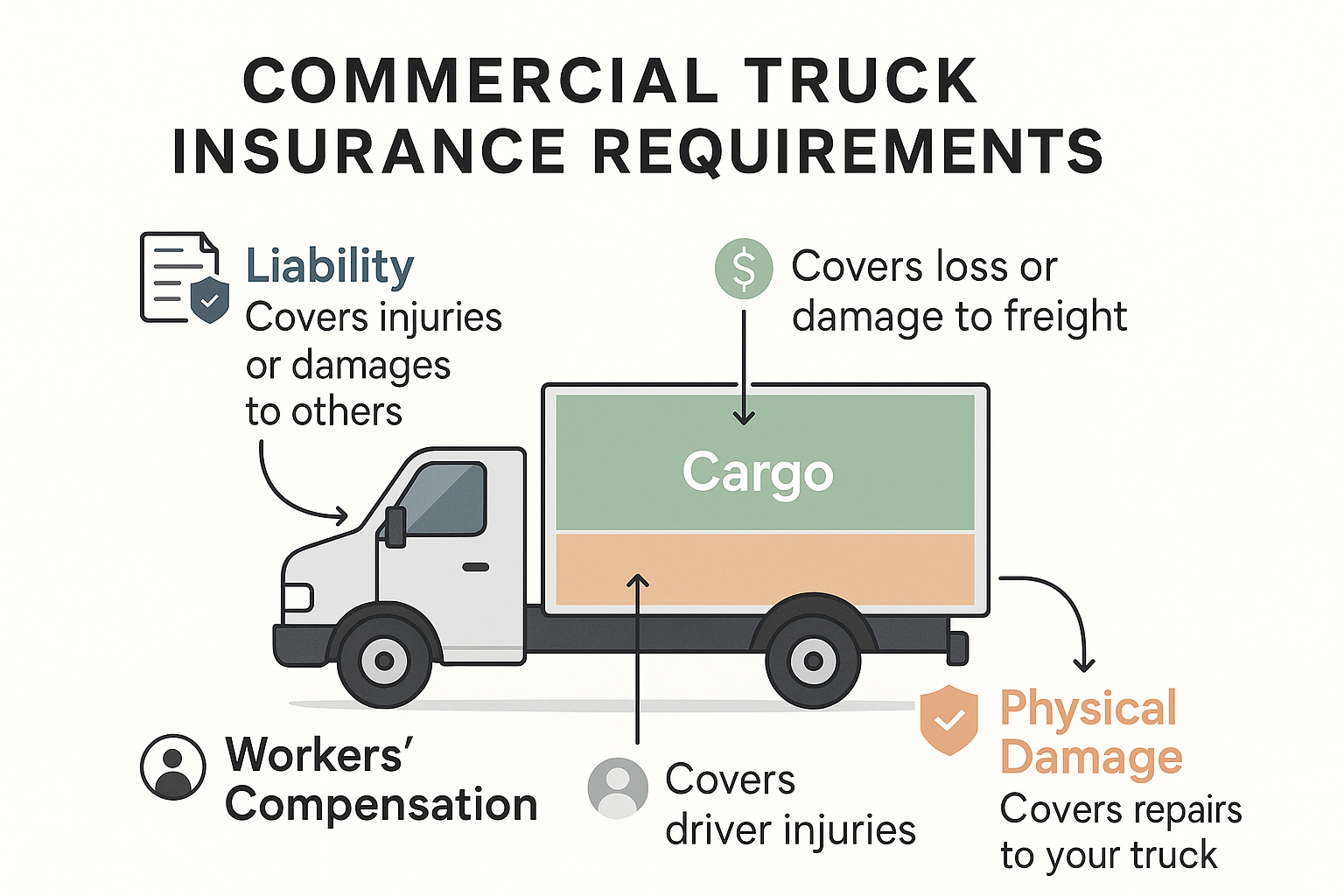
Commercial vehicles are subject to insurance regulations that differ from those for personal automobiles. While private auto insurance protects personal drivers, commercial truck insurance is designed to cover the additional risks associated with business operations.
Every business owner should understand that all states require you to carry liability insurance before legally operating a commercial vehicle. However, the specific commercial truck insurance requirements depend on several factors, including:
- The state where your vehicle is registered
- Whether you operate only within one state or across state lines
- The type of cargo you transport
- Your vehicle’s weight
- Whether a Commercial Driver’s License (CDL) is required
- Federal operating authority, when applicable
If your business operates only within one state, you generally need to comply with that state’s commercial auto insurance regulations. Businesses involved in interstate commerce may also need to meet FMCSA truck insurance requirements, which establish minimum levels of financial responsibility for qualifying commercial carriers.
Understanding where state regulations end and federal requirements begin can prevent costly compliance issues while ensuring your business remains properly insured.
Why Insurance Requirements Differ by State
Although every state requires commercial vehicles to maintain insurance, each one establishes its own minimum liability limits, filing procedures, registration requirements, and enforcement practices.
Several factors influence these requirements, including:
- Population density
- Traffic volume
- Accident statistics
- State transportation laws
- Commercial vehicle classifications
For example, businesses operating primarily within California may face different documentation requirements than companies registered in Texas or Florida. Likewise, insurance minimums may vary depending on whether your business transports household goods, construction materials, retail products, or specialized cargo.
Businesses should review their coverage whenever they expand into new service areas because operating in multiple states can introduce additional compliance obligations.
Insurance Minimums, Liability Limits, and FMCSA Requirements
One of the most common questions business owners ask is how much insurance they actually need.
The answer depends on both state regulations and, for some businesses, federal law.
State Minimum Insurance Requirements
Every state establishes minimum insurance requirements for commercial vehicles before they can be legally registered and operated.
These minimums generally include liability insurance, which helps pay for:
- Bodily injury claims
- Property damage
- Legal defense costs
- Court settlements within policy limits
While meeting the state’s minimum liability requirement allows many businesses to operate legally, minimum coverage is not always enough to fully protect your company after a serious accident.
Many customers, brokers, government agencies, and commercial contracts require businesses to carry higher liability limits than state minimums before work can begin.
When FMCSA Rules Apply
Businesses involved in interstate commerce may also need to comply with federal regulations administered by the Federal Motor Carrier Safety Administration (FMCSA).
In general, FMCSA insurance requirements may apply when your box truck:
- Travels across state lines
- Operates under federal motor carrier authority
- Transports regulated freight
- Carries certain types of commercial cargo
Federal regulations establish minimum liability limits based on the type of cargo transported and the risks associated with those operations. Businesses should understand that meeting state insurance requirements does not automatically satisfy federal regulations.
If you’re unsure whether FMCSA rules apply to your business, working with an experienced insurance agency can help you determine which filings and coverage limits are required.
Choosing the Right Coverage for Your Box Truck Business
Meeting legal requirements is only the starting point. A strong insurance program protects your business against financial losses that extend beyond minimum liability coverage.
Depending on your operation, your commercial policy may include several types of protection.
| Coverage | What It Protects | Who Typically Needs It |
|---|---|---|
| Commercial Auto Liability | Injuries and property damage caused to others | All commercial box truck operators |
| Physical Damage Coverage | Repairs or replacement of your truck after covered losses | Businesses that own or finance their vehicles |
| Cargo Insurance | Customer property while being transported | Movers, retailers, distributors, and delivery companies |
| General Liability | Claims unrelated to vehicle operation, such as incidents at business locations | Contractors and service businesses |
| Uninsured/Underinsured Motorist Coverage | Protection if another driver has insufficient insurance | Businesses operating in high-traffic areas |
The combination of coverage you need depends on how your box truck is used.
For example, a local moving company may place greater emphasis on cargo insurance because it regularly transports customers’ household belongings. A contractor may focus on protecting expensive tools and equipment, while a retail distributor may require higher liability limits because of contractual obligations with commercial clients.
Insurance carriers also consider:
- The value of your cargo
- Annual mileage
- Operating radius
- Driver experience
- Vehicle value
- Claims history
Selecting the right combination of coverages helps reduce financial risk while keeping your business compliant with customer contracts and regulatory requirements.
At IIS Insurance Services, we review each operation individually to recommend policies that balance legal compliance, business protection, and long-term affordability. Rather than offering identical policies to every customer, we help businesses build coverage around their specific operations and future growth plans.
Staying Compliant With State Insurance Requirements
Maintaining the right insurance is not a one-time task. As your business grows, expands into new markets, or changes the type of cargo you transport, your insurance needs may change as well. Staying compliant with both state regulations and, when applicable, federal requirements helps you avoid fines, registration issues, and interruptions to your business.
Each state has its own process for verifying financial responsibility, and businesses may need to provide proof of insurance during vehicle registration, inspections, or audits. Companies operating under federal authority may also be required to submit specific insurance filings before they can legally begin interstate operations.
Regular policy reviews help ensure your coverage continues to match your business activities. If you add vehicles, hire new drivers, expand into new states, or begin transporting different types of cargo, your insurance policy should be updated accordingly.
Business owners can stay compliant by following these best practices:
- Review your insurance policy at least once each year.
- Notify your insurance agent when adding new vehicles or drivers.
- Keep proof of insurance in every commercial vehicle.
- Track policy renewal dates to prevent coverage lapses.
- Update your policy if your operating radius or cargo changes.
- Maintain copies of required registrations and insurance filings.
- Verify that your liability limits satisfy customer and contractual requirements.
Taking these steps reduces the risk of unexpected compliance issues while helping your business remain road-ready throughout the year.
Common Mistakes That Can Lead to Penalties
Even experienced business owners occasionally overlook insurance requirements that can result in costly penalties or operational delays. Many of these issues are avoidable with proper planning and regular communication with your insurance provider.
One of the most common mistakes is assuming that meeting the minimum insurance requirement automatically provides adequate protection. While minimum coverage may satisfy state registration rules, it may not be enough to protect your business from large liability claims or contractual obligations.
Another frequent issue occurs when businesses expand into new service areas without reviewing their insurance policy. Operating in additional states or transporting different cargo may introduce new insurance requirements that your existing policy does not address.
Other mistakes include:
- Allowing a commercial policy to expire before renewal.
- Failing to update driver information after hiring new employees.
- Not reporting changes in business operations.
- Carrying insufficient cargo coverage for higher-value shipments.
- Overlooking required state or federal insurance filings.
- Selecting coverage based only on price instead of overall protection.
These oversights can lead to registration delays, denied claims, regulatory penalties, or gaps in coverage that leave your business financially exposed.
Working with an experienced insurance agency helps reduce these risks by ensuring your policy keeps pace with changing business operations and regulatory requirements.
How IIS Insurance Services Helps Box Truck Businesses Stay Protected
Understanding box truck insurance requirements by state can become challenging, especially for businesses operating in multiple locations or managing growing fleets. Regulations change over time, customer contracts often require higher liability limits, and every operation has unique insurance needs.
At IIS Insurance Services, we simplify the process by helping business owners understand both state and federal insurance requirements while comparing policies from trusted insurance carriers.
Our team assists businesses with:
- Reviewing current insurance coverage.
- Identifying state-specific insurance requirements.
- Comparing commercial auto and liability coverage options.
- Selecting appropriate cargo insurance limits.
- Meeting FMCSA insurance requirements when applicable.
- Updating policies as businesses expand or add vehicles.
- Finding competitive rates without sacrificing protection.
Instead of offering one-size-fits-all policies, we take time to understand your business, the type of box truck you operate, your delivery routes, cargo, and long-term goals. That personalized approach helps ensure you receive coverage that supports compliance while protecting your drivers, vehicles, customers, and business assets.
Whether you operate one truck or an entire fleet, IIS Insurance Services is committed to providing responsive service, knowledgeable guidance, and insurance solutions tailored to your operation at the best cost.
Protect Your Business With the Right Box Truck Insurance
Meeting box truck insurance requirements by state starts with understanding the laws that apply to your business, but long-term success depends on having coverage that protects your operations every day. The right policy helps you satisfy legal requirements, protect your vehicles and cargo, reduce financial risk, and build confidence with customers who expect professional, properly insured transportation services.
At IIS Insurance Services, we help independent operators, contractors, delivery companies, and fleet managers find commercial insurance solutions that match their business needs. Our experienced team will explain your coverage options, review your current policy, and help you identify opportunities to improve protection while managing costs.
Request a personalized quote today to learn how IIS Insurance Services can help your business stay compliant, protect its assets, and confidently operate wherever your routes take you. Whether you’re purchasing your first commercial policy or reviewing existing coverage, we’re here to help you make informed insurance decisions with dependable support every step of the way.