

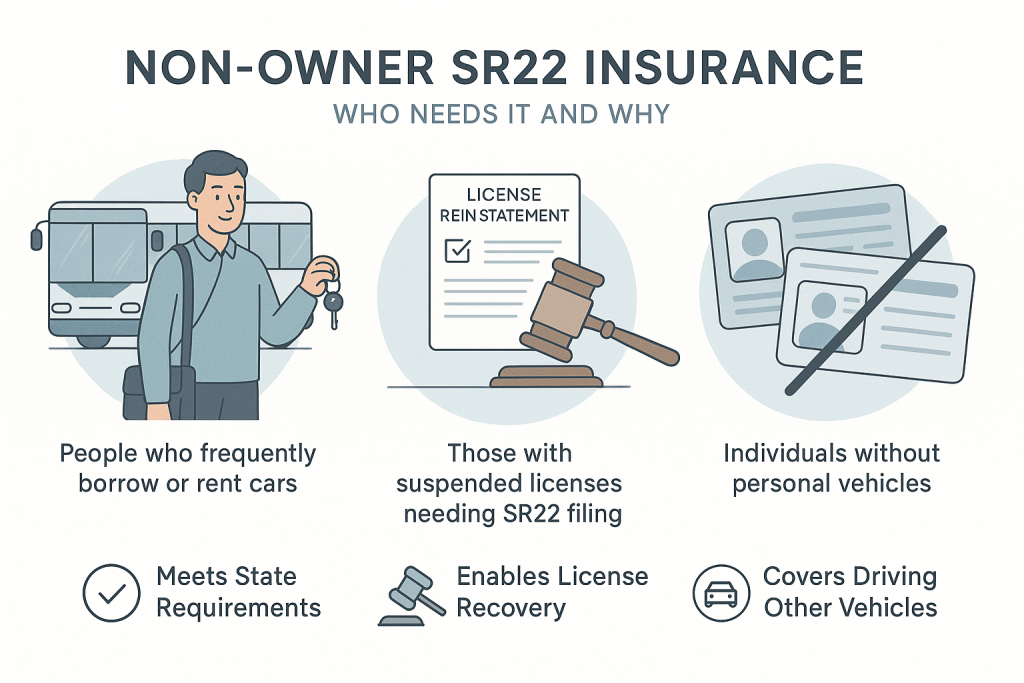
If your driver’s license has been suspended or you are required to file an SR-22 but do not own a vehicle, you may still need proof of financial responsibility before you can legally drive again. How does non-owner SR-22 insurance work? It combines a non-owner liability insurance policy with an SR-22 certificate filed by your insurance company with the state. This filing demonstrates that you carry the minimum liability coverage required by law, allowing you to satisfy legal requirements without purchasing insurance for a vehicle you do not own.
Unlike a standard auto insurance policy, non-owner coverage follows the driver rather than a specific vehicle. It generally provides liability protection when you occasionally borrow, rent, or drive a shared vehicle. While the SR-22 itself is not an insurance policy, it serves as proof that your coverage meets your state’s financial responsibility requirements. A non-owner policy does not pay for damage to the vehicle you are driving, but it can help you restore or maintain your driving privileges after certain traffic violations or license suspensions.
At IIS Insurance Services, we recognize that every driver’s situation is unique. Whether you need a fast SR-22 filing after a license suspension, want to maintain continuous insurance coverage between vehicles, or need help selecting the right policy, our experienced agents are here to help. We work with a network of trusted insurance carriers to find affordable non-owner SR-22 coverage that meets your state’s requirements while delivering responsive, personalized service.
Who Needs Non-Owner SR-22 Insurance?
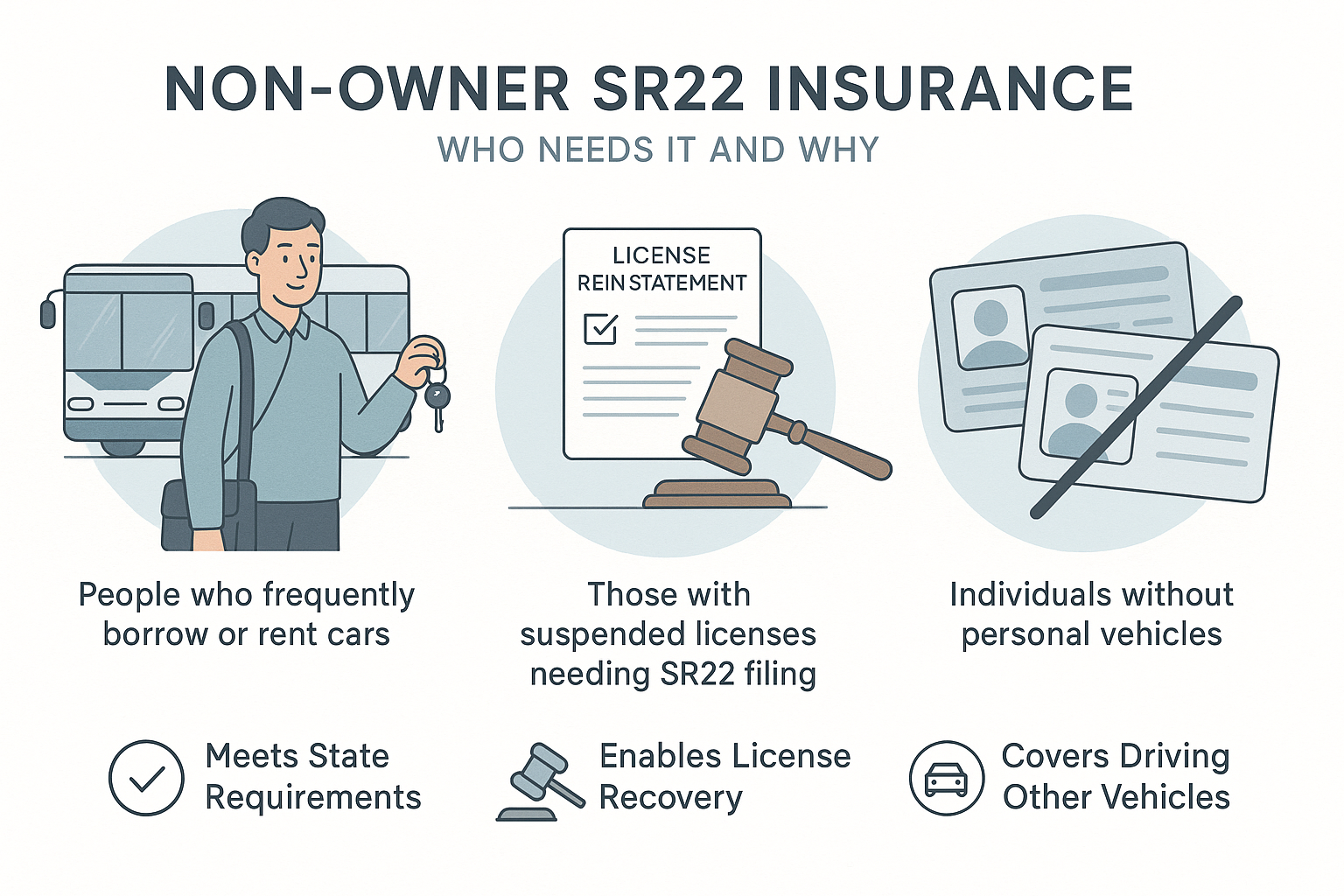
Non-owner SR-22 insurance is intended for drivers who are required to carry an SR-22 but do not currently own a vehicle. Although many people associate SR-22 filings with vehicle owners, ownership is not what determines whether the filing is required. Instead, the requirement is based on your driving record and your state’s regulations.
A court or state motor vehicle agency may require an SR-22 after violations such as:
- Driving without insurance
- DUI or DWI convictions
- Multiple traffic violations within a short period
- Reckless driving
- License suspension or revocation
- Driving with a suspended license
If you still need to drive occasionally but do not own a vehicle, a non-owner policy can help you meet these legal obligations without purchasing an owner policy.
Many people benefit from this type of coverage, including those who:
- Frequently borrow a friend or family member’s vehicle
- Rent vehicles for work or travel
- Use car-sharing services occasionally
- Have recently sold their vehicle but still need driving privileges
- Need continuous insurance coverage while shopping for another vehicle
A non-owner policy provides liability-only coverage while driving an eligible borrowed or rented vehicle. Since it does not insure a specific automobile, premiums are often lower than traditional auto insurance policies.
If your state requires an SR-22 filing, your insurance company submits the necessary paperwork directly to the appropriate agency, allowing you to demonstrate continuous financial responsibility throughout the required filing period.
Non-Owner Car Insurance vs. Standard Auto Insurance
Although both policies provide liability protection, they serve different purposes. Understanding these differences helps you select coverage that matches your current situation.
| Feature | Non-Owner Car Insurance | Standard Owner Policy |
|---|---|---|
| Covers a specific vehicle | No | Yes |
| Covers the driver | Yes | Yes |
| Liability coverage | Yes | Yes |
| Collision coverage | No | Available |
| Comprehensive coverage | No | Available |
| SR-22 eligible | Yes, when available | Yes |
| Best for | Drivers without a vehicle | Vehicle owners |
The biggest distinction is that a non-owner policy follows the individual driver rather than a specific vehicle. Whenever you legally borrow or rent an eligible vehicle, your liability coverage can apply after any applicable primary insurance.
However, non-owner insurance has limitations. It generally does not provide coverage for:
- Damage to the borrowed or rented vehicle
- Vehicles owned by members of your household
- Vehicles you regularly use
- Commercial vehicles unless specifically permitted by the policy
Because of these limitations, non-owner insurance is not a substitute for a standard auto policy if you own a vehicle or drive the same vehicle regularly.
Before purchasing a policy, discuss your driving habits with an experienced insurance agent. IIS Insurance Services can help determine whether non-owner coverage is the right fit or if another policy better matches your circumstances.
How Does the SR-22 Filing Work With a Non-Owner Policy?
Many drivers mistakenly believe that SR-22 insurance is a separate insurance product. It is not. An SR-22 is simply a certificate filed by your insurance company confirming that your liability insurance meets your state’s minimum financial responsibility requirements.
Here’s how the process typically works:
- Purchase a non-owner liability policy. Choose coverage that meets your state’s minimum liability limits.
- Request the SR-22 filing. Your insurer files the SR-22 electronically or by other approved methods with the appropriate state agency.
- State confirmation. Once processed, the state receives proof that you carry the required insurance.
- Maintain continuous coverage. Your policy must remain active throughout the required filing period. If the policy lapses or is canceled, your insurer must notify the state, which could result in another license suspension.
Although procedures vary by state, the overall process remains similar across the country. In California, for example, the California Department of Motor Vehicles (California DMV) requires eligible drivers to maintain continuous coverage until the SR-22 obligation has been satisfied. Other states have similar requirements administered by their own licensing agencies.
Working with an insurance agency experienced in SR-22 filings helps reduce delays and paperwork errors. IIS Insurance Services assists drivers throughout the filing process, helping ensure documents are submitted promptly so you can return to the road as quickly as possible.
If you buy a car during the filing period, the policy has to change. Our post on non-owner SR-22 insurance online and what happens when you buy a car walks through the switch to an owner policy without a lapse.
Navigating State Requirements for Non-Owner SR-22 Insurance
Although the purpose of an SR-22 filing is generally the same across the United States, each state establishes its own rules for filing, minimum liability limits, and the length of time drivers must maintain coverage. Before purchasing a policy, verify the requirements with your state’s licensing authority or work with an experienced insurance agency that can guide you through the process.
For example, drivers in California may be required to file an SR-22 with the California Department of Motor Vehicles (California DMV) after offenses such as driving without insurance, certain traffic convictions, or license suspensions. The filing remains active until the state determines the requirement has been satisfied. Allowing your policy to lapse before that period ends can result in additional penalties or another suspension.
While filing procedures differ from state to state, the overall process follows a similar path.
| Step | What Happens |
|---|---|
| Determine the requirement | Confirm whether your state requires an SR-22 filing and whether a non-owner policy is appropriate. |
| Purchase liability coverage | Select a non-owner auto insurance policy that meets your state’s minimum liability limits. |
| SR-22 filing | Your insurance company files the SR-22 certificate with the appropriate state agency. |
| License reinstatement | Once accepted, you may complete any remaining reinstatement requirements. |
| Maintain continuous coverage | Keep your policy active until your state officially releases the filing requirement. |
If you relocate while your SR-22 requirement is still active, you may need to comply with both your previous state’s filing requirement and your new state’s insurance laws. An experienced insurance agent can explain how these situations apply to your specific circumstances and help prevent unnecessary interruptions in coverage.
Because requirements can change, working with an agency familiar with state filing procedures helps simplify the process while reducing the likelihood of filing delays.
How to Find Affordable Non-Owner SR-22 Insurance
Cost is often one of the biggest concerns for drivers who need an SR-22 filing. Fortunately, non-owner policies are generally less expensive than traditional auto insurance because they provide liability-only coverage and are not attached to a specific vehicle.
Several factors influence your premium, including:
- Your driving history
- The reason the SR-22 was required
- Your age and location
- State minimum liability requirements
- Length of your filing requirement
- The insurance company you choose
Although price matters, the lowest premium is not always the best value. Look for an insurer that offers:
- Fast electronic SR-22 filing
- Multiple carrier options
- Knowledge of state filing requirements
- Responsive customer service
- Clear explanations of coverage
- Competitive pricing without sacrificing support
When requesting quotes, provide accurate information about your driving record and how often you expect to drive borrowed or rented vehicles. This helps your agent recommend coverage that fits your needs while avoiding unnecessary costs.
If your circumstances change and you purchase a vehicle during your filing period, your insurance policy may need to be converted from a non-owner policy to a standard owner policy. Working with one agency throughout the process makes this transition much easier and helps prevent gaps in coverage.
Why Drivers Choose IIS Insurance Services
Finding the right SR-22 policy is about more than meeting a legal requirement. You also want guidance from professionals who understand your situation and can help you move forward with confidence.
At IIS Insurance Services, we work with drivers facing a wide range of insurance needs, including license reinstatements, non-owner policies, and SR-22 filings. Our goal is to make the process straightforward while helping you find coverage that fits both your circumstances and your budget.
When you work with IIS Insurance Services, you can expect:
- Personalized insurance recommendations based on your driving history
- Assistance with non-owner and standard auto insurance policies
- Prompt SR-22 filing with your state when required
- Access to multiple insurance carriers for competitive pricing
- Friendly support throughout the policy period
- Help transitioning to an owner policy if you purchase a vehicle later
Our experienced agents take time to explain your options, answer your questions, and help you remain compliant with your state’s financial responsibility requirements. Whether you need coverage for occasional driving, a rental vehicle, or help restoring your driving privileges, we are committed to making the experience as simple as possible.
Get Back on the Road With Confidence
Needing an SR-22 does not mean you have to own a vehicle to meet your state’s insurance requirements. A non-owner SR-22 insurance policy allows eligible drivers to maintain the required liability coverage while driving borrowed or rented vehicles, helping them restore and protect their driving privileges.
Choosing the right policy begins with understanding your state’s requirements and working with an insurance agency that can guide you through every step. From selecting appropriate liability coverage to submitting your SR-22 filing promptly, professional guidance can help you avoid unnecessary delays and maintain continuous coverage.
If you’re ready to secure non-owner SR-22 insurance, contact IIS Insurance Services today. Our knowledgeable team will explain your options, answer your questions, and help you find affordable coverage that meets your state’s requirements. Request a personalized quote and take the next step toward getting back on the road with confidence.