

RV ownership changes how insurance works. While many people assume recreational vehicles can be insured like standard cars, the reality is very different. RVs combine transportation with living space, storage, and travel use, which creates risks that auto insurance is not designed to handle.
Understanding how RV insurance differs from car insurance helps owners avoid coverage gaps, denied claims, and unexpected expenses. Whether you travel full-time, seasonally, or a few weekends a year, the right insurance structure matters.
IIS Insurance helps RV owners compare coverage types, understand policy differences, and select protection that fits how their vehicle is used both on the road and while parked.
Why RV Insurance Is Not the Same as Car Insurance
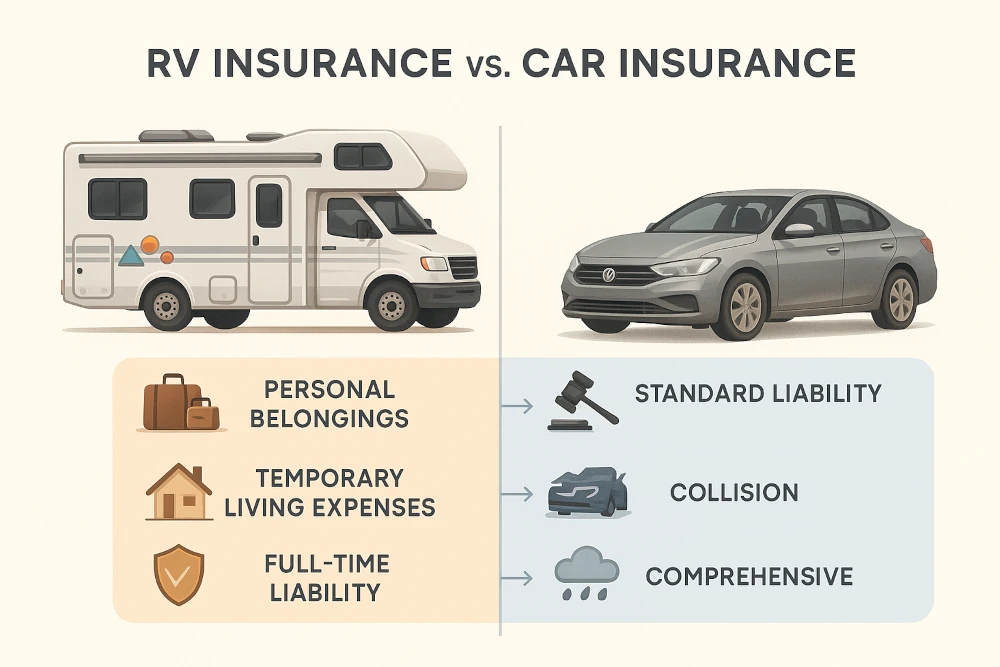
Car insurance is designed for vehicles used primarily for driving. RV insurance is designed specifically for recreational vehicles that often double as temporary or permanent living spaces.
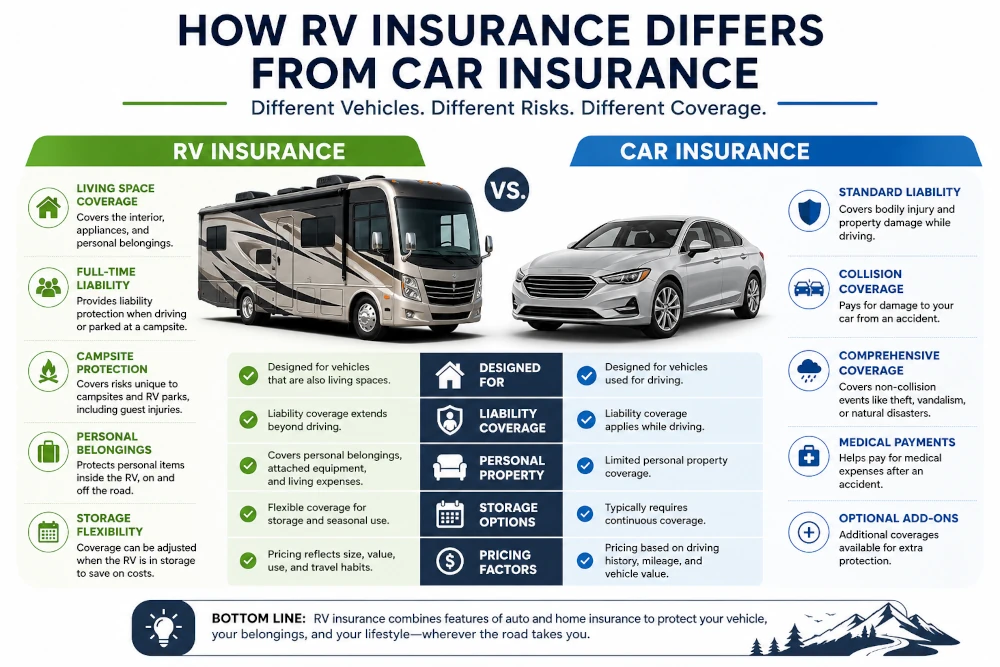
Auto insurance focuses on collision, liability, and limited personal property. RV insurance merges elements of auto insurance and home insurance to reflect how RVs are used. This blended structure allows RV policies to address risks that occur while driving, camping, storing, or living inside the vehicle. RVs face different exposure than cars. Accidents may involve guests, campsite incidents, personal belongings, and longer repair timelines. RV insurance caters to these risks in ways car insurance does not.
How Coverage Structure Differs Between RV and Car Policies
Car insurance policies are relatively standardized. They include liability, collision, comprehensive, and optional add-ons. RV insurance policies are more flexible and more detailed.
RV insurance is designed specifically to address the size, value, and use of recreational vehicles. Policies often include coverage for personal belongings, attached equipment, and temporary living expenses when the RV is damaged during travel.
RV coverage can often be suspended or adjusted during storage periods. Car insurance rarely allows this level of flexibility. This difference alone can affect cost and protection how rv size affects insurance needs throughout the year.
IIS Insurance Services helps RV owners understand how policy structure changes based on travel frequency, storage, and living arrangements.
RV Living Space Risks vs Standard Vehicle Use
One of the biggest differences between RV insurance and car insurance is how the living space is treated. Cars are not designed for extended occupancy. RVs are. RVs often include beds, kitchens, bathrooms, and storage. Damage inside the RV can affect more than the vehicle itself. Furniture, appliances, and personal property may need coverage. RV insurance addresses these risks by offering coverage similar to home insurance for personal belongings and interior damage. Car insurance does not account for living spaces or household-style contents.
For owners who spend significant time inside their RV, this distinction is essential.
Liability Differences When Driving and When Parked
Liability coverage works differently for RVs than for cars. With a car, liability applies mainly while driving. With an RV, liability does not stop when you park.
RVs create liability exposure at campsites, RV parks, and temporary locations. Guests may enter the RV. Equipment may be set up outside. Accidents can occur even when the vehicle is stationary. RV insurance includes options such as campsite liability insurance and full-timers insurance to address these risks. Auto insurance does not provide this type of protection.
For full-time RV owners, higher liability limits are often necessary because the RV functions as both vehicle and home.
Full-Timers Insurance and Extended Use Coverage
Full-timers insurance is one of the clearest examples of how RV insurance differs from car insurance. This coverage is designed for people who live in their RV year round. Full-timers insurance blends features of auto insurance and home insurance. It includes higher liability limits, personal property protection, and coverage for living expenses if the RV becomes unusable.
Car insurance does not address long-term living scenarios. Using a car insurance policy for full-time RV living can lead to denied claims and uncovered losses.
IIS Insurance Services helps full-time RV owners select insurance that supports daily living, travel, and liability exposure.
Storage Flexibility in RV Insurance
RV insurance offers flexibility during storage periods that car insurance typically does not. When an RV is placed into storage, driving risks decrease but other risks remain.
RV insurance coverage can often be adjusted so liability and collision are reduced or removed while comprehensive coverage stays active. This protects against theft, weather damage, and vandalism without paying for unnecessary road coverage.
Car insurance policies usually require continuous coverage without this type of adjustment.
This flexibility allows RV owners to manage insurance costs while keeping protection in place year-round.
How Pricing Differs Between RV and Car Insurance
Insurance pricing reflects risk. RV insurance pricing is influenced by factors that do not apply to car insurance.
RV insurance premiums depend on vehicle size, value, usage, storage location, and travel habits. Full-time use, long trips, and higher replacement costs can increase premiums.
Car insurance pricing is driven mainly by driving history, mileage, and vehicle value. It does not account for living space, travel duration, or campsite exposure.
RV insurance may cost more than car insurance, but it also provides broader protection. In some cases, RV insurance may cost less during periods of limited use due to flexible coverage options.
IIS Insurance Services helps owners understand pricing differences and identify opportunities to balance coverage and cost.
What RV Insurance Covers That Car Insurance Does Not
RV insurance includes coverage options that are not available under standard car insurance policies.
These may include coverage for personal belongings inside the RV, attached equipment such as awnings or satellite systems, and temporary living expenses if the RV cannot be used during travel. RV insurance also addresses specific risks related to recreational vehicles, such as extended downtime, speciality repairs, and campground incidents.
Car insurance focuses on vehicle damage and liability related to driving only.
Understanding these coverage differences helps RV owners choose insurance that matches real-world use.
Common Misunderstandings About RV and Car Insurance
Many RV owners assume car insurance can be extended to cover an RV. This is rarely true. Car insurance does not cover RV living risks or extended travel use. Another misunderstanding is assuming coverage applies the same way regardless of how the RV is used. Full-time living, rentals, or commercial use require specific coverage disclosures. Some owners also believe coverage automatically adjusts during storage. Adjustments usually require policy updates.
IIS Insurance Services helps clarify these points so owners avoid costly assumptions.
Choosing the Right Insurance Based on How You Use Your RV
Choosing between RV insurance and car insurance is not optional for RV owners. RVs require specialized insurance to address how they are used.
Weekend travelers may need basic RV insurance with optional add-ons. Seasonal travelers may benefit from storage adjustments. Full-time RV owners need expanded coverage similar to homeowners' insurance.
The right policy depends on travel frequency, storage plans, and lifestyle. IIS Insurance Services reviews these factors with RV owners to build coverage that fits both usage and budget.
Why Working With an RV-Focused Insurance Agency Matters
RV insurance is more complex than car insurance. Working with an agency that understands recreational vehicles helps prevent gaps and confusion. RV-focused agencies understand policy structure, coverage options, and claims scenarios specific to RV ownership.
IIS Insurance Services works with RV owners across California to provide clear explanations, tailored policies, and ongoing support as needs change.
Get Help Understanding How RV Insurance Differs From Car Insurance
RV insurance differs from car insurance in structure, coverage, flexibility, and purpose. These differences matter whether you are planning a short trip or living on the road full-time.
IIS Insurance Services helps RV owners understand these distinctions, compare coverage options, and choose insurance that supports safe travel and peace of mind.
If you have questions about RV insurance or want to review your current policy, contact IIS Insurance Services for clear guidance and personalized support.