

Owning or managing an apartment complex involves balancing property protection, tenant safety, and financial stability. With multiple units, shared spaces, and ongoing maintenance needs, insurance plays a central role in keeping operations running smoothly. Understanding how apartment complex insurance works helps property owners, landlords, and managers avoid coverage gaps, control costs, and respond effectively when losses occur.
Apartment insurance is not just about repairing damage after an incident. It is a system designed to address property risks, liability exposure, income disruption, and long-term risk management. Knowing how policies are structured and how coverage applies gives owners greater confidence when making decisions that affect their investment.
The Purpose of Apartment Building Complex Insurance
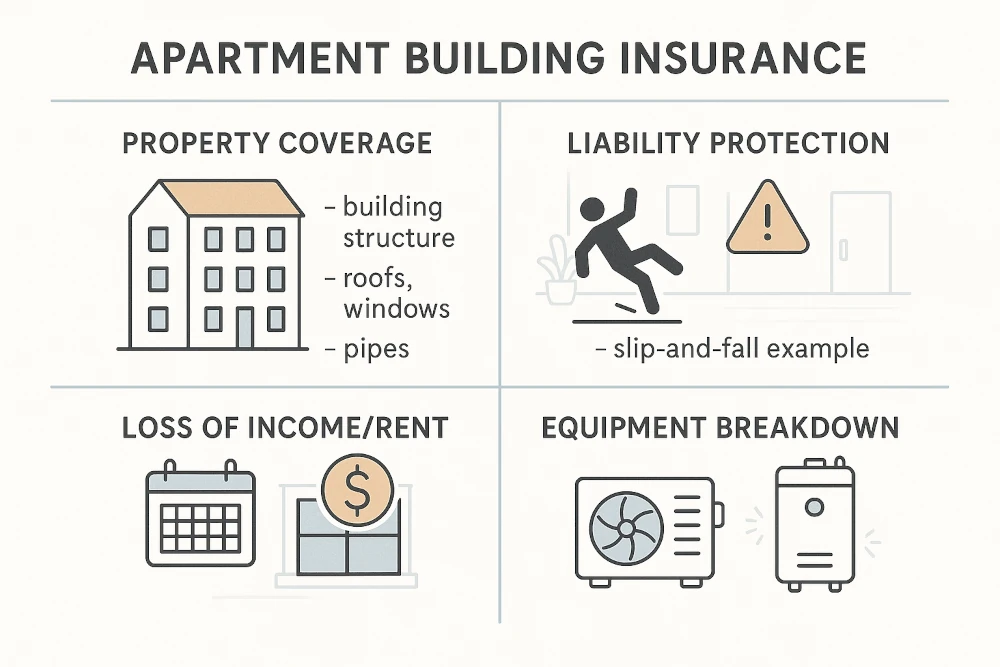
Apartment complex insurance is designed to protect buildings that house multiple tenants under a single ownership structure. Unlike single-family rental insurance, these policies are built to address shared systems, common areas, and higher exposure to claims.
The primary goal of this insurance is to protect the physical structure of the apartment building while also addressing legal responsibility when injuries or property damage affect others. It also supports business continuity by helping owners recover after losses that disrupt rental income.
For property owners, this coverage creates financial predictability. When an incident occurs, insurance helps absorb repair costs, legal expenses, and lost income, reducing the risk of long-term disruption.
Property Insurance and Building Protection
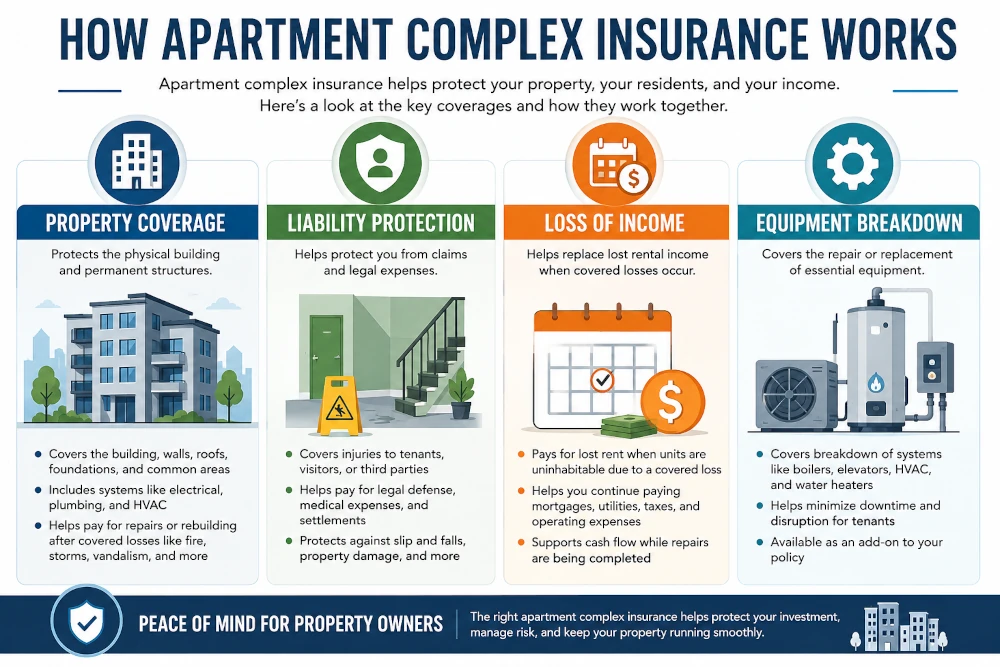
Property insurance is the foundation of most apartment complex insurance policies. This coverage focuses on the physical building and permanent components attached to it.
Property insurance typically applies to:
- Exterior and interior walls
- Roofs and foundations
- Stairwells, hallways, and shared spaces
- Electrical, plumbing, and HVAC systems
- Permanently installed fixtures
Covered losses often include fire, smoke, storms, vandalism, and certain types of water damage. When a covered event occurs, property insurance helps pay for repairs or rebuilding, allowing owners to restore the building and resume normal operations.
Accurate coverage limits are critical. Insurance should reflect current rebuilding costs rather than the original purchase price. Construction costs change over time, and underinsured buildings can leave owners paying out of pocket after a loss.
Regular reviews help ensure property coverage remains aligned with the building’s condition, age, and improvements.
Liability Coverage and Legal Responsibility
Liability coverage is another major component of apartment complex insurance. While property insurance addresses physical damage, liability insurance focuses on legal and financial responsibility when injuries or property damage affect tenants, visitors, or third parties.
Common liability scenarios include slip and fall accidents, injuries in common areas, or damage caused by maintenance activities. In these situations, liability insurance helps cover legal defense costs, medical expenses, and settlements tied to covered claims.
Liability exposure increases with building size, number of units, and foot traffic. Shared spaces such as parking areas, stairwells, and entryways create ongoing risk that must be addressed through proper coverage.
Coverage limits should be selected based on the property’s exposure rather than minimum requirements. Higher limits may be appropriate for larger complexes or properties with public access.
Loss of Rental Income Coverage
Rental income is essential to the financial health of an apartment complex. When a covered loss makes units uninhabitable, income disruption can create immediate financial pressure.
Many apartment insurance policies include coverage for loss of rental income. This coverage helps replace lost rent while repairs are being made after a covered event. It allows owners to continue paying mortgages, utilities, taxes, and operational expenses during the recovery period.
Loss of income coverage is particularly important for multifamily properties, where a single incident can affect multiple units at once. Without this protection, owners may struggle to meet financial obligations even after repairs begin.
Policy terms define how long income replacement applies and what documentation is required. Understanding these details before a loss occurs helps prevent confusion during claims.
How Claims Typically Work for Apartment Complexes
When a loss occurs, the claims process becomes a key part of how apartment complex insurance works. Prompt reporting and clear documentation support faster resolution and reduce delays.
The process usually begins with notifying the insurance provider and documenting the damage. Photos, maintenance records, and repair estimates are often required. An adjuster may inspect the property to assess the extent of the loss.
Once coverage is confirmed, repairs can begin. For larger losses, payments may be issued in stages as work progresses. Clear communication between owners, contractors, and the insurance provider helps keep the process moving efficiently.
Understanding policy exclusions is just as important as understanding coverage. Some events, such as flooding or earthquakes, may require separate policies. Knowing what is not covered prevents surprises during claims.
Optional Coverage Owners Often Add
Apartment complex insurance can be customized with additional coverage based on property location, age, and use.
Common optional coverages include equipment breakdown insurance for systems like boilers or elevators. Ordinance or law coverage may help pay for code upgrades required during rebuilding after a loss.
In certain areas, flood or earthquake insurance may be necessary. These risks are often excluded from standard property policies and require separate coverage.
Owners may also consider umbrella policies that provide additional liability limits above standard coverage. These policies can offer added protection against large claims.
Choosing optional coverage should be based on actual risk exposure rather than assumptions. Professional guidance helps identify which additions provide meaningful value.
The Role of Property Management and Maintenance
Insurance works best when paired with strong property management practices. Regular inspections, timely repairs, and clear documentation reduce the likelihood of claims and support better outcomes when losses occur. Maintenance records demonstrate responsible ownership and can influence claim decisions. Well-maintained properties often experience fewer losses and smoother underwriting reviews.
Clear communication with tenants also plays a role. Encouraging prompt reporting of maintenance issues helps prevent small problems from becoming major losses.
Requiring renters insurance can further reduce disputes and clarify responsibility when tenant-related damage occurs.
Managing Insurance Costs Without Sacrificing Protection
Cost control is an ongoing concern for apartment complex owners. Insurance premiums are influenced by building condition, claims history, security measures, and coverage limits.Owners can manage costs by reviewing policies regularly, addressing maintenance issues proactively, and implementing safety improvements. Security upgrades and documented inspections may reduce risk and support more favorable pricing.
Adjusting deductibles may also affect premiums, but higher deductibles should only be chosen if owners can comfortably cover out-of-pocket costs after a loss.
Working with an experienced insurance advisor helps balance protection and affordability without leaving gaps in coverage.
Choosing the Right Insurance Partner
The effectiveness of apartment complex insurance depends heavily on the provider behind the policy. A knowledgeable insurance partner understands multifamily risks and structures coverage accordingly.
The right partner helps explain policy terms, identify gaps, and guide owners through claims when losses occur. This support reduces uncertainty and improves long-term outcomes.
IIS Insurance Services works with apartment owners, landlords, and property managers to build insurance solutions that reflect real-world conditions. Coverage is tailored to property size, layout, and risk profile rather than generic assumptions.
Building Confidence Through Understanding
Knowing how apartment complex insurance works gives owners greater control over risk and financial planning. From property protection and liability coverage to income replacement and claims handling, insurance supports stability when challenges arise.
Apartment ownership involves many moving parts, but insurance should not be one of the uncertainties. With informed planning and professional support, coverage becomes a reliable tool that protects investments and supports long-term success.
IIS Insurance Services is available to review existing policies, explain coverage options, and help property owners build insurance strategies that match their needs. A clear understanding today can prevent costly surprises tomorrow.