

Understanding RV Insurance for Life on the Road
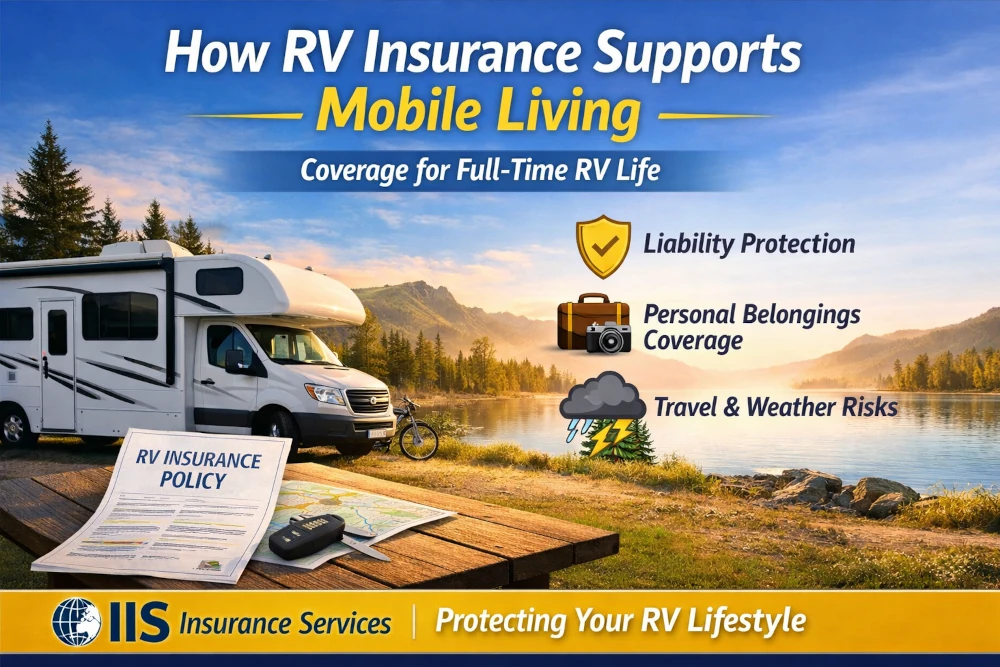
Mobile living continues to grow as more people choose RVs for extended travel, seasonal living, or year-round residence. When an RV serves as both transportation and living space, insurance needs change. RV insurance plays a critical role in protecting not only the vehicle, but also the lifestyle built around it.
Understanding how RV insurance supports mobile living helps owners choose coverage that fits daily use, travel patterns, and personal risk. From liability exposure to personal belongings and property protection, the right policy supports life on the road without unnecessary gaps.
IIS Insurance Services helps RV owners navigate these needs with clear guidance and coverage options designed for real-world travel and living situations.
Understanding RV Insurance for Life on the Road
RV insurance differs from standard auto insurance because an RV functions as more than a vehicle. It may serve as a temporary residence, a full-time home, or a combination of both. Insurance coverage must reflect that dual purpose.
A typical RV insurance policy may include liability coverage, physical damage protection, and options similar to home insurance. These elements work together to address risks that arise when living and traveling in the same space.
Mobile living increases exposure to weather, theft, and on-site incidents. RV insurance accounts for these risks in ways standard auto policies do not.
IIS Insurance Services helps owners understand how RV insurance policies are structured and which coverages matter most for mobile lifestyles.
How RV Insurance Supports Full-Time Living
Full-time RV living creates insurance needs closer to homeowners coverage than auto coverage. Full-time insurance is designed for individuals who use their RV as a primary residence.
This type of policy often includes expanded liability protection, similar to personal liability found in home insurance. It may cover incidents that occur while the RV is parked and being used as a living space.
Full-time RV insurance may also address risks associated with long-term parking, extended stays, and daily living activities. Without this coverage, full-time RV owners may face gaps that standard policies do not address.
IIS Insurance Services works with full-time RV owners to structure policies that reflect residential use and travel patterns.
Liability Coverage and Personal Responsibility
Liability coverage is a core part of RV insurance and plays a major role in mobile living protection. It applies when an RV owner is responsible for injury or property damage to others.
While driving, liability coverage addresses accidents involving other vehicles or property. When parked, personal liability may apply to incidents such as injuries occurring around the RV site.
Mobile living often involves campgrounds, shared facilities, and public spaces. Liability coverage helps protect RV owners from financial exposure in these environments.
Selecting appropriate liability limits is important, especially for full-time living. IIS Insurance Services helps RV owners evaluate limits based on realistic risk rather than minimum requirements alone.
Property Coverage for RVs and Personal Belongings
When an RV serves as a home, personal belongings become just as important as the vehicle itself. Property coverage within RV insurance helps protect items stored inside the RV. This may include furniture, electronics, clothing, tools, and everyday household items. Coverage applies to risks such as theft, fire, vandalism, and certain weather events.
Property coverage differs from auto insurance and may resemble homeowners' insurance in structure. Limits and exclusions vary by policy, making review important.
IIS Insurance Services helps RV owners understand what personal belongings are covered and how to adjust limits based on lifestyle and possessions.
Comprehensive Coverage and Non-Collision Risks
Comprehensive coverage protects RVs against losses that do not involve a collision. This includes damage from storms, falling objects, fire, theft, and vandalism.
Mobile living increases exposure to environmental risks due to frequent travel and varied parking locations. Comprehensive coverage helps manage these risks. For RVs that spend time parked or stored, comprehensive coverage remains important. Damage can occur even when the vehicle is not in motion.
IIS Insurance Services explains how comprehensive coverage fits into an overall RV insurance policy and when it is most beneficial.
Stationary RV Use and Insurance Considerations
Some RV owners spend extended periods in one location. Stationary use introduces different risks compared to constant travel. Insurance policies may handle stationary RV use differently, depending on duration and setup. Extended stays may require specific endorsements or adjustments. Stationary risks include weather rv insurance and weather-related risks exposure, utility connections, and on-site liability. Coverage should reflect these factors to remain effective.
IIS Insurance Services reviews usage patterns with RV owners to ensure policies align with how the RV is actually used.
Travel Trailers, Motorhomes, and Coverage Differences
Different types of RVs carry different insurance needs. Motorhomes combine driving and living space, while travel trailers are towed and rely on separate vehicles.
Insurance coverage varies based on RV type. Motorhomes typically require a standalone policy, while travel trailers may share liability with the towing vehicle but still need property coverage. Understanding these distinctions helps avoid coverage gaps.
IIS Insurance Services assists RV owners in selecting policies that match their specific vehicle type and travel style.
Claims Support for Mobile Living
Filing an insurance claim while living on the road can feel complex. RV insurance policies are designed to support claims regardless of location. Claims may involve vehicle damage, property loss, or liability incidents. Clear documentation and timely reporting help keep the process moving.
Mobile living requires flexibility. IIS Insurance Services supports RV owners through the claims process, helping coordinate repairs, coverage questions, and next steps. Knowing how claims work before an incident occurs reduces stress and downtime.
Choosing RV Insurance That Fits a Mobile Lifestyle
Selecting RV insurance involves more than comparing prices. Owners should consider how often they travel, how long they stay parked, and whether the RV serves as a primary residence.
Policies should be reviewed regularly as travel habits change. Full-time living, seasonal travel, or extended stationary use may require coverage updates. Working with an experienced agency helps ensure policies remain aligned with lifestyle changes. IIS Insurance Services provides guidance based on real usage rather than generic assumptions.
Common Gaps in RV Insurance for Mobile Living
Some RV owners assume coverage works the same way as auto or home insurance. This assumption can lead to gaps. Standard policies may not fully cover personal belongings, long-term residence use, or on-site liability. Business use or rental activity may also require additional coverage.
Identifying these gaps before a claim occurs is critical. IIS Insurance Services reviews policies with owners to help address exposures tied to mobile living.
Get Support for RV Insurance and Mobile Living
Mobile living brings flexibility, independence, and new experiences. RV insurance plays a key role in supporting that lifestyle by protecting both the vehicle and the life built around it.
IIS Insurance Services helps RV owners understand how insurance supports mobile living, from full-time residence needs to travel-related risks. Whether reviewing an existing policy or selecting new coverage, experienced guidance helps reduce uncertainty.
If you are living in an RV or planning extended travel, contact IIS Insurance Services to review coverage options and choose insurance that supports your life on the road.