

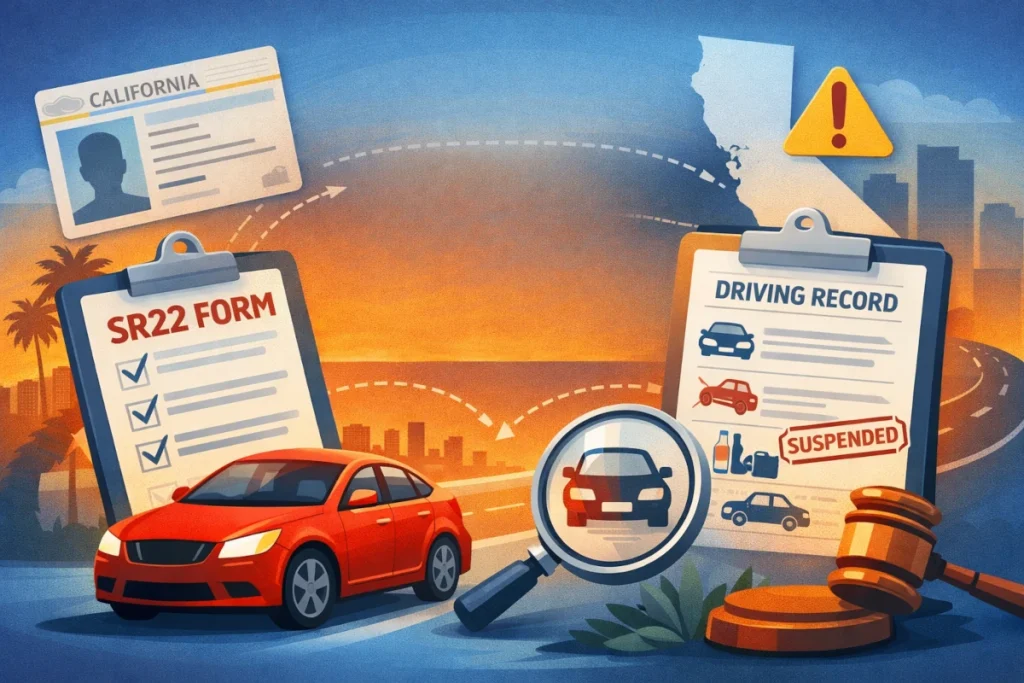
When a California driver is required to carry an SR22, the connection between insurance and driving records becomes much tighter.
An SR22 requirement usually follows serious driving or insurance issues, and it places added attention on a driver’s history, compliance, and future behavior. Understanding the relationship between SR22 and driving records helps drivers avoid setbacks, manage insurance costs, and protect their driving privileges.

IIS Insurance Services works with drivers throughout California who need SR22 filings after license suspension, traffic violations, or insurance lapses. With the right information and support, drivers can meet state requirements while moving toward a more stable insurance profile
How SR22 Connects Insurance to Your Driving Record
An SR22 is a form filed by an insurance company with the California DMV to confirm that a driver carries the required minimum liability coverage. It is not a separate insurance policy, but it creates a direct reporting relationship between your insurer and the state. This reporting link ties your insurance status closely to your driving record.
When an SR22 is required, it usually reflects prior issues listed on your driving record, such as moving violations, at-fault accidents, DUI charges, or driving without insurance. These events classify a driver as higher risk, which triggers the need for proof of financial responsibility before driving privileges can be restored.
Although the SR22 itself does not appear as a violation on your license, it is connected to your driver record through DMV monitoring. If coverage cancels or lapses during the required period, the insurer must notify the DMV. That notice often results in license suspension and an updated record showing noncompliance.
For drivers, this means that insurance decisions directly influence driving status. Maintaining continuous coverage protects both your license and your standing with the state. IIS Insurance Services helps drivers understand these connections so they can keep their records in good standing while meeting SR22 requirements.
Driving Record Issues That Commonly Trigger SR22 Filings
Several situations can lead to an SR22 requirement in California. These events are documented on a driving record and signal increased risk to both insurers and the DMV.
Common triggers include DUI convictions, repeated traffic violations, at-fault accidents without insurance, and driving with a suspended license. Accumulating too many points within a short period can also lead to license suspension and the need for an SR22 before reinstatement.
Insurance-related problems can trigger SR22 filings as well. Policy cancellations, coverage lapses, or failure to maintain required insurance limits may result in DMV action. Once an SR22 is required, the driver must carry qualifying coverage continuously for the full filing period.
Each of these incidents becomes part of your driving history. Insurers review this history when determining eligibility and pricing. The more serious or frequent the violations, the higher the perceived risk. IIS Insurance Services works with drivers who have a wide range of driving records, helping them secure coverage that meets state rules without unnecessary complications.
License Reinstatement, Proof of Coverage, and Associated Costs
After a license suspension, reinstatement requires several steps, and an SR22 filing is often one of them. Before driving privileges are restored, the DMV requires proof that the driver carries valid insurance. This proof comes from the SR22 filed by the insurer.
In addition to filing proof, drivers must pay a reinstatement fee to the DMV. This fee is separate from insurance costs and is required even if coverage is already in place. Drivers may also face higher insurance premiums due to their driving record and risk classification.
Insurance companies typically charge a filing fee to submit the SR22. While this fee is usually modest, the larger expense comes from higher premiums associated with high-risk status. Prior violations, bad driving history, and past insurance lapses all contribute to increased costs.
During the SR22 period, any missed payment or policy cancellation can lead to another suspension and additional reinstatement fees. IIS Insurance Services helps drivers plan coverage carefully, manage payment schedules, and avoid disruptions that could increase overall costs.
How SR22 Status Influences Insurance Premiums over Time
An SR22 requirement often leads to premium increases, especially during the first policy term. Insurers view SR22 drivers as higher risk due to documented driving or insurance issues. This classification affects how rates are calculated and which coverage options are available.
Premium increases are not always permanent. Insurance companies regularly review driving records, payment history, and claim activity. Drivers who maintain continuous coverage, avoid new violations, and demonstrate responsible driving behavior may see gradual improvements over time.
However, new traffic violations, missed payments, or insurance lapses during the SR22 period can lead to further premium increases or policy cancellation. That cancellation would be reported to the DMV and could restart the SR22 requirement from the beginning.
IIS Insurance Services helps drivers find policies designed for challenging records, including auto, motorcycle, non-owner, RV, and business coverage. By maintaining steady insurance and avoiding additional issues, drivers can work toward more favorable rates once the SR22 obligation ends.
Managing Your Driving Record While Carrying an SR22
Successfully completing an SR22 requirement depends on careful management of both insurance and driving behavior. Every decision during this period affects your driving record, insurance costs, and license status.
Continuous coverage is the foundation. Drivers should confirm that policies remain active, payments are made on time, and any policy changes are coordinated properly. Even short gaps can lead to DMV action and added penalties.
Safe driving habits also matter. Avoiding new violations helps prevent additional points on your record and reduces the likelihood of extended SR22 requirements. Over time, a clean driving record supports better insurance opportunities.
IIS Insurance Services supports California drivers throughout the SR22 process, offering clear guidance and responsive service. If you need SR22 insurance or have questions about how your driving record affects your coverage, contact IIS Insurance Services for a personalized quote. Reliable coverage and informed choices help keep your license active and your insurance on track.