

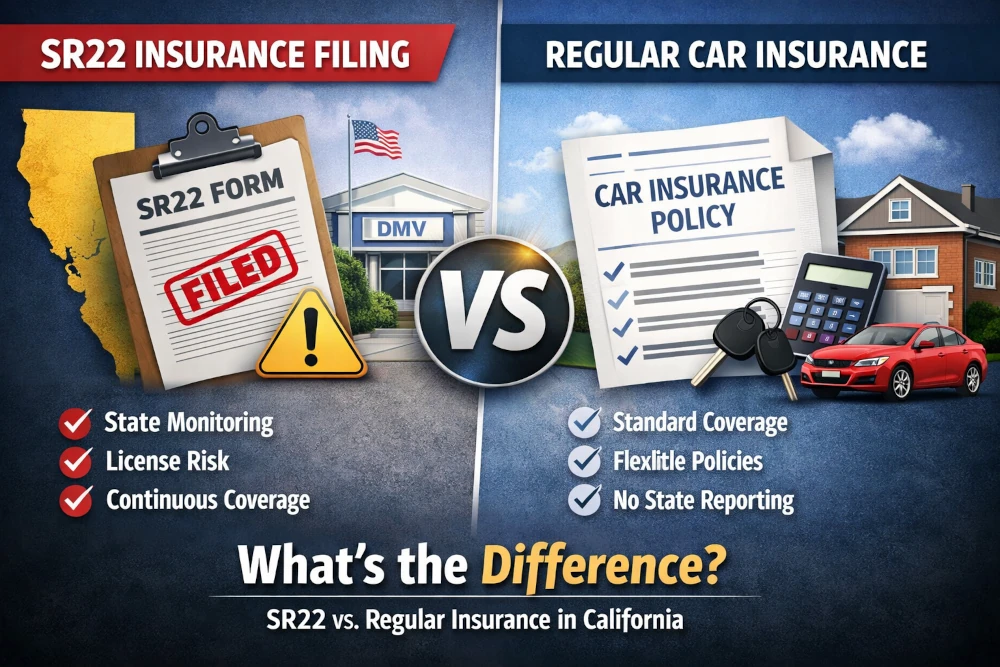
Many California drivers are surprised to learn that an SR22 filing is not the same thing as standard car insurance.
The difference affects how policies are managed, how the state tracks coverage, and how insurance companies respond to changes. Understanding how SR22 filings differ from regular insurance helps drivers avoid license setbacks, unexpected costs, and compliance issues.
IIS Insurance Services works with drivers who need clarity after a license suspension, traffic violations, or insurance lapses. Knowing what separates SR22 filings from standard coverage allows drivers to choose the right policy and stay on the road legally.

What an SR22 Filing Is Compared to Regular Insurance
Regular insurance is a policy that provides financial protection if you are involved in an accident or cause damage. It satisfies California’s minimum liability requirements and allows you to legally drive, but it does not involve direct reporting to the DMV beyond initial verification.
An SR22 filing, by contrast, is a form that is filed by your insurance company with the state. It confirms that you carry the required liability insurance and allows the DMV to track your coverage status. The filing creates a reporting relationship between your insurer and the state that does not exist with regular insurance.
Drivers usually need an SR22 after events such as DUI convictions, repeated traffic violations, driving without insurance, or license suspension. These situations place a driver in a higher risk category, which leads the state to require proof of financial responsibility on an ongoing basis.
With regular insurance, coverage can be changed or canceled without immediate state involvement. With an SR22, any cancellation, nonpayment, or lapse must be reported by the insurance company, often resulting in license suspension. This reporting requirement is one of the primary differences drivers experience.
How Insurance Requirements Change with an SR22
Insurance requirements under an SR22 are stricter than those tied to regular insurance. While both require liability coverage that meets state minimums, SR22 policies must remain active without interruption for the full filing period.
Regular insurance allows flexibility. A driver may switch carriers, adjust coverage, or cancel a policy as long as another valid policy replaces it. The DMV is not automatically notified of these changes unless coverage fully lapses and is later discovered.
With an SR22, flexibility is limited. The insurance company must notify the DMV if the policy ends for any reason. Even a short lapse due to a missed payment can trigger immediate suspension of driving privileges. This makes consistent policy management a daily responsibility for SR22 drivers.
Some drivers require a non-owner policy rather than a standard auto policy. A non-owner SR22 policy provides liability coverage for drivers who do not own a vehicle but still need to meet state requirements to reinstate or maintain a license. Regular insurance typically applies only to vehicles you own.
IIS Insurance Services helps drivers determine which policy type fits their situation while ensuring insurance requirements are met without unnecessary coverage.
Financial Responsibility and State Monitoring
Financial responsibility is the legal obligation to carry liability insurance that protects others on the road. Regular insurance fulfills this obligation but does not involve continuous monitoring by the state.
An SR22 filing adds monitoring. Once the form is submitted, the state tracks whether your insurance remains active. The insurance company acts as the reporting party, notifying the DMV if coverage ends, changes, or lapses.
This monitoring system exists to reduce uninsured driving among high-risk drivers. It places accountability on both the driver and the insurer. As long as the policy remains active and compliant, the driver can maintain driving privileges.
The filing fee for an SR22 is usually modest, but the broader financial impact often comes from higher insurance premiums. Insurance companies take on additional responsibility when filing an SR22, which can affect pricing.
IIS Insurance Services works with carriers that understand these requirements and help drivers manage financial responsibility without unnecessary complications.
Cost Differences between SR22 and Regular Insurance
Cost is one of the most noticeable differences between SR22 filings and regular insurance. Regular insurance rates are based on factors such as driving history, location, vehicle type, and claims record.
When an SR22 is required, insurance premiums are often higher. This increase reflects the driver’s risk profile, not the filing itself. Past violations, license suspension, or insurance lapses contribute to the higher cost.
The SR22 filing fee is separate from premiums and is typically charged once per policy term. While the fee is relatively small, missed payments or cancellations can lead to additional costs tied to reinstatement and new filings.
Non-owner SR22 policies may cost less than owner policies since they do not insure a specific vehicle. Regular insurance usually cannot be used in place of a non-owner SR22 when the state requires proof for license reinstatement.
Over time, maintaining continuous coverage and avoiding new violations can help stabilize insurance costs. IIS Insurance Services assists drivers in finding affordable options that meet state requirements while supporting long-term cost control.
Insurance Policy: Choosing the Right Insurance Support for SR22 Filings
Choosing an insurance company experienced with SR22 filings can make a significant difference. Not all insurers handle SR22 requirements efficiently, and mistakes can lead to license suspension or extended filing periods.
With regular insurance, drivers often manage policies independently with minimal oversight. With an SR22, active support matters. Payment reminders, clear communication, and proper filing procedures help prevent coverage disruptions.
IIS Insurance Services provides SR22 support for auto, motorcycle, non-owner, RV, and business insurance in California. The team helps drivers understand their obligations, select appropriate coverage, and keep policies active throughout the filing period.
If you need help understanding how SR22 filings differ from regular insurance or need coverage to meet state requirements, contact IIS Insurance Services for a personalized quote. Reliable insurance and informed guidance help protect your license and keep your coverage on track.