

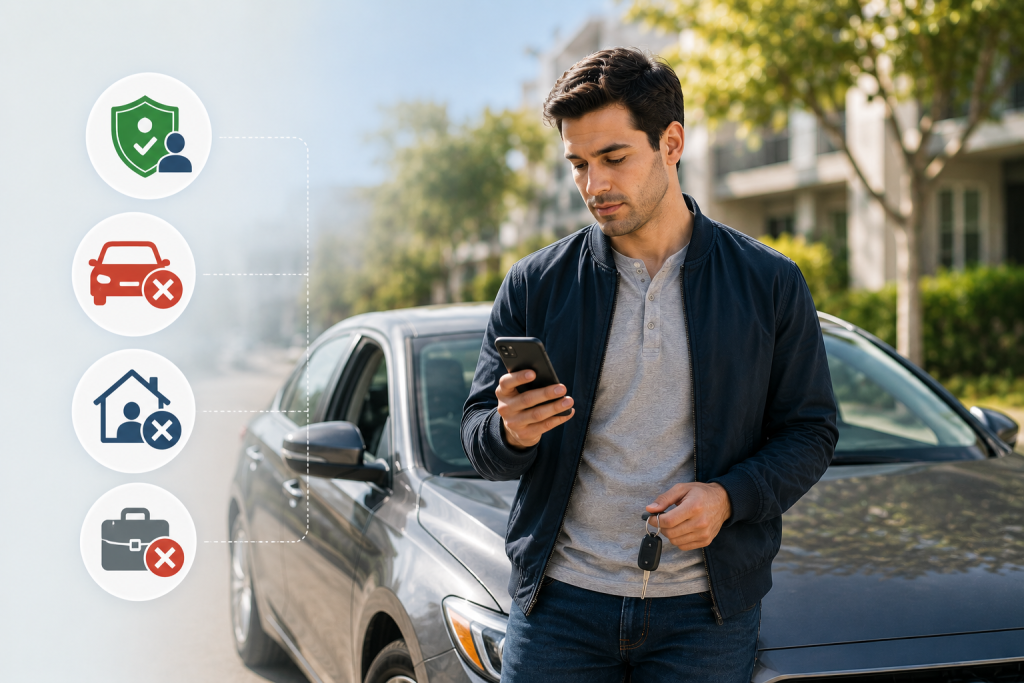
If you drive but don’t own a car, a non-owner policy can sound like the simple answer. It can help in the right situation, but it also has clear limits. Understanding non owners auto insurance limitations can help you avoid gaps, denied claims, or surprise costs after an accident.
Non-owner car insurance is usually built for people who drive occasionally, rent cars, borrow vehicles, or need liability coverage without owning a vehicle. It may also help some California drivers who need SR-22 filing but don’t have a car registered in their name.
The part that causes confusion is what this type of policy does not do. It usually doesn't replace the owner’s insurance. It usually doesn't cover physical damage to the car you’re driving. It may not apply if you live with the owner, use the same vehicle often, or drive for work.
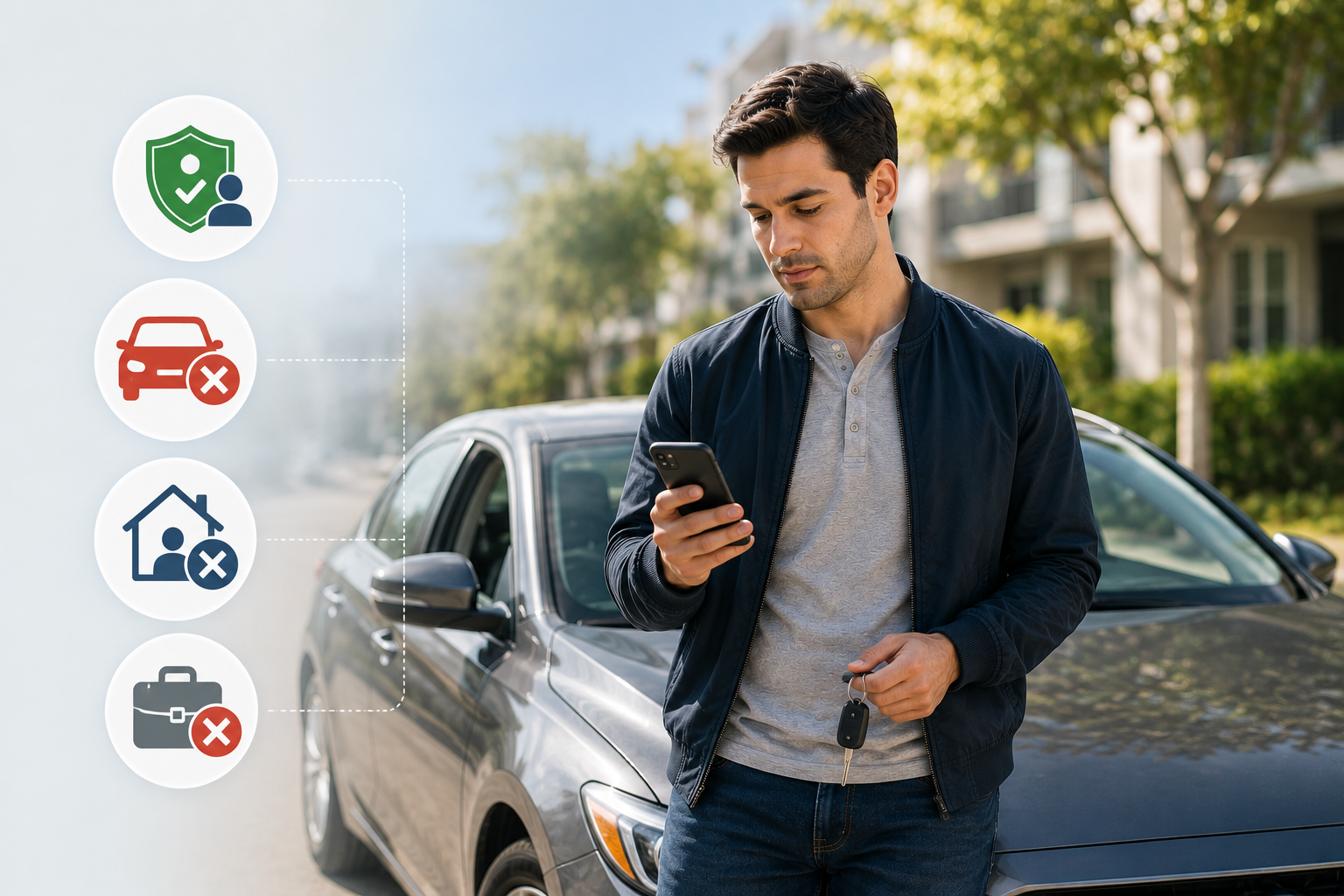
What Non-Owner Car Insurance Is Designed to Do
Non-owner car insurance is auto insurance for a driver who doesn't own a vehicle. It usually provides liability coverage if you cause an accident while driving a car you don’t own, as long as the situation fits the policy terms.
Liability coverage can help pay for injuries or property damage you cause to others. It doesn't work the same way as collision or other physical damage protection. In most cases, non-owner insurance is focused on the driver’s liability, not the vehicle itself.
This type of policy may be useful if you borrow cars from friends once in a while, rent cars often, use car-sharing services, or want to avoid a gap in your insurance history. It can also be useful for some drivers who need proof of insurance for an SR-22 but do not own a car.
In California, drivers still need to think about financial responsibility rules. The state requires insurance or another accepted form of financial responsibility for vehicles operated or parked on California roads. A non-owner policy may help certain drivers show liability protection, but it must match the driver’s actual situation and any DMV filing needs.
A non-owner policy is not meant for someone who secretly uses the same car every day. If you regularly drive a household vehicle, keep a car at your home, or act as the main driver, the insurance company may expect a different setup.
Where Non-Owner Auto Coverage Falls Short
The biggest limitation is simple. Non-owner insurance typically doesn’t cover damage to the car you’re driving. If you crash a borrowed car, your non-owner policy may help with damage or injuries you caused to someone else, but it usually won’t pay to repair the car you were using.
That can be a major surprise after an accident. If the owner has collision coverage, their owner auto insurance may respond to damage to their own car, depending on the claim and policy terms. If they don’t have collision coverage, the repair bill may fall outside both policies.
A non-owner policy also usually does not cover vehicles you own. If you buy a car, you need an owner insurance policy tied to that vehicle. Keeping a non-owner policy after buying a car can leave you with the wrong type of protection.
There are other limits to keep in mind:
- It may not cover a car owned by someone in your household.
- It may not apply if you drive the same vehicle regularly.
- It may not include collision, comprehensive, rental reimbursement, or towing.
- It may not cover business use, delivery driving, or rideshare work.
- It may not cover medical costs for you or your passengers unless added coverage is available.
- It may not satisfy every SR-22 situation, depending on your requirements and carrier eligibility.
Coverage limits also matter. If your policy has low limits and you cause a serious accident, the claim may go beyond the amount your insurance can pay. Higher limits can offer stronger liability protection, but rates vary based on your driving history, location, filing needs, carrier rules, and other factors.
How a Non-Owner Policy Compares With Other Options
A non-owner policy is one option, but it’s not the right answer for every driver. The best choice depends on whether you own a car, how often you drive, who owns the vehicle, and whether you need SR-22 filing.
| Option | What it may help with | Main limitation |
|---|---|---|
| Non-owner car insurance | Liability protection when you drive cars you don’t own | Usually does not cover damage to the car you’re driving |
| Owner car insurance | Coverage for a vehicle you own and register | Usually not available if you don’t own the vehicle |
| Being added to someone’s policy | Regular access to a family or household vehicle | The owner must agree, and rates may change |
| Rental company coverage | Short-term protection for a rental car | Can be costly and depends on the rental agreement |
| Commercial auto insurance | Work-related driving, business vehicles, or delivery use | Usually not needed for personal occasional driving |
| Non-owner SR-22 policy | Filing support when you need SR-22 but don’t own a car | May not apply if you own or regularly use a specific car |
The table shows why the details matter. A person who rents a car twice a month may have different needs than someone who borrows a roommate’s car every day. A driver with no SR-22 need may need a different policy from a driver trying to meet a DMV filing requirement.
Some people also ask about mobility insurance or named non-owner coverage. These terms can vary by company, so it’s better to ask what the policy actually covers instead of relying on the name alone. Ask about liability limits, excluded vehicles, household rules, rental use, SR-22 filing, and whether any optional coverages are available.
When Non-Owner Insurance May Not Fit Your Situation
Non-owner insurance is meant for occasional access, not full-time use. If you're the main driver of a car, you may need to be listed on that vehicle’s policy or buy a policy tied to the car if you own it.
You may not be a good fit for non-owner insurance if:
- You own a car, even if you don’t drive it often
- You regularly drive a car owned by someone in your household
- You keep a borrowed vehicle at your home
- You drive for delivery, rideshare, courier work, or business use
- You need protection for damage to the vehicle you’re driving
- You want coverage for tools, personal items, or equipment inside the car
- Your SR-22 requirement calls for a different type of filing
This is where many people run into trouble. They buy a policy because it sounds affordable, then learn later that it doesn’t match how they actually drive. That can create problems if there’s a claim, a traffic stop, or a DMV requirement involved.
For example, a California driver who borrows a friend’s car once a month may be a possible fit. A person who drives a partner’s car daily may not be. A driver who needs SR-22 but has no vehicle may qualify for non-owner SR-22, while a driver who owns a car may need a regular policy with an SR-22 filing.
If there’s any doubt, explain your real driving habits to an agent. Don’t base the decision only on price. The policy needs to match the vehicle access, driver status, and filing need.
Common Questions to Ask Before You Buy
Before buying non-owner car insurance, slow down and make sure it fits the way you drive. A few minutes of questions can prevent a costly misunderstanding later.
Ask these questions before you choose a policy:
- Does this policy provide liability coverage in California?
- What are the coverage limits?
- Does it include SR-22 filing if I need it?
- Does it apply when I borrow a friend’s car?
- Does it apply when I rent a car?
- Does it exclude household vehicles?
- Does it cover business, delivery, or rideshare driving?
- Does it include medical payments, uninsured motorist, or other optional coverages?
- What happens if the car owner’s insurance pays first?
- What is not covered under the policy?
A good agent should be able to explain the answers in plain language. If you don’t understand a limit, exclusion, or condition, ask before you pay.
It also helps to gather basic information before requesting a quote. Be ready to share whether you own a vehicle, how often you drive, whose cars you use, whether you live with the car owner, whether you need SR-22 filing, and whether you drive for personal or work reasons.
You should also be honest about your driving history. DUI history, suspended license issues, insurance gaps, tickets, and past accidents can affect rates and options. These details may feel uncomfortable, but they help the agent look for a policy that actually fits.
Talk With IIS Insurance About Non-Owner Coverage
Non-owner auto insurance can be useful, but only when it matches your real situation. If you drive without owning a car, borrow vehicles, rent cars, need SR-22 filing, or want to avoid an insurance gap, IIS Insurance Services can help you understand your options.
Our California-based team works with many types of drivers, including people with DUI history, suspended license concerns, high-risk status, no vehicle ownership, gaps in coverage, and no U.S. license. We’ll explain what non-owner car insurance may cover, what it may leave out, and when another policy may make better sense.
You don’t have to guess your way through coverage. Call IIS Insurance Services or request a quote online to speak with a licensed agent. We’ll help you compare available options, review carrier eligibility, and look for coverage that fits your driving needs, budget, and California requirements.
Fast help, clear answers, and friendly support can make the process easier, especially when your insurance situation is not simple.