

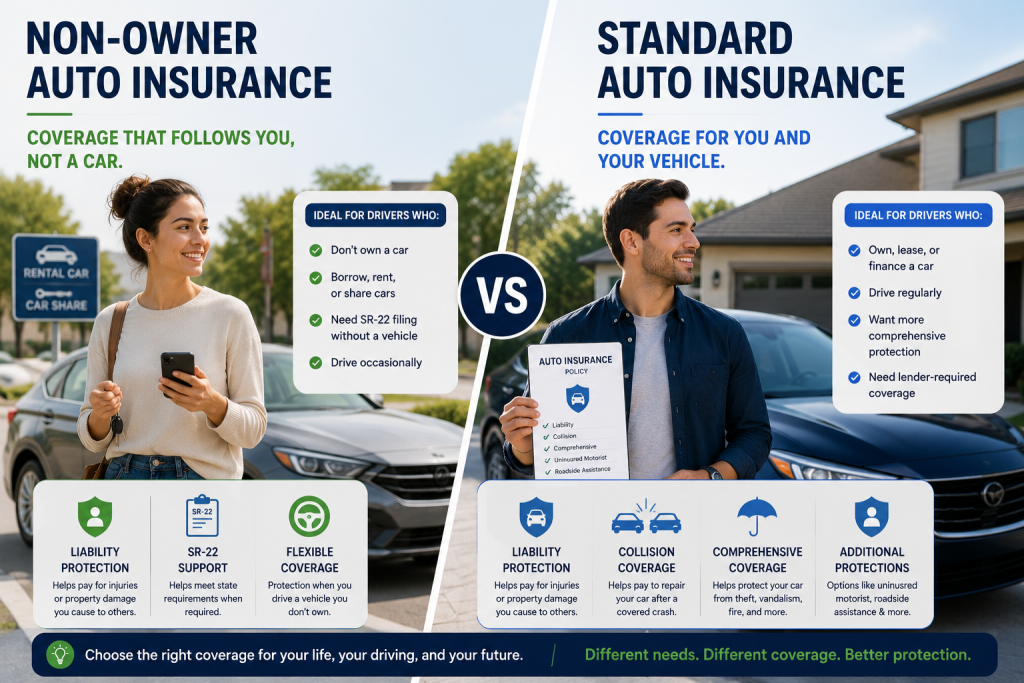
If you drive in California, the type of auto policy you choose needs to match how you actually use a vehicle. Some drivers own a car and need standard auto insurance. Others don’t own a car but still drive borrowed, rented, or shared vehicles from time to time. That’s where non owners insurance vs standard auto becomes an important comparison.
A non-owner policy can be useful for some drivers, especially people who need liability coverage without vehicle ownership. It may also help with certain SR-22 filing needs. Standard auto insurance is different because it's tied to a specific car you own, lease, finance, or regularly drive.
Both options can help protect you, but they aren't interchangeable. Choosing the wrong one can leave you with coverage gaps, claim problems, or a policy that doesn't match your driving life.
What Non-Owner Car Insurance Means
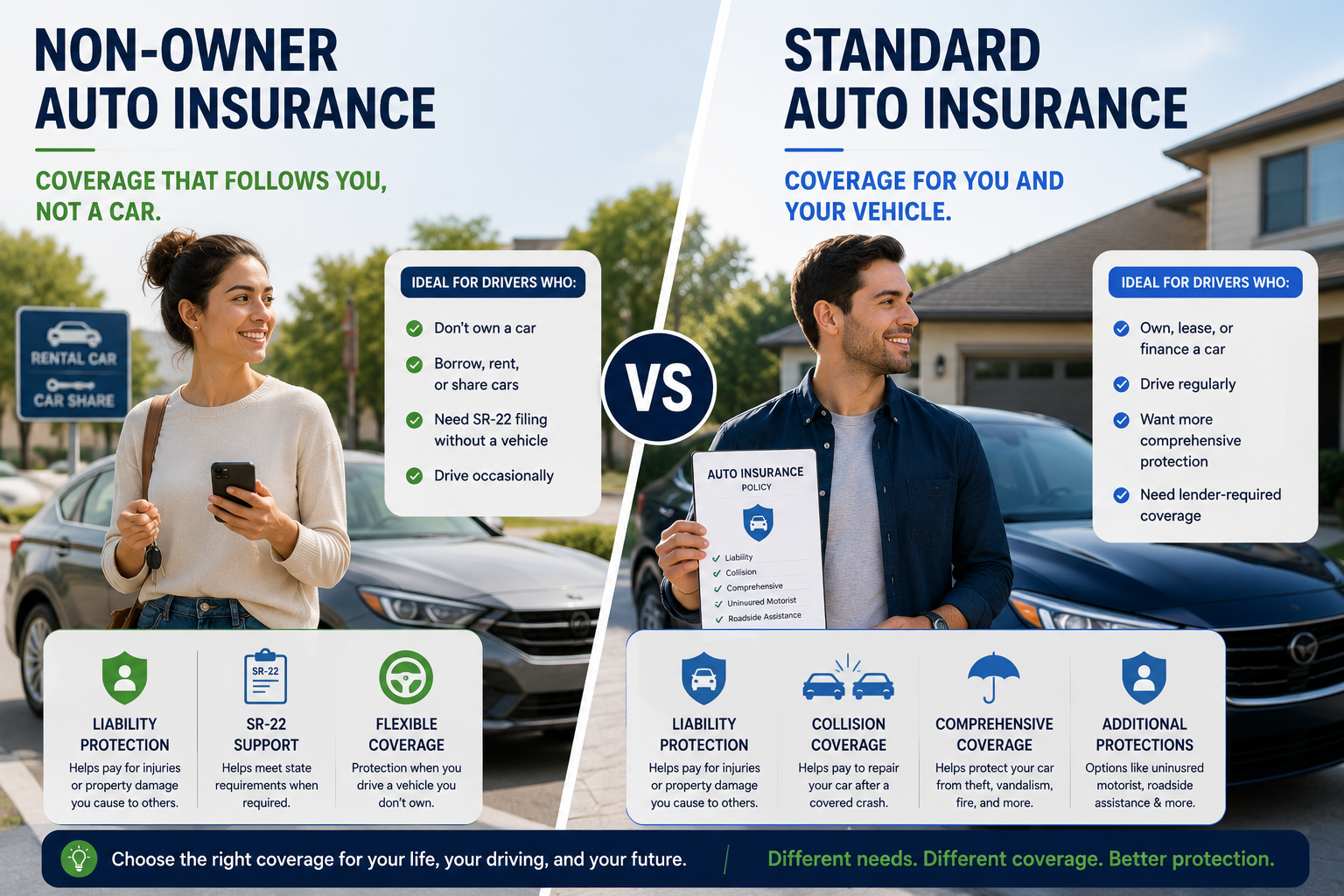
Non-owner car insurance is designed for drivers who do not own a vehicle. It usually provides liability coverage when you drive a car you don’t own, as long as the use fits the policy terms.
Liability coverage can help pay for bodily injury or property damage you cause to other people in an accident. It doesn't usually pay to repair the car you were driving. That’s one of the biggest differences between a non-owner policy and standard auto insurance.
A non-owner policy may be considered by people who:
- Borrow a friend’s or family member’s car once in a while
- Rent cars but do not own one
- Use car-sharing services occasionally
- Want to avoid a gap in auto insurance history
- Need SR-22 filing but do not own a vehicle
- Drive occasionally but are not the main driver of any one car
Non-owner coverage is usually meant for occasional driving. If you use the same car every day, live with the car owner, or keep the vehicle at your home, the insurance company may decide that a standard policy or listed-driver arrangement is a better fit.
What Standard Auto Insurance Covers
Standard auto insurance is tied to a specific vehicle. If you own, lease, or finance a car, this is usually the type of policy you need. The policy lists the vehicle, the named insured, and often the drivers who regularly use it.
A standard insurance policy can include liability coverage, collision, comprehensive, uninsured motorist, medical payments, rental reimbursement, roadside assistance, and other coverages depending on what you choose and what the carrier offers.
Liability coverage is often the base requirement. In California, drivers must carry proof of financial responsibility, and most people meet that requirement with an auto insurance policy. Minimum coverage can meet legal requirements, but it may not offer enough protection for every accident.
Collision and comprehensive coverage are where standard insurance can look very different from non-owner coverage. Collision may help pay to repair your car after a covered crash. Comprehensive may help with covered damage from theft, fire, vandalism, falling objects, or certain weather events. These coverages are usually not part of a basic non-owner policy because there is no owned vehicle attached to it.
If you finance or lease a car, your lender or leasing company may also require higher protection than state minimums. They may require collision and comprehensive coverage to protect the vehicle while you are making payments.
How Non-Owner and Standard Auto Insurance Compare
The right policy depends on vehicle ownership, driving frequency, SR-22 needs, and the kind of protection you want. A non-owner auto policy may cost less in some cases because it usually provides narrower protection and doesn't insure a specific car. Still, rates vary based on your driving record, location, coverage limits, filing needs, and carrier rules.
| Comparison point | Non-owner car insurance | Standard auto insurance |
|---|---|---|
| Best for | Drivers who do not own a vehicle and drive occasionally | Drivers who own, lease, finance, or regularly use a car |
| Vehicle listed on policy | Usually no specific owned vehicle | Yes, the policy is tied to one or more vehicles |
| Liability coverage | Usually included, depending on policy terms | Usually included and required for most drivers |
| Collision and comprehensive | Usually not included | Often available and may be required by lenders |
| SR-22 filing | May be available for drivers without a car | May be available for drivers who own or insure a car |
| Regular household vehicle use | Often not a good fit | Usually handled by listing the vehicle and drivers properly |
| Cost pattern | It’s typically cheaper than standard car insurance in many cases | Usually costs more because it can cover the vehicle and wider risks |
| Best next step | Confirm eligibility with an agent | Compare coverage limits, deductibles, and optional coverages |
NOA policies are often less expensive than standard auto insurance because they usually provide liability protection without requiring vehicle ownership or physical damage coverage for a specific car. That lower cost does not mean it offers the same protection.
If you cause an accident in a borrowed car, a non-owner policy may help with injuries or damage you cause to others. It usually will not cover damage to the car you were driving. A standard policy with collision coverage may be better for someone who owns a vehicle and wants protection for that vehicle.
When Non-Owner Coverage May Make Sense
Non-owner insurance can make sense when your driving is occasional and you don't have a car registered in your name. It can also help when you need continuous insurance history but do not currently own a vehicle.
For example, someone who recently sold a car but plans to buy another one later may want to avoid a gap in coverage. A person who rents cars several times a year may want liability protection beyond what they receive through a rental company, depending on their situation. A driver who needs SR-22 filing but does not own a vehicle may need a named non-owner option if they qualify.
Non-owner insurance may also fit people who borrow cars but are not regular drivers of those vehicles. The difference between occasional and regular use matters. Borrowing a friend’s car once a month is not the same as driving a partner’s car every day.
It may not fit if:
- You own a car
- You have regular access to a household vehicle
- You are the main driver but not the policyholder
- You need collision or comprehensive protection
- You use a vehicle for delivery, rideshare, or business driving
- You want the policy to cover personal items inside a car
- You need coverage for a vehicle you keep at your home
This is where many drivers get confused. Non-owner insurance can be helpful, but it's not a shortcut around listing the right car or driver on a policy.
When Standard Auto Insurance Is the Better Fit
Standard auto insurance is usually the better fit when you own a vehicle or use one regularly. It gives the insurance company a clearer picture of the car, the drivers, the garaging address, and how the vehicle is used.
If you drive the same car every day, even if someone else owns it, you should ask whether you need to be added to that person’s policy. If you live with the owner, the carrier may have specific household driver rules. Not listing a regular driver can create claim issues later.
Standard auto insurance is also the better option when you want protection for the vehicle itself. If you want repairs covered after a crash, theft, vandalism, fire, or certain weather damage, you’ll usually need physical damage coverages tied to the car.
This matters for financed and leased vehicles. Lenders often require full coverage, which usually means liability plus collision and comprehensive. A non-owner policy does not satisfy that kind of lender requirement because it does not insure the actual car.
Standard insurance can also be easier to adjust as your life changes. You can add drivers, update limits, choose deductibles, add vehicles, and adjust optional coverages. A non-owner policy is usually narrower and less flexible because it is built around the driver, not the car.
How to Choose the Right Policy
Start with the basic question. Do you own or regularly use a vehicle? If the answer is yes, standard auto insurance is usually the place to start. If the answer is no, and you only drive occasionally, non-owner insurance may be worth asking about.
Before requesting a quote, gather a few details:
- Whether you own, lease, or finance a vehicle
- How often you drive
- Whose vehicle you drive
- Whether you live with the car owner
- Whether you need SR-22 filing
- Whether you drive for personal use, work, delivery, or rideshare
- Whether you want liability only or wider protection
- Your license status, driving record, and any coverage gaps
These details help an agent match you with options that fit. They also help avoid a policy that looks affordable but does not apply when you need it.
Ask about coverage limits as well. Minimum liability coverage may keep you compliant, but a serious accident can create costs above low limits. Higher limits may offer stronger protection, though they can affect your quote.
The best choice is not always the cheapest policy. It's the policy that fits your real driving habits, vehicle access, budget, and California requirements.
Talk With IIS Insurance About Your Options
Choosing between non-owner car insurance and standard auto insurance can be confusing, especially if you need SR-22 filing, have a suspended license concern, do not own a vehicle, or have gaps in past coverage.
IIS Insurance Services helps California drivers compare options in plain language. Our team can explain when a non-owner policy may fit, when standard auto insurance is the better choice, and what information you need before starting a quote.
We work with many types of drivers, including high-risk drivers, people with DUI history, drivers without a U.S. license, and people who need fast proof of insurance. We’ll help you review available options based on your needs, driving history, vehicle access, and carrier eligibility.
Call IIS Insurance Services or request a quote online to speak with a licensed agent. You’ll get friendly help, practical answers, and support from a California-based team that understands complicated insurance situations.