

Arriving in California comes with plenty to organize, and finding car insurance shouldn’t add unnecessary stress. Insurance for short-term residents with foreign license documentation may be available even if you don’t yet have a U.S. driving record, permanent address, Social Security number, or California driver’s license.
IIS Insurance Services helps international students, temporary workers, visitors, undocumented residents, and other foreign drivers compare California car insurance options from multiple carriers. A friendly agent can explain what documents you need and help you find coverage for drivers using an international license that fits your stay, vehicle, and budget.
Who Can Get International Car Insurance with a Foreign License?
You don’t necessarily need to be a U.S. citizen or permanent resident to buy car insurance. California carriers may consider applications from:
-
International students attending a California school
-
Employees completing temporary work assignments
-
Visiting professionals and researchers
-
People staying with relatives for several months
-
New arrivals who haven’t obtained a California license
-
Temporary visa holders who own, lease, or regularly drive a car
-
Foreign residents spending part of the year in California
A valid foreign license generally shows that your home country has authorized you to drive. An International Driving Permit, commonly called an IDP, translates information from your existing license into several languages. It doesn’t replace the original document or grant driving privileges by itself.
Some carriers accept a valid foreign license alone, while others may request an IDP, especially when the original license isn’t written in English or doesn’t use the Latin alphabet. When an IDP is needed, carry it with your valid home-country license. An IIS agent can help you understand which documents a carrier may accept.
Insurance eligibility and permission to drive aren’t the same. A carrier may issue a policy, but your license must still be valid for your stay. Your residency status, license validity, and state rules can affect how long you may continue using foreign driving credentials.
Drivers who establish California residency are generally expected to apply for a California driver’s license within 10 days. Visitors can generally drive with a valid foreign license during a temporary stay if they continue to meet the state’s driving and insurance requirements. The California Department of Motor Vehicles can confirm licensing rules, while IIS can help with car insurance options.
Some insurance companies may not accept foreign licenses, but others work with international drivers and may request additional records. Carrier rules can differ among national companies, including Progressive, and smaller regional insurers. IIS Insurance Services can compare options from multiple carriers and help you find a policy suited to your circumstances.
Documents International Drivers from Another Country May Need
The application process usually starts with proof of identity, driving authorization, and vehicle information. Requirements vary by car insurance company, so you may not need every item below.
Gathering available information helps your agent understand your situation. An IIS agent can explain which documents are needed and help you avoid delays.
| Document or Detail | Why an Insurer May Request It | Examples |
|---|---|---|
| Driver identification | Confirms your identity and license status | Valid foreign driver’s license, passport, International Driving Permit |
| California address | Shows where the vehicle is kept and regularly driven | Lease, utility statement, hotel confirmation, host’s address |
| Immigration or stay documentation | Helps explain the expected length and purpose of your stay | Visa, I-20, DS-2019, work assignment letter |
| Vehicle information | Allows the insurer to identify and rate the car | VIN, registration, purchase agreement, lease paperwork |
| Prior driving record | May help establish experience outside the United States | Certified driving abstract, claims record, prior policy |
| Payment information | Allows the policy to be activated after approval | Accepted card or bank account |
| Driver details | Identifies everyone who may operate the vehicle | Names, birth dates, license details, driving frequency |
Documents written in another language may need an official or certified translation. An IDP can make license information easier to read, but a carrier may still request additional verification.
A foreign driving record can also be useful. U.S. databases often can’t retrieve violations, claims, or licensing information from another country. If your home-country licensing authority can issue a formal driving abstract, ask your agent whether the carrier will consider it.
Provide accurate information about who owns and drives the car. Don’t list someone else as the primary driver solely because that person has a U.S. license. Accurate ownership, address, vehicle use, and driver details help the agent place the insurance policy correctly and reduce delays or claim complications.
Short-term residents without a permanent home can provide their current California location. Tell your agent whether you’re staying at a hotel, apartment, university residence, employer-provided home, or relative’s property. The agent can explain which proof of address each carrier accepts.
Insurance Coverage for a Long Stay or Temporary Visit
California drivers must carry liability insurance with minimum limits of $30,000 in bodily injury coverage per person, $60,000 per accident, and $15,000 in property damage coverage. Liability insurance helps pay for covered injuries or property damage you cause to others, up to the policy limits required by the state.
The legal minimum may not be enough after a serious accident. Higher liability limits can provide greater financial protection. An agent can explain the price difference between available limits so you can choose one that fits your budget.
Short-term residents may also consider:
-
Collision coverage: Helps pay for covered damage to your car following a collision, subject to the deductible.
-
Comprehensive coverage: Helps with covered non-collision losses such as theft, vandalism, fire, falling objects, or certain weather damage.
-
Uninsured or underinsured motorist coverage: May help when another driver has no insurance or insufficient limits.
-
Medical payments coverage: Helps with certain medical costs for you and your passengers after a covered accident.
-
Rental reimbursement: May contribute toward a temporary replacement vehicle while your insured car is repaired after a covered loss.
-
Roadside assistance: May provide help with towing, flat tires, lockouts, dead batteries, or similar roadside problems.
A financed or leased vehicle may require collision and comprehensive coverage under the lender or leasing agreement. The finance company may also set deductible or coverage requirements. Your agent can review those details so you don’t overlook required coverage or pay for protection you don’t need.
Your vehicle arrangement also affects the type of insurance that may work best. Someone buying a car for a year has different needs from a traveler renting a vehicle for two weeks. If you regularly borrow a relative’s car, you may need to be added to that person’s policy. A non-owner policy may also be an option if you frequently borrow or rent vehicles but don’t own one.
Rental car companies usually offer optional protection at the counter. These products aren’t the same as a personal auto policy. Coverage may also be available through a credit card, travel policy, employer plan, or existing insurance from another country, but exclusions and territorial limits can apply. Review insurance options for renting with an international permit before declining coverage from the rental company.
“Temporary car insurance” can be confusing because many U.S. auto policies use standard policy periods even when a driver expects to stay for only a few months. A short term stay doesn’t always mean the policy itself will use a short policy period. You may be able to cancel after selling the vehicle or leaving California, depending on policy terms, fees, and refund rules. An IIS agent can explain the process before coverage begins.
What Affects the Cost of an Insurance Policy?
Car insurance rates for international drivers depend on several factors. Not having a U.S. insurance history may affect the quote, but rates can vary among carriers. Comparing options can help you find a balance between reliable protection and a manageable price.
Insurers may consider your age, driving experience, California address, vehicle, expected mileage, coverage limits, deductibles, prior claims, and other household drivers.
The car itself matters. Newer vehicles, luxury models, high-performance cars, and vehicles with costly replacement parts may cost more to insure. A modest vehicle with strong safety features may cost less, although the final rate depends on the full application.
Where the vehicle is kept also affects the quote. Traffic density, theft rates, accident patterns, repair costs, and local claim history differ among California ZIP codes. Providing the address where the car is actually parked helps the carrier prepare an accurate car insurance quote.
Describe your expected use accurately. Tell your agent whether the car will be used for commuting, university travel, personal errands, business visits, or occasional recreation. Rideshare, delivery, and other commercial uses may require separate coverage or endorsements.
A deductible is the amount you agree to pay toward certain covered damage to your vehicle. Choosing a higher deductible can lower the premium, but it increases what you’ll pay after a covered loss. An agent can show how deductible options affect the price.
Coverage limits involve a similar trade-off. Lower limits may reduce the initial price but provide less protection after an accident. Compare quotes with matching limits and deductibles so you can see the true price difference.
Payment arrangements may also affect the total insurance cost. Paying in full may cost less than monthly installments with service fees. Ask about down payments, installment charges, cancellation terms, and available discounts. IIS can help you review these details before selecting a policy.
How to Get Car Insurance with an International License as a Short-Term Resident
Starting the process before you buy or register a vehicle can help you avoid surprises. Knowing the likely car insurance cost may also help you choose a car that fits your monthly budget.
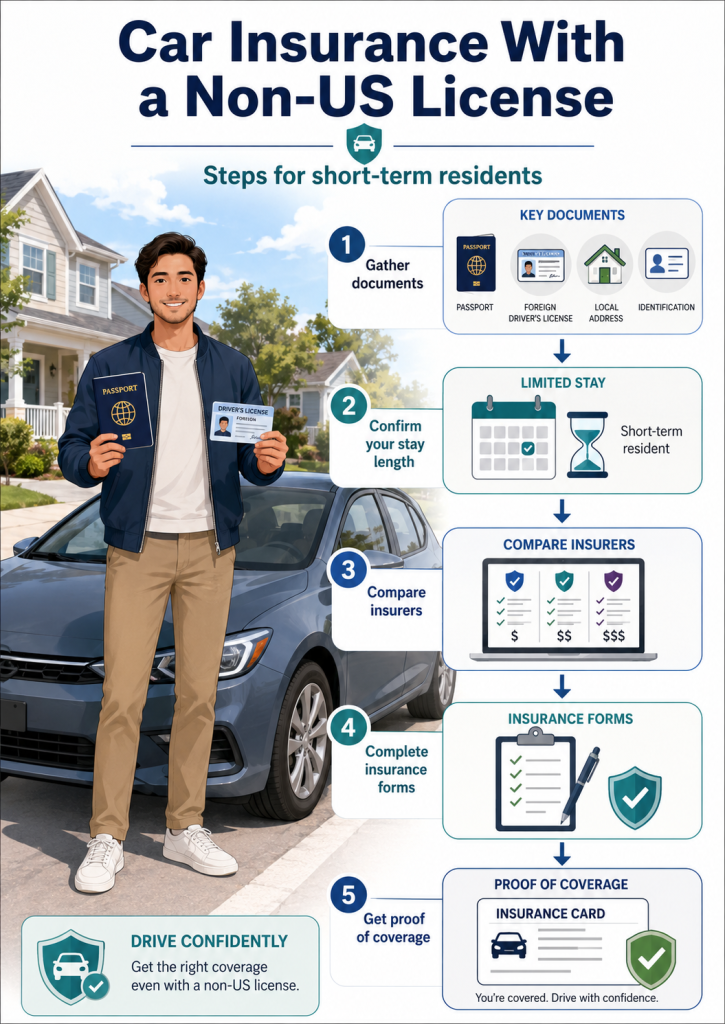
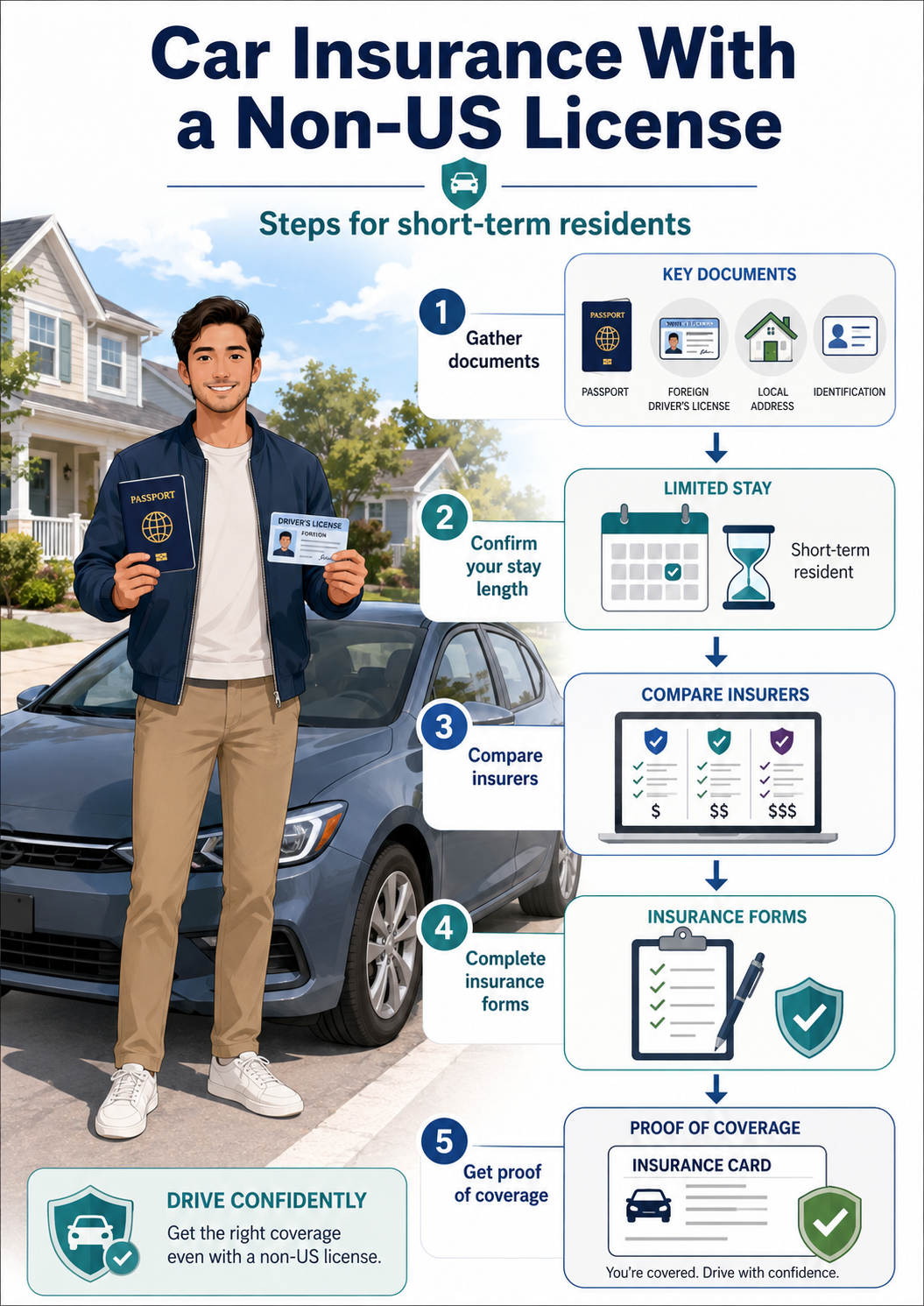
Begin by sharing your foreign license, passport, current California address, and expected dates of residence with your agent. If you have an IDP or certified driving history, provide those as well.
Next, provide information about the car. The VIN gives the most accurate vehicle details, but an initial estimate may be possible using the year, make, model, trim, ownership status, and expected annual mileage.
Tell the agent how long you expect to remain in California, whether you plan to apply for a California license, who will drive the vehicle, and whether the car will be financed, leased, registered to another person, or used for work. These details help the agent recommend suitable coverage.
IIS can then compare carriers that accept your documentation. One insurer may accept a foreign license with a passport, while another may request an IDP, translated driving record, or proof of residency. Reviewing practical ways to shop for coverage with a non-U.S. license can help you prepare before comparing policies.
Compare car insurance policies using the same coverage limits and deductibles. An agent can explain the premium, down payment, installment fees, deductibles, optional insurance coverage, exclusions, and cancellation terms in plain language. This helps you avoid unnecessary extras while keeping suitable protection.
Before driving, confirm that the policy is active. A quote, application, or payment receipt doesn’t always mean coverage has started. Check the effective date and keep the insurance identification card in the vehicle or in an accepted digital format.
Let your agent know if you move, replace the car, add a household driver, begin commuting, obtain a California license, or extend your stay. Keeping your information current helps protect the policy and allows your agent to check whether another option could save you money.
Get Support from IIS Insurance Services
You don’t have to sort through carrier rules alone. IIS Insurance Services has helped California drivers compare auto insurance options since 2009 and works with multiple carriers to find coverage for different driving and licensing situations.
A licensed agent will review your foreign license and vehicle details, explain your options, and compare pricing, liability limits, deductibles, payment plans, and available insurance coverage. You can choose a policy that suits your stay and budget without paying for protection you don’t need.
Contact IIS Insurance Services for a personalized car insurance quote and responsive support from a real insurance professional. Bring the documents you have, and the team will guide you through the remaining steps so you can feel informed and ready to drive in California.