

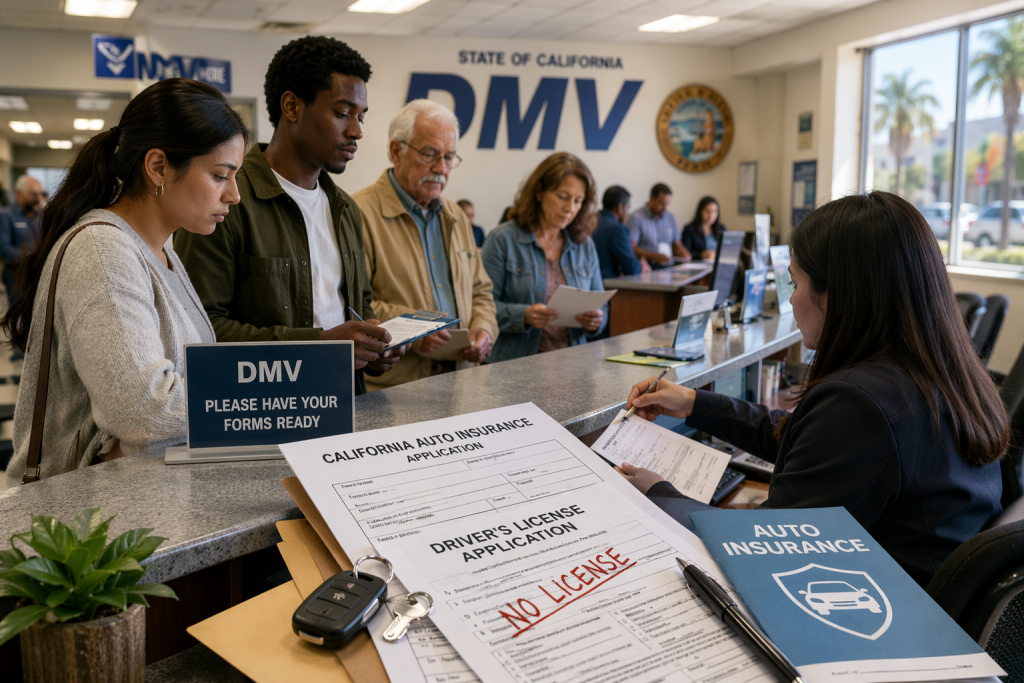
Owning a vehicle does not always mean you have an active driver's license. Many vehicle owners find themselves researching whether auto insurance is available without a license after a change in driving status, ownership needs, or household arrangements. These situations are more common than many people expect, and they often come with questions about legality, cost, and approval.
Auto insurance exists to protect vehicles, property, and financial responsibility. While most insurance companies expect the policyholder to be licensed, California insurers also recognize situations where the vehicle owner is not the person driving the car. With the right policy structure, coverage can still be obtained.
California law requires registered vehicles to meet financial responsibility standards. Even if you do not drive, an uninsured vehicle can create registration problems, fines, and added risk if the car is involved in an accident. Insurance helps prevent those issues while protecting your investment.
Below, we discuss the answer to the question: Can you get auto insurance without a license? Understanding how coverage works when the vehicle owner does not drive helps clarify what insurers require under California law.
Situations Where You May Need Car Insurance With No License
There are several legitimate reasons someone may need car insurance without holding a driver's license. These situations affect individuals, families, and businesses across California.
Some vehicle owners stop driving due to age, health concerns, or personal preference, yet still own a car used by family members or caregivers. Insurance allows the vehicle to remain covered while others operate it legally.
License suspension or revocation is another common reason. Even when a license is inactive, the vehicle often stays registered. Insurance may be required to avoid penalties and is frequently necessary when working toward license reinstatement. Many drivers also need active coverage to meet SR-22 filing requirements.
Business owners may insure company vehicles that they do not personally drive. In these cases, insurance protects business assets and ensures employees can legally operate the vehicles.
Other scenarios include stored, seasonal, or collector vehicles that are not driven regularly but still face risks such as theft or weather damage.
Common situations include:
- Vehicle owners who no longer drive due to medical or age-related reasons
- Drivers with a suspended or revoked license
- Business owners insuring vehicles driven by employees
- Families insuring a car for a licensed household member
- Owners of stored or collector vehicles
Each situation requires careful setup to ensure coverage remains valid.
How Insurance Works When You List a Licensed Driver
The most common way to get car insurance without a license is by listing a licensed driver on the policy. Insurance companies require at least one qualified driver who is legally permitted to operate the vehicle. This person becomes the primary driver for underwriting purposes.
When a licensed driver is added, insurance companies generally expect the following conditions to be met:
- The driver holds a valid California driver's license
- The driver regularly operates the vehicle
- The driver’s driving history is used to assess risk and pricing
- All driver details are disclosed accurately on the application
The licensed driver is often a spouse, adult child, relative, or trusted household member. For business vehicles, it may be an employee assigned to operate the car as part of their role. Insurance providers use this driver’s record to determine eligibility, rates, and available coverage options.
Accuracy is especially important. Misstating who drives the vehicle or how often it is used can lead to denied claims or policy cancellation. Insurance companies expect transparency to ensure the policy reflects real-world use.
Listing a responsible driver with a clean record can also help control costs. This structure allows the vehicle owner to maintain coverage without holding driving privileges.
What Insurance Companies Review on No-License Applications
Insurance companies follow a detailed review process when evaluating applications from vehicle owners without a license. Their focus is on responsibility, risk, and compliance with state requirements.
The primary driver’s record is central to the review. Insurers examine driving history, past claims, and current license status. A stable record improves approval odds and may help keep rates reasonable.
Vehicle information is also reviewed closely. Insurers consider the type of car, its value, how it is used, and where it is stored. A vehicle used occasionally may be rated differently than one driven daily.
Ownership and registration details must align with DMV records. Any mismatch can slow approval or cause future complications. This step is especially important for drivers dealing with suspension or revocation.
Coverage selection also plays a role. Liability-only policies may be easier to place, while full coverage can involve additional review. Some insurers also offer non-owner policies when appropriate.
IIS Insurance Services helps customers prepare accurate applications and connect with providers that accept these scenarios.
Getting Auto Insurance After a Suspended or Revoked License
A suspended or revoked license does not remove the need for insurance. In many cases, maintaining coverage is necessary to avoid additional penalties and support future reinstatement.
California often requires proof of insurance through an SR-22 filing after certain violations. An SR-22 confirms that coverage is active and meets state requirements. Not all insurers offer this service, but IIS Insurance Services works with companies that do.
During a suspension period, the vehicle must remain insured if it is still registered. Listing a licensed driver allows the policy to stay active while meeting legal standards. This helps prevent lapses that could extend suspension timelines.
All application details must be accurate, including license status and driver assignment. Insurance companies verify this information, and inconsistencies can delay approval.
IIS Insurance Services guides clients through each step, from choosing coverage to filing required paperwork, making the process more manageable during a challenging time.
How Coverage Options and Costs May Differ Without a License
Auto insurance costs and coverage options can vary when the vehicle owner does not have a driver’s license. Insurance companies base pricing primarily on risk, which is tied to the listed driver rather than the owner’s license status alone.
Policies that list a licensed driver with a strong record often qualify for broader coverage options and more stable pricing. Liability coverage is commonly available, while full coverage may depend on vehicle value and insurer guidelines. Stored or limited-use vehicles may qualify for adjusted coverage structures.
Rates can also be influenced by how the vehicle is used, where it is kept, and whether the policy includes additional filings such as an SR-22. Providing accurate details helps insurers apply the correct rating and avoid unexpected changes later.
Working with an agency experienced in these situations helps avoid unnecessary costs. IIS Insurance Services compares options across multiple providers to identify coverage that aligns with both legal requirements and budget considerations.
Get Help Securing Auto Insurance Without a License
Getting auto insurance without a license in California requires the right approach and knowledgeable support. IIS Insurance Services assists individuals and business owners who need coverage despite license limitations.
Whether your license is suspended, revoked, or not required for your situation, coverage options remain available. By working with insurance companies that allow alternative drivers and flexible policy structures, IIS Insurance Services helps clients protect their vehicles and stay compliant.
Fast quotes, personalized guidance, and clear communication help simplify the process. From basic liability coverage to SR-22 filings, the focus remains on matching each customer with a policy that fits their needs and budget.
If you need help securing car insurance with no license, contact IIS Insurance Services today. A licensed professional can review your situation and help you move forward with confidence and proper coverage.