

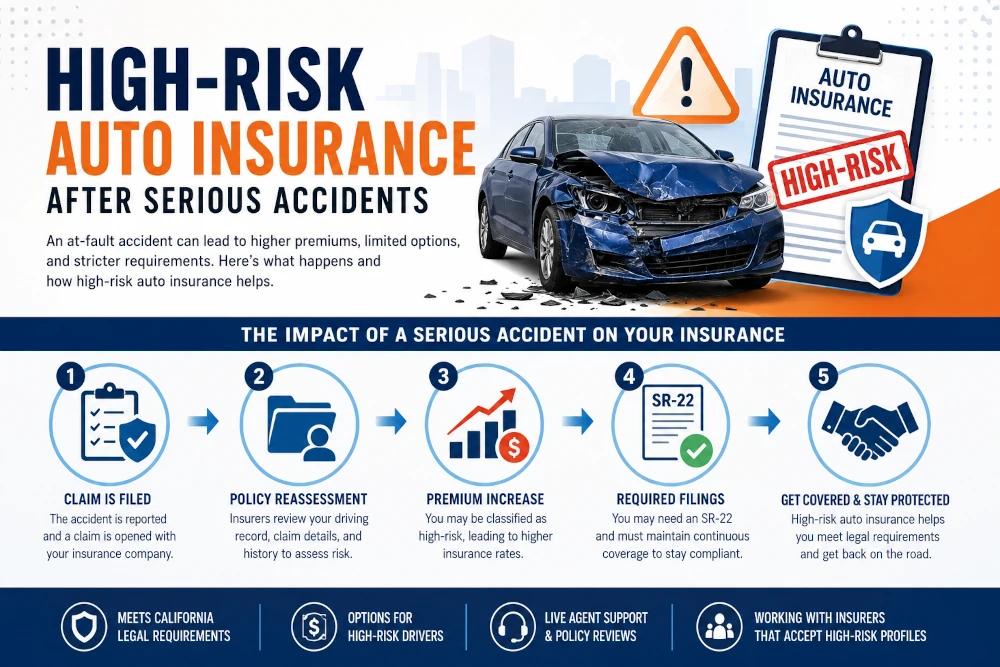
Finding auto insurance after a serious accident can feel overwhelming, especially when your driving history places you in a high-risk category. California drivers often face higher premiums, stricter underwriting, and fewer coverage choices after an at-fault collision or multiple claims. License reinstatement deadlines, proof-of-insurance requirements, and financial pressure can quickly stack up, making the process feel urgent and confusing.
This is where high-risk auto insurance after serious accidents plays a direct role. Coverage must satisfy California’s legal standards while accounting for increased insurer scrutiny tied to recent claims or violations. IIS Insurance Services works with drivers who need solutions that address both urgency and affordability. Whether you are dealing with a suspended license, SR-22 filing, or limited carrier options, having guidance matters. Policies are structured to meet state requirements while keeping coverage practical for daily driving needs. With live agent support, tailored policy reviews, and access to insurers that accept higher-risk profiles, drivers gain a clearer path back to legally insured driving without unnecessary delays or confusion.
How an At-Fault Accident and Your Driving Record Shape High-Risk Insurance Status
Insurance companies rely on driving data to assess risk, and a serious or at-fault accident can change how insurers view your profile almost immediately. Drivers with recent collisions, injury-related claims, or multiple losses are commonly labeled as high-risk, what qualifies as high-risk auto insurance, which directly affects pricing, eligibility, and coverage structure.
Insurance providers typically review several factors when determining high-risk status, including:
- The severity of an at-fault accident and total claim costs
- Whether injuries or multiple vehicles were involved
- The number of prior accidents or claims on your driving record
- Recent violations, such as a speeding ticket
- Gaps in coverage or prior policy cancellations
High-risk auto insurance exists to meet legal obligations while accounting for an increased likelihood of future claims. These policies often include higher premiums, modified deductibles, or fewer optional coverages. In some cases, insurers may require upfront payments or shorter policy terms to reduce exposure.
California drivers may be placed into this category due to accident severity, frequency of claims, or a combination of accidents and violations. Even drivers with long prior insurance histories can be reclassified after one serious incident. IIS Insurance Services helps drivers understand how these classifications work, what insurers review, and which coverage paths remain available. This clarity allows drivers to move forward without guesswork while staying compliant with state insurance laws.
How Driving Records and At-Fault Accidents Affect Insurance Rates
A driving record is one of the strongest pricing indicators insurers use when calculating premiums. An at-fault accident signals increased risk, often leading to changes in insurance rates that can remain in place for several policy terms. The financial impact depends on claim costs, whether injuries were involved, and how recently the accident occurred. Insurers rely on historical data to predict future exposure, which means even a single serious incident can influence how car insurance is priced.
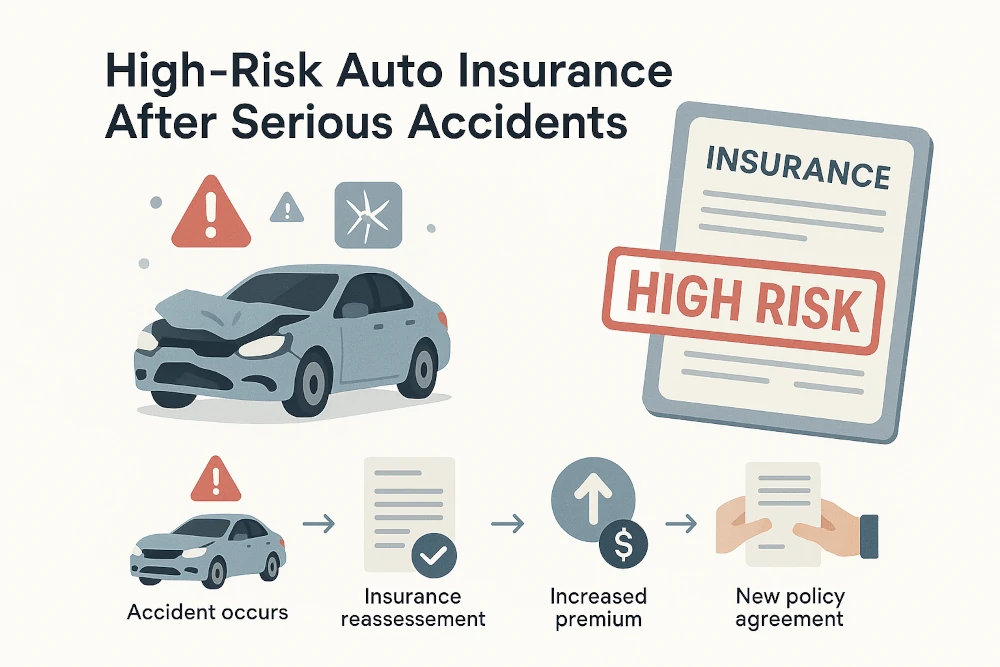
Drivers may experience premium increases that feel disproportionate, especially when combined with prior tickets or claims tied to their automobile history. Even one speeding ticket after an accident can further limit options. Insurance companies review patterns, not just isolated events, so repeated issues across multiple cars or policies carry added weight when determining eligibility.
Rate changes can also affect deductible choices, coverage limits, and access to certain plans. Some drivers may be shifted into non-standard markets with fewer customization options compared to policies offered by top-rated companies. IIS Insurance Services helps drivers review these changes in context, comparing car insurance policies across multiple carriers. This approach allows drivers to identify where savings may still exist and avoid paying for coverage that does not fit their situation or driving needs.
Why High-Risk Drivers Face Added Challenges in California
California’s insurance regulations are designed to protect consumers, but they can also narrow options for high-risk drivers. Insurers must comply with strict underwriting rules, and many carriers limit how many high-risk policies they accept to control overall risk. As a result, insurance rates are often higher, and insurance premiums can go up quickly after a serious incident. Drivers may also find fewer companies willing to offer automobile insurance under standard terms, especially when prior claims or violations appear on a driving record.
High-risk drivers may face mandatory SR-22 filings, shorter policy periods, or closer renewal reviews. Missed payments or coverage lapses can worsen the situation, leading to additional penalties or license complications. While some articles and consumer resources reference options like accident forgiveness, these features are often unavailable once a driver is classified as high-risk.
For drivers who rely on their cars for work, including delivery services or business travel, these disruptions can affect income and daily responsibilities. Small business owners face added exposure when company vehicles or employee drivers are involved. Maintaining a compliant insurance plan becomes even more important when multiple automobiles are tied to one policy. IIS Insurance Services works within California’s regulatory framework, using underwriting data and practical resources to identify insurers that still offer workable solutions, helping drivers remain insured while avoiding unnecessary administrative setbacks or coverage gaps.
Affordable Coverage Options for High-Risk Auto Needs
Affordable auto insurance remains possible for high-risk drivers when coverage is structured with intention. The goal is to balance legal compliance, meaningful protection, and cost control without unnecessary extras that increase premiums. Rather than relying on generic offers, IIS Insurance Services approaches each insurance plan with a clear understanding of how insurers price risk and where flexibility may still exist.
Coverage strategies often begin with reviewing liability limits to ensure they meet California requirements without exceeding what is necessary for a given automobile or driving pattern. Deductibles are evaluated carefully, since higher deductibles can reduce premiums but may create financial strain after a claim. Identifying carriers that regularly insure higher-risk drivers is another important step, as these companies often design policies differently than standard markets.
Some insurers also account for recent improvements in driving behavior. Completing approved traffic courses, maintaining continuous coverage, or avoiding new violations can influence insurance rates at renewal. These adjustments are based on underwriting data that reflects current behavior rather than past mistakes alone.
Ongoing policy reviews are equally important. As a driving record improves, new coverage options may become available, including access to more competitive pricing from broader carrier networks. IIS Insurance Services helps drivers track these changes, compare updated plans, and reassess coverage regularly. This proactive approach supports long-term affordability while keeping cars legally insured throughout every stage of recovery after a serious accident.
Comparing High-Risk Auto Insurance Providers and Getting a Quote
When you are classified as a high-risk driver in California, comparing auto insurance providers becomes an important step toward controlling costs and maintaining legal coverage. Insurance companies evaluate risk differently, which means pricing, eligibility, and policy structure can vary widely even when coverage levels appear similar. Drivers with serious accidents, multiple claims, or recent violations often see noticeable differences between quotes, even for policies that meet the same state requirements.
Each insurance provider applies its own underwriting criteria when reviewing high-risk drivers. Factors such as driving history, vehicle usage, prior coverage consistency, and claim patterns all influence how a policy is structured. Some insurers focus on state-minimum coverage for compliance, while others offer broader options depending on the driver’s profile. Because no single approach works for every situation, reviewing options side by side helps clarify what is actually being offered and why prices differ.
High-risk auto insurance quotes are influenced by several factors beyond the accident itself. Insurers consider how recent the accident was, whether injuries were involved, how many claims appear on your driving record, and whether coverage has remained active without lapses. Vehicle type, annual mileage, and business use can also affect pricing and availability. Some drivers qualify for adjusted plans designed around minimum requirements, while others need additional protection due to financing terms or employer obligations.
IIS Insurance Services helps drivers sort through these variables without the frustration of repeated applications. Agents review your driving record, explain how insurers weigh risk, and identify coverage options that meet California requirements. This process helps drivers understand pricing differences, avoid unnecessary coverage gaps, and move forward with confidence when selecting a policy.
Request a Free High-Risk Car Insurance Quote From IIS Insurance Services
If you need auto insurance after a serious accident, working with the right agency can make the process clearer and faster. IIS Insurance Services specializes in helping California drivers secure coverage when options feel limited. Whether you need an SR-22 filing, a policy review, or help comparing high-risk auto insurance quotes, experienced agents are available to guide you through each step.
IIS Insurance Services focuses on practical coverage solutions that meet legal requirements while respecting your budget. Drivers receive clear explanations, responsive support, and access to insurers that accept higher-risk profiles. To review your options and see what coverage is available for your situation, contact IIS Insurance Services and request your personalized quote today.