

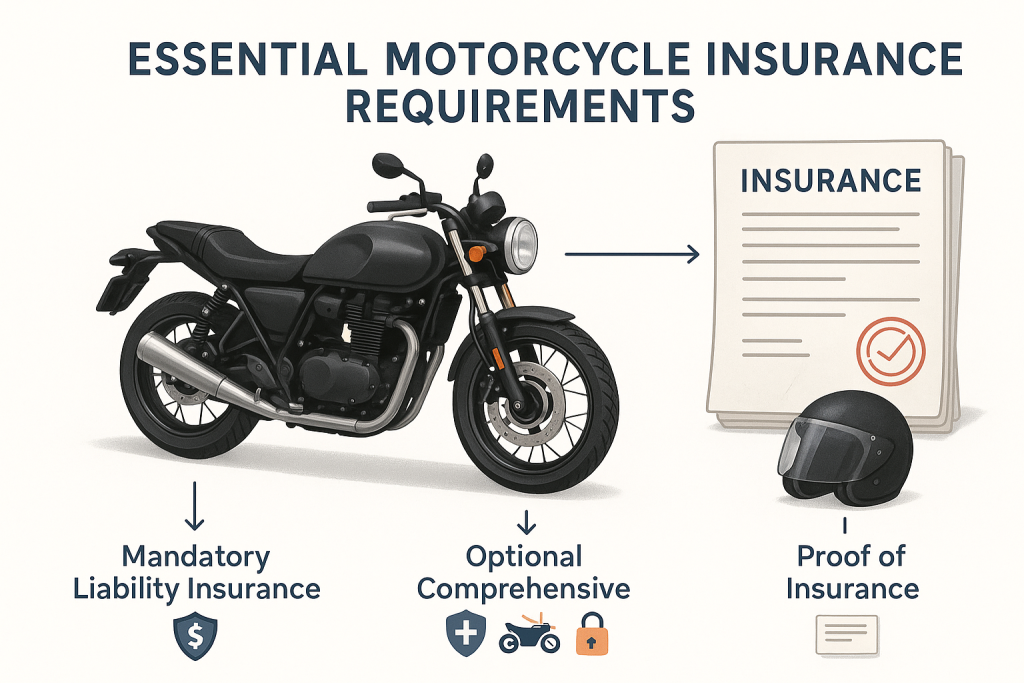
Motorcycle riders across the United States are required to meet specific insurance standards before riding on public roads. These rules exist to protect riders, passengers, and other drivers if an accident occurs. While the experience of riding may feel personal and independent, insurance laws apply the moment a motorcycle is registered or operated on public streets.
Motorcycle insurance legal requirements vary by state. Some states mandate liability insurance for all riders, while others allow alternatives such as proof of financial responsibility. Understanding what your state requires helps you avoid penalties, registration issues, and coverage gaps that can create serious financial exposure after an accident.
IIS Insurance Services helps riders understand how insurance law applies to motorcycles, how state rules differ, and how to choose coverage that satisfies legal obligations while staying affordable.
Motorcycle Insurance Legal Requirements Explained
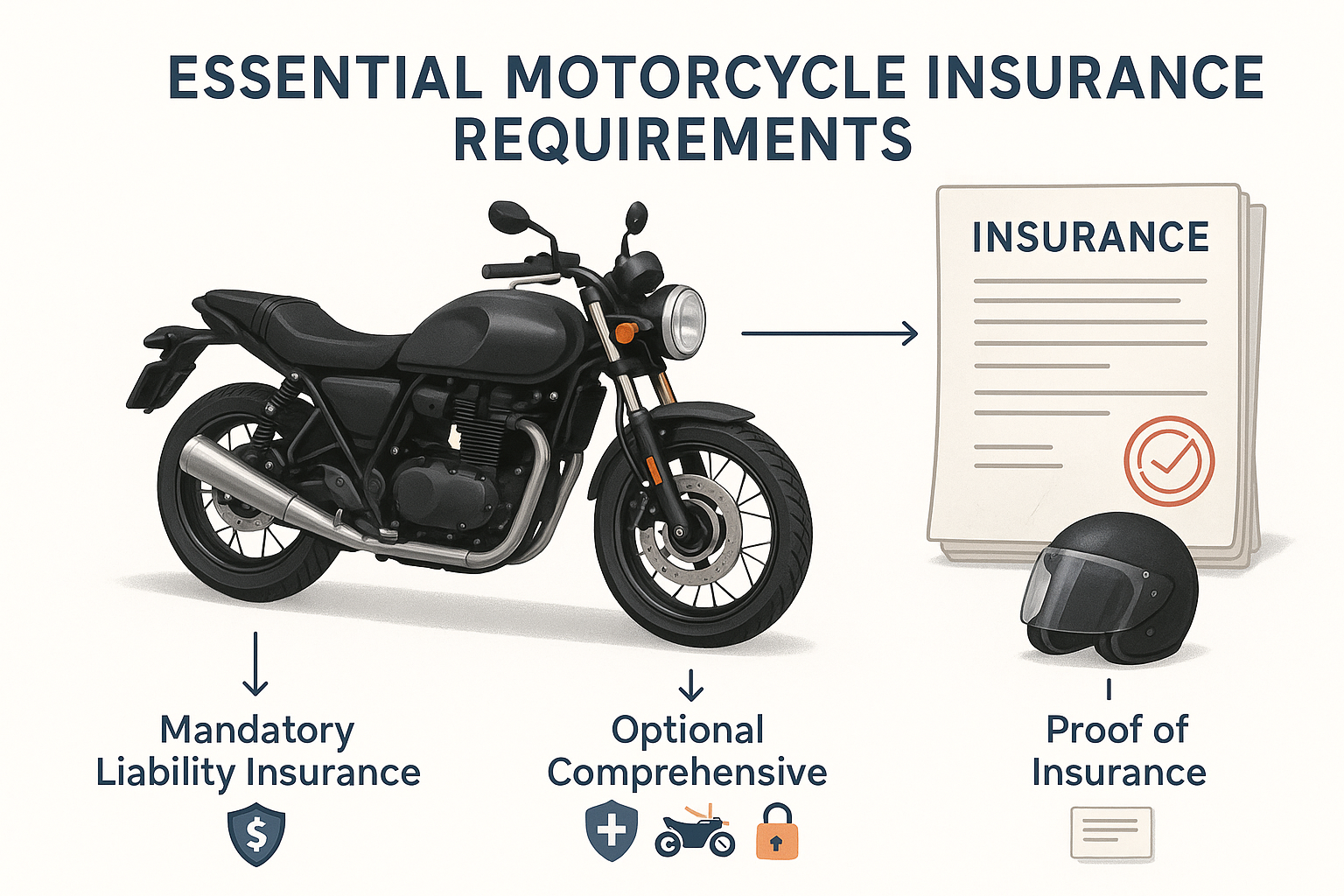
Most states require motorcycle owners to carry insurance that meets minimum liability standards. Liability coverage pays for injuries or property damage caused to others when the rider is found at fault in an accident. Even in states with flexible rules, riders must still demonstrate financial responsibility.
Across the country, motorcycle insurance requirements exist to ensure that anyone operating a motorcycle can cover damages they cause. While car insurance laws often influence motorcycle rules, motorcycle coverage operates under its own set of regulations and minimums.
Motorcycle requirements vary significantly. Some states enforce strict liability insurance laws, while others allow riders to post bonds or self-insure under limited circumstances. Riders should always verify their state law before registering or operating a motorcycle.
Failing to meet insurance requirements can result in license suspension, registration cancellation, fines, or long-term legal consequences. Insurance compliance protects both your legal standing and your financial stability.
How State Law Shapes Motorcycle Insurance Coverage
Every state sets its own motorcycle insurance standards. These laws define what coverage is required, how proof of insurance must be shown, and what penalties apply for noncompliance.
Most states require motorcycle riders to carry liability insurance with set liability limits. These limits represent the maximum amount the insurance company will pay after an accident. States establish these limits to ensure minimum protection for injured parties.
Some states require uninsured motorist coverage, while others make it optional. A few states permit riders to show financial responsibility through cash deposits or bonds rather than purchasing a motorcycle insurance policy.
Because motorcycle insurance laws differ, riders traveling across state lines should maintain coverage that satisfies multiple state requirements. A policy that meets one state’s minimum may not meet another’s if an accident occurs outside the rider’s home state.
IIS Insurance Services helps riders confirm state requirements, understand how those laws apply to their riding habits, and maintain coverage that stays valid across jurisdictions.
Minimum Liability Coverage and Liability Limits
Liability coverage forms the foundation of most motorcycle insurance policies. It pays for bodily injury and property damage when the insured rider causes an accident. State minimum liability requirements define the lowest acceptable coverage amounts.
Liability limits are usually expressed as three numbers. These reflect injury coverage per person, total injury coverage per accident, and property damage coverage. State minimum limits are designed to offer baseline protection, but they may not cover the full cost of serious accidents.
Medical bills, vehicle repairs, and legal claims often exceed minimum limits. Riders who rely only on minimum coverage risk paying out of pocket when damages surpass policy limits. This exposure can follow riders for years through lawsuits or wage garnishment.
Many states require liability insurance to register a motorcycle. Proof of insurance must remain active for the duration of ownership or operation. Insurance lapses can lead to fines or license action.
IIS Insurance Services reviews liability limits with riders to help balance legal compliance with realistic accident costs.
What Makes a Motorcycle Insurance Policy Compliant
A compliant motorcycle insurance policy meets all state insurance requirements and remains active without coverage gaps. Compliance depends on the type of coverage carried, the limits selected, and the accuracy of the rider’s information.
To remain compliant, riders must:
-
Carry liability coverage that meets state minimum limits
-
Maintain active coverage without lapses
-
Provide accurate vehicle and rider information
-
Keep proof of insurance available when required
Insurance companies file coverage details with state agencies in many states. If a policy is canceled or lapses, the state may suspend registration or driving privileges automatically.
A compliant policy also reflects how the motorcycle is used. Commuters, seasonal riders, and occasional riders may face different rating factors. Proper classification helps avoid claim denials or policy issues later.
IIS Insurance Services works with riders to structure policies that meet legal standards while fitting real riding patterns.
Staying Protected Beyond Legal Minimums
While meeting legal requirements keeps riders compliant, additional coverage options help protect against financial loss after an accident. Motorcycle accidents often result in injuries that exceed minimum liability limits.
Optional coverage may include:
-
Uninsured or underinsured motorist coverage
-
Medical payments coverage
-
Comprehensive coverage for theft or weather damage
-
Collision coverage for bike repairs
Uninsured motorist coverage can be especially important in states with high numbers of uninsured drivers. If another driver causes an accident and lacks insurance, this coverage helps cover injuries and damages.
Motorcycle insurance differs from health insurance. Medical expenses from an accident may not be fully covered by health plans, especially for ongoing care. Insurance tailored to motorcycle risks fills these gaps.
IIS Insurance Services helps riders assess coverage options without adding unnecessary costs.
Get Help With Motorcycle Insurance Compliance
Motorcycle insurance laws can be difficult to navigate without guidance. State rules change, coverage options vary, and minimum limits may not reflect real accident costs.
IIS Insurance Services helps riders understand motorcycle insurance legal requirements, compare coverage options, and maintain compliant policies. Whether you are registering a motorcycle, updating coverage, or reviewing liability limits, experienced guidance helps avoid costly mistakes.
Speak with IIS Insurance Services today to confirm your coverage meets state law and supports safe, confident riding.