

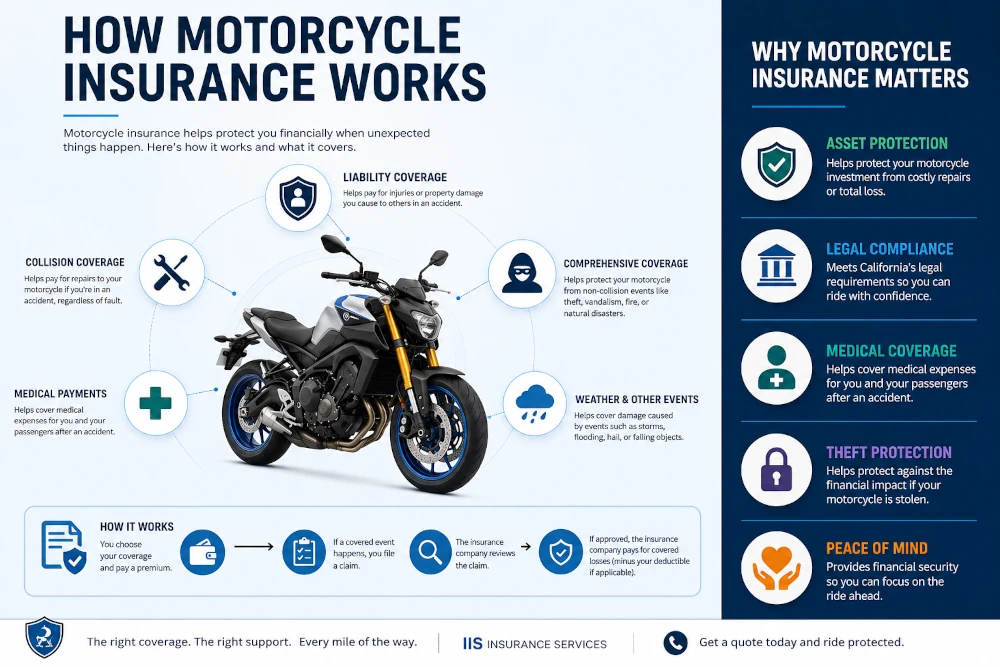
Motorcycle insurance can feel confusing, especially for new riders or drivers switching from cars to bikes. Policies use unfamiliar terms, coverage types vary, and costs can shift based on factors that are not always obvious. Understanding how motorcycle insurance works helps riders make confident decisions before an accident, not after one.
A motorcycle insurance policy is designed to manage financial risk when damage, theft, or injury occurs. It outlines what the insurance company pays, what the rider pays, and how claims are handled. Knowing these basics helps riders avoid coverage gaps and unexpected expenses.
IIS Insurance Services helps California riders understand motorcycle insurance in clear, practical terms so coverage decisions are based on real use and real risk.
What Motorcycle Insurance Is and What It Does
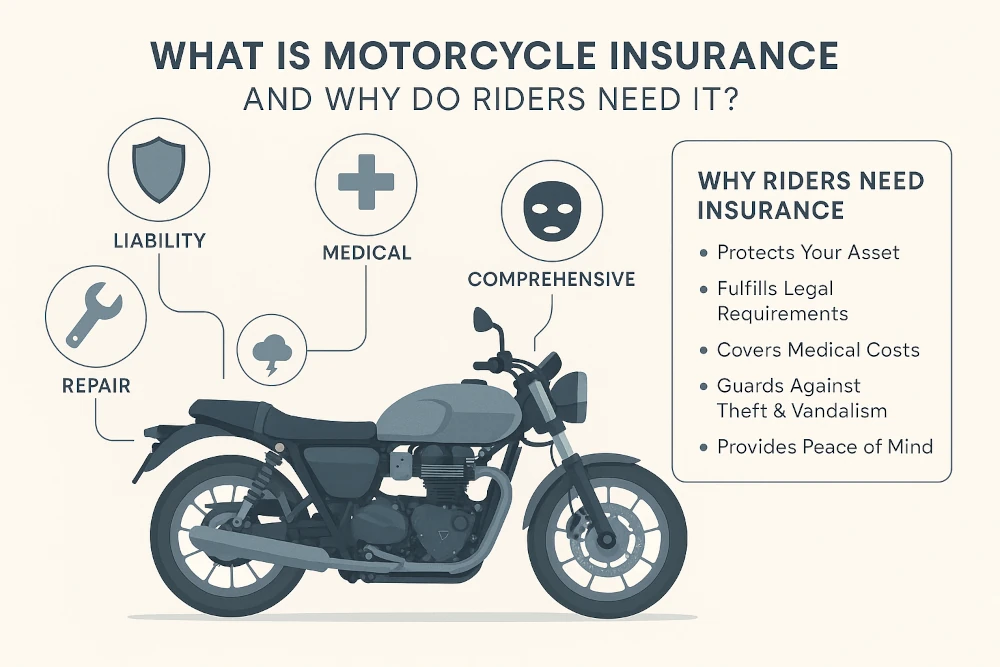
Motorcycle insurance is a contract between a rider and an insurance company. In exchange for a premium, the insurer agrees to provide coverage for specific losses defined in the policy. These losses may include damage to property, injuries to others, or loss of the motorcycle due to theft or certain events.
Most policies include liability insurance, which addresses harm caused to others. Additional coverages may protect the motorcycle itself or help with medical expenses. The structure of the policy determines how protection applies in different situations.
Motorcycle insurance serves two purposes. It satisfies legal insurance requirements and provides financial protection when something goes wrong. Understanding both roles is essential when selecting coverage.
How Motorcycle Insurance Works After an Accident
After an accident, motorcycle insurance works by applying the coverages listed in the policy. The first step is reporting the claim to the insurance company. Details such as the accident location, involved parties, and damage are reviewed.
If the rider is at fault, liability insurance applies. It helps pay for injuries or property damage suffered by others. If the policy includes collision coverage, repairs to the motorcycle may also be covered, subject to the deductible.
If another party is at fault, their liability insurance may pay for damages. In cases involving uninsured drivers, uninsured motorist coverage may apply if included in the policy.
The insurance company evaluates fault, coverage limits, and damages before issuing payment. IIS Insurance Services assists riders throughout this process to reduce confusion and delays.
Motorcycle Liability Insurance Explained
Motorcycle liability insurance is the foundation of most policies. It covers injuries and property damage caused to others when the rider is responsible for an accident.
Liability insurance includes two main components. Bodily injury liability addresses medical expenses, lost income, and legal claims related to injured parties. Property damage liability covers repair or replacement costs for vehicles or other property.
Liability insurance does not pay for damage to the rider’s own motorcycle or injuries to the rider. Its purpose is to protect against third-party claims.
California law requires riders to carry liability insurance that meets minimum limits. Many riders choose higher limits to reduce personal financial exposure.
Understanding Motorcycle Coverage Options
Beyond liability insurance, motorcycle policies may include several optional coverages. Each option addresses a specific type of risk.
Collision coverage pays for repairs to the motorcycle after an accident, regardless of fault. Comprehensive coverage protects against non-collision events such as theft, vandalism, fire, or weather damage. Medical payments coverage may help pay for treatment costs following an accident.
Uninsured motorist coverage applies when another driver causes an accident but lacks sufficient insurance. This coverage can be important given the number of uninsured drivers on the road.
Choosing motorcycle coverage depends on bike value, riding frequency, and financial tolerance for repairs or medical costs. IIS Insurance Services helps riders evaluate these options based on real riding habits.
How Deductibles and Payments Work
A deductible is the amount the rider pays out of pocket before insurance coverage applies. For example, if repairs cost five thousand dollars and the deductible is five hundred dollars, the insurance company pays the remaining balance.
Higher deductibles usually result in lower insurance premiums. Lower deductibles increase premiums but reduce out-of-pocket costs after a claim. Selecting a deductible involves balancing monthly cost and financial readiness for repairs.
Liability insurance does not use deductibles because it pays claims to others. Deductibles apply to collision and comprehensive coverage.
Understanding deductibles helps riders anticipate the amount they will pay if a claim occurs.
What Motorcycle Insurance Covers and What It Does Not
Motorcycle insurance covers specific events listed in the policy. Covered events may include accidents, theft, vandalism, and certain types of damage.
Insurance typically does not cover normal wear, mechanical failure, or damage from improper use. Riding without permission or using the motorcycle for undisclosed business purposes may also void coverage.
Personal items damaged during an accident may not be covered unless added separately. Custom parts and accessories often require additional endorsements.
Reviewing policy exclusions helps riders avoid assumptions about coverage. IIS Insurance Services walks riders through these details before a loss occurs.
How Insurance Companies Calculate Motorcycle Rates
Insurance companies use several factors to calculate motorcycle insurance rates. These factors help estimate the likelihood and cost of future claims. Common factors include rider age, driving history, motorcycle type, engine size, location, and annual mileage. Sport motorcycles often carry higher rates due to increased accident severity.
Coverage selections also influence rates. Higher liability limits and lower deductibles increase premiums. Discounts may apply for safety courses, bundled policies, or claim-free records.
Comparing quotes from different insurance companies helps riders find competitive rates. IIS Insurance Services assists with comparisons and discount opportunities.
Insurance Requirements for California Riders
California requires motorcycle riders to carry liability insurance that meets state minimum limits. Proof of insurance is required for registration and lawful operation. Failure to carry insurance can result in fines, registration suspension, or impoundment. Insurance requirements exist to ensure that riders can cover damages they cause.
While meeting minimum requirements satisfies the law, minimum limits may not reflect actual accident costs. Riders should consider higher limits based on personal exposure.
IIS Insurance Services helps riders meet legal requirements while tailoring coverage for real-world risk.
Filing a Motorcycle Insurance Claim
Filing a claim starts with notifying the insurance company as soon as possible. Riders should provide accurate details and documentation such as photos, reports, and contact information.
Avoid speculating about fault during initial reporting. Insurance companies determine fault based on evidence and investigations. Claims may involve inspections, repair estimates, and medical documentation. Clear communication helps move the process forward.
IIS Insurance Services provides guidance during claims to help riders understand the next steps and coverage application.
Common Misunderstandings About Motorcycle Insurance
Many riders assume motorcycle insurance works the same way as auto insurance. While similar in structure, motorcycle policies account for different risks. Another common misunderstanding is believing liability insurance covers personal injuries or bike repairs. Those losses require separate coverage.
Some riders believe coverage automatically applies across all uses. Undisclosed business or racing use may not be covered.
Clarifying these points before purchasing a policy helps avoid denied claims later.
Choosing the Right Motorcycle Insurance Policy
Choosing the right policy involves more than selecting the lowest price. Riders should consider how and how often they ride, the value of the motorcycle, and their financial tolerance for risk. A policy should align with legal requirements and personal circumstances. Reviewing coverage annually helps ensure continued fit as riding habits change.
Working with an experienced agency simplifies this process. IIS Insurance Services provides personalized guidance to help riders choose coverage that supports both compliance and protection.
Get Help Understanding How Motorcycle Insurance Works
Understanding how motorcycle insurance works puts riders in control of their protection. Clear knowledge helps riders manage risk, budget effectively, and respond confidently after an accident.
IIS Insurance Services helps California riders understand motorcycle insurance policies, coverage options, and claims processes. Whether reviewing an existing policy or purchasing new coverage, expert guidance reduces uncertainty.
If you have questions about motorcycle insurance or want help selecting coverage that fits your riding lifestyle, contact IIS Insurance Services for clear answers and personalized support.