


Driving in another country can be a practical way to get around, handle daily needs, or commute while traveling or living abroad. For international drivers, understanding driving laws for international drivers, local permit rules, and insurance requirements helps reduce the risk of delays, fines, or coverage gaps. Laws vary widely by country, and requirements can change based on visa status, length of stay, and vehicle type. Clear preparation supports smoother travel and fewer complications at checkpoints or after an incident.
IIS Insurance Services works with travelers, students, expats, and business visitors who need clear guidance on international driving rules, documentation, and insurance options that align with local regulations and practical use abroad.
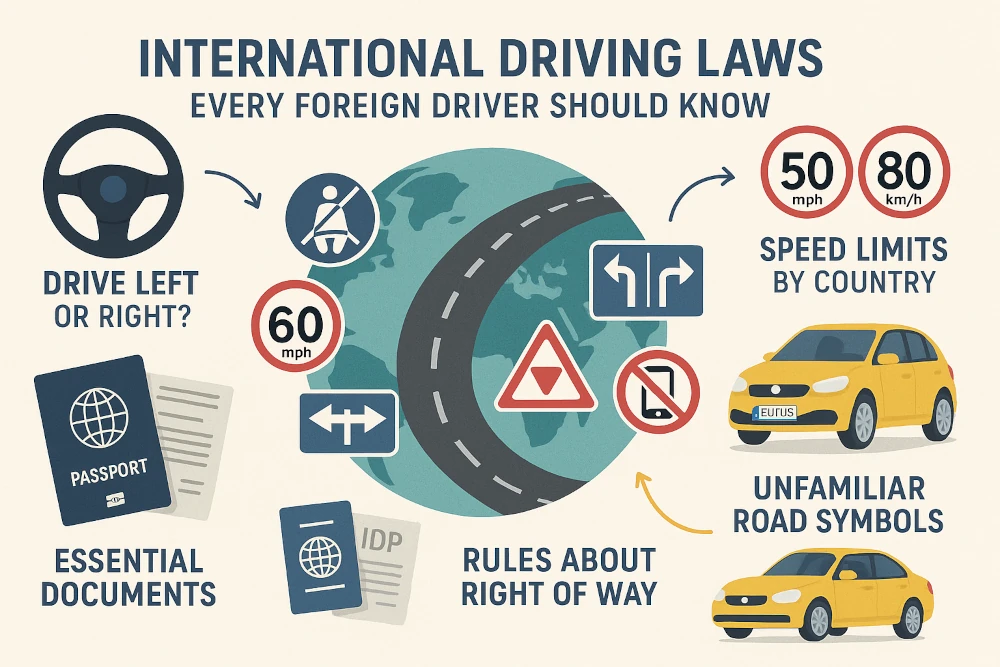
Understanding Driving Laws for International Drivers
Driving laws for international drivers are set by each country and enforced at the national or regional level. While many countries allow visitors to drive using a foreign driver’s license, this permission is often limited by time, purpose of stay, or documentation requirements.
In many cases, your valid foreign driver's license allows you to drive temporarily, but only when paired with additional identification. Some countries require an official translation of your license, while others accept an international driving permit as proof that your license is valid.
An international driving permit is not a standalone license. It works as a recognized translation of your existing license and helps local authorities verify your driving eligibility. Without it, foreign drivers may face rental car restrictions, roadside penalties, or delays during traffic stops.
Driving laws also differ in areas such as speed limits, road signage, right of way rules, and required safety equipment. Even countries with similar traffic systems may enforce rules differently. For international drivers, reviewing country-specific regulations before driving is one of the simplest ways to avoid legal trouble.
IIS Insurance Services encourages international drivers to confirm license recognition, permit requirements, and insurance rules before driving abroad. Preparation helps reduce stress and supports safer driving experiences.
International Driving Permit Requirements and Required Documents
An international driving permit is commonly required when driving abroad, especially when local authorities cannot easily read or verify your foreign license. While not every country requires an IDP, many strongly recommend it.
When driving internationally, foreign drivers should carry the following documents at all times:
- A valid foreign driver’s license issued by your home country
- An international driving permit, when required
- Passport or government issued identification
- Proof of insurance that is valid in the country where you drive
Your international driving permit is issued by an authorized office, such as AAA or a designated automobile association. It confirms that your license is valid and translates your driving credentials into multiple languages.
Some countries require both your license and IDP to be carried together. Others may accept your state driver’s license for a limited time but require an IDP for longer stays. Rental agencies often request an international driving permit even when local law does not strictly require one.
Foreign drivers should also understand that learner permit holders are usually not eligible to drive abroad. A learner permit does not qualify as a full license and may not be accepted internationally.
Before driving, confirm whether your destination country requires an IDP, recognizes your foreign license, or imposes additional rules for international drivers. IIS Insurance Services can help clarify insurance and documentation requirements tied to your travel plans.
How to Obtain an International Driving Permit
Obtaining an international driving permit is a straightforward process when completed through an authorized office. In the United States, IDPs are issued through approved organizations, not directly by the DMV.
To apply for an international driving permit, you typically need:
- A valid foreign or state issued driver’s license
- Completed IDP application form
- Passport-sized photos
- Processing fee
Permit driver applicants must hold a full license. Students or citizens with a learner permit are not eligible. Once issued, your IDP is valid for a limited period and must be renewed if it expires.
The IDP is issued quickly in most cases and can often be obtained before travel without long wait times. Drivers should never rely on online sellers that are not government authorized, as unofficial permits are not legally recognized.
When traveling, always carry your international driving permit and your original license together. Authorities may ask to see both documents during routine checks or traffic stops.
IIS Insurance Services recommends securing your IDP well before departure and reviewing insurance coverage at the same time. This approach ensures both documents align with your destination’s legal and insurance standards.
Driving Abroad in Canada, Mexico, and Other Countries
Driving abroad often feels familiar, but important differences exist between countries. Canada and Mexico are common destinations for international drivers, and both have specific rules that travelers should understand.
In Canada, many international drivers can use their foreign license for short stays, but an international driving permit may be required depending on the province. Traffic laws are enforced strictly, and violations can result in fines or license restrictions. Seat belts, speed limits, and mobile phone restrictions are enforced nationwide.
Mexico requires proof of valid insurance issued by a recognized provider. Many U.S. auto policies do not extend coverage into Mexico, even if the vehicle itself is permitted. Drivers stopped without proper insurance may face fines or vehicle impoundment.
Other countries may impose additional requirements such as reflective vests, warning triangles, or specific equipment that must be carried in the vehicle. Failure to comply can result in penalties even if no accident occurs.
Before driving abroad, review the following:
- Whether your foreign license is recognized
- Whether an international driving permit is required
- Minimum insurance coverage laws
- Required safety equipment
- Local traffic enforcement practices
IIS Insurance Services works with international drivers to review insurance gaps and identify affordable coverage options that meet local requirements.
Our post on insurance companies that accept an international driver's license explains what an insurance company looks at on a foreign license before it quotes.
Insurance Considerations and Safe Driving Tips for International Drivers
Insurance is a critical part of legal driving abroad. Even if your license and permit are valid, driving without proper insurance can lead to serious financial and legal consequences.
International drivers should never assume their existing auto insurance applies overseas. Coverage often varies by country, and exclusions are common. Confirm coverage details before driving.
Safe driving also requires awareness of local habits and enforcement. Traffic patterns, signage, and driving culture differ widely. Adjusting your driving style and staying alert helps reduce risk.
Helpful safety practices include:
- Carry all required documents while driving
- Follow posted speed limits and signage
- Avoid using mobile devices while driving
- Understand local accident reporting procedures
- Keep emergency contact information accessible
IIS Insurance Services supports international drivers by explaining coverage options in clear terms and helping travelers stay compliant. Whether you are visiting short term or planning an extended stay, proper insurance and preparation help protect you on the road.
If you need assistance reviewing coverage or understanding international driving requirements, IIS Insurance Services is available to help you make informed decisions before you drive.