

After an accident without insurance in California, a suspended license can leave you wondering whether an SR-22 will get you back on the road and what else the DMV expects. The answer depends on your suspension notice, the accident report, and whether you need an owner or non-owner policy. Our page on SR-22 insurance in California covers filing and pricing in general. This post is about the uninsured accident case: how the suspension works, how to get your license back early, and how to keep your SR-22 on file.
SR22 After Accident Without Insurance California: What California Law and Your DMV Notice Require
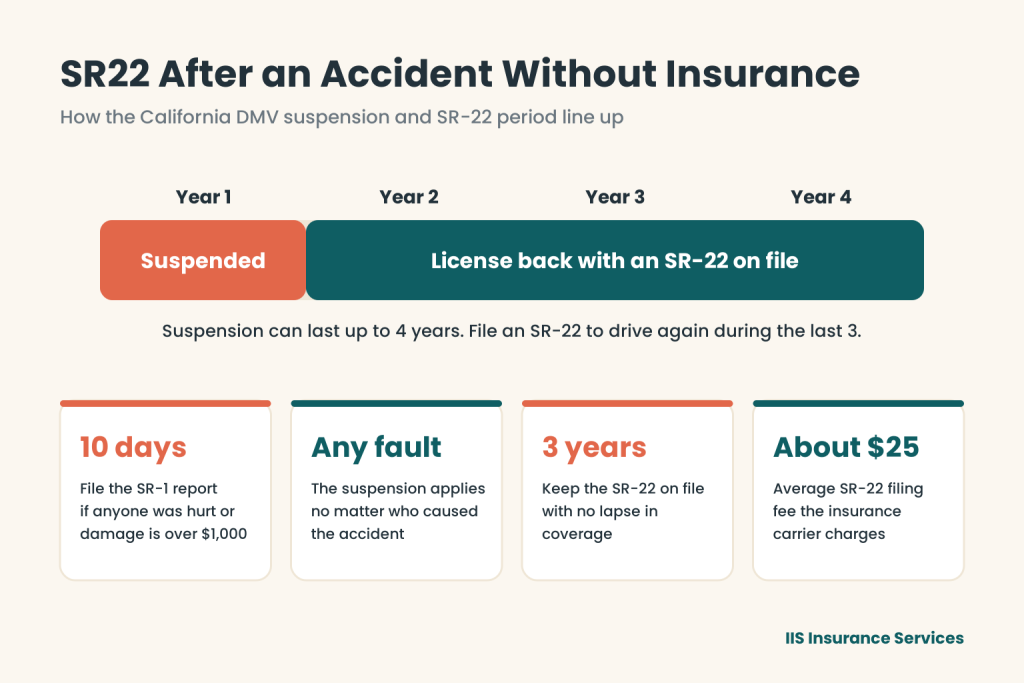
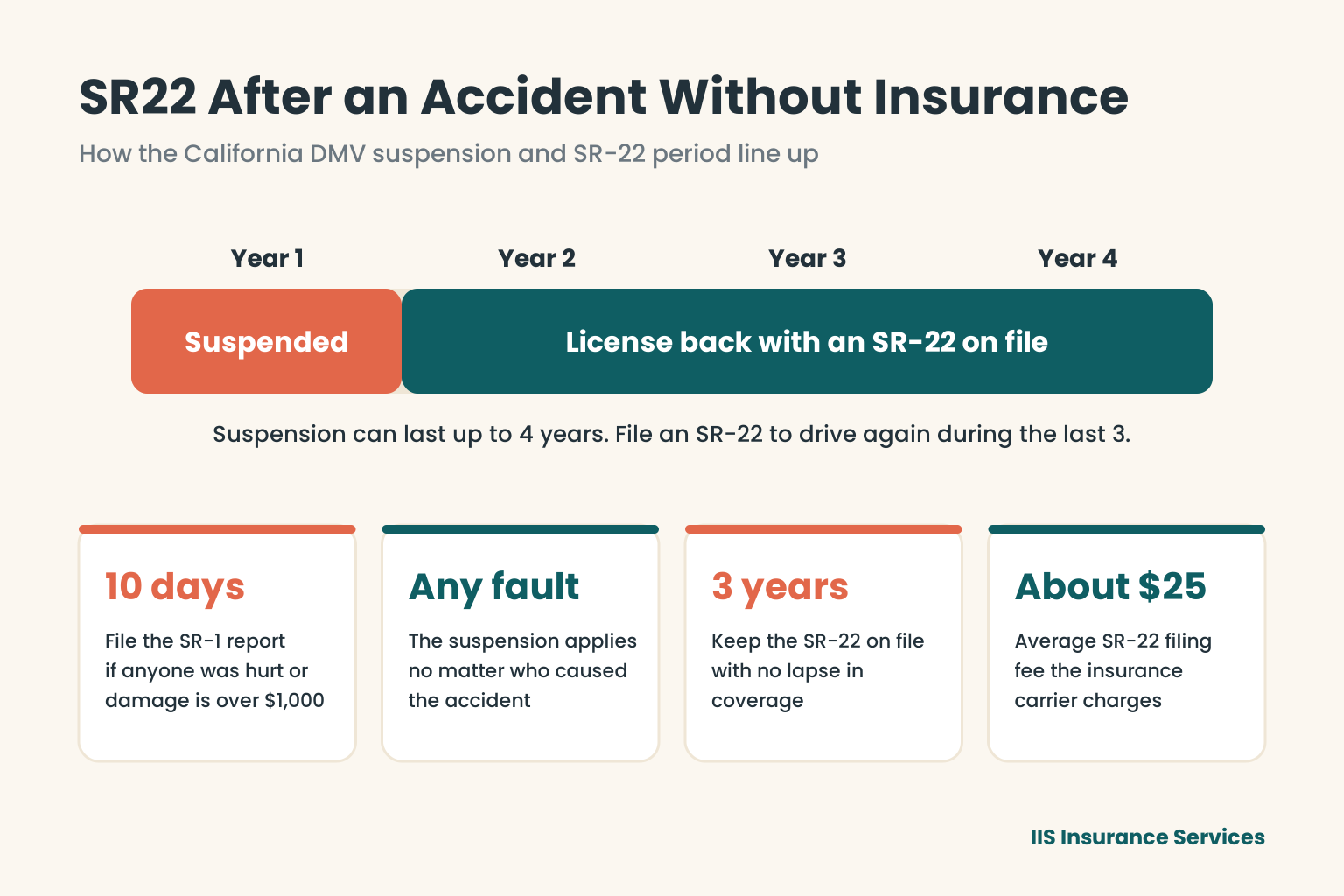
California law requires every driver to maintain financial responsibility, which for most people means auto liability insurance, and to show proof of that coverage when asked. If a collision caused any injury or death, or more than $1,000 in property damage, an SR-1 accident report is due to the DMV within 10 days. That applies whether or not you caused the accident.
The SR-1 asks for your insurance information. If you were driving without insurance, the DMV will suspend your driver license, and the fault doesn’t matter. The suspension can last up to four years. The good news is that you don’t have to sit out all four. You can get your license back during the last three years of the suspension if you file an SR-22 and keep it on file for three years.
If the other driver was hurt or their car was damaged, they or their auto insurance company may also come after you for the cost. That is a separate matter from the DMV suspension, and an unpaid judgment can keep your license suspended until it is resolved.
Your notice from the California DMV is the document that matters the most. It should show the suspension date, your hearing rights, and what you need to do to restore your license. Read it before you call anyone, and keep it nearby when you get a quote. You can always contact us and we will be more than happy to explain your options.
An SR-22 is not insurance by itself. It is a certificate your insurance carrier files with the DMV electronically to confirm that a qualifying auto liability insurance policy is in force, with at least California’s minimum limits: $30,000 per person and $60,000 per accident for injuries, and $15,000 for property damage.
| Item | What it means | What to do |
|---|---|---|
| SR-1 accident report | Due within 10 days if anyone was hurt or damage is over $1,000, no matter who was at fault | File it with the DMV on time |
| License suspension | Up to 4 years for driving without insurance, regardless of fault | Don’t drive while suspended |
| Early reinstatement | Possible during the last 3 years of the suspension | Get an SR-22 policy and have it filed |
| SR-22 period | Kept on file for 3 years | Keep the policy active with no lapses |
| DMV notice | Lists dates, hearing rights, and requirements | Read it carefully and keep a copy |
Driving without insurance is a different case from a DUI, which carries its own DMV and court requirements. If that is your situation, read our post on SR22 after DUI in California. In both cases, the first step is the same: make sure not to drive while your license is suspended, get the required coverage, and make sure the DMV has your SR-22 before you apply for reinstatement.
DMV Filing and Reinstatement Steps for an Uninsured Driver
The DMV process can feel more complicated than it is. The first step is to confirm exactly what the DMV requires: the reason for the suspension, the filing it wants, and the date your driving privilege can be restored.
- Read your DMV notice for the suspension date, hearing rights, and reinstatement requirements.
- Make sure the SR-1 was filed within 10 days.
- Choose an owner or non-owner policy that matches your situation.
- Start the policy. The insurance carrier files the SR-22 with the DMV, usually the same day.
- Pay the DMV reinstatement fee and complete any other conditions on your notice.
- Keep the policy active, with no lapses, for the full three years.
The SR-22 doesn’t clear every suspension reason. It takes care of the insurance part. You may also need to pay a reinstatement fee, resolve a court matter, or handle a judgment from the accident if the other driver’s damages haven’t been paid. Your DMV notice lists what applies to you.
Keeping the policy active matters just as much as getting it filed. If the policy cancels, the insurance company notifies the DMV, and your license can be suspended again. If you switch insurance companies, the new company has to file its SR-22 before the old policy ends. Otherwise the DMV sees a lapse.
Owner and Non-Owner Insurance Options, Regular Coverage and Ongoing Compliance
The first question we ask is simple: do you own a car, or do you have regular access to one? The answer decides whether an owner SR-22 policy or non-owner coverage is the right starting point.
Owner policy. If you own, register, or regularly keep a car, the insurance carrier files the SR-22 on your car insurance policy and insures the car at the same time. Depending on the car and your lender, regular insurance can also include collision, comprehensive, and uninsured motorist coverage. After an uninsured accident, uninsured motorist coverage is worth a look, because it protects you if the other driver has no insurance.
Non-owner policy. If you don’t own a vehicle and don’t have regular access to one, a non-owner SR-22 policy meets the DMV requirement and gives you liability coverage when you borrow or rent a car. It doesn’t insure a car you own or one you drive every day. If your living situation or access to a car changes, tell us before you assume the policy still fits. Non-owner policies are usually the least expensive option.
Motorcycle owners. The companies we work with don’t file SR-22s on motorcycle policies. If you ride a motorcycle, you would carry a non-owner SR-22 for the DMV and a separate motorcycle insurance policy for the bike.
What an SR-22 Costs After an Uninsured Accident
Your price depends on your driving record, where you live in California, the limits you choose, the vehicle for an owner policy, and each insurance company’s rules. The accident and the gap in coverage are what raise the premium, not the filing itself. When you compare quotes, look at three separate costs:
- The policy premium
- The SR-22 filing fee the insurance carrier charges, about $25 on average
- The agency’s broker fee
Most SR-22 agencies charge a broker fee, and it has to be disclosed to you in writing. IIS Insurance Services charges broker fees too, but we never turn anyone away, and we lower or waive the fee for people going through a tough time.
Frequently Asked Questions
Do I need an SR-22 after an accident without insurance in California?
If the DMV suspended your license for driving without insurance, yes. An SR-22 is how you get your license back during the last three years of the suspension. Your DMV notice confirms what applies to you.
How long is my license suspended for an accident without insurance?
Up to four years, regardless of who was at fault. You can get it back during the last three years if you file an SR-22 and keep it on file for three years.
Do I have to report a California accident to the DMV?
Yes, with an SR-1 report within 10 days if anyone was injured or killed or the damage is over $1,000, no matter who caused the accident.
Can I get a non-owner SR-22 policy if I don’t own a car?
Yes. A non-owner SR-22 meets the DMV requirement and covers you when you borrow or rent a car. It doesn’t cover a car you own.
Get Your SR-22 Filed Today
Call IIS Insurance Services at (877) 210-9514. We review your DMV notice with you, compare insurance companies that accept drivers after an uninsured accident, and have the SR-22 filed with the DMV, usually the same day. We have been placing SR-22 cases since 2009 and can help you in seven languages. For the official rules on your case, check with the California DMV.
Reviewed by George Karapetyan, IIS Insurance Services. CA license #0E94849, agency license #0G56765. Last reviewed October 2026.