
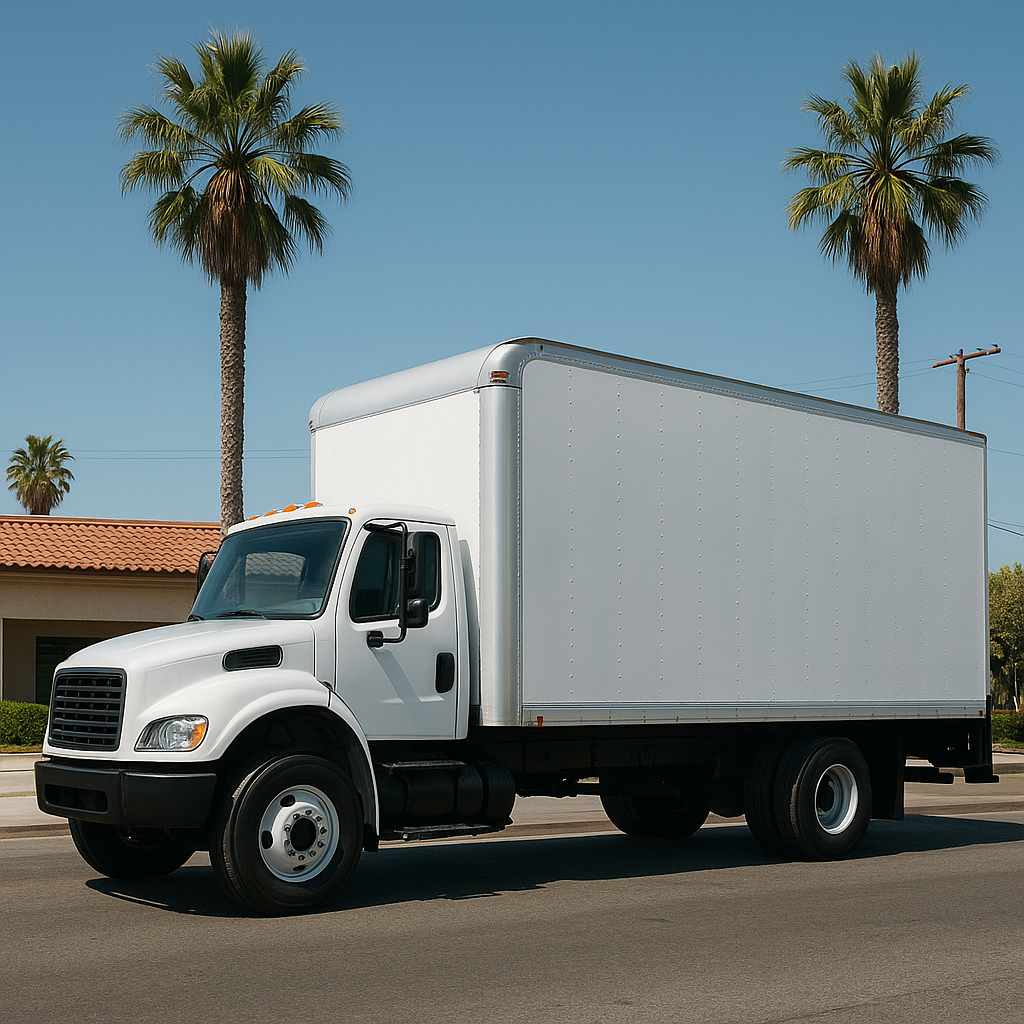
Moving Company Insurance California: Commercial Auto for Your Trucks

Get a free California auto insurance quote from IIS Insurance Services.
🔒 Secure  ·  🛡️ Licensed CA #0G56765  ·  ⭐ 4.9 (300+ reviews)
Name
Address

This site is protected by reCAPTCHA and the Google Privacy Policy and Terms of Service apply.

By clicking Submit, you agree that IIS Insurance and its agents may contact you at the phone number and email provided, including via autodialed calls, prerecorded messages, and SMS, about insurance products and quotes. Consent is not required as a condition of purchase. Message and data rates may apply. Reply STOP to opt out. See our Privacy Policy and Terms of Service.
Request your free insurance quote from IIS Insurance Services in California.

Reviewed by , Commercial Auto and Moving Company Insurance Specialist, 20+ Years Experience

CA Insurance License #0E94849 · IIS Insurance Services (CA Agency License #0G56765) · Verify license at CA DOI »

Last reviewed: October 22, 2026

Commercial Auto Insurance for Moving Companies in California

Moving company insurance in California: the basics before you call

IIS Insurance Services provides commercial auto insurance for moving companies in California. That is the policy on your trucks. It includes the liability coverage the state requires, and the insurance company files proof of it with the Bureau of Household Goods and Services so you can get and keep your mover’s permit. We also quote the cargo, general liability and workers’ compensation that go with it, so the whole program comes from one place and the certificates match.

If you have a truck and need a commercial auto quote, call (877) 210-9514 with the VIN and your drivers’ license numbers. The rest of this page explains, in plain terms, what the state asks for, what each policy does, and how a quote with us works.

Here is what IIS Insurance Services goes over with every mover before any price comes up:

  • Commercial auto insurance on the trucks comes first. It includes the liability coverage the state requires. A personal auto policy or a rideshare endorsement cannot replace it.
  • Movers who carry household goods for pay inside California need a permit from the Bureau of Household Goods and Services. The Bureau does not issue the permit until liability and cargo insurance are on file.
  • Liability minimums (Business and Professions Code 19248): $250,000 for injury or death of one person, $500,000 per accident for more than one person, and $100,000 for property damage. A $600,000 combined single limit also works.
  • Cargo insurance: at least $20,000 per shipment, on file with the Bureau before the permit is issued.
  • Workers’ compensation is required if you have employees. The Bureau wants the certificate before it issues or reinstates the permit.
  • The insurance company files the certificates with the Bureau. A policy on file cannot be canceled without 30 days’ written notice to the Bureau.
  • IIS Insurance Services handles the insurance only. We do not file the permit application, and we do not handle claims. The insurance company’s claims department does.
  • We quote and set up coverage by phone, anywhere in California. Call (877) 210-9514.

Moving company insurance California requires before a mover's permit is issued

Movers in California are licensed by the Bureau of Household Goods and Services, part of the Department of Consumer Affairs. The Bureau will not issue a permit until the insurance certificates are on file, so the insurance comes before the permit, not after. The Bureau’s application packet asks for three certificates and one bond, each in the exact legal business name on the application.

RequirementMinimumWho files itWhen
Auto liability (the Bureau calls it public liability and property damage)$250,000 per person, $500,000 per accident, $100,000 property damage, or a $600,000 combined single limitThe insurance company, by certificateBefore the permit is issued, and kept on file for as long as you hold the permit
Cargo$20,000 per shipmentThe insurance company, by certificateBefore the permit is issued
Workers’ compensationCovers all employees. If you have none, a signed statement explaining how you operate without employeesThe insurance company or the State Compensation Insurance Fund, by certificateBefore the permit is issued or reinstated
C.O.D. surety bond$2,000The surety companyOnly if you handle C.O.D. shipments

Two rules matter as much as the numbers. First, the business name on each certificate must match the application word for word, or the Bureau can reject it. Second, under Business and Professions Code 19251, a policy on file cannot be canceled without 30 days’ written notice to the Bureau. If a policy lapses, the Bureau finds out. The insurance company tells the Bureau, and a mover with no liability and cargo certificates on file cannot operate under the permit. The full text of these rules is in the Bureau’s Household Movers Act law book.

The truck list

The application includes a list of every for-hire truck you operate, including leased trucks. Service trucks, passenger cars and forklifts do not go on the list. The Bureau sends that list to the California Highway Patrol and to your insurance company every year, and every truck on it has to be on your auto policy. Each truck also has to display the Bureau’s identification symbol on both cab doors (Business and Professions Code 19236).

Commercial auto insurance for moving trucks: the policy every mover starts with

We quote the truck policy first, because the permit depends on it and because it is the policy most movers are calling about. It is a commercial auto policy written for a household mover. It includes the liability limits in the table above, so the insurance company can issue the certificate in your business name. It pays for injury and property damage your trucks cause to other people. It does not pay for the goods on board. That is the cargo policy’s job.

Three things will not get you the certificate the Bureau accepts: a personal auto policy, a rideshare or delivery endorsement on a personal policy, and a commercial policy written for a different kind of business, like a contractor’s pickup.

What else goes on the truck policy:

  • Comprehensive and collision, which pays for damage to your own trucks, minus your deductible. A lender requires this on a financed truck and is listed on the policy as the loss payee, which means the lender gets paid first if the truck is totaled.
  • Hired and non-owned auto. This covers the liability when your crew drives a rented truck on a big job, or an employee drives their own car on an errand for the business.
  • A liability limit above the Bureau’s minimum. Many buildings and corporate customers ask for $1,000,000.

Every for-hire truck on the Bureau’s list goes on the policy, leased trucks included. A truck you add later goes on the policy before it goes on a job.

What we need for the quote: the legal business name as it appears on the Bureau application, each truck’s year, make, model, VIN and gross vehicle weight rating, where the trucks are parked overnight, each driver’s license number, how far from your base you drive, and whether any truck is financed. We collect all of this first, because it decides whether the insurance company accepts the driver, the price, and the down payment. Only then do you pay. Rented and borrowed trucks, adding a second truck, and why a household mover does not need a DMV Motor Carrier Permit are covered in our post on moving company truck insurance.

Business insurance for moving company owners: the policies in a complete program

No single policy covers everything: the truck, the goods inside it, the crew carrying them, and the home the crew works in. The Bureau requires the auto liability above plus two of the policies below. The rest are required by customers, buildings and lenders, or by the size of your business.

Cargo

Cargo coverage insures the customer’s household goods while they are in your care, from pickup to delivery, for the causes the policy lists. The Bureau’s minimum is $20,000 per shipment. The right limit is the value of the largest shipment you will carry. A mover who sells full value protection on a shipment worth more than the limit has promised more than the policy will pay. Read the exclusions. The usual ones are boxes packed by the customer, jewelry and cash, goods left in an unattended truck, and goods in storage.

General liability

General liability covers injury and property damage from the crew’s work off the truck: a scraped floor, a damaged wall in a hallway, a tenant hurt in the lobby. The Bureau does not list it, so a permit can be issued without it. Apartment buildings, condominium associations and commercial landlords do require it before they let a crew in, often with the building named as an additional insured. Have the certificate ready before the booking, not the morning of the move.

Workers’ compensation

Workers’ compensation pays for a crew member’s medical care and lost wages after a work injury. California requires it for employers, and the Bureau wants the certificate before it issues or reinstates the permit. If you have no employees, the Bureau wants a signed statement explaining how you operate without them. Whether a day helper counts as an employee is a question the state answers, not the agency.

Our post on workers compensation insurance for moving companies covers who has to be on the policy, what it pays and what it is priced on.

Umbrella

An umbrella policy sits above the auto and general liability limits and pays after they run out. Some corporate customers and buildings ask for limits so high that an umbrella is the practical way to reach them. Whether an umbrella is available for a mover’s policies, and at what limit, is something we check when we quote you.

Storage and warehouse coverage for movers who hold customers' goods

Storage is a normal part of the moving business: goods held between two moves, a container waiting for a customer whose new home is not ready, or a warehouse full of belongings for people who moved out of state. The cargo policy is meant for goods on the move, and many cargo policies limit or exclude goods once they are off the truck and in a warehouse. Goods you store need their own coverage, usually a warehouse legal liability policy, with a limit based on the total value of everything in the building, not one shipment. If you rent space in someone else’s warehouse, read the lease. The landlord’s policy covers the building, not your customers’ furniture inside it.

Interstate movers: what the FMCSA adds

A California mover that also crosses the state line keeps the Bureau’s General Household Mover license and adds a federal registration with the Federal Motor Carrier Safety Administration. The federal rules add filings on top of the Bureau’s. They do not replace them. Under 49 CFR 387.9, the liability minimum for trucks rated 10,001 pounds or more is $750,000, and under 49 CFR 387.303 the household goods cargo minimum is $5,000 per vehicle and $10,000 per occurrence. The insurance company files proof with the FMCSA on its own forms. Federal rules also require interstate movers to offer customers two valuation options, released value and full value protection. We set the limits so both agencies are satisfied.

The Bureau’s Interstate Mover license is a different thing. It is for movers based outside California that only move goods into or out of the state, and the Bureau does not require liability or cargo certificates for it.

Who needs moving company insurance in California

The coverage is a little different for each kind of mover.

A mover doing paid moves within California holds the Bureau’s General Household Mover license and needs everything in the table above. A mover doing both local and interstate work holds the same license and adds the FMCSA filings. A mover that also carries used office, store and institution furniture can do that work under the household mover permit by filing a Notice of Election with the Bureau. Without that election, office moves need a DMV Motor Carrier Permit, which is a different permit with its own certificate. A labor-only crew that packs and loads but never transports the goods should ask the Bureau whether the permit applies. The insurance question is simpler: a crew in a customer’s home needs general liability, and a crew with employees needs workers’ compensation, either way.

One rule all of them share: under Vehicle Code 34601, a household mover is not a “motor carrier of property.” A licensed household mover’s trucks run under the Bureau’s permit, not a DMV Motor Carrier Permit. A mover that also hauls general freight for pay with the same trucks falls under both permits and should say so on the call.

What sets the price of moving company insurance

Each policy is priced on its own information, so there is no single number until we have your list.

  • The auto policy follows the trucks and the drivers: how many, their weight rating and value, the drivers’ records and years licensed, where the trucks are parked overnight, how far from your base you drive, and the liability limit you choose.
  • The cargo policy follows what you carry: the limit per shipment, the deductible, whether you move pianos, safes or fine art, whether goods go into storage, and your claims history.
  • General liability follows revenue, crew size, the services you offer beyond loading and driving, and the limits your buildings require.
  • Workers’ compensation follows payroll and the type of work.

What lowers the price: drivers with clean records, deductibles you could afford to pay if something happened, a driving distance and coverage limits that match the work you really do, and an inventory process at pickup that keeps small claims from turning into disputes. Paying the term in full usually costs less than monthly payments with the insurance companies we work with. If you pay monthly, set up autopay. A missed payment cancels the policy, the insurance company sends the Bureau its notice, and the permit is at risk.

How a moving company insurance quote with IIS Insurance Services works

We quote by phone, and the call goes faster with the list in hand:

  • The legal business name exactly as it is, or will be, on the Bureau application
  • Each truck’s year, make, model, VIN and gross vehicle weight rating
  • Where the trucks are parked overnight
  • Each driver’s license number
  • Whether you have employees and roughly what the payroll is
  • Whether you pack, crate or store goods
  • The value of the largest shipment you expect to carry
  • Whether you work in high-rises or gated communities that ask for certificates
  • Whether any truck is financed
  • Whether you cross the state line

We collect all of it first, because it decides whether the insurance company accepts the driver, the price, and the down payment. Then we shop several insurance companies that insure movers, give you a separate price for each policy, and set up the coverage by phone. Once you buy the policy and it goes into effect, the insurance company issues the certificates in your business name and files them with the Bureau, and with the FMCSA if you are interstate.

After that, a certificate request from a building or a corporate customer is a phone call. We show you what the certificate will say before you sign a building’s move-in agreement or a corporate contract. Whether a building can be added as an additional insured is a policy question, so ask us before the job is booked.

Damage claims: who pays what when something breaks

The paperwork uses the word “liability” for three different things, so here is the claims path in plain terms.

When a customer’s goods are lost or damaged, what you owe is set by the valuation level the customer chose on the moving agreement under the Bureau’s Maximum Rate Tariff 4: the basic level of $0.60 per pound per article, actual cash value, or full value protection. That is your obligation to the customer. The cargo policy is the insurance that pays for it. It pays the covered amount, up to the policy limit, minus your deductible, through the insurance company’s claims department.

Damage to the customer’s home is a general liability claim. Damage your truck does to someone else’s car or property is an auto liability claim. Whether the customer’s own homeowners or renters policy covers goods in transit is their insurance company’s question. IIS Insurance Services does not handle claims. We help you read the policy and point the claim to the right department.

Why movers work with IIS Insurance Services

IIS Insurance Services was established in 2009 and has many years of experience writing commercial auto coverage. We arrange the whole program for a mover (auto, cargo, general liability, workers’ compensation, warehouse and umbrella) from several insurance companies, so the certificates match and there are no gaps between the policies. We help clients in seven languages: English, Spanish, Korean, Russian, Ukrainian, Armenian, and Georgian. We quote and set up coverage by phone, anywhere in California, and we show you what each certificate will say before anyone signs anything.

Get a moving company insurance California quote for your trucks

IIS Insurance Services shops several insurance companies that insure movers, quotes the commercial auto policy on your trucks first, gives you a separate price for every other policy, sets up the coverage by phone, and has the certificates filed with the Bureau in your business name. Have your legal business name, your truck list and your drivers’ license numbers ready and call (877) 210-9514.

Frequently asked questions

Which certificates does the Bureau need before it issues a mover's permit?

Three: auto liability at the Bureau's limits, cargo at $20,000 per shipment, and workers' compensation if you have employees. General liability, warehouse coverage and an umbrella are not on the application. Buildings, customers and the size of your business decide those.

Which agency licenses moving companies in California?

The Bureau of Household Goods and Services, part of the Department of Consumer Affairs. It issues the General Household Mover license for moves within California, or within California plus interstate, and the Interstate Mover license for out-of-state movers that only move goods into or out of California. Interstate movers also register with the Federal Motor Carrier Safety Administration.

Do I need a DMV Motor Carrier Permit as well as the Bureau permit?

Not for household moves. Vehicle Code 34601 leaves household movers out of the definition of a motor carrier of property. A mover that hauls other freight for pay needs the DMV permit for that work.

How much does moving company insurance cost?

IIS Insurance Services prices it on your trucks, drivers, parking address, driving distance, limits, shipment values, payroll and claims history, so the number is different for every mover. Call with your truck list and we will give you a separate price for each policy.

Is cargo insurance the same as the valuation the customer picks?

No. Valuation is what you owe the customer under the Bureau's tariff. Cargo insurance is the policy that pays what you owe, up to its limit, minus your deductible.

What happens if my insurance lapses?

The insurance company must give the Bureau 30 days' written notice before canceling a policy on file, so the Bureau learns of the lapse. A mover without liability and cargo certificates on file cannot operate under the permit. Getting back in good standing means new certificates on file.

Do I need general liability to get the permit?

The Bureau's application does not list it. Buildings and customers require it by contract, and most larger buildings do, so a mover who works in buildings carries it.

Can IIS Insurance Services file my permit application?

No. We handle the insurance only. The insurance company files the certificates with the Bureau. The application, fingerprints, exam and fees are between you and the Bureau.

Ready for a moving company insurance quote?

Have your legal business name, truck list and drivers' license numbers ready. We quote several insurance companies that insure movers.Get a Free Quote
IIS Insurance Services agent reviewing a commercial auto policy and CPUC filing with a California livery driver

Why California movers choose IIS Insurance Services

  • CA Lic 0G56765, writing statewide
  • Access to the insurance companies that insure household movers
  • We tell you exactly what the Bureau needs on file, so the permit application does not sit waiting on certificates
  • Help in seven languages: English, Spanish, Korean, Russian, Ukrainian, Armenian and Georgian

Call (877) 210-9514 or use the form at the top of this page. Tell us your legal business name, your trucks and your drivers, and we will take it from there.

Reviews
★★★★★ 4.9
300+ reviews See our rating